Feeds:
Posts
Comments

Posts Tagged ‘dunkelflaute’

The attached Uniper study provides interesting data on the frequency and duration of German Dunkelflauten:

  • A Dunkelflaute was recorded whenever combined national wind and solar output fell below 10% of Germany’s total installed capacity for at least 10 consecutive hours (smoothed using a rolling 6-hour average).
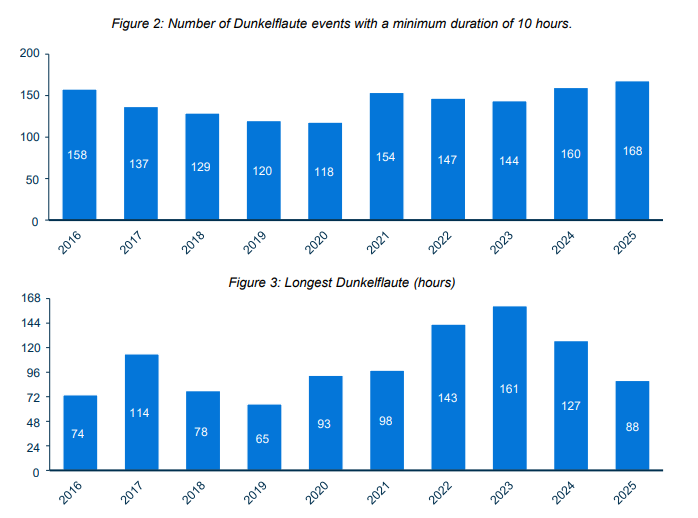
  • Over the past ten years, 1,435 Dunkelflauten lasting longer than 10 hours occurred (see Figure 2). On average, this means that a Dunkelflaute occurs every third day.
  • Over the period 2016–2025, Dunkelflauten lasted an average of 12.9 hours.
  • Longer events (Figure 3) are less frequent but still occur regularly. A 24-hour Dunkelflaute occurs almost every month, while three-day Dunkelflauten occur around twice per year.
  • Extreme Dunkelflauten lasting more than five days occur every three and a half years.
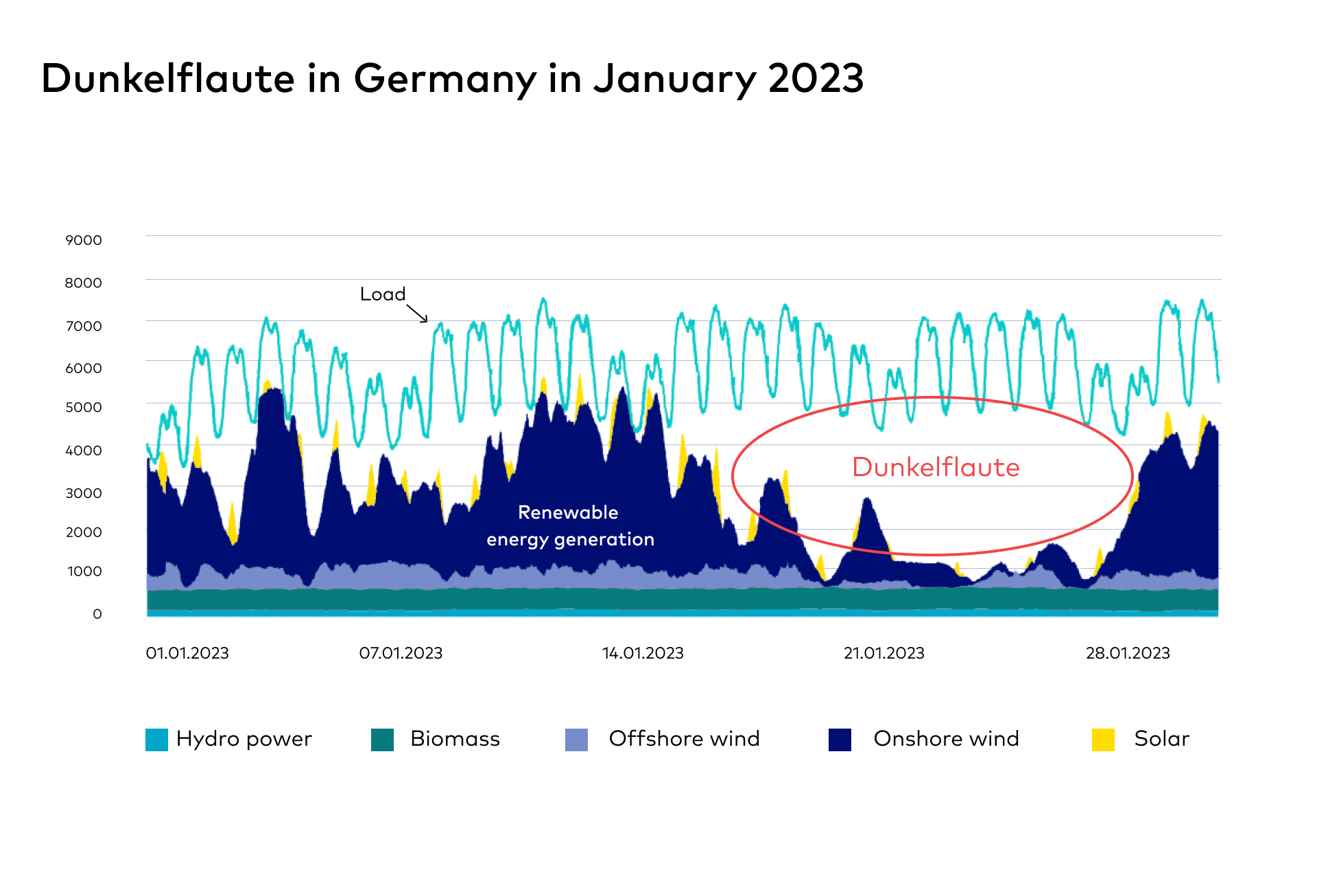
  • In 2023, there was even a nearly week-long Dunkelflaute (161 hours).
  • Storage and flexibility measures cannot bridge these long periods. Therefore, power plants that can generate electricity reliably and flexibly regardless of weather conditions remain a central component to ensure security of supply.
Read Full Post »

Add Dunkelflaute to the list of interesting and expressive compound German words. Die Dunkelflaute is a dark lull, a period of time in which minimal energy can be generated by the sun or wind. More specifically in German:

Die Dunkelflaute als sogenanntes Kofferwort beschreibt das gleichzeitige Auftreten von Dunkelheit und Windflaute. Diese Wetterlage entsteht typischerweise im Winter und sorgt für geringe Erträge aus Solar- und Windenergie bei gleichzeitig saisonal hohem Strombedarf. Eine Dunkelflaute kann mehrere Tage andauern. Kommen zu Dunkelheit und Windflaute noch niedrige Temperaturen hinzu, die für gewöhnlich den Strombedarf weiter ansteigen lassen, spricht man auch von “kalter Dunkelflaute.”

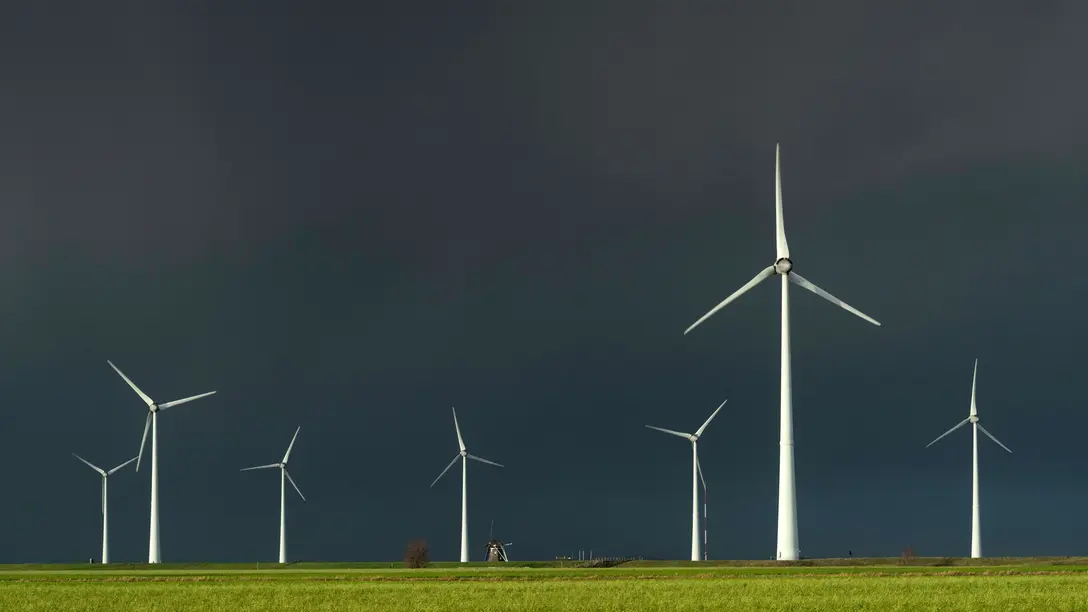
Note the prolonged Dunkelflaute (below) during which renewables provided minimal power in the middle of winter.

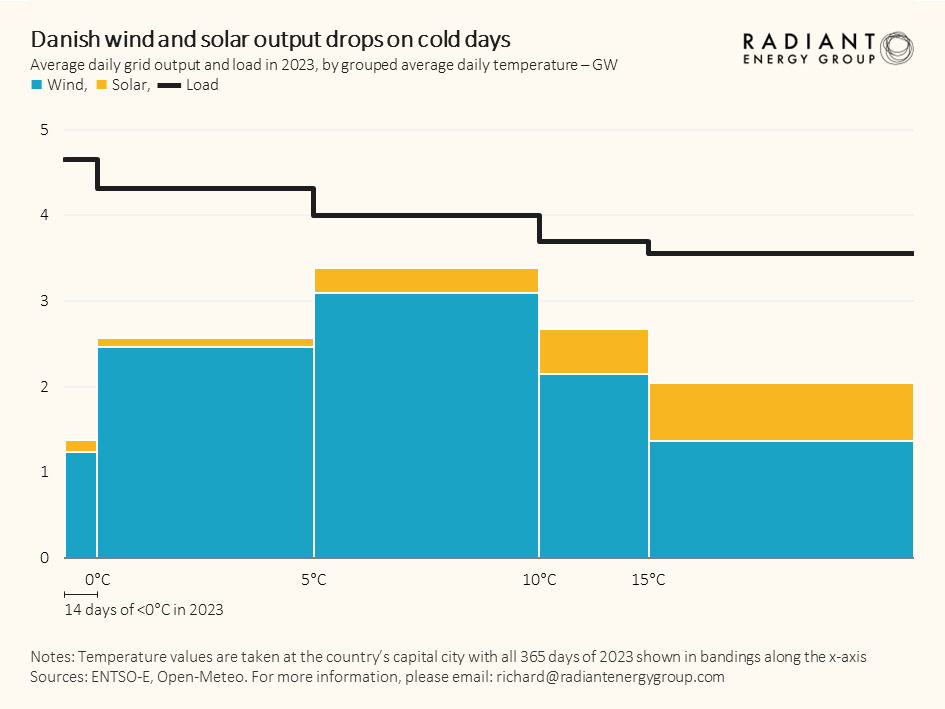
Unsurprisingly, wind and solar output are the lowest when the temperatures are the coldest. See the Danish summary for 2023 below. Note that wind output was also low when temperatures were above 15 deg. C.

Regional wind energy grids are not always an effective solution as Danish physicist Jens Christiansen, a nuclear energy advocate, has illustrated:

‘The wind always blows somewhere.’ Is that really true though? Here I’ve looked at the capacity factors of wind from five northern European countries in August The winds seem highly correlated, and there is almost a week-long period without significant wind anywhere.

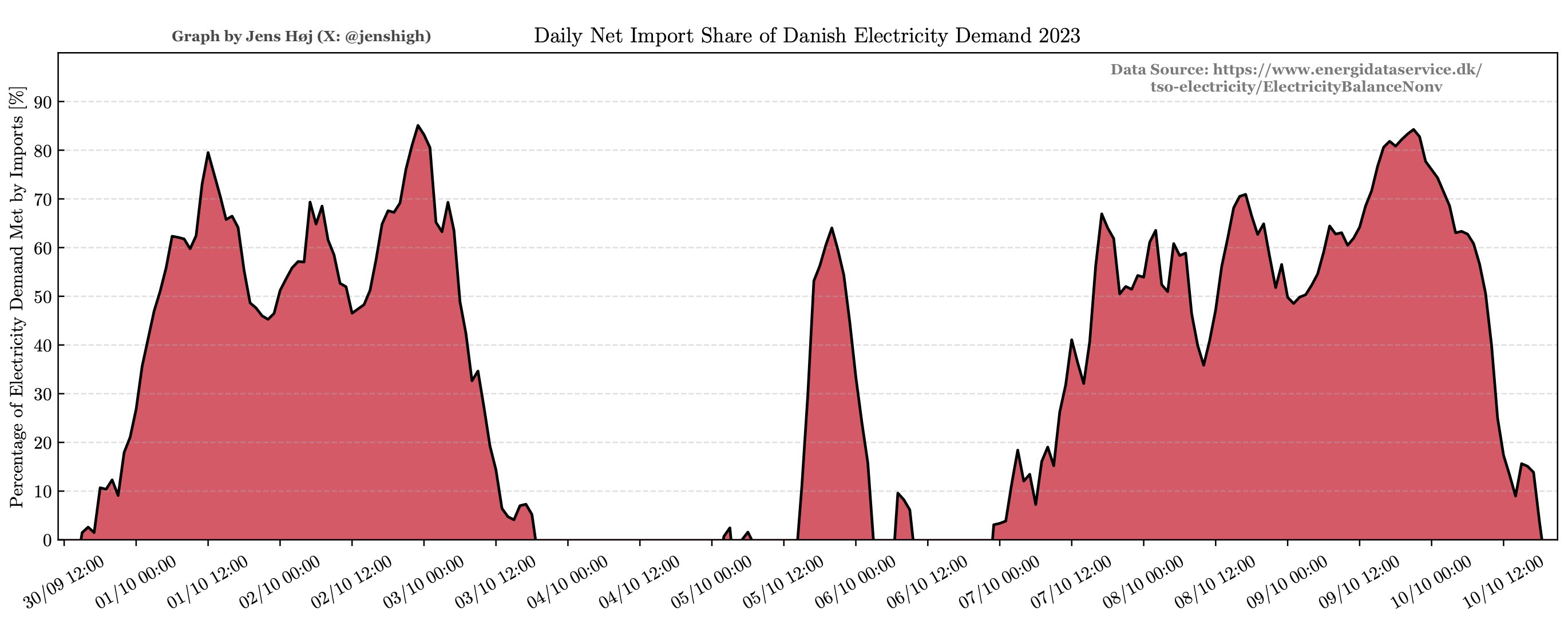
Christiansen illustrates Denmark’s reliance on imported electricity:

Paraphrasing Margaret Thatcher: “The problem with electricity imports is that you eventually run out of other people’s electricity.” In the U.S., California imports more electricity than any other state and typically receives between one-fifth and one-third of its electricity supply from outside of the state.

Given that massive battery storage is well beyond current capabilities and restrictions on electricity consumption and economic growth are undesirable, redundant or complementary power sources are essential for a reliable grid. Natural gas power generation is most responsive to variable demand, and is thus a good complement to variable sources like wind turbines and solar panels.

Read Full Post »