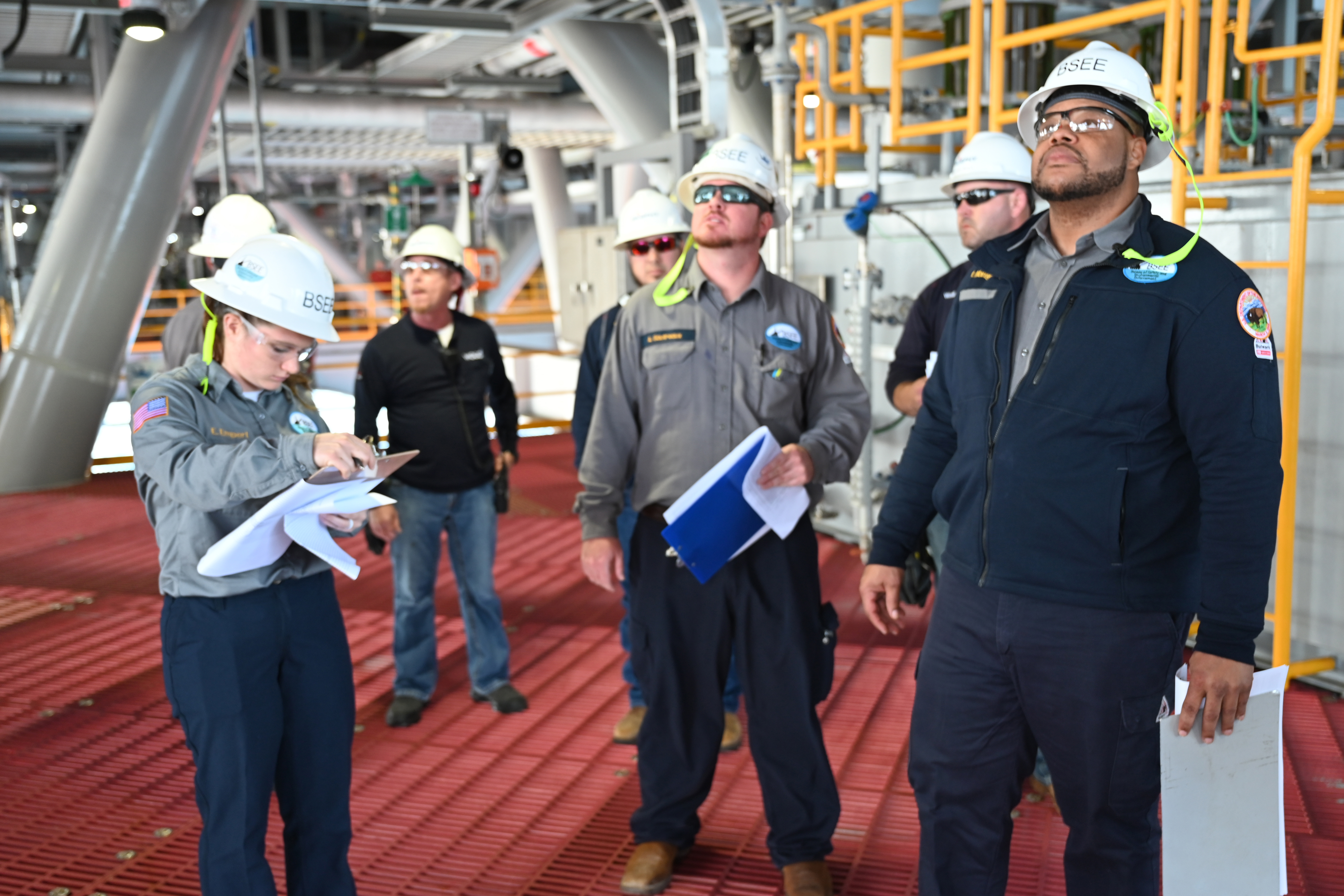
Pictured above are BSEE inspectors from the famed Houma District conducting one of their (always) thorough pre-production inspections at Murphy’s King’s Quay semisubmersible production platform in the Gulf of Mexico. [Trivia question: Who was the first Houma District Supervisor?]
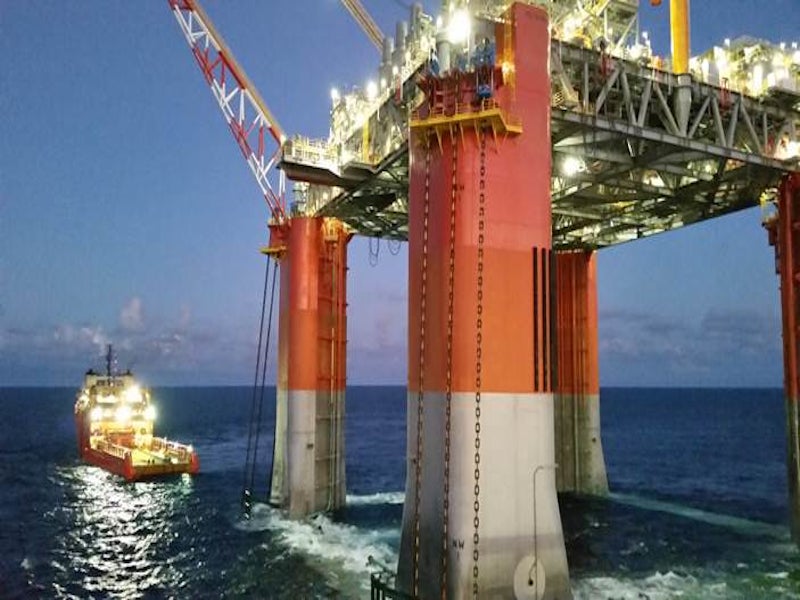
King’s Quay is one of six deepwater platforms expected to begin production in the Gulf over the next several years. Others include Shell’s Vito and Whale, BP’s Argos, Chevron’s Anchor, and Beacon’s Shenadoah. All are semisubmersible platforms, the current design of choice for the deepwater Gulf. Production semis have become smaller and more efficient, greatly improving the economics of deepwater projects.
These platforms feature efficient gas turbines and compression systems that should increase the GHG intensity advantage of deepwater Gulf production.
These are the first deepwater production structures to be installed in the Gulf since Shell’s Appomattox in 2018. Per our previous post on this topic, current GoM production rates are not sustainable without regular, predictable lease sales and increased exploration.
On October 19, 2021, RODA issued the government agencies a 60-day Notice of its Intent to Sue if they did not comply with the Clean Water Act, Endangered Species Act, Outer Continental Shelf Lands Act, and other federal environmental statutes. “The Alliance received no reply, and the environmental violations were not remedied,” Hawkins stated. “The decisions on this project didn’t balance ocean resource conservation and management, and must not set a precedent for the enormous “pipeline of projects” the government plans to facilitate in the near term. So we had no alternative to filing suit.”
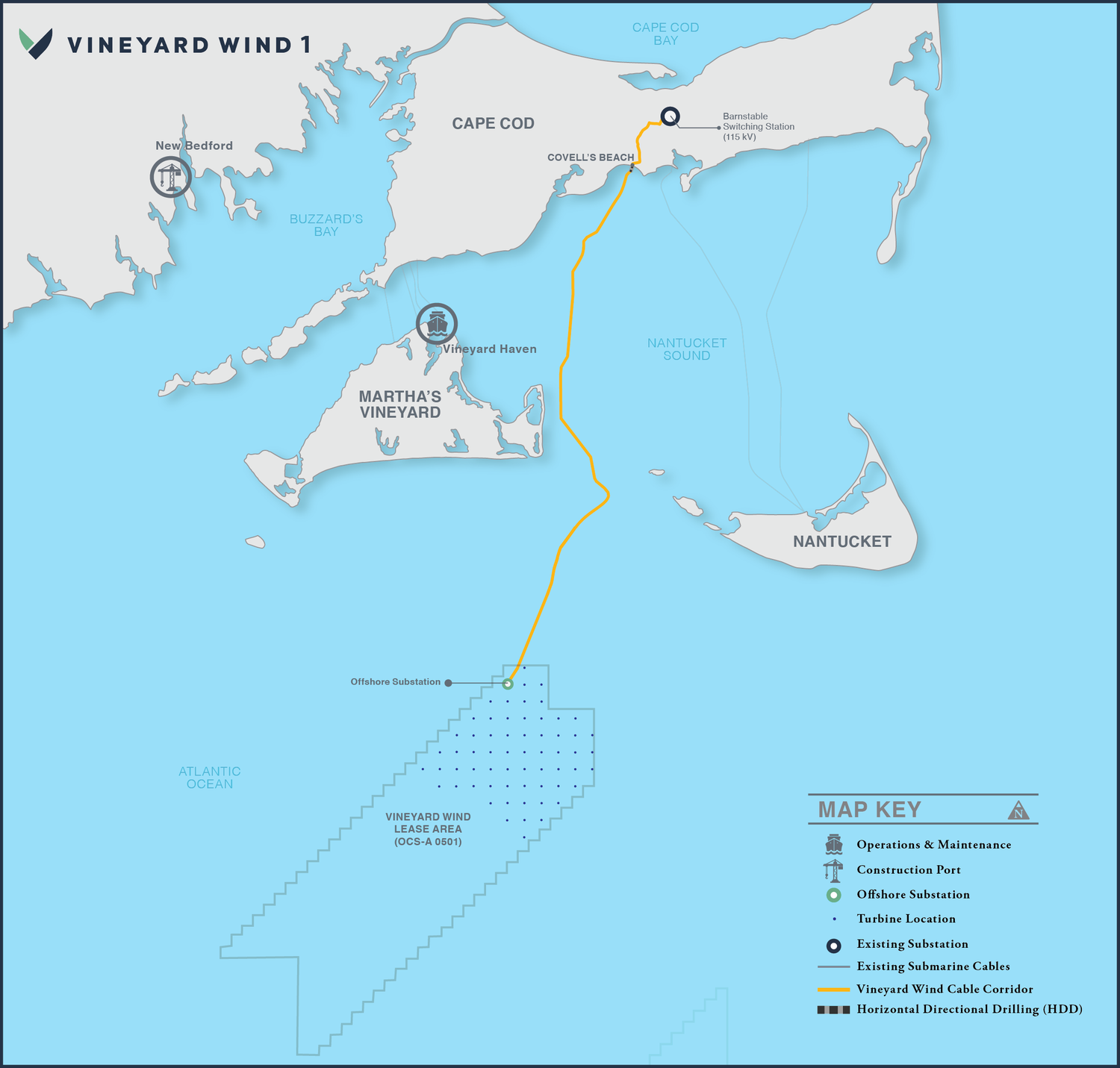
Vineyard Wind 1 is a 62-turbine offshore wind project to be built 15 miles south of Martha’s Vineyard, and is the first commercial-scale wind project approved for US offshore waters.
Of particular interest to the offshore industry, RODA’s court filing raises concerns about the structural integrity of the 13 MW Haliade-X turbines during Atlantic hurricanes, ice shedding in the winter, radar interference, pile driving noise, Jones Act violations, and failure to consider decommissioning issues.
This interesting Time Magazine interview with Saudi Arabia’s Energy Minister includes a discussion of the Kingdom’s decision to increase production capacity by 3 million bopd. A few excerpts follow:
Abdulaziz insists Saudi Arabia can roll out multibillion-dollar solar, wind, and hydrogen projects at home, even while remaining a giant oil producer. Choosing between the two is absurd, he says, and those who predict the inevitable decline of fossil fuel use are “living in a fantasy land.”
We believe oil consumption will continue to grow. The demand for oil will continue growing. At what level, I do not know, because the jury is out. Anyone who tells you that they have a good grasp of where and when and how much is certainly living in a fantasy land. We are human, and we could prove to be wrong, but that is exactly what we believe.
Three billion people lack any meaningful energy source, any clean energy, just for cooking. These people use biomass, everything, to burn, including cutting trees. Just to get through the day, they expose themselves to all sorts of hazards, including sickness and even death. For $500 million you would be able to give energy to 750 million people, in order to cook using clean energy, using propane energy, giving them a stove.
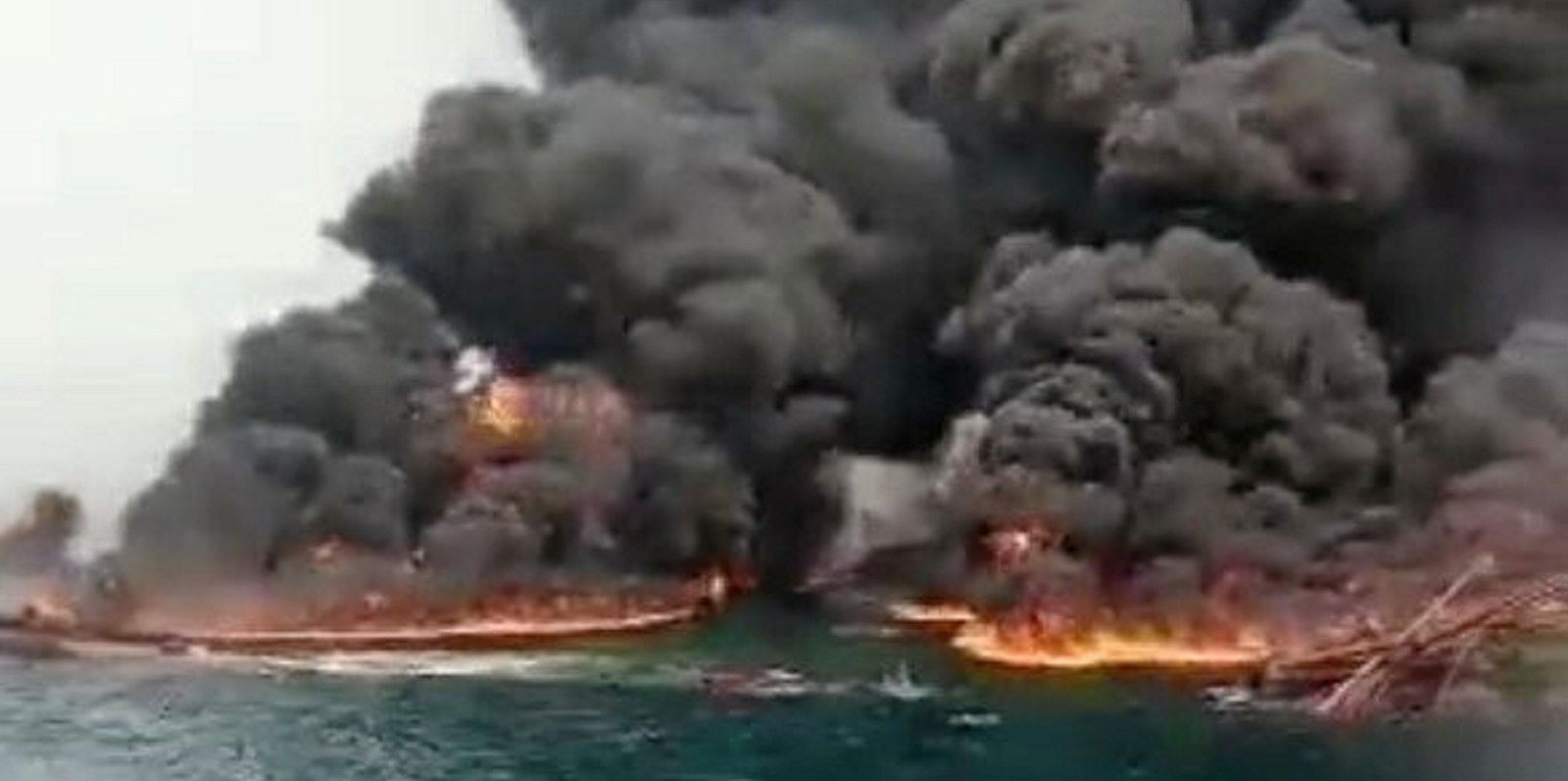
Ikemefuna Okafor, the executive officer of Shebah Exploration & Production Company Ltd (SEPCOL), the vessel owner, said late Sunday “three crew members have been found alive in the community”.
The incident occurred last Wednesday (2/2), but the only public statement from the operator was the following day:
“At this time there are no reported fatalities but we can confirm that there were 10 crewmen on board the vessel prior to the incident and we are prioritising investigations with respect to their safety and security,” SEPCOL Chief Executive Ikemefuna Okafor said in a statement.
That statement has been contradicted by at least 2 Nigerian press reports:
Meanwhile, three persons have been confirmed dead while eleven others declared missing following the explosion. Sources told reporters in Warri yesterday that three bodies had been recovered while 12 others were yet to be accounted for at the time of filing this report.
Daily Trust had, however, gathered that three Seafarers working onboard the Floating Production Storage and Offloading (FPSO) facility may have lost their lives in the fire
The only public statement by the Nigerian regulator (NUPRC) echoed the SEPCOL statement:
“There has been no report of any casualties or fatalities and the Commission will take necessary measures to ensure that all safety and environmental measures in line with global best practices to safeguard lives and the environment are put in place.”
Comments:
Apparently, the fate of the workers was unknown, and the “no report of any casualties” comments were misleading and inappropriate given the gravity of the situation.
Neither the operator nor the regulator have provided any update on the number of workers safely recovered or missing, or the status of any ongoing search.
There is not a single mention of the fire on either the operator or regulator website.
There seems to be uncertainty about the size of the crew at the time of the incident.
This Nigerian source is now reporting that there are 3 confirmed deaths, and 11 workers declared missing. No other sources are reporting casualties at this time.
The latest AFP report indicates that the fire has been extinguished.
The Nigerian Upstream Petroleum Regulatory Commission (NUPRC) Thursday disclosed that it had commenced an investigation into the circumstances surrounding the explosion of a Floating Production, Storage and Offloading (FPSO) vessel in Warri, Delta State.
Industry source indicated that the FPSO was not producing at the time and had about 50,000 barrels in storage
No indication that any wells are on fire
Per Rystad the FPSO has not been producing since 2019 and was being used solely for storage.
Per Reuters, SEPCOL is the technical operator of the block though the production licence was held by consortium member Express Petroleum. SEPCOL’s production license had reportedly been revoked in 2019 for legacy debts.
Lots of important technical, operational, and management aspects to this major incident. Hopefully, NUPRC’s report will be publicly available at the conclusion of their investigation.
The number of GoM platforms is down 75% from its peak and continuing to decline.
Most new production is in the deepwater GoM and is accomplished with very few, remote and widely dispersed facilities. There are currently only 57 deepwater platforms across the entire Gulf.
The wind industry appreciates the synergy between offshore oil and gas and offshore wind operations. Indeed the oil industry has been very supportive of offshore wind, and some of the same operating companies and contractors are major players in both industries.
t has been 17 years since the enabling legislation was passed, yet we are still awaiting the first commercial wind project in the US Atlantic. You can’t blame the oil and gas industry for that delay. To the contrary, one can make the case that the presence of oil and gas operations would have accelerated Atlantic wind development.
The enabling legislation for offshore wind was drafted by the agency that managed the offshore oil and gas program and recognized the compatibility of oil and wind development. Wind development is clearly a high priority for BOEM, the current OCS land manager.
Will the Administration appeal the court decision to vacate the lease sale or does the decision assist them by reinstating their leasing pause? How will the conflict between the DC court decision and the injunction invalidating the leasing pause (Federal Court for the Western District of Louisiana) be resolved?
What does this mean for the 94 leases that were to have been acquired for carbon sequestration purposes? Will BOEM have a proper CCS sale after conducting an environmental assessment, determining bidding terms and evaluation criteria, and publishing a Notice of Sale? Or will there be a legislative end run that authorizes the issuance of the leases without these steps?
Our last GoM update predicted November oil production of 1.8 million BOPD. The EIA figure released yesterday came in slightly less than that at 1.795 million BOPD.



 Bud's Offshore Energy (BOE)