Feeds:
Posts
Comments

Archive for 2021

Due to water currents and a robust emergency clean-up effort, local beaches and ocean were re-opened on Oct. 11. By mid October, walking along the wide, sandy beaches there’s no sign of the spill as dolphins and surfers share the waves against a backdrop of cargo ships, oil rigs and the soft silhouette of Catalina Island.

Santa Cruz Sentinel

Further confirmation of the lower spill volume:

“Right now, there’s high confidence that the spill was approximately 24,696 gallons. The exact number won’t be able to be verified until the investigation has been completed. But there’s high confidence in that number,” Shaye said.

LCDR Shaye to the Sentinel

“Our world environment is very resilient, which is a positive thing,” Shaye said. “As far as the birds and wildlife; there have been some deaths, as happens in this kind of situation. But quite a few have been rehabilitated and released back into their environment.

LCDR Shaye to the Sentinel

Kudos to the responders. The training and response exercises worked!

Read Full Post »

But certainly, the supply and — and OPEC and putting additional pressure on OPEC is something that — that, certainly, our national security team will continue to do. 

Jen Psaki, Press Secretary

Equally predictable:

I will also note that, as it relates to gas prices, we remain concerned about trends we have seen where, even as supply has increased at times over the last several months, we’ve still seen heightened prices.

The FTC — we’ve asked the FTC to look into that.  They’ve said they were doing that.

Jen Psaki, Press Secretary

Related post.

Read Full Post »

Printed Metal Table Tops - Don't Mess With Texas

UN Secretary General Guterres to Texas:  “Texas must end its reliance on oil and gas production to remain prosperous in the era of climate change.

Gov. Abbott responds:

Texas to United Nations: Pound Sand

The world is reeling from spiraling fuel costs caused by premature over-reliance on renewable energy.

High fuel costs punish middle class families & stoke the supply chain crisis.

Texas oil & gas is needed right now.

Greg Abbott tweet

Read Full Post »

Greenpeace climate activists stage a protest at a Shell refinery in Rotterdam, Netherlands
EuroNewa.green

Oil firms have been banned from taking an active role in the upcoming COP26 summit.

The news is a seismic victory for climate activists.

It stops Big Oil companies from sponsoring the conference and steering the narrative away from their culpability in the climate crisis.

Euronews.green

Comments:

  • This decision is more about exercising political power than advancing our energy future, which is dependent on collaboration among all sectors of the energy industry.
  • Oil and gas producers are “banned,” but major energy consumers are welcome to support the conference.
  • The 3 oil companies mentioned in the article are major investors in offshore wind and other renewable energy projects. These companies have spent hundreds of millions of dollars to purchase US offshore wind leases and will spend much more on the projects that follow. They are also major investors in low carbon intensity offshore oil and gas production.
  • Does the US government, which (at taxpayers expense) is sending a very large delegation to COP26, support this type of discriminatory behavior toward major contributors to our economy?
  • While the delegates are attending the conference, the folks at home are seething about gasoline prices and inflation.

Read Full Post »

Never Let a Good Crisis Go to Waste - FocusCFO

A group of environmental organizations demanded Wednesday that the Biden administration suspend and cancel oil and gas leases in federal waters off the California coast after a recent crude oil spill.

NBC LA

While not the disaster that some had predicted, this spill is another setback for California offshore production. However, cancellation of the remaining producing leases would be a very difficult and costly proposition for the Federal government. At this time, the Beta Unit operator appears to be minimally responsible for the spill, so what would be the basis for cancelling those leases? Cancelling other producible leases would be even more problematic.

Read Full Post »

With regard to air emissions, the advantages of deepwater Gulf of Mexico production are rather obvious:

  • High production rates per well
  • Few surface facilities (57 deepwater platforms, 3% of GoM total, produce 90+% of oil)
  • Modern gas turbines for power generation
  • Tightly enforced restrictions on flaring and venting
  • Better control of fugitive emissions
  • Distant from shore (not a factor for GHG effects)

Wood Mackenzie, NOIA, and others contend that restrictions on GoM leasing are contrary to carbon reduction goals.

An important and unintended consequence of enacting more restrictive policies such as a lease ban or increase in royalty rate in the Gulf of Mexico is that it could give rise to carbon leakage to countries that export crude to US.

Wood Mackenzie
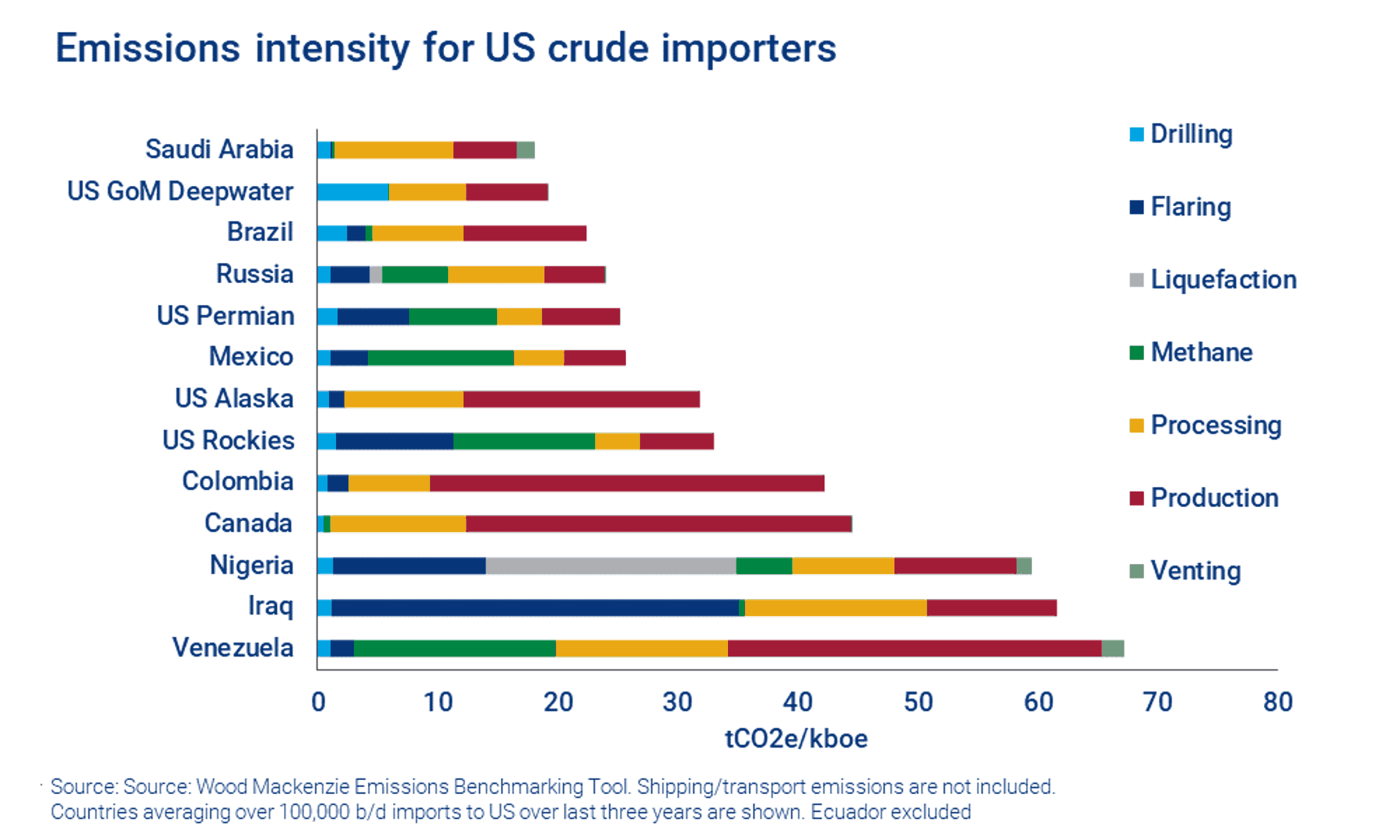
Chart: Emissions intensity for US crude importers. US Gulf of Mexico deepwater emissions are less intensive than all but one importer.

In light of the policy implications of GHG emissions, a Carbon Intensity Workshop is highly recommended. The estimates generated by Wood Mackenzie, Rystad, and others need to be explored in depth. Is data quality an issue? How are the data verified? Is there regulator or third party oversight? What are the assumptions behind the estimates? Also, for the purposes of US policy decisions, product transportation emissions should certainly be included. A barrel produced in the Middle East is not the same as a barrel produced in the GoM.

Looking at the chart above, I have immediate questions about the drilling emissions (blue). What wells are included? What about workovers and other well operations? I’m surprised that the deepwater GoM drilling emissions are so high relative to the other regions. While dynamically positioned MODUs have high fuel consumption rates, deepwater wells are few in number relative to shale drilling. Also, why are Brazil’s drilling emissions, which I assume are primarily associated with deepwater operations, so much lower that those for the GoM.

BOEM/BSEE and/or the Gulf Research Program (NASEM) would seem to be good sponsors for such a workshop.

Read Full Post »

Are the Saudis reading BOE?

The Public Investment Fund (PIF) announced today the launch of “THE RIG.”, a new tourism project. Inspired by offshore oil platforms, “THE RIG.” will be located in the Arabian Gulf and will span a combined total area of more than 150,000 square meters and provide a multitude of hospitality offerings, adventures, and aquatic sporting experiences.

PIF News Release

Were they inspired by this BOE exclusive?

Rigs-to-Rides
Rigs-to-Rides

Read Full Post »

Leading up to #COP26 convening in Glasgow next month, the OPEC SG advised legislators and policymakers to consider the fact that billions of people lack reliable and affordable modern energy, a basic need for all.

OPEC

Reminder that “no energy is dirtier than no energy.

For those interested in regional and international oil market data, OPEC’s monthly reports are quite good. You can download the October report here.

Image

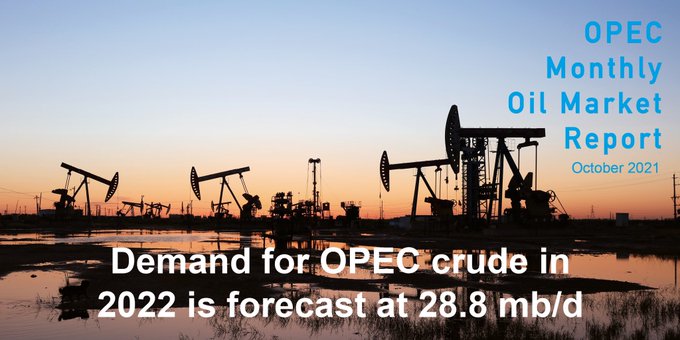
Demand for OPEC crude in 2022 was revised up by 0.1 mb/d from the previous month’s assessment to stand at 28.8 mb/d, around 1.0 mb/d higher than in 2021.

Read Full Post »

Scandpower study (2004) for MMS:

Overall Conclusion
Currently, there are no regulations that require removal of subsea pipelines if they are not an obstruction to navigation. Based on the high costs for removing the pipelines, the personnel risk involved in the removal operations, the negative effect on overall emissions to air and the very limited reduction in discharges to sea, the overall conclusion is that it is better to leave the pipelines in place. If possible, re-use of the pipelines is the optimal solution.

Environmental Impacts
The impacts on the environment and the marine environment from pipelines and cables left in place were found to be very minor. Conversely recovery operations will have a negative impact on the environment. The number of vessels required for removal operations and long operating hours will result in considerably more releases and emissions than leaving the pipelines in place. In addition the energy savings benefit from recycling the pipeline materials will be exceeded by the energy required to remove the pipelines and separate the materials.

Pipeline Decommissioning: Environmental Impact Metric (per Scandpower)

Remove/
recycle
Remove/
landfill
Reuse or
preserve
Bury Abandon
in place
EnergyHighHighLowModerateNone
EmissionsHighHighLowLowLow
DischargesLowLowModerateLowLow
HabitatLowLowModerateLowLow
AestheticsLowModerateNoneNoneNone
Resource
Utilization
HighNoneHighNoneNone
LitteringLowLowLowLowModerate

The “Habitat” impacts row seems questionable. Pipeline removal certainly has a greater impact on habitat than abandonment in place, particularly for buried pipelines.

Read Full Post »

Read Full Post »

« Newer Posts - Older Posts »