
The National Commission has a diverse lineup of “heavy hitters” slated for hearings on 27-28 September. CSpan doesn’t have their schedule posted yet for these dates, but I assume they will be broadcasting the hearings live.
Posted in Uncategorized, tagged accidents, Deepwater Horizon, Gulf of Mexico, macondo, National Commission, offshore oil, oil spill on September 24, 2010| Leave a Comment »
The National Commission has a diverse lineup of “heavy hitters” slated for hearings on 27-28 September. CSpan doesn’t have their schedule posted yet for these dates, but I assume they will be broadcasting the hearings live.
Posted in Uncategorized, tagged Argentina, drilling, Falklands, offshore oil, Rockhopper, UK on September 24, 2010| Leave a Comment »
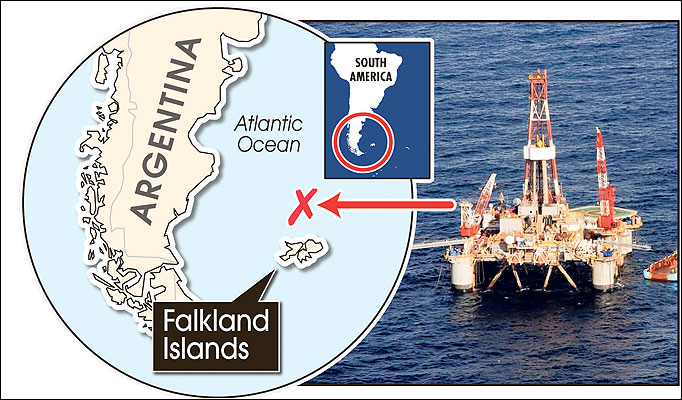
from The Sun
Deepwater drilling may be on hold in US waters, but that is not the case elsewhere. However, drilling in other parts of the world is not free from political tension and intrigue. Of particular interest is a recent discovery well in 450m of water in the North Falkland Basin. From the Buenos Aires Herald:
As President Cristina Fernández de Kirchner prepares to address the UN General Assembly and renew the Argentine claim on the Malvinas Islands sovereignty, British explorer Rockhopper said its controversial oil discovery offshore the islands could have produced double the amount of oil had a test not been besieged by technical problems.
Analysts believe up to 60 BILLION barrels of oil lie in waters off the UK territory.
That estimate would seem to be a considerable stretch (to say the least), but will no doubt complicate the diplomatic challenge facing the UK and Argentina.
Posted in accidents, tagged aban pearl, accidents, sinking, venezuela on September 24, 2010| Leave a Comment »
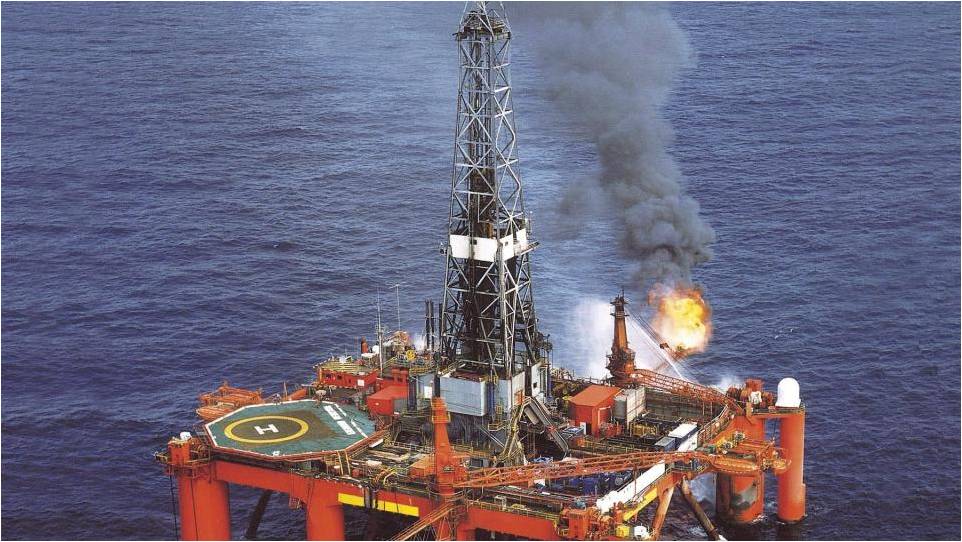
Aban Pearl
The Aban Pearl sank off the coast of Venezuela in May. Shortly after the accident, Venezuela announced that a high-level commission would investigate. However, interested parties, inquiring through official diplomatic channels, have been unable to even confirm that the sinking is being investigated.
Until operators, contractors, and governments agree to conduct accident investigations and release reports in a timely manner, offshore safety objectives cannot be achieved.
Posted in accidents, well control incidents, tagged accidents, Australia, blowouts, Deepwater Horizon, Gulf of Mexico, macondo, Martin Ferguson, Montara, NOPSA, oil spill, safety, well control on September 23, 2010| Leave a Comment »
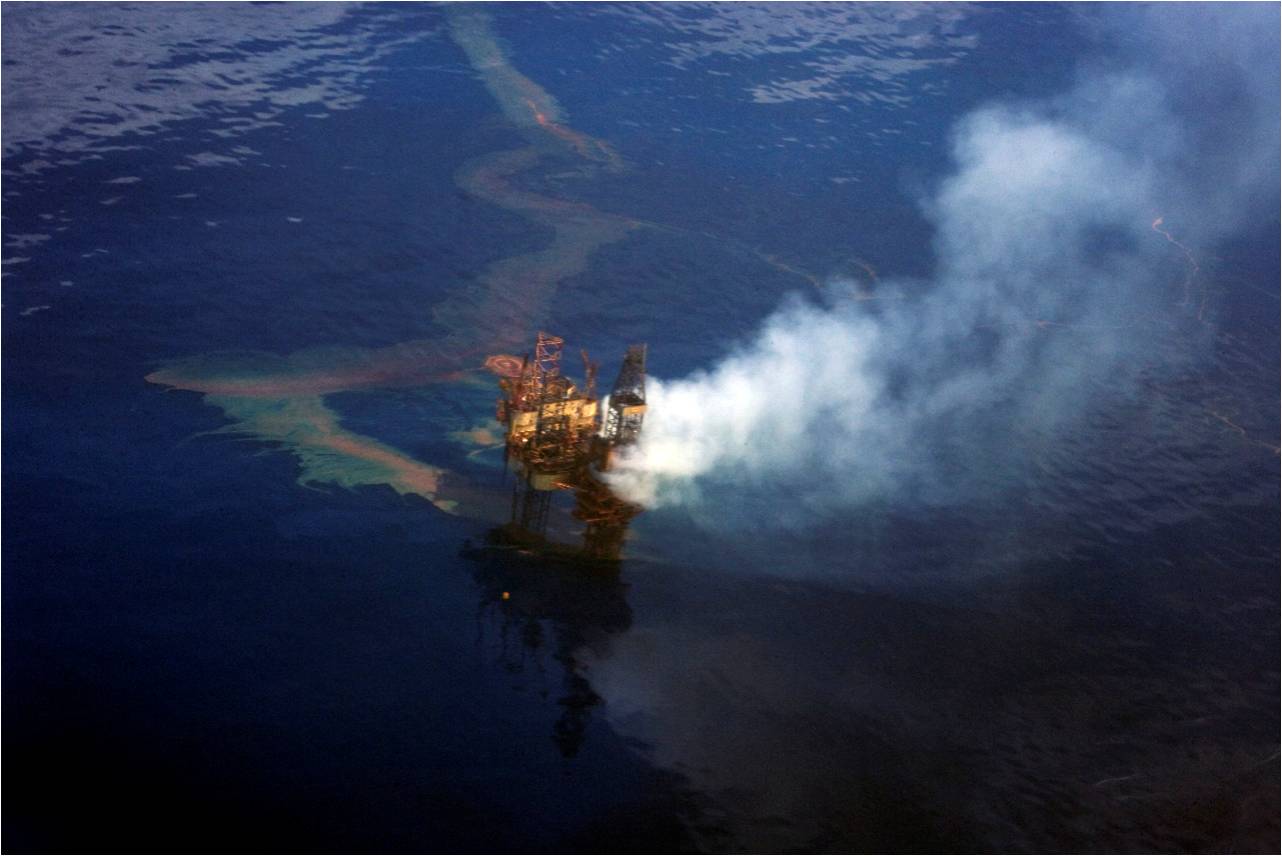
Montara Blowout, Timor Sea
I awoke to two very important developments from Australia as reported by Anthea Pitt with Upstream:
By expanding Nopsa’s role, one central agency will look out for the safety of our offshore workers and the environment from exploration to decommissioning. That means it will be responsible for approvals and regulation of safety and environment, as well as integrity of facilities and day-to-day operations.
Bravo to Australia and Minister Ferguson! As I indicated in a submission to the Montara Commission and testimony before the US Senate Committee on Energy and Natural Resources, a single agency must be responsible and accountable for the regulation of offshore oil and gas operations if safety and pollution prevention objectives are to be achieved.
Posted in Uncategorized, tagged beer, Gulf of Mexico, macondo, oil spill, Superdome on September 22, 2010| 2 Comments »

Louisiana Superdome
“How big was the oil spill in the Gulf? It was equal to pouring three cans of beer into the Superdome.”
Beer in the Superdome? How could that be possible? Certainly not during a Saints game! 🙂
I never liked these types of analogies for the following reasons:
Posted in Uncategorized, tagged 200th anniversary, Jan de Jong, Netherlands, Queen Beatrix, SSM on September 21, 2010| Leave a Comment »
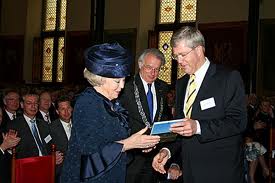
Queen Beatrix recognizes Jan de Jong, Inspector General, and the State Supervision of Mines
A regulatory agency does not survive for 200 years without the respect and support of elected officials and the public. The State Supervision of Mines (SSM) in the Netherlands has earned its outstanding reputation through sustained excellence and innovation.
SSM regulates all aspects of oil and gas exploration, production, and transportation, wind projects, and mining activities.
To learn more about the SSM, I encourage you to view this 200th anniversary video. At about the 6 minute mark, pay particular attention to SSM’s regulatory philosophy which emphasizes risk assessment and effective management systems. SSM does “not focus on nuts and bolts but on the effectiveness of management systems.”
Congratulations to Jan, Roel, Jos, Michael, and the dedicated professionals of the State Supervision of Mines. Keep going strong through anniversaries 210, 220, and beyond!
Posted in Uncategorized, tagged Grand Banks, Igor, Newfoundland, Ruelokke, transocean on September 21, 2010| Leave a Comment »

Max Ruelokke
As a precaution in advance of Hurricane Igor, all personnel were removed from two Transocean rigs operating offshore Newfoundland. The rigs are the GSF Grand Banks and the Henry Goodrich. Igor headed for Newfoundland after battering Bermuda yesterday.
Max Ruelokke, Chairman and CEO of the Canada-Newfoundland and Labrador Offshore Petroleum Board, told BOE that this is the first time he can recall a Grand Bank’s rig being down-manned to zero in advance of a storm. Personnel are expected to return to both rigs tomorrow.
Posted in accidents, tagged accidents, international treaty on September 20, 2010| 1 Comment »
Why is action needed?
What should be done? Governments should support an international treaty to improve data gathering and analyses and help prevent future disasters at offshore facilities. Here are some suggested provisions for such a treaty:
We have been talking about accident investigation and information shortcomings for decades. It is time to do something!
Posted in accidents, well control incidents, tagged accidents, blowouts, Deepwater Horizon, Gulf of Mexico, macondo, offshore oil, oil spill, relief well, safety, well control on September 19, 2010| 1 Comment »
Now that Admrial Allen has officially confirmed that the dead Macondo well is in fact dead, what is the legacy of the relief well?
Posted in Uncategorized, tagged East Resources, Happy Valley, Hockey Valley, ice hockey, Kim Pegula, Marcellus Shale, Penn State, Shell, Terry Pegula on September 19, 2010| Leave a Comment »
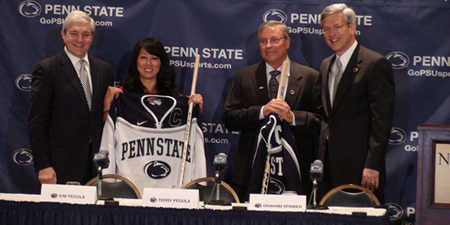
Kim and Terry Pegula flanked by PSU President Graham Spanier and Athletic Director Tim Curley
Penn State, often known as Happy Valley, is now also Hockey Valley, thanks to an $88 million donation to fund a new ice arena and establish NCAA Division I hockey programs for men and women. The donation was made by Terry Pegula, a Penn State petroleum and natural gas engineering graduate, and his wife Kim. The Pegulas recently sold their exploration and development company, East Resources, to Shell for a reported $4.7 billion. East Resources has extensive holdings in the Marcellus Shale, a major component of the emerging “natural gas revolution” in the US.
Although Terry and I had the same major at Penn State, he graduated two years after me and I did not know him. Nonetheless, I want to congratulate Terry for his phenomenal success and generosity. The Pegulas’ unprecedented contribution will have major recreational, economic, and social benefits for Happy Valley and all of Central Pennsylvania.

 Bud's Offshore Energy (BOE)