“Our internal investigation into the events of that tragedy is nearing completion,” Newman told investors during a conference call to discuss Transocean’s fourth-quarter earnings. “In light of continuing delays and obtaining information on the third-party testing of the Horizon’s (blowout preventer), we expect to release findings in the next month or two.” Fox Business
Posts Tagged ‘well control’
Transocean Report
Posted in accidents, well control incidents, tagged accidents, blowouts, drilling, Gulf of Mexico, macondo, offshore oil, oil spill, safety, transocean, well control on February 24, 2011| Leave a Comment »
Russia:”Can’t Happen Here”
Posted in accidents, tagged accidents, arctic, blowouts, Can't Happen Here Award, Deepwater Horizon, Gulf of Mexico, offshore oil, Russia, safety, well control on February 24, 2011| Leave a Comment »

No deepwater horizons in Russian arctic:
Developed by SevMash, the first Barents Sea oil rig will be a steel table the size of a football pitch and capable of withstanding temperatures of down to minus 50 Celsius. The whole point of it is that standing on the seabed, it will allow drilling and pumping the way they are done of firm land. This is a very far cry from the Deepwater Horizon. That platform was semi-submersed, positioned dynamically and designed to pump oil from beneath a mile of sea. When the oil gushed, the spill proved almost unstoppable. The Barents Sea platform will employ a very different production technology, which involves the use of powerful pumps. Chief Technology Officer of the Gazpromneft Shelf company Dr Alexander Kisser
Comment:
- Don’t demonize deepwater production to promote the arctic (or vice versa). The world needs responsible production from both.
- “Can’t happen here (or to me)” talk impresses no one. Explain how a disasters can happen to you and what you are doing to prevent them.
- Identify the special risks at your site and how they will be mitigated. Don’t tell us why the arctic isn’t the Gulf of Mexico.
- Perhaps we should present Can’t Happen Here awards as part of the Not My Job awards program.
Lucky Australia? Lucky PTTEP?
Posted in accidents, well control incidents, tagged accidents, Australia, blowouts, drilling, macondo, Montara, offshore oil, well control on February 17, 2011| Leave a Comment »
Anthea Pitt, Executive Editor of the Petroleum Economist and a native Australian, recently wrote about her country and its historical dependence on natural resources:
Australia is well aware it relies on primary industries for its wealth. In the 19th century, the country proudly “rode on the sheep’s back”. More recently, iron ore, coal, bauxite and gold helped keep the worst of the sub-prime crisis at bay. Soon, a slew of large hydrocarbon developments off the country’s remote northwest coast will come on line, another rich seam flowing into Australia’s resources revenue stream.
The blowout at Montara was well-earned, and Australian and PTTEP were lucky even during a massive disaster. No one was injured, the well was at a remote location, and international attention was soon diverted to the spectacle of Macondo.
Evidence given to the inquiry showed exactly how fortunate Australia had been. It emerged that wells drilled at Montara failed to meet PTTEP AA’s internal well-construction standards, let alone satisfy regulatory requirements. The H-1 well, which had been suspended as a future producer during batch drilling operations, was open to surface for around a week before it blew out. Its downhole cementing job was flawed; there were no mechanical barriers in place. The rig’s blowout preventer was over another well at the time of the incident.
Although PTTEP has been given a pass by Australian Resources Minister Ferguson, the lessons of Montara must not be ignored. Deepwater drilling is not the problem; Montara was in 80m of water. Poor planning and execution are the problem, whether the well is in the Timor Sea, the Gulf of Mexico, the arctic, the North Sea or anywhere else in the world.
Interesting items from Martin Ferguson’s press conference
Posted in accidents, well control incidents, tagged accidents, blowouts, macondo, Montara, offshore oil, oil spill, safety, well control on February 10, 2011| Leave a Comment »
From the Australia Resources Minister’s Press Conference on 4 February in Canberra (click for the full transcript):
I might also say that I was in the United States last week and these issues were clearly top of mind in my discussions in Washington (l didn’t know he was here and have seen no US coverage of these meetings.)
I reinforced my previous commitment to work closely with the United States in terms of the consideration of the outstanding recommendations of the Macondo report and our determination to put in place a single national regulator in Australia
Discussions were also held with the companies and the US administration about an international conference we will hold in Western Australia in August of this year, focusing on the recommendations of the Macondo and Montara reports. That conference will be highly technical in nature.
It will in my opinion be a very important regulatory conference because it’s about basically having a look at where we are, what national and international responses can be coordinated, any specifications that might have to be changed so that we get a uniform approach to industry practice and the nature of equipment used. (Is the Minister unaware of the Vancouver conference and the ongoing work among regulators?)
(On the report about the Varanus Island explosion) Firstly I’d love to get my hands on it because I want to fully assess it. But I can’t get access to it at the moment because the WA government has determined it would be inappropriate to release it because it may impinge on potential legal proceedings.
Transocean to release report next month
Posted in accidents, well control incidents, tagged accidents, blowouts, Deepwater Horizon, drilling, Gulf of Mexico, macondo, offshore oil, oil spill, safety, well control on February 9, 2011| Leave a Comment »
From today’s Platts Oilgram News:
Offshore drilling giant Transocean expects to release its internal investigative report next month on last year’s Macondo disaster in the Gulf of Mexico as the first of several milestones toward resolving liability issues, Transocean CEO Steven Newman said February 8.
The BOP section of TO’s report should be very interesting.
Good Montara Article in the Sydney Morning Herald
Posted in accidents, well control incidents, tagged accidents, Australia, blowouts, Montara, offshore oil, oil spill, safety, well control on February 7, 2011| Leave a Comment »
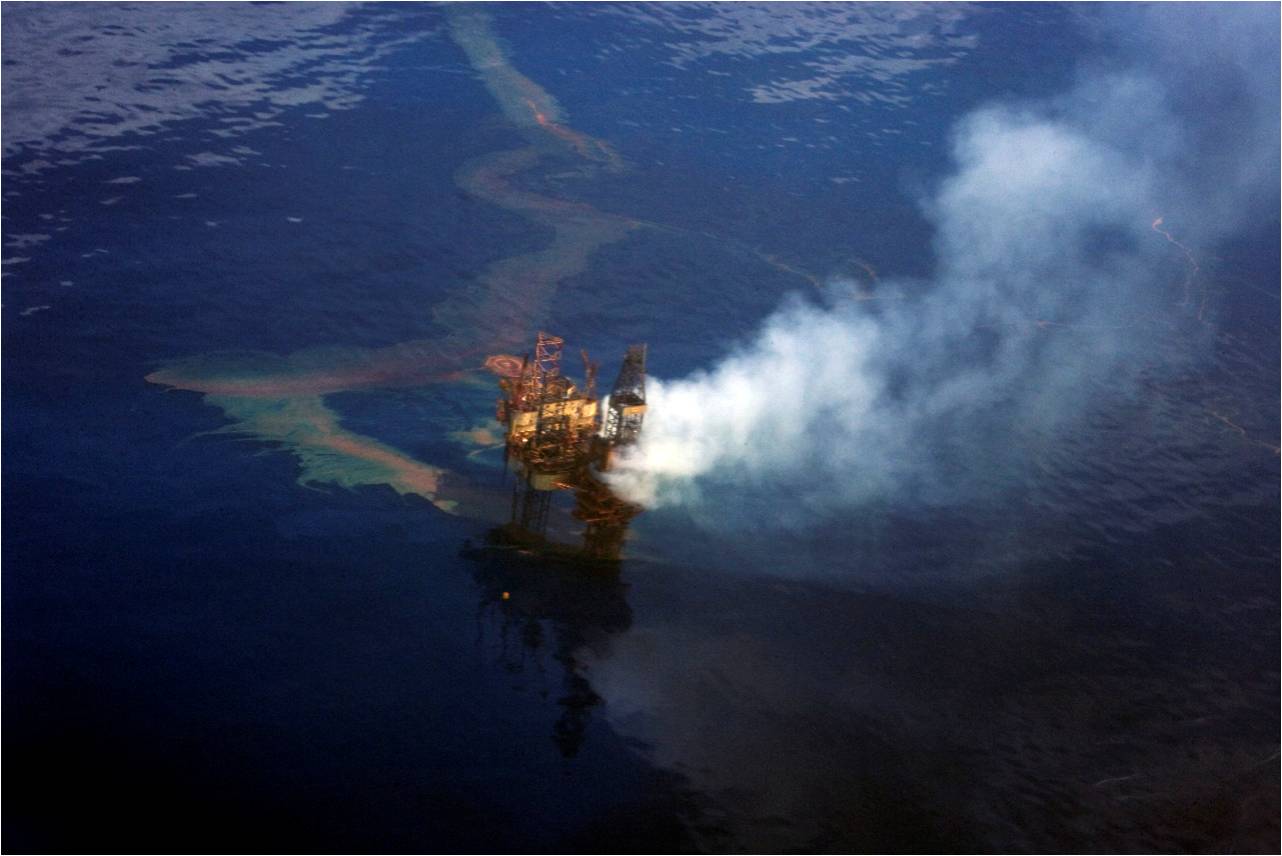
Montara Blowout - Timor Sea
PTTEP will have to report monthly and meet quarterly with Mr Ferguson under a binding agreement for the next 18 months.
Comment: That “penalty” is almost comical. What is the next level of punishment – weekly meetings with Ferguson? Also, shouldn’t the Minister let the regulator oversee PTTEP? Shouldn’t the Minister receive such reports and briefings from the regulator?
There is no disincentive, there’s no penalties. That’s what I think many Australians will be scratching their heads about. Paul Gamblin, WWF WA Director
Comment: I have to agree with the World Wildlife Federation. As one who has been following Monatara since the blowout was first reported and has read every page of the submissions and testimony, it seems inconceivable that PTTEP is able to continue its operations with no apparent penalty.
Biology Lab and the Deepwater Horizon BOP
Posted in accidents, well control incidents, tagged accidents, blowouts, BOP, Deepwater Horizon, drilling, Gulf of Mexico, macondo, offshore oil, oil spill, safety, well control on February 6, 2011| Leave a Comment »

This cartoon reminded BOE sage Odd Finnestad of the Deepwater Horizon BOP “forensics” testing.
While the BOP testing is now in its 4th month with no official updates and no information on the badly neglected investigation website (where items from last August are listed as the “latest news”), there is online video evidence that gives us good clues about what happened. However, this is partial evidence, and concerned operators, contractors, and regulators need complete information. While we wait, wells are being drilled around the world without the benefit of even preliminary findings.
When a plane crashes, information is released as soon as possible so that future accidents can be prevented. Why is that not the case with this investigation? The absence of urgency and transparency is most disappointing.
Mitsui gets a bill
Posted in accidents, well control incidents, tagged accidents, blowouts, Deepwater Horizon, drilling, Gulf of Mexico, macondo, offshore oil, oil spill, safety, well control on February 5, 2011| 7 Comments »
From Platts Oilgram News (3 February 2011):
Mitsui affiliate MOEX Offshore has received invoices from BP seeking $2.64 billion in reimbursement related to the Macondo oil spill in the US Gulf of Mexico, Mitsui said February 2.
A wise attorney (not an oxymoron :)) recently mentioned that you had to be very careful about ventures that you are buying into (as a partner) or selling into (as a contractor or manufacturer). If something horrible happens, your company’s economic future could be jeopardized, even if your role was rather small.
PTTEP gets the green light for Montara development
Posted in accidents, well control incidents, tagged Australia, blowouts, macondo, Montara, offshore oil, oil spill, relief well, safety, well control on February 4, 2011| Leave a Comment »
Australian Department of Resources, Energy, and Tourism
The Independent Review concluded that the Montara Action Plan effectively responds to the issues identified by the Montara Commission of Inquiry and sets PTTEP Australasia on the path to achieving industry best practice standards for both good oil field practice and good governance.
Comments:
- Perhaps the results of the “Independent Review” should have been released before PTTEP announced that it was moving ahead with development of the Montara field.
- Macondo was a model operation compared to Montara which was suspended for months with only a flawed casing shoe and a corrosion cap as barriers. When well activities resumed after the suspension, and the corrosion cap was removed, they could have tied back the 13 3/8″ casing and installed the BOP stack, but instead moved to another well so they could optimize efficiency. When the well began to flow, there was no means of even attempting to shut it in or install a surface cap.
- PTTEP has not been fined or penalized in any way by the Australian government. I wonder how Commissioner Borthwick and the folks who participated in the Montara Inquiry, which did an admirable job and was very critical of PTTEP, feel about that.
New York Times on NEPA
Posted in accidents, Regulation, tagged accidents, blowouts, Deepwater Horizon, drilling, Gulf of Mexico, macondo, NEPA, offshore oil, oil spill, Regulation, well control on February 4, 2011| Leave a Comment »
The future pace of drilling approvals in the Gulf of Mexico might be slowed less by new laws or regulations stemming from last year’s massive spill but by a decades-old law that opens the door to longer environmental reviews and litigation. New York Times
We know the NEPA process is slow and repetitive, but how much value is added? NEPA reviews don’t improve well integrity, BOP performance, or safety management programs; nor do they even address these fundamental safety and pollution prevention considerations, at least not in a substantive way. Why not publish a single, comprehensive online environmental review for drilling and production operations in the region? The review would cover all possible impacts for every type of operation. This detailed “living document” would be continuously updated as new environmental information is acquired, technology advances, and regulations and standards are updated. The public could comment on specific operations as they are proposed, and could otherwise comment on the document at any time. Periodic public meetings could be held as necessary and desirable.
 Bud's Offshore Energy (BOE)