Feeds:
Posts
Comments

Posts Tagged ‘Santa Ynez Unit’

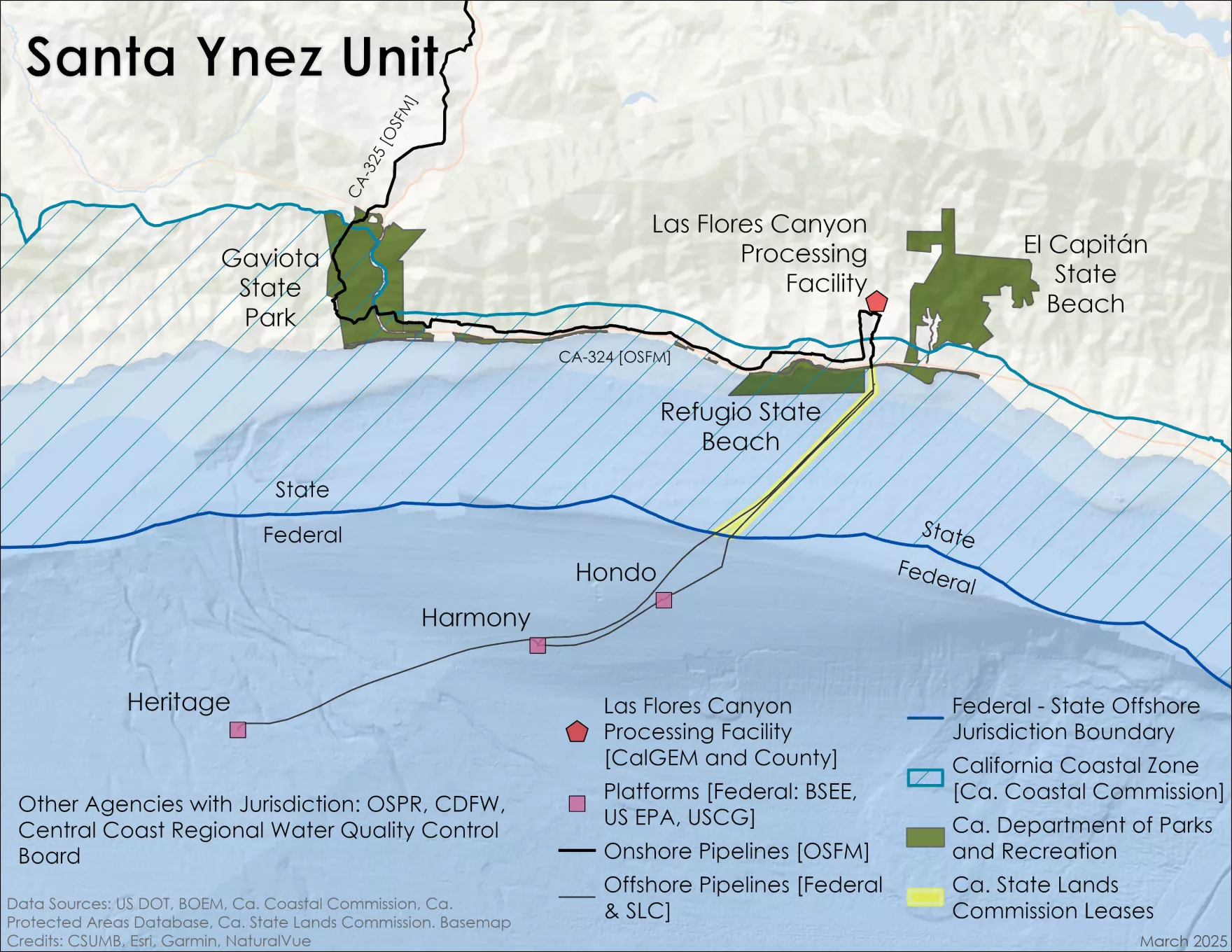
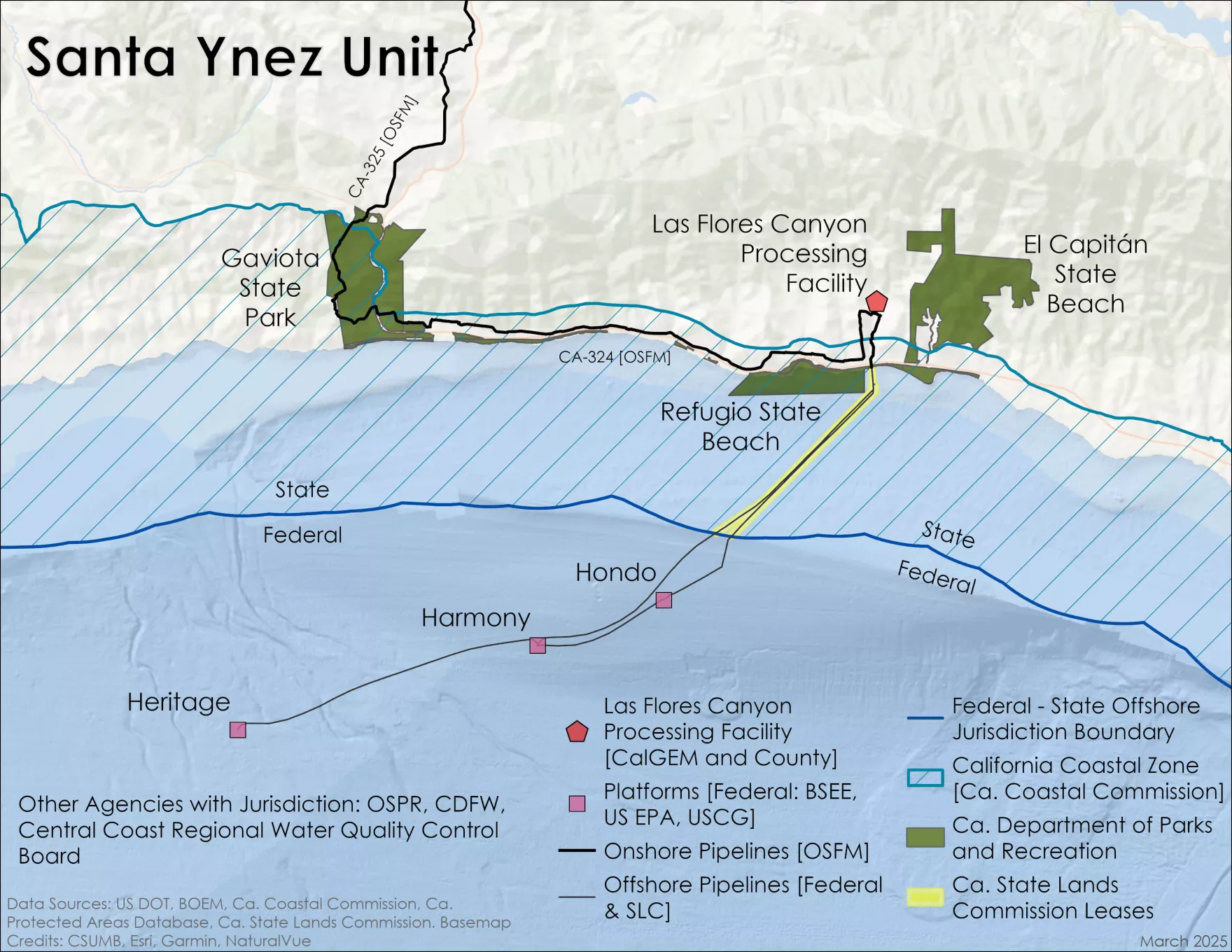
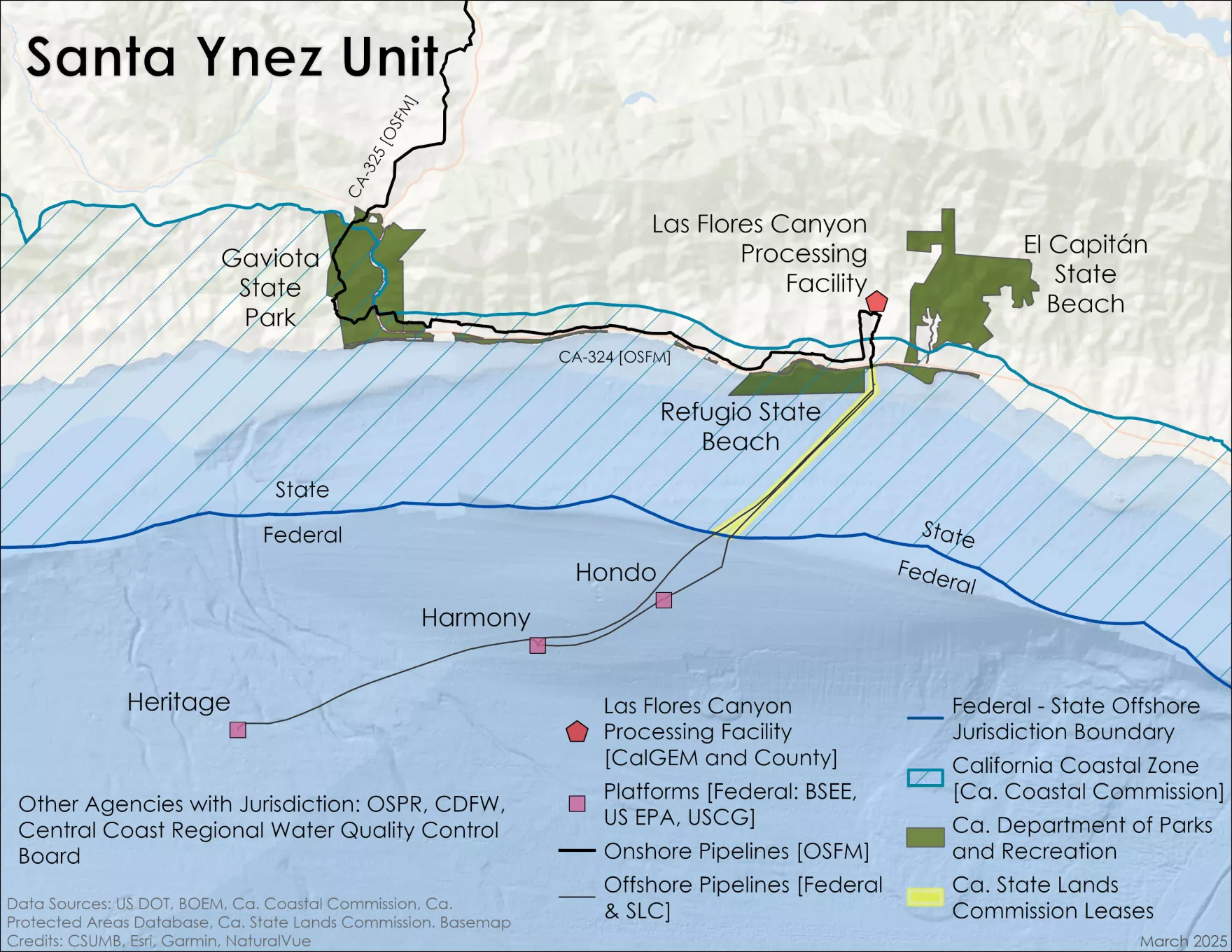
The anticipated State-Federal jurisdictional battle over Sable’s Las Flores Canyon Pipeline is on! See the attached letter from the Pipeline and Hazardous Materials Safety Administration (PHMSA) declaring that the pipeline is under Federal jurisdiction.

The major hurdle for PHMSA/Sable is the court approved Consent Decree that was executed following the 2015 Refugio pipeline spill. The Decree, which designates the California Fire Marshal as the sole regulator for the pipeline, is not mentioned in the PHMSA letter. Needless to say, another major legal battle looms.

Excerpt from the PHMSA letter:

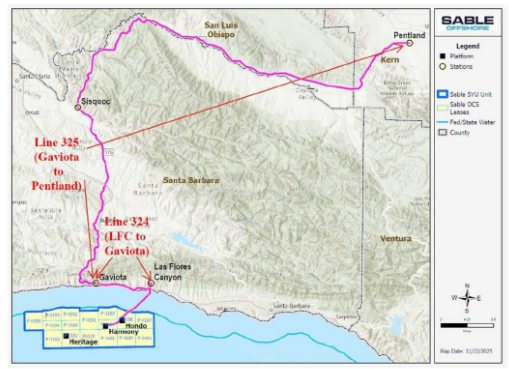
PHMSA’s evaluation of the Las Flores Pipeline confirms that it transports crude oil from the OCS to an onshore processing facility at Las Flores Canyon and continues the transportation of crude oil from Las Flores Canyon to Pentland, California. Consistent with Appendix A, the Las Flores Pipeline is an interstate pipeline. As portions of the Las Flores Pipeline were previously considered to be intrastate and regulated by OSFM, PHMSA is notifying OSFM that the Las Flores Pipeline is subject to the regulatory oversight of PHMSA.

Read Full Post »

Kayla Bartkowski/Los Angeles Times/Getty Images

WSJ article on Sable Offshore:

“Oil giants have fled California, but James Flores is desperate to get in, even if it means crossing swords with the state.”

Read Full Post »

The pipeline spill just north of Refugio State Beach on May 19, 2015, coated miles of shoreline and marine habitat, and dolphins, elephant seals, sea lions, pelicans and other birds. | Santa Barbara Independent

We can scream all we want (with some justification) about the California Coastal Commission, Santa Barbara County, and intractable environmental organizations, but the Santa Ynez Unit would still be producing today were it not for an ugly, preventable pipeline spill.

What happened:

At approximately 10:55 a.m. Pacific Daylight Time (PDT) on May 19, 2015, the Plains Pipeline, LP (Plains), Line 901 pipeline in Santa Barbara County, CA, ruptured, resulting in the release of approximately 2,934 barrels (bbl) of heavy crude oil. An estimated 500 bbl of crude oil entered the Pacific Ocean.

Why it happened:

1) Ineffective protection against external corrosion of the pipeline
 The condition of the pipeline’s coating and insulation system fostered an environment that led to the external corrosion.
 The pipeline’s cathodic protection (CP) system was not effective in preventing corrosion from occurring beneath the pipeline’s coating/insulation system.
2) Failure by Plains to detect and mitigate the corrosion
 The in-line inspection (ILI) tool and subsequent analysis of ILI data did not characterize the extent and depth of the external corrosion accurately.
3) Lack of timely detection of and response to the rupture
 The pipeline supervisory control and data acquisition (SCADA) system did not have safety-related alarms established at values sufficient to alert the control room staff to the release at this location.
 Control room staff did not detect the abnormal conditions in regards to the release as they occurred. This resulted in a delayed shutdown of the pipeline.
 The pipeline controller restarted the Line 901 pipeline after the release occurred.
 The pipeline’s leak detection system lacked instrumentation and associated calculations to monitor line pack (the total volume of liquid present in a pipeline section) along all portions of the pipeline when it was operating or shut down.
 Control room staff training lacked formalized and succinct requirements, including emergency shutdown and leak detection system functions such as alarms.

Plains Pipeline was the responsible party, but that doesn’t absolve the companies that were dependent on Plains to transport their production. Given the organized opposition that emerged following the Santa Barbara blowout in 1969 (the result of a reckless well plan), the integrity of that pipeline was critical to their business strategy and they should have exercised some oversight.

Offshore disasters have had enormous consequences for the oil and gas industry in terms of lost opportunities. Think about this: prior to the Macondo blowout, the Obama administration had proposed an oil and gas lease sale in the Atlantic and the Florida Senate was holding hearings about leasing in Florida State waters. Such lease sales are now completely out of the question.

Regulations and standards are not enough. We need open discussion about incidents, large and small, and a willingness to be critical of the responsible parties.

Read Full Post »

Excerpts from a stunning Sable update issued by Hunterbrook Media LLC (“Hunterbrook“) on November 14, 2025:

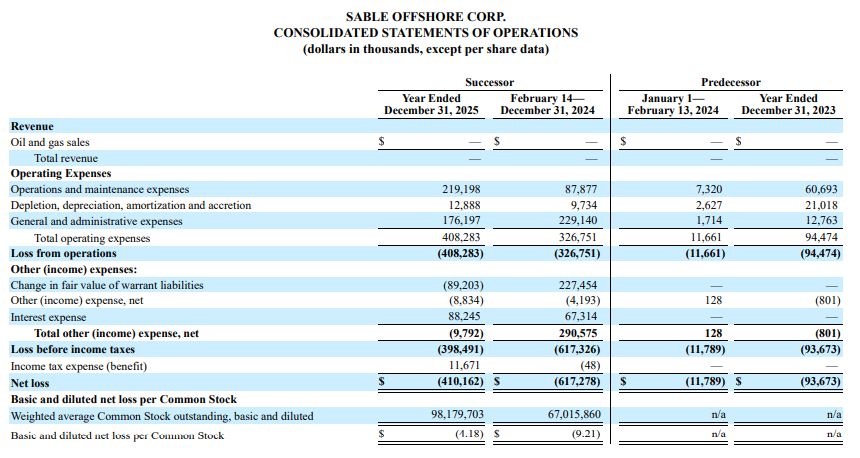
  • SEC filing reveals Sable entered October about a month from potential bankruptcy. The company had $41.6 million as of September 30, with $39.7 million in average monthly burn in 3Q25.  
  • When Sable announced its $250 million financing on November 10 at $5.50 per share, the company likely had single digit millions in the bank based on its reported burn, against over $163 million in accounts payable and accrued liabilities. Sable does not generate any revenue.
  • Sable needs to raise significantly more money: According to leaked audio of Sable’s CEO briefing for select investors, the company will require $2.3 billion to achieve commercial production of oil and gas from its three platforms off the coast of Santa Barbara.
  • That includes at least $900 million to buy out Exxon, to which Sable must pay 15% interest on debt due by March 31, 2027. By then, the loan would be about $1.1 billion, accruing $200 million in added debt.
  • One of Sable’s only known assets other than the oil and gas project is a private plane the company purchased from its CEO, Jim Flores. The plane recently flew round-trip from Houston, where Flores lives, to Louisiana, in time for a football game at the CEO’s alma mater.

Comments from Santa Barbara County Supervisor Steve Lavagnino, an oil industry supporter, that explain his opposition to the transfer of Exxon’s pipeline permit to Sable:

“The final straw for me was a Hunterbrook article, which was as disturbing as anything I’ve read. I have many friends in the oil industry and I will continue to support efforts to access our natural resources, but it has to be done responsibly by operators who put safety above profits.”

Sable’s limited response to the Hunterbrook report includes information on decommissioning financial assurance:

  • Sable’s original SYU Purchase and Sales Agreement (PSA) with Exxon required Sable to post a $350 million decommissioning bond “150 days following the resumption of production from the wells.”
  • According to Sable, production resumed on May 15, 2025. The bond would have thus been required in October. (SYU production was halted by court order on June 6, so that “resumption date” may be irrelevant. Regardless, the Oct. financial assurance deadline is immaterial given the recent update to the PSA.)
  • The PSA update extended the date for posting the decommissioning bond to three business days following the new Exxon Loan Maturity Date of March 31, 2027 or 90 days after first sales of hydrocarbons, whichever comes first. (Note the change in language from “resumption of production” to “first sales.” Brief well test production does not trigger posting of the decommissioning bond.)
  • Under certain circumstances after the bonding is in place Exxon may seek an increase in the bonding amount to $500 million.

The decommissioning obligations are moot if Sable runs out of funds or is unable to resume SYU production prior to the 3/31/2027 PSA deadline. Exxon would remain fully responsible for SYU decommissioning.

Is it time for a public statement from Exxon on the SYU and Sable?

Read Full Post »

Attached is John Smith’s comprehensive summary of lawsuits related to Sable Offshore’s attempts to restart Santa Ynez Unit production.

If you are keeping score, there are 10 separate cases including a class action lawsuit filed by investors. New legal battles are sure to follow given Sable’s OS&T strategy. Per John:

The combined legal challenges, injunctions, and restraining orders have significantly delayed Sable’s restart plans and prompted the company to pursue an Offshore Storage and Treatment Vessel (OS&T) strategy, which was utilized to process SYU production in federal waters from 1981 – 1994, and transport oil to markets using tankers.

Read Full Post »

John Smith shared the attached Santa Ynez Unit regulatory update for the 8 state agencies that have oversight roles (see regulatory fragmentation).

John notes that Exxon’s March 26 contractual deadline for Sable to have the SYU up and running is fast approaching.  What will Exxon do in the likely event that Sable fails to meet that deadline? Does Exxon want to re-enter the SYU legal and regulatory quagmire?

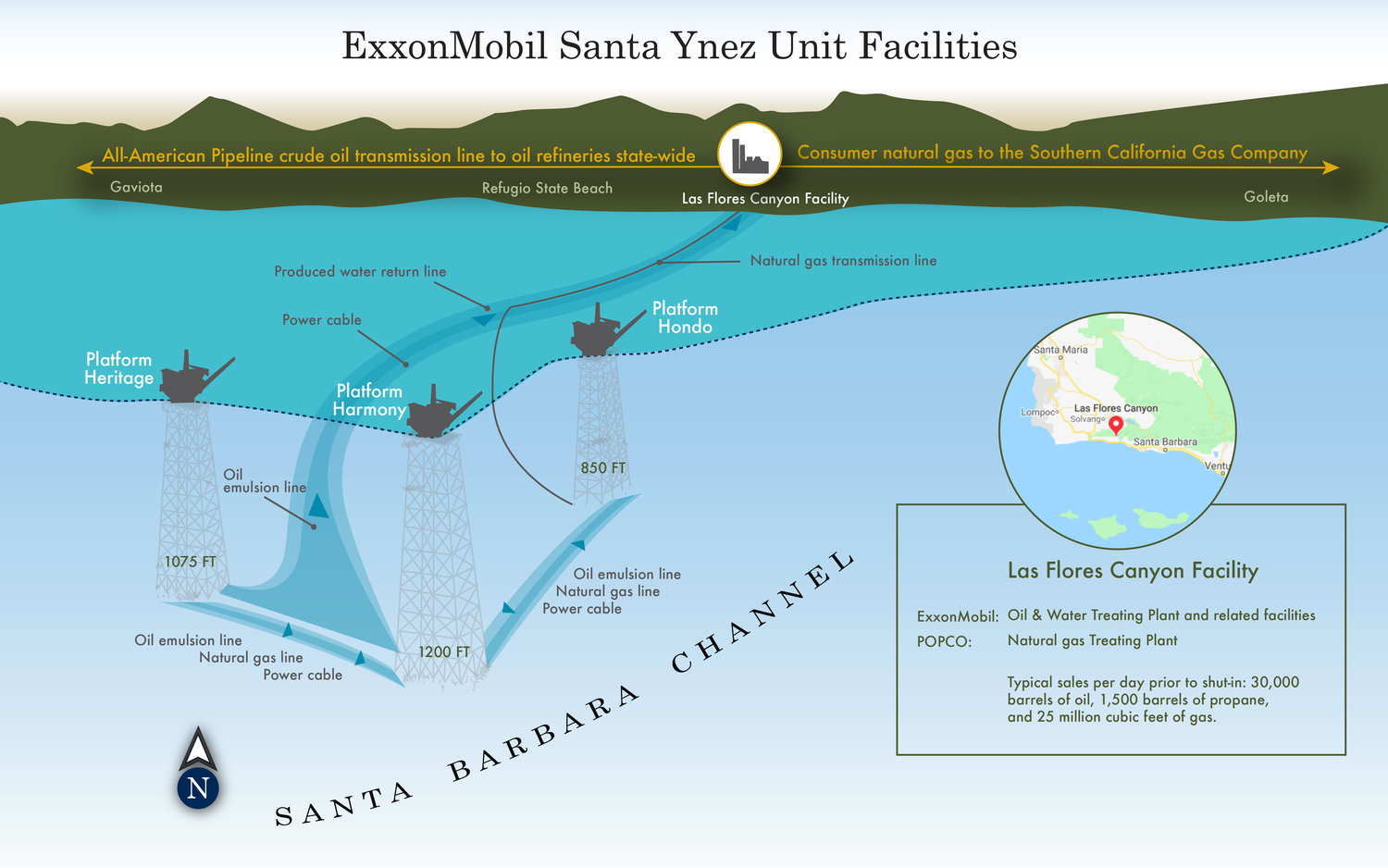
The SYU’s 500+ million barrels of oil, 3 deepwater platforms, and onshore processing facilities are an enormous prize, but is that prize attainable?

Meanwhile, the latest skirmish between Sable and the Office of the State Fire Marshal (OFSM) pertains to metal loss anomalies and inspection tool tolerances. The dispute is summarized in the linked filing.

Sable contends that the Fire Marshal’s letter contradicts guidance from OSFM staff and provides examples. Sable goes a step further at the end of their response by calling for the FIre Marshal to coordinate better with the experts on his staff:

We respectfully request that, given this background, you coordinate further with the expert team at OSFM and revisit the statements in your October 22nd letter.”

It’s not looking good for a quick resolution of these issues.

Read Full Post »

Energy Secretary Chris Wright

In a post on X, Chris Wright commented:

Only in California! Newsom is blocking oil production off California’s coast from reaching their own refineries, driving gasoline prices even higher for Californians! Now, this oil production will have to be shipped elsewhere, lowering gas prices for other areas— just not for California! This is the opposite of common sense!

BOE was a fan of Chris Wright long before he became Energy Secretary, and I agree that the resumption of Santa Ynez Unit production is economically desirable for California and the nation. However, his comment implies that OS&T processing and tanker transport is a realistic option, and I do not believe that is the case.

John Smith and I have discussed Sable’s OS&T announcement on a number of occasions, and we don’t see a reasonable path forward for this option. In addition to the significantly higher capital and operational costs and the need to acquire and retrofit a suitable floating production, storage, and offloading vessel (FPSO), the legal and permitting challenges could be even more complex than for the pipeline option (as daunting as that may sound).

The OS&T option would require a revised development and production plan, and the associated environmental review (almost certainly an EIS).  An EIS would not favor this option, and the California Coastal Commission would surely rule that the OS&T/tanker alternative was inconsistent with their CZM plan. (Keep in mind that the SYU/OS&T production in the early 1980’s was approved prior to the passage of the Coastal Zone Management Act.) The Secretary of Commerce could overrule the Commission’s consistency determination, but legal objections to the override would likely delay the project for years and have a good chance of success.

Onshore processing and pipeline transportation using existing facilities is clearly the environmentally and economically preferable option. The only reasonable path forward for Sable or Exxon is to continue to pursue the onshore pipeline approvals. Federal attention should focus on jurisdiction over that pipeline, which is inherently an interstate line because it transports OCS production, and State actions that are blocking interstate commerce.

Finally, keep in mind that the SYU would still be producing today were it not for the entirely preventable pipeline rupture and the resulting Refugio oil spill. Plains Pipeline, the party responsible for this ugly incident, is no longer the owner, but that doesn’t comfort coastal residents; nor does it absolve the companies that transported their oil through the line from all responsibility.

The Refugio spill will be discussed further in an upcoming post.

·

Read Full Post »

John Smith shared the linked ruling against Sable Offshore and in favor of the California Coastal Commission. On February 18, 2025, Sable had filed a petition against the Commission requesting, among other things, declaratory relief for impairment of vested rights.

Today, Judge Thomas Anderle concluded:

As the above discussion demonstrates, the issue before the Court is not whether the specific work conducted by Sable was or is ultimately necessary or appropriate for pipeline safety. The issue before the Court is whether the Commission abused its discretion in issuing the April 10 Orders under the standards for review by petition for administrative writ of mandate.

Based on the foregoing analysis and a review of all of the arguments of the parties and the AR, the Court finds the Commission’s factual findings are supported by substantial evidence and that Sable has not met its burden to show an abuse of discretion by the Commission in issuing the April 10 Orders.

Accordingly, the petition for administrative mandate as set forth in the first cause of action of Sable’s FAP will be denied.

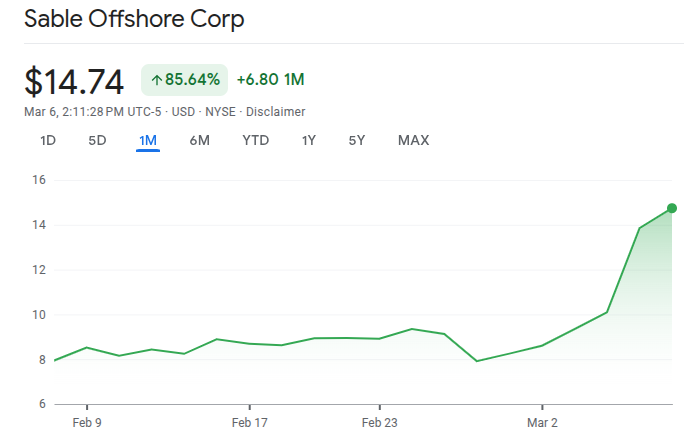
The road ahead for Sable continues to get rockier, and their share price took a major hit today.

Read Full Post »

California Senate Bill 237 — disapprovingly dubbed by some environmental groups as Newsom’s “Drill Bill” —  is meant to ease environmental regulations hampering onshore oil development in Kern County. However, the bill also includes language that heightens Sable’s regulatory hurdles.

As a result, on Sept. 29 Sable Offshore filed a declaratory judgement action against the State of California in Kern County. Sable is asking the court to confirm that the objectionable permitting provisions of SB 237 do not apply to their Las Flores Pipeline System. 

Also, on Oct. 6 Sable filed a motion increasing the monetary damages in its ongoing case against the California Coastal Commission to $347 million. Sable asserts that their pipeline repair program was authorized by existing permits issued by the County of Santa Barbara under its Local Coastal Program and delegated Coastal Act authority.

These seem like good tactical moves on the part of Sable.

More on Sable and the Santa Ynez Unit.

Read Full Post »

Thumbs up to Santa Ynez Unit production from Phil Mickelson!

Phil also believes SYU production would reduce natural seepage:UCSB and State Lands Commission studies (Quigley, Luyendyk, Hornafius, Peltonen, and others) have shown that when oil production is active, reservoir pressure is reduced and natural seepage declines by up to 50%. That means: •Cleaner beaches (less tar and oil) •Cleaner ocean surface (fewer sheens) •Healthier marine life with reduced chronic stress

Note that those studies are specific to Platform Holly and the Coal Oil Point area. To the best of my knowledge, no studies have associated SYU production with a reduction in natural seepage.

From a related 2010 BOE post entitled “Slick Talk About Seeps” (note that production at Platform Holly has since been terminated):

While Platform Holly may be a negative spillage facility (i.e. Holly’s seep reduction may significantly exceed the platform’s production spillage), this type of seepage reduction has not been demonstrated at other platforms.  Decisions on offshore exploration and development should be driven by the economic, energy security, and environmental benefits.  To the extent that production reduces natural seepage, all the better.  However, seepage reduction is not a primary reason for producing offshore oil and gas.

Thoughts on Sable’s production options:

Option 1 (use of existing onshore infrastructure) is preferable from cost, air emissions, spill risk, State and local revenue, and regional energy supply standpoints. This is the only option that makes sense despite the enormous permitting challenges.

Option 2 (floating processing facility and tankers) would literally be an “in your face” act of defiance given the coastal visibility of the offshore facilities. Supporters of this option should be aware that there was no Coastal Zone Management Act when Exxon produced from Platform Hondo (the only SYU platform at the time) to the Offshore Storage and Treatment (OS&T) vessel in the 1980s. An EIS would not favor this option, and the California Coastal Commission would surely rule that this option was inconsistent with their CZM plan. The Secretary of Commerce could overrule the Commission’s decision, but legal objections to the override would seem to have a good chance of success.

The only reasonable path forward is to do the right thing and continue to pursue the State pipeline/onshore approvals. Although these approvals are substantively warranted, more litigation is probably inevitable. It will be far better to defend a good project (option 1) than a contrived workaround (option 2).

Read Full Post »

Older Posts »