Politico.EU: “NATO will send around 10 ships to guard important underwater infrastructure in the Baltic Sea by the end of the week, Finnish newspaper Yle reported on Tuesday.
Why increase operating costs and expose platform operations to power disruption risks when there is no net environmental benefit?
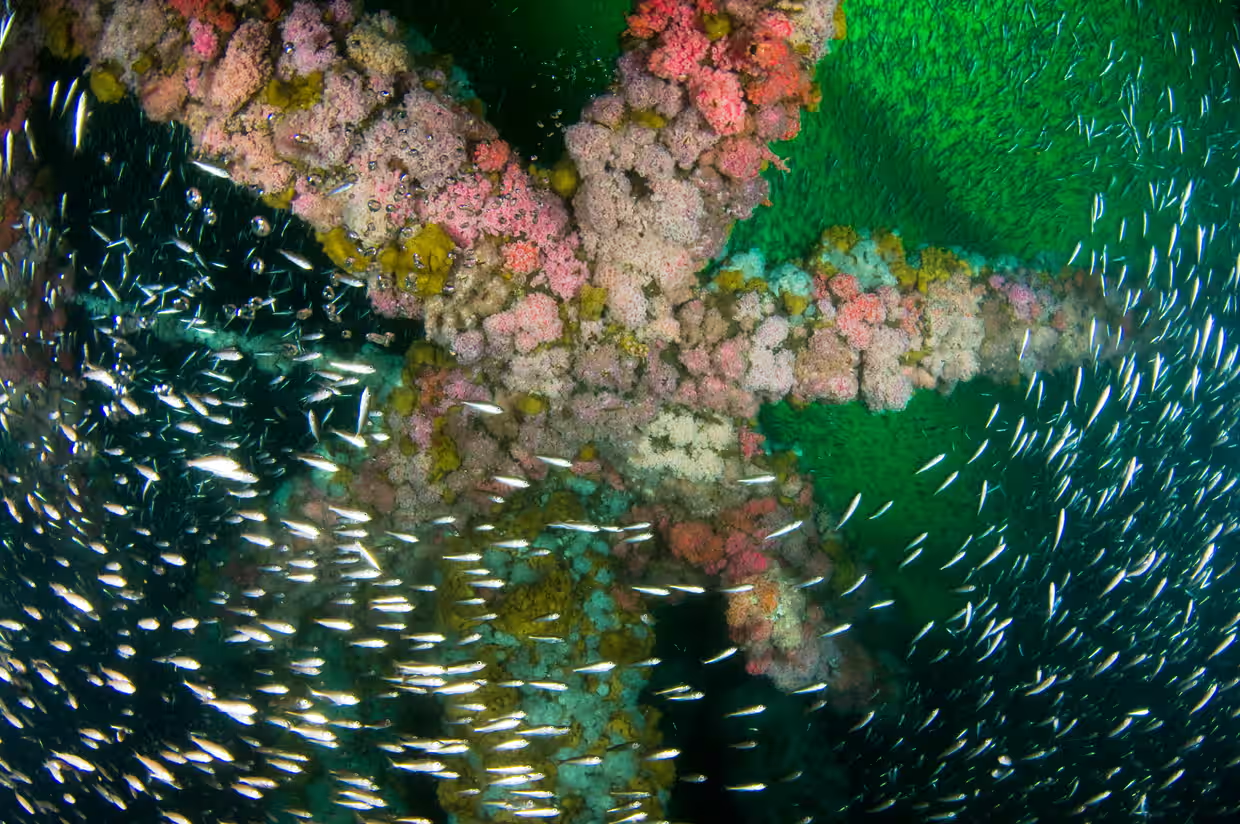
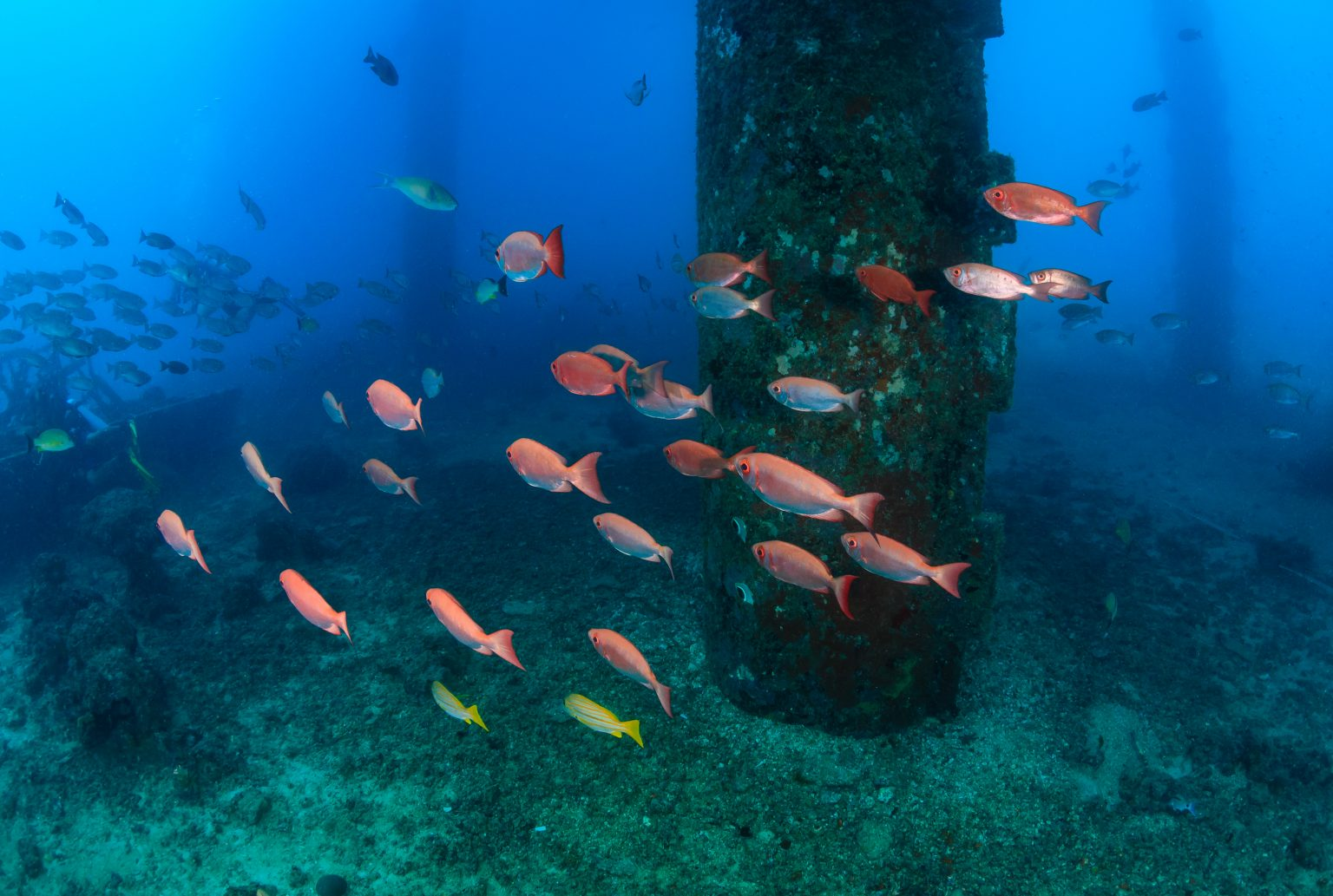
Guardian: Juvenile rockfish seen on an oil platform off the coast of Santa Barbara. For the scientists who study them, preserving these accidental marine ecosystems has become a moral issue. Photograph: Scott Gietler
Excellent Guardian article featuring my former colleague Dr. Ann Bull and Dr. Milton Love from the University of California at Santa Barbara.
According to a 2014 study they (Bull and Love) co-authored, the rigs were some of the most “productive” ocean habitats in the world, a term that refers to biomass – or number of fish and how much space they take up – per unit area. The research showed the rigs to be about 27 times more productive than the natural rocky reefs in California.
Something here does not remotely add up. If New York state succeeds by 2030 in closing its natural gas plants — the plants that account for 60% of the State’s generation capacity — that would bring our total installed capacity down from 37.5 GW to as little as 15 GW. But we need almost 60 GW to meet projected demand. And that’s 60 GW that can be called on any time as needed to meet peak usage. The 9 GW of projected offshore wind turbines wouldn’t make much of a dent even if they operated all the time and could be dispatched to meet peak demand, which they can’t. Instead, they will operate only about a third of the time, and at their own whim. At best they will provide about 3 GW on average, when what we need for this full electrification project is more like 45 GW of dispatchable power to add to our existing hydro and nuclear.
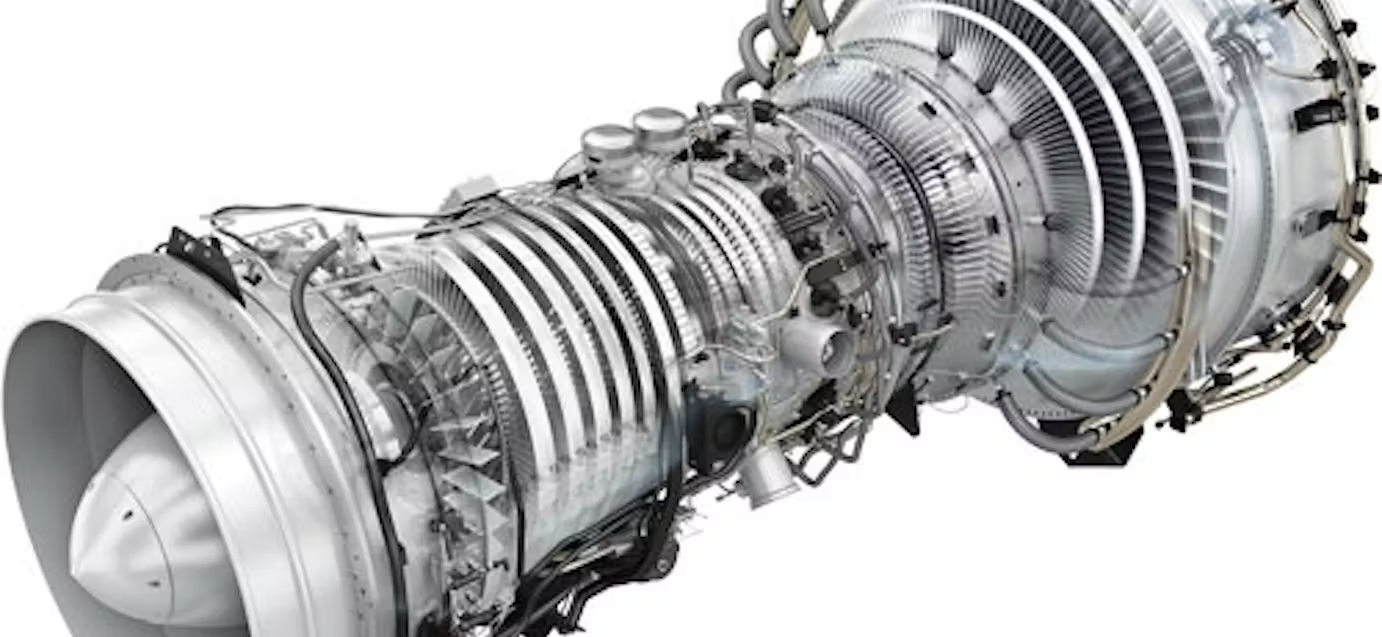
Offshore platforms: In some regions, there is a push to power platforms with renewable energy transported by electric cable. Currently, most platforms are efficiently powered by gas turbines which satisfy energy needs even when demand spikes during well operations like tripping out of the hole. The extent to which renewables can reliably support platform operations during these and other operations, when power interruptions are unacceptable from a safety standpoint, is a risk that must be assessed prior to committing to alternative energy sources.
The environmental benefits of powering platforms with renewable energy also have not been clearly documented. In most cases, offshore platforms produce sufficient gas to support their power demands. Should platforms be powered by imported electricity, gas that is not used for platform operations would presumably be marketed for consumption elsewhere or reinjected.
If the gas is marketed and consumed elsewhere, there is essentially no net (global) CO2 emissions reduction benefit. Gas that is reinjected is wasted unless there is an enhanced oil recovery benefit. So, the net environmental benefit from importing electric power seems questionable, and the operational risks could be significant.
Yesterday, BSEE issued investigation reports for 2 of the fatal 2020 incidents. Both of these incidents involved falls, a chronic and preventable cause of offshore worker casualties. Not enough industry and trade association attention is given to such incidents, which have been trivialized in the past by categorizing them as “slips, trips, and falls.” The reports are linked below:
The reports describe how the incidents occurred and what we can do better to prevent similar events in the future. Despite the advance in safety management programs over the past 30 years, there has been no discernible improvement in preventing these incidents. We need to rethink training programs, planning, and methods. Deadly falls are not inevitable.
The Bureau of Ocean Energy Management says it is looking into an incident on Apache Corporation’s natural gas production platform WC 575A, about 150 miles south of Lake Charles that led to the death of an offshore worker.
The incident occurred at approximately 7:45 a.m. Wednesday, the bureau said. The worker fell into the water, apparently while transferring from a vessel to the platform.
Other crew members were able to get the worker back on the platform, but shortly thereafter he became unresponsive and was subsequently pronounced dead.
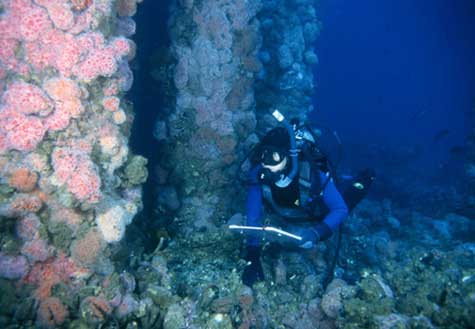
The Marine Science Institute of the University of California Santa Barbara has completed a 6-year study to investigate the differences between the types of fish that live around offshore oil and gas production platforms off the coast of California and the species that inhabit natural reefs in the same geographic area. This research strengthens and confirms observations made in previous studies. Among the important conclusions (full study linked here):
There is very extensive diversity in the species assemblages around the oil and gas platforms of California. Factors driving this variability include A) location around the platform, B) geographic location of the platforms, and C) bottom depth of the platform.
Around each platform, there are three, unique, fish assemblages: midwaters, bottom, and shell mound. While a suite of rockfishes (of 43 species) dominate most platform assemblages, a number of other taxa (e.g., lingcod, combfishes, sculpins, and seaperches) are also important.
Midwater fish assemblages tend to be similar across platforms; there are substantial differences among those found at bottoms and shell mounds.
In general, the assemblages of platforms and natural sites are different. These differences are primarily based on differences in species’ densities rather than the presence or absence of taxa.
The role that habitat complexity plays in structuring platform fish assemblages should not be underestimated.


 Bud's Offshore Energy (BOE)