Feeds:
Posts
Comments

Posts Tagged ‘offshore oil’

“The goal of our efforts is a culture of safety, in which protecting human life and preventing environmental disasters are the highest priorities, while making leasing and production safer and more sustainable,” said Assistant Secretary Wilma Lewis, who chaired the Safety Oversight Board.

The report of the Department of the Interior’s Safety Oversight Board has been posted on the DOI website.  The report recommends certain improvements in DOI’s offshore oil and gas regulatory program. Because of my participation in this project, I won’t comment on the specifics of the report.  I will say that I was impressed by the professionalism of the Board and the DOI staff who assisted with the project.  All views were openly discussed and carefully considered.

Read Full Post »

Here is the link.

Our main interest was in the flow path and BOP issues:

Flow path:

The investigation team concluded that hydrocarbon ingress was through the shoe track, rather than through a failure in the production casing itself or up the wellbore annulus and through the casing hanger seal assembly.

BOP:

  1. The explosions and fire very likely disabled the emergency disconnect sequence
  2. The condition of critical components in the yellow and blue control pods on the BOP very likely prevented activation of another emergency method of well control, the automatic mode function (AMF), which was designed to seal the well without rig personnel intervention upon loss of hydraulic pressure, electric power and communications from the rig to the BOP control pods. An examination of the BOP control pods following the accident revealed that there was a fault in a critical solenoid valve in the yellow control pod and that the blue control pod AMF batteries had insufficient charge; these faults likely existed at the time of the accident.
  3. Remotely operated vehicle intervention to initiate the autoshear function, another emergency method of operating the BOP, likely resulted in closing the BOP’s blind shear ram (BSR) 33 hours after the explosions, but the BSR failed to seal the well.
BP’s flow path assessment is consistent with our expectations.  Early on, while most of the attention was focused on the annulus, we thought that flow inside the production casing was a distinct possibility.  With regard to the BOPs, BP’s explanation is a more complete than we expected at this time, given that the stack has just been recovered.
More to follow.

    Read Full Post »

    Julia Gillard

    Martin Ferguson is likely to retain his post as Minister for Resources and Energy.  We trust that he will now release the Montara Inquiry Report as promised.  When has a politician ever broken a promise?  Never happens in this country 🙂

    Upstream Article on Australia’s minority government.

    Read Full Post »

    BOE has received unconfirmed reports that BP’s internal investigation into the causes of the Macondo blowout will be released on Wednesday (8 September) in Washington, DC.  The investigation team of more than 70 engineers and other staff has been headed by Mark Bly, BP’s Group VP for Safety and Operations.  Stay tuned!

    Read Full Post »

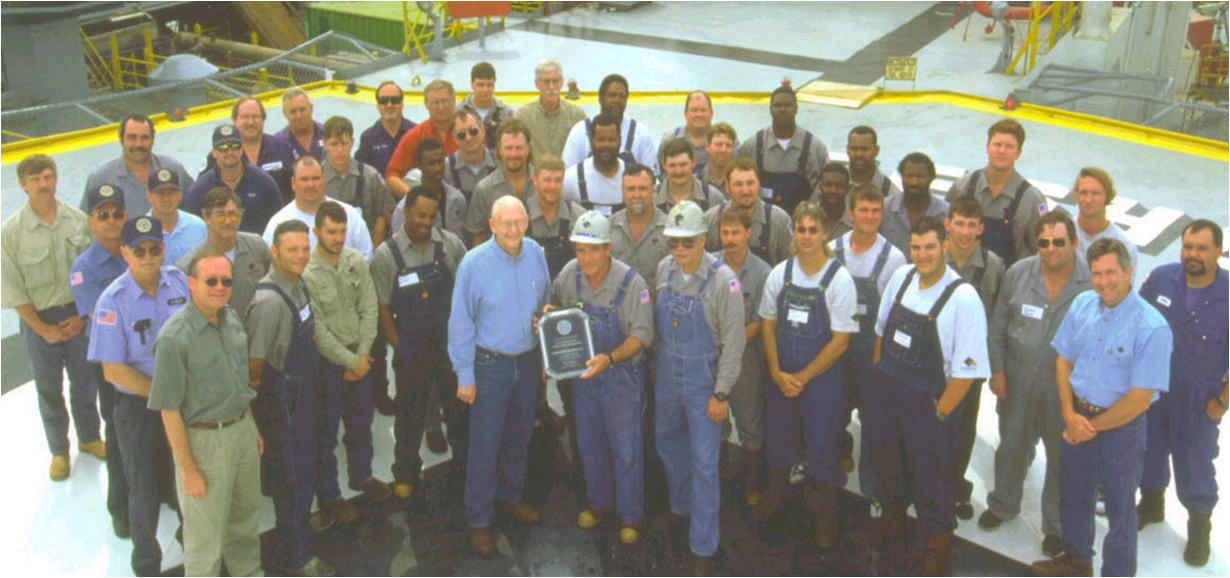
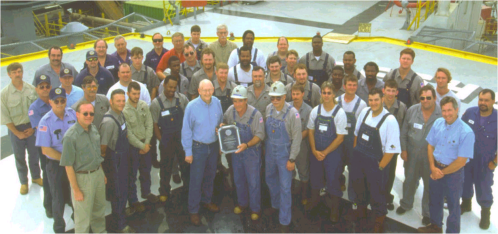
    Diamond Offshore Workers Receiving SAFE Award Recognition

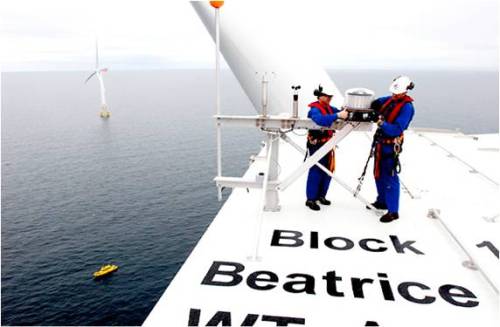
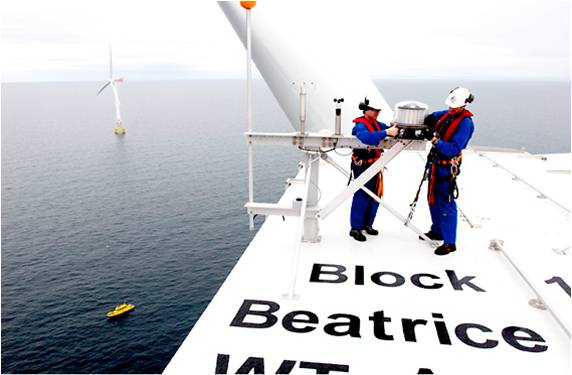
    On Labor Day 2010, BOE is proud to salute the thousands of dedicated offshore professionals, in the US and around the world, who work in remote locations under challenging conditions to provide energy for our economy and our way of life. Regardless of one’s opinion about oil and gas operations, wind projects, and other sources of offshore energy, we should all appreciate the important contributions made by offshore workers.

    While investigations and enforcement actions are necessary, positive recognition is even more important, especially at times like these.  The overwhelming majority of offshore workers do their jobs conscientiously and carefully, and make every effort to protect their colleagues and the environment.  It is these workers who are most at risk when an accident occurs, not those of us who are sitting behind a desk philosophizing and pontificating. Their lives and the lives of their friends and colleagues are threatened when accidents occur, their “back yard” is polluted when oil is spilled, and their jobs are at stake if offshore exploration and development are curtailed.

    Fortunately for us, energy exploration and production doesn’t stop on holidays. Whether they are working or enjoying the day with their friends and families, BOE wants offshore workers to know that we appreciate their important contributions.  Happy Labor Day!

    Read Full Post »
    This article is nicely done, but like most commentary on the factors contributing to the Macondo blowout, it assumes that the well flowed in the annulus outside the production casing.  Steps 1-3 would be irrelevant if the well flowed up through the shoe track and inside the production casing (ala Montara).

    Read Full Post »

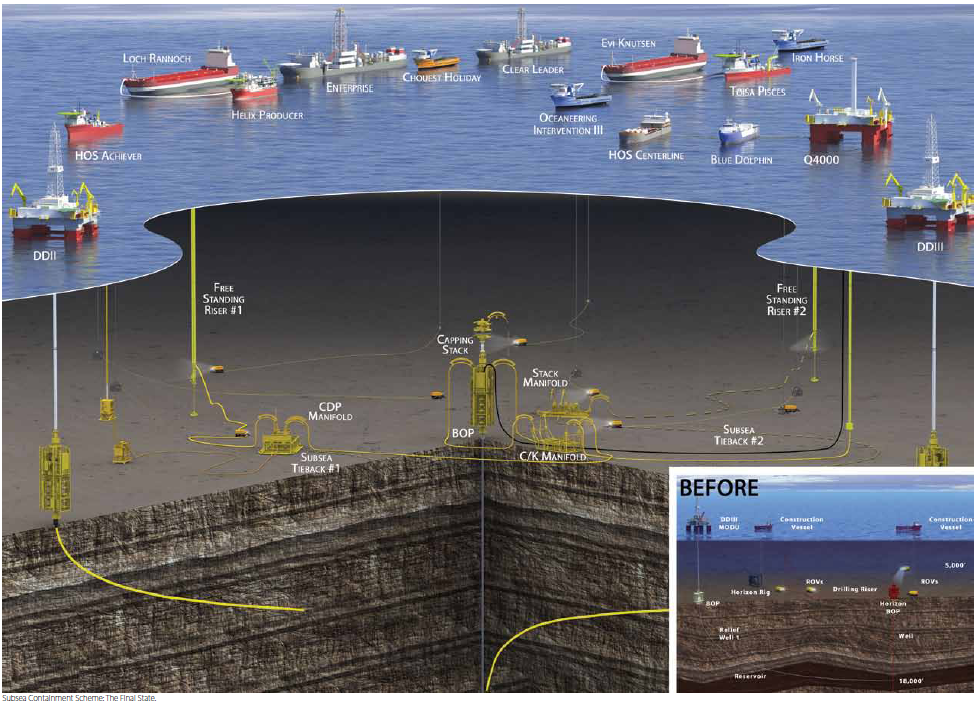
    BP has issued a report on the response capabilities and innovative new technology and procedures demonstrated following the Macondo blowout. While the report is somewhat promotional (understandably), the information is summarized and compiled in a useful manner and underscores the magnitude of the response.  Although most close observers probably have issues with certain actions taken by BP or the Unified Command, one cannot deny the unprecedented size and complexity of the response.  We can only imagine how chaotic this response could have been if the operator did not have the resources and the will to mount such an enormous effort.

    I hope BP will be similarly forthcoming with the results of their internal review of the blowout’s causes.  When will that very important report be released?

    At some point, BP’s candid observations on the functioning and effectiveness of the Unified Command system would also be helpful. The more we can learn about the differences of opinion and problems that arose during the response, the better we can prepare for future incidents.  Will any of the official investigations be looking into these aspects of the response?  At BOE, we are particularly interested in the well intervention, capping, containment, and relief well decisions.

    Read Full Post »

    Interesting Upstream article.

    A leading member of Greenland’s ruling Inuit Ataqatigiit (Inuit Brotherhood) party has slammed Greenpeace’s actions to hamper drilling in Baffin Bay, saying the party will not quietly accept the environmental group’s “know-it-all” attitude towards exploration off Greenland.

    Read Full Post »

    Click for an excellent summary of what may have gone wrong at Macondo and what can be done to prevent future incidents.

    While there are no new details on the causes of the blowout, available information on the possible contributing factors is nicely summarized.  The presentation also includes a very good summary of risk management considerations.

    Barriers against accidents are not only technical and operational and “physical” but are also non-physical built around strategic and organizational measures and decisions

    During the Montara hearings and later in Macondo discussions, we raised concerns about the timing of the production casing pressure test. This issue has not received enough attention in our view, possibly because most of the Macondo focus has been on annulus flow and barriers.  It was good to see this comment in the presentation:

    Pressure tested well far too early – could have blown out cement of shoe track

    Read Full Post »

    Some readers have suggested links and information on the official US investigations of the Macondo blowout.  Some basic information is provided below.  The links will be added to the blogroll in the right column.

    We will be examining the relevant facts and circumstances concerning the root causes of the Deepwater Horizon explosion and developing options to guard against, and mitigate the impact of, any oil spills associated with offshore drilling in the future.  This may include recommending improvements to federal laws, regulations, and industry practices.

    Joint BOMRE – Coast Guard Investigation

    The purpose of this joint investigation is to develop conclusions and recommendations as they relate to the Deepwater Horizon Mobile Offshore Drilling Unit (MODU) explosion and loss of life on April 20, 2010. The facts collected at this hearing, along with the lead investigators’ conclusions and recommendations will be forwarded to Coast Guard Headquarters and Minerals Management Service (MMS) for approval. Once approved, the final investigative report will be made available to the public and the media. No analysis or conclusions will be presented during the hearing.

    This study will address the performance of technologies and practices involved in the probable causes of the Macondo well blowout and explosion on the Deepwater Horizon. It will also identify and recommend available technology, industry best practices, best available standards, and other measures in use around the world in deepwater exploratory drilling and well completion to avoid future occurrence of such events.

    The CSB intends to proceed with an investigation of the root causes of the accidental chemical release that destroyed the Deepwater Horizon rig and took the lives of 11 workers. The investigation will include the key investigators who were involved in the CSB’s 2005-2007 investigation of the March 23, 2005, explosion at the BP Texas City refinery.

    Various congressional committees are also reviewing issues associated with the blowout, most notably the Senate Committee on Energy and Natural Resources and the House Committee on Energy and Commerce.  As time permits, BOE will post updates on post-Macondo legislative actions.

    Read Full Post »

    « Newer Posts - Older Posts »