Feeds:
Posts
Comments

Posts Tagged ‘offshore oil’

Encouraging and prudent decision:

The Bureau of Ocean Energy Management, Regulation and Enforcement (BOEMRE) today notified 13 companies whose deepwater drilling activities were suspended by last year’s deepwater drilling moratorium that they may be able to resume those previously-approved activities without the need to submit revised exploration or development plans for supplemental National Environmental Policy Act (NEPA) reviews. Before resuming those activities without additional NEPA review, however, the companies must comply with BOEMRE’s new policies and regulations.

The resumption of operations on suspended wells was the major concern of some operators and had the potential to delay anticipated new production.

Read Full Post »

Wall Street Journal on on Gulf delays

The Energy Information Administration, the research arm of the Department of Energy, last month predicted that domestic offshore oil production will fall 13% this year from 2010 due to the moratorium and the slow return to drilling; a year ago, the agency predicted offshore production would rise 6% in 2011. The difference: a loss of about 220,000 barrels of oil a day.

UK moves ahead with deepwater drilling

MPs have ruled out a moratorium on deep water drilling in the North Sea, despite concerns it could lead to a disaster worse than BP’s oil spill in the Gulf of Mexico last year.

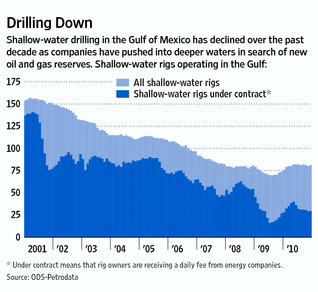
Shallow water struggle (Wall Street Journal)

From bad to worse for shelf operations:

“We were on our knees when Macondo hit,” said Jim Noe, senior vice president and general counsel for Hercules.

Read Full Post »

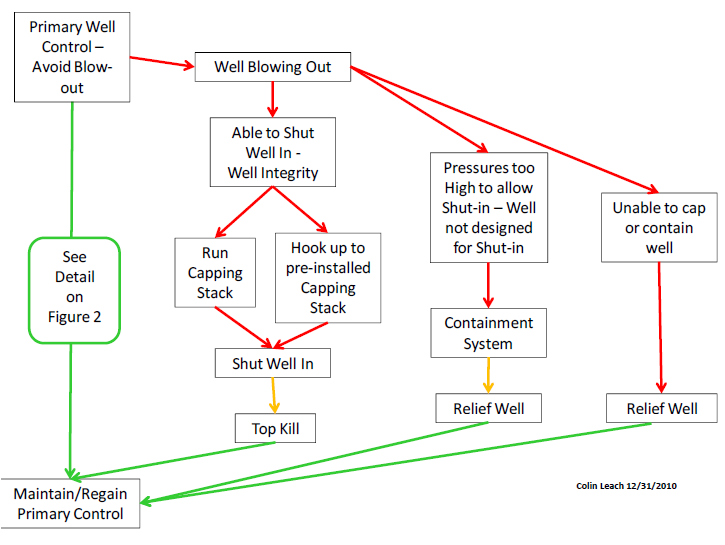
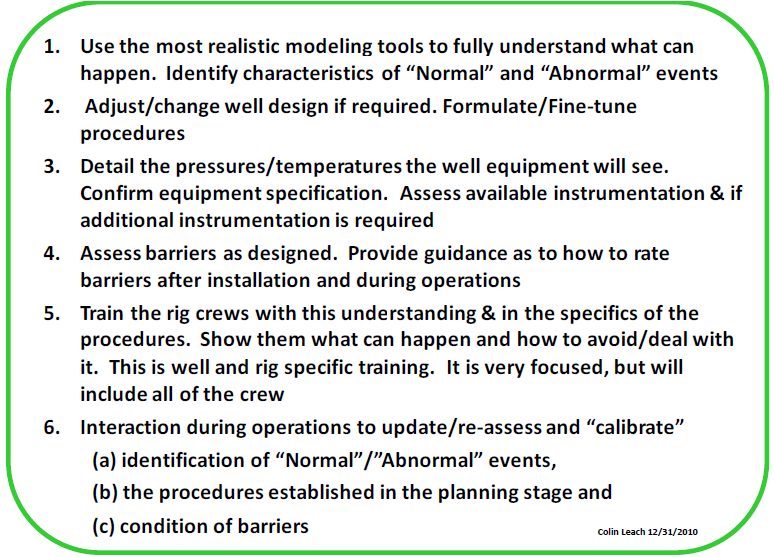
Colin Leach has provided a nice overview of the loss of well control scenarios for a deepwater well (Figure 1), and a concise, but comprehensive, summary of the critical elements of a well control program (Figure 2).   Click on either figure to enlarge.

We appreciate Colin’s continued leadership and initiative on well control issues.

Figure 1: Well Control Activities in Deep Water

Figure 2: Activities Focused on Maintaining Primary Well Control

Read Full Post »

A colleague sent a link to a Marathon Oil Company Macondo presentation that was posted by the Houston Chronicle. The presentation was intended for internal training and discussion purposes.

Firstly, I applaud Marathon for ensuring that the blowout is studied and debated within the company. Hopefully, they did the same thing for Montara, have a good internal system for studying accidents throughout the industry, and thoroughly investigate all of Marathon’s incidents and near misses.

I thought Marathon’s comments about safety culture were particularly interesting, including these on slide 58:

Although harder to define and measure, and even more difficult to regulate, we pointed to our culture as the single most important differentiating attribute when comparing us to BP.

In a recent meeting with an individual who has numerous dealings with BP, he observed that regardless of the purpose of the gathering (planning session to morning rig call), it is almost impossible to determine who is ultimately responsible and accountable for the operation being discussed. Evidence of this exists in the very report this presentation was derived from.
I wonder what convinces Marathon that their safety culture is superior. The above anecdote, while interesting, doesn’t tell us much. Prior to Macondo (and perhaps even after the blowout), I’ll bet most BP employees thought that they had a strong safety culture. Ditto for Transocean. Does Marathon have any better evidence demonstrating the strength of their safety culture? If not, what makes them so confident? Does Marathon have a process for assessing and monitoring the attitude and commitment of their employees? Have they conducted regular internal surveys to gauge safety culture? My sense is that they have not. If they had, they could make their case without the very subjective comparison with BP.

Read Full Post »

President-elect Dilma joked recently that the oil discoveries were just the latest proof that God is Brazilian. And economists from Goldman Sachs no less are predicting that Brazil — along with Russia, China and India — will dominate the world economy in the 21st century.

If you didn’t see the 60 Minutes story on Brazil, you can view it here. With regard to the significance of Brazil’s recent deepwater discoveries, OGX owner Eike Batista offered the following:

Oh, it, it means we should be producing in excess of six million barrels a day. So it’ll put us in among the third, fourth largest producer in the world. Massive exporting.

According to this blog entry, Batista forecasts this 6 million bopd production rate (more than double the current output) by 2020!

Like other offshore producers, Brazil has experienced its tragedies, most notably the sinking of the P-36 production platform that resulted in 11 fatalities. Petrobras and Brazil have recovered nicely from that disaster, but outstanding safety performance is critical if they are to sustain their offshore success.

Read Full Post »

Agenda

Live Webcast

Read Full Post »

Globe and Mail report:

“I will be contacting the federal government to begin discussions about the setup of a stand-alone regulator,” Premier Kathy Dunderdale said to applause in the House of Assembly Monday.

The province’s action is in response to a recommendation in Judge Wells’ report on last year’s helicopter crash that killed 17.

Read Full Post »

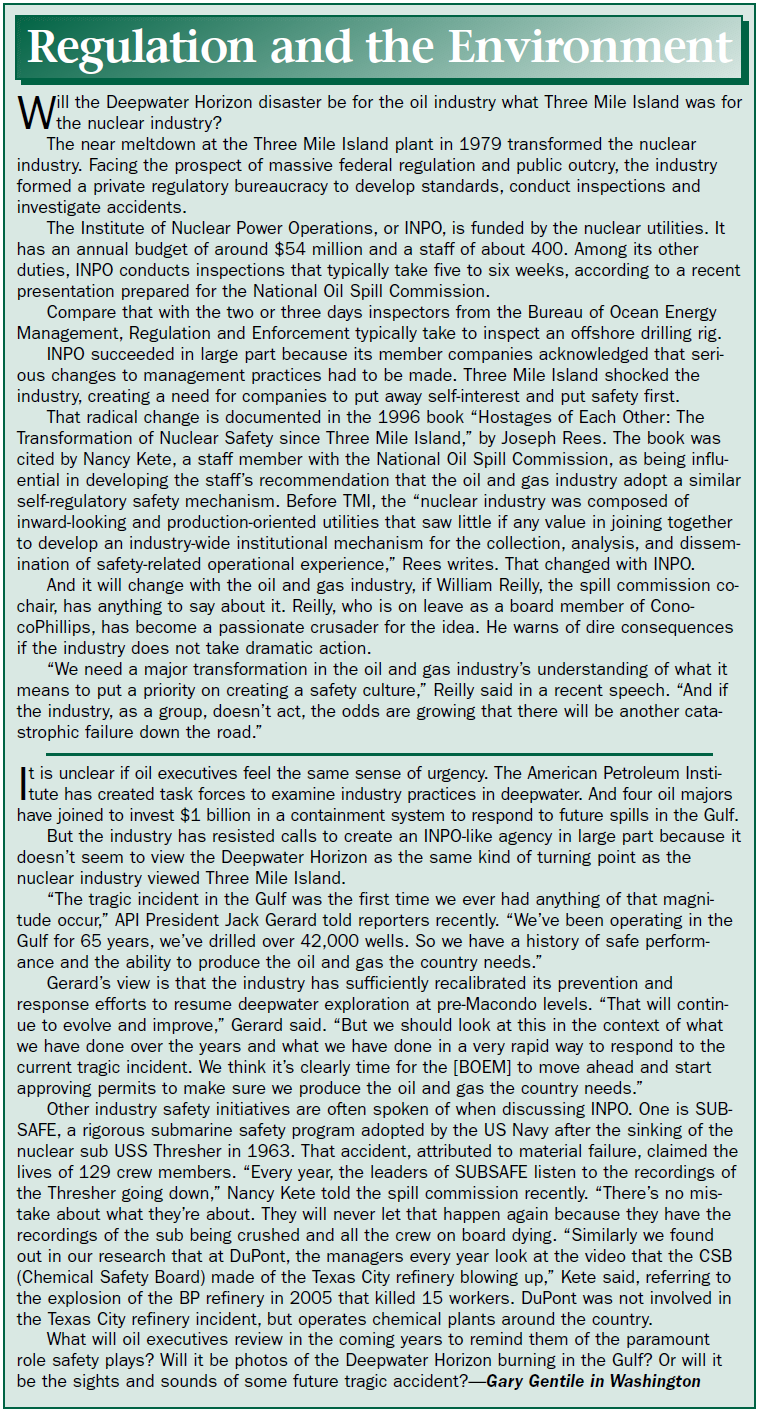
This is a very good column that we are posting with the permission of Gary Gentile, Platts Oilgram.

Read Full Post »

Top 10 Twitter trends for 2010:

1. Gulf Oil Spill
2. FIFA World Cup
3. Inception
4. Haiti Earthquake
5. Vuvuzela
6. Apple iPad
7. Google Android
8. Justin Bieber
9. Harry Potter & the Deathly Hallows
10. Pulpo Paul

Pre-Macondo poll numbers I would like to have seen:

  • Percentage of adult Americans (outside of the Gulf Region) who knew there was offshore oil and gas production in the Gulf of Mexico.  Based on conversations I’ve had with people in the DC area, I’m guessing less than 50%. I know that sounds astounding, but that’s my guess.
  • Percentage of adult Americans who had heard of the Minerals Management Service (probably less than 2%) and knew that the MMS had regulatory responsibilities for offshore oil and gas operations (had to be less than 1%).

Read Full Post »

Based on the chart above, I think we can now safely declare that the 2010 hurricane season is over. While the threat of tropical storms posed some problems for the Macondo response, the Gulf of Mexico was spared any significant damage or suspensions of production.

During the post-Macondo discussion about safety and regulatory issues, not much has been said about the major disruptions caused by Hurricanes Ivan, Katrina, Rita, Gustav, and Ike, and the attention and resources that have been dedicated to hurricane issues for the past five years. Major advances have been made in mooring capabilities and assessments, design standards, securing topsides equipment, and other aspects of hurricane preparedness.

How much did hurricane issues affect the assessment and management of other operating risks? This question may merit further attention.

Mars TLP took a direct hit from Hurricane Katina with sustained winds >150 mph

Read Full Post »

« Newer Posts - Older Posts »