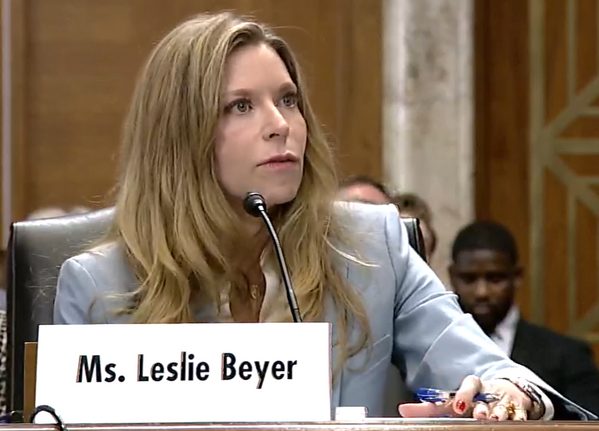
Leslie Beyer, Assistant Secretary for Land and Minerals Management (ASLM), has stepped down from her post as the leader of the Dept of the Interior’s offshore energy programs. She was the senior official at this month’s BGG1 lease sale, and made strong remarks about the importance of the offshore oil and gas program. Ms. Beyer was confirmed by the Senate in September.
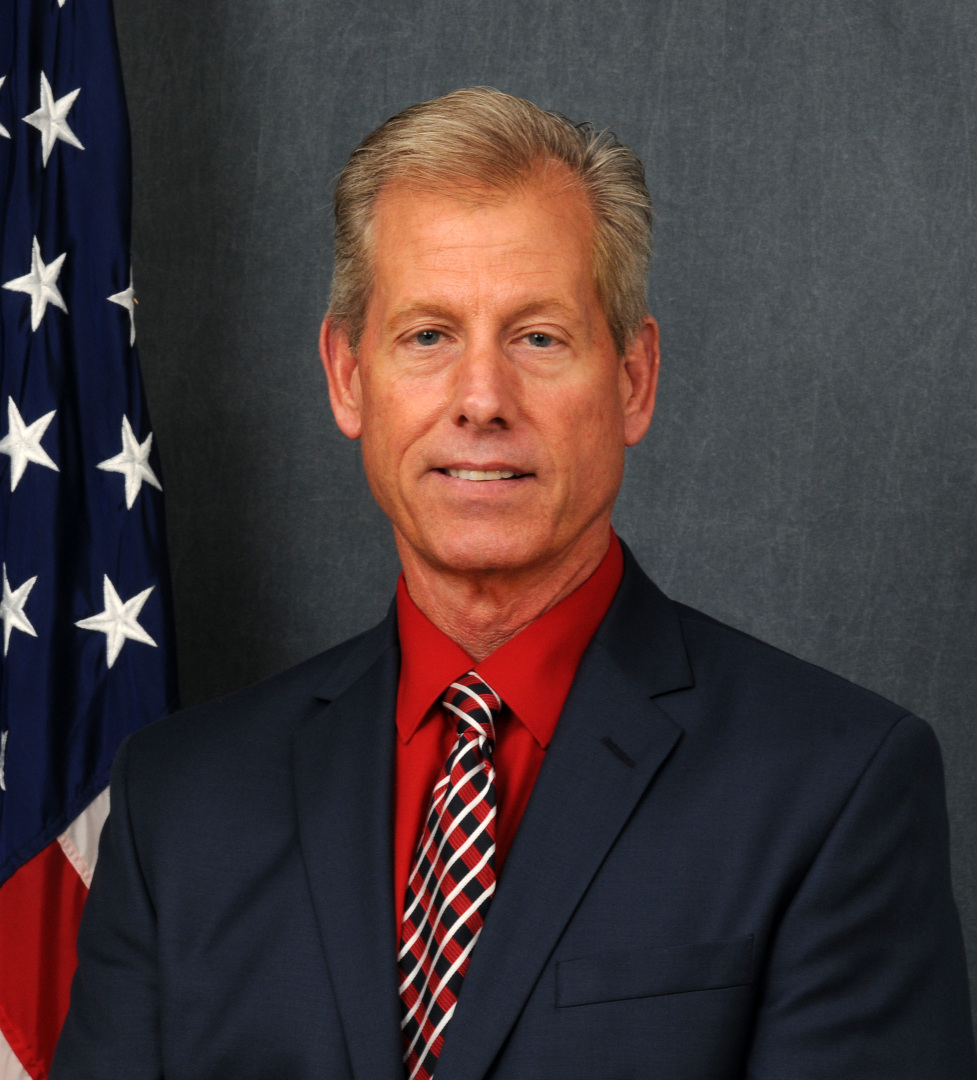
Lanny Erdos, Director, Office of Surface Mining Reclamation and Enforcement, has been named Acting ASLM.
This leaves the offshore energy program without a confirmed Asst. Secretary and with Acting Directors at both BOEM (Matthew Giacona) and BSEE (Kenny Stevens).
On my favorite holiday, I’m sending best wishes to BOE readers of all persuasions. Offshore energy issues can be divisive, even among friends, and I’m grateful for the opportunity to share information and opinions.
My wife and I will be spending Thanksgiving with my daughter’s family including our 6 grandchildren, none of whom have expressed interest in being offshore safety regulators (no higher calling 😉).
Belated holiday wishes to our friends in Canada where Thanksgiving is celebrated in October, and cheers to those living where a similar fall holiday is observed.
The EO requires agencies to issue a rule, effective not later than September 30, 2025, that inserts a sunset date into each “covered regulation.” The sunset date must be 1 year after the effective date of the sunset rule, but may be extended multiple times for a total of up to 5 years.
From an offshore energy perspective, the confusion starts with the EO’s applicability. One section of the order exempts regulatory permitting regimes authorized by statute. Another section specifies that the order “applies to all regulations issued pursuant to the Outer Continental Shelf Act of 1953 and any amendments thereto.” This is a fundamental contradiction given that OCSLA is a statutory planning and permitting regime. Which regulations are subject to the EO?
Comments:
For some reason (too complicated?), EPA and the Army Corps of Engineers are given 30 days to provide a list of statutes that are subject to the EO. Perhaps all affected regulators should have been given 30 days to comment on the draft EO before it was finalized.
The EO is sure to create chaos as regulators, under the direction of managers keen on complying with the President’s directive, attempt to determine the EO’s applicability and establish implementation procedures.
The EO, which is intended to provide order and certainty, will do exactly the opposite. How does the regulated industry plan for future operations while this vague and controversial “zero based regulatory budgeting” exercise is ongoing? What are the chances of this directive being sustained?
Reducing the number of pages in the US Code, while desirable, is not regulatory reform.
The order assumes that most regulations are meaningless, which is not the case. What is the plan for filling the void after regulations are deleted?
The EO should embrace, rather than circumvent, the notice and comment requirements of the Administrative Procedures Act. The tedious and sometimes burdensome APA has protected the public and the energy industry from countless unjustified, unauthorized, and poorly considered regulatory initiatives.
Eliminating rules is not synonymous with establishing a regulatory framework that will improve efficiency and stimulate innovation.
Other factors are paramount in improving regulatory effectiveness and efficiency. These include regulatory fragmentation, effective goal setting, management systems, culture, data gathering, performance monitoring, continuous improvement, collaboration, and the adoption of industry standards.
Quality regulators are more important than quality regulations. Regulating with fewer rules requires skilled regulators.
Agencies should be directed to consider how they can best reduce the regulatory burden without compromising safety and environmental performance. Page reduction should be secondary.
If regulatory efficiency is the goal, this EO is likely to do more harm than good. Federal agencies are largely comprised of bright people with good intentions. Challenge them to propose innovative reforms that will simplify and improve their regulatory regimes.
The Secretary of the Interior is, by far, the most important offshore energy official in the Federal government. Yesterday, Doug Burgum was easily confirmed to be the next Secretary. Nonetheless, the following 18 senators chose to vote against his confirmation:
Katherine (Kate) MacGregor has been appointed Deputy Secretary of the Interior, the position she held under the previous Trump administration. She was highly regarded by DOI staff and advocates for responsible offshore energy development.
DOI is the most important Federal department from the standpoint of energy production on Federal offshore and onshore lands.
Also important from a policy perspective is the appointment of James Danly as Deputy Secretary of Energy. Danly is a former Army officer and Chairman of the Federal Energy Regulatory Commission
The images were provided by Magellan, a UK company that conducts surveys for the offshore oil and gas industry:
“Established in 2015, Magellan is driven by a management team whose background includes offshore contracting, geotechnical survey and ultra-deep water ROV operations, including environmental and site investigation. These operations have been conducted for a wide range of clients across the oil and gas, fibre-optic and subsea recovery industries.
Supported by the board, the management team have guided and overseen the integration of standard oil and gas practices as well as the building and development of 6,000m ROVs, specialist and innovative winches and a range of purpose-built subsea tooling.”
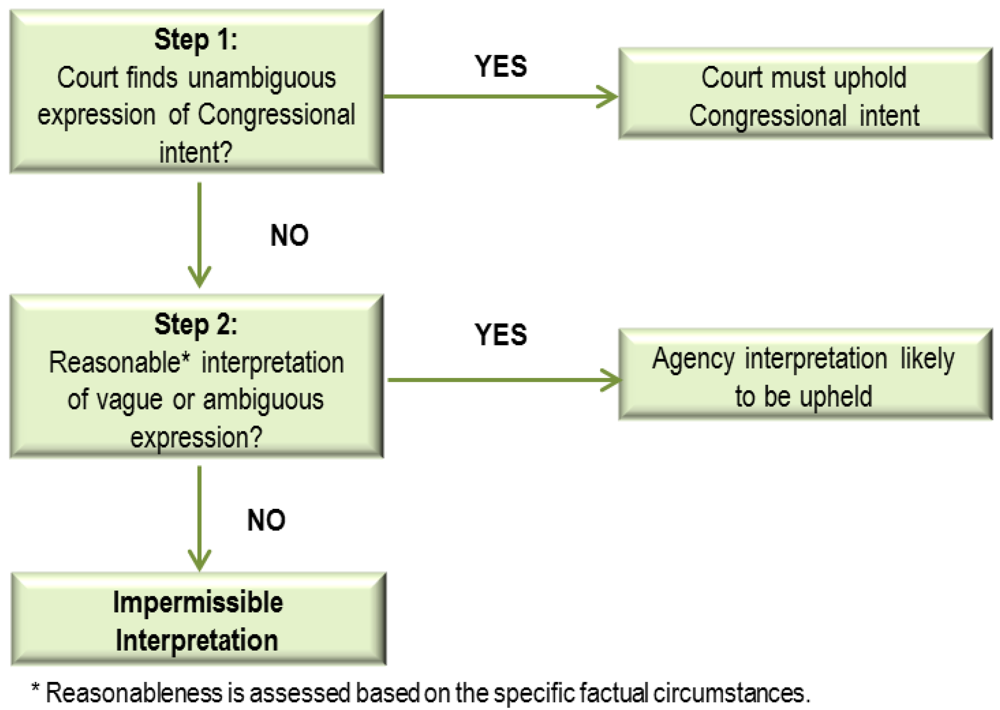
The Supreme Court will hear a case that could significantly scale back federal agencies’ authority, with implications for regulations affecting the US offshore program. The court could overturn a precedent known as the “Chevron doctrine” that instructs judges to defer to federal agencies when interpreting ambiguous federal laws.
Few Supreme Court doctrines have been stretched more by regulators and lower-court judges than Chevron deference, which says judges should defer to regulators’ interpretations when laws are supposedly ambiguous. The High Court agreed Monday to give Chevron a much-needed legal review.
One of the most important principles in administrative law, the “Chevron deference” was coined after a landmark case,Chevron U.S.A., Inc. v. Natural Resources Defense Council, Inc., 468 U.S. 837 (1984). The Chevron deference is referring to the doctrine of judicial deference given to administrative actions. In Chevron, the Supreme Court set forth a legal test as to when the court should defer to the agency’s answer or interpretation, holding that such judicial deference is appropriate where the agency’s answer was not unreasonable, so long as Congress had not spoken directly to the precise issue at question.
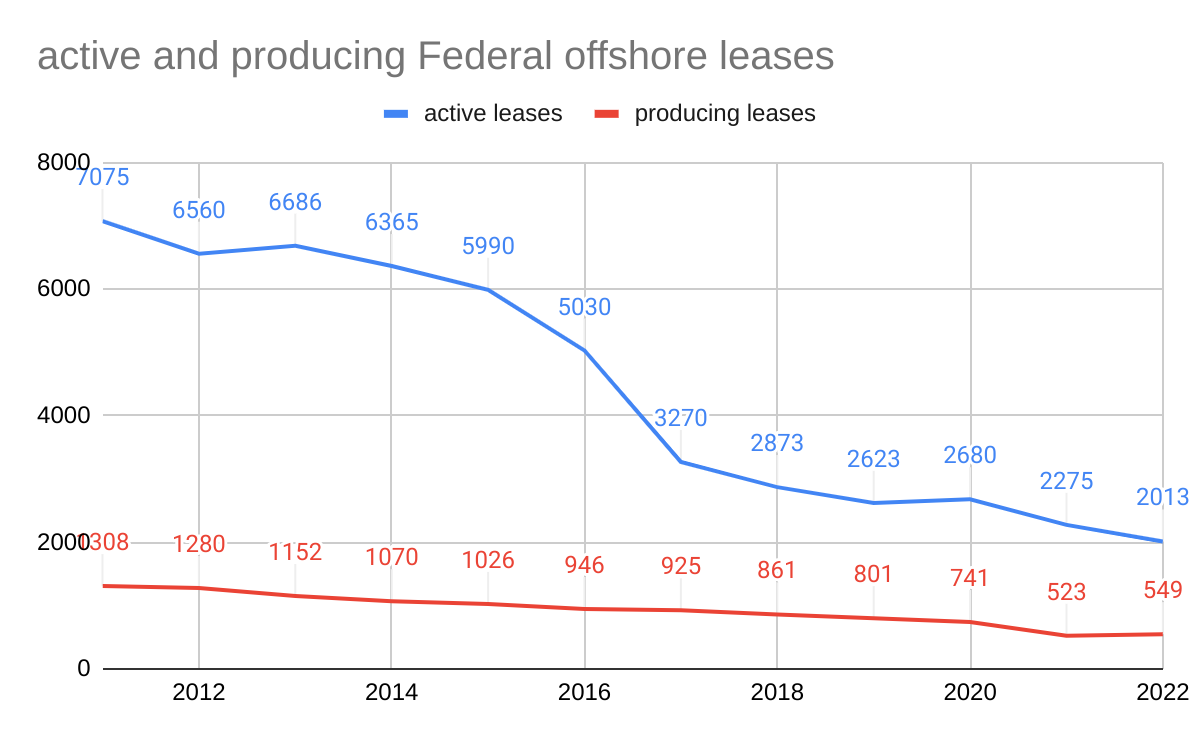
active leases ➡ producible leases ➡ energy production
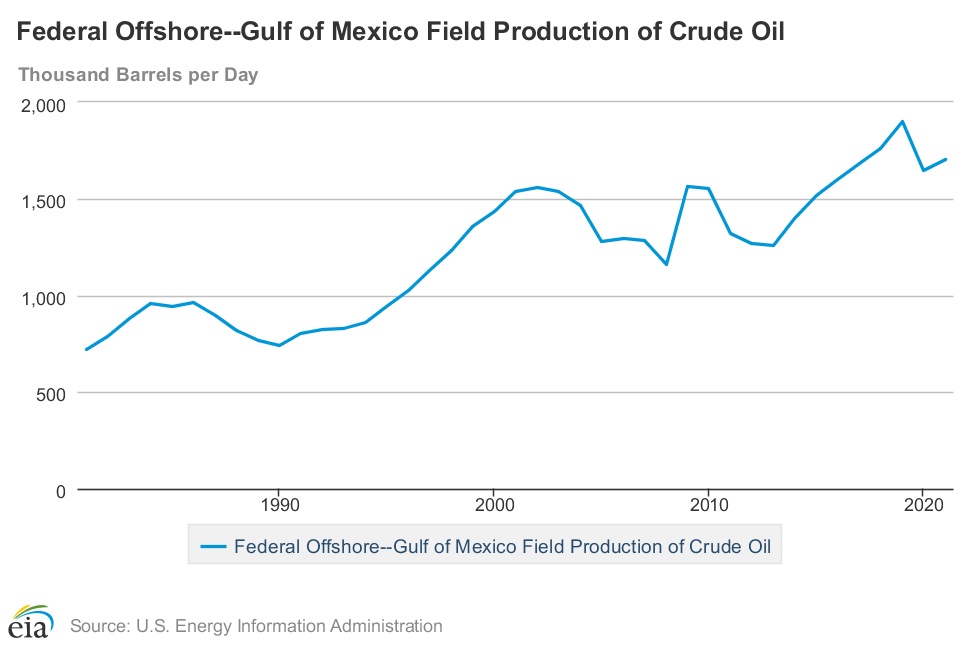
The future of US offshore energy production is in jeopardy. As is clear in the first chart below, the problem is the precipitous decline in opportunities (l.e. leases), not the will to produce. At 27.3% (6/2022 data), the % of active leases that are producing is near the historic high of 30%. The spin doctors really need to drop the old and tired nonproducing leases excuse.









 Bud's Offshore Energy (BOE)