Feeds:
Posts
Comments

Posts Tagged ‘offshore drilling’

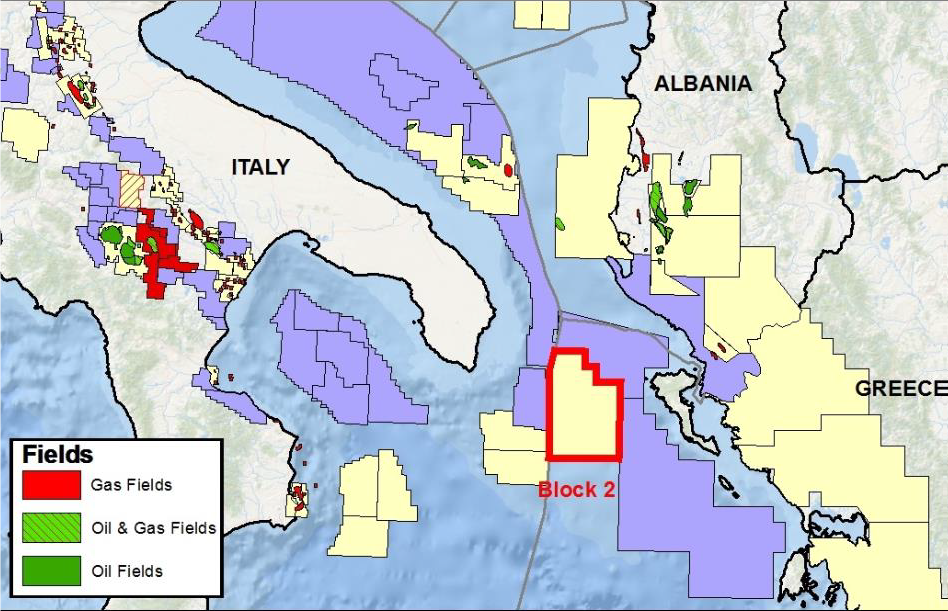
Greece has licensed Block 2 to Energean Hellas LTD and HELLENiQ Energy:

  • Location: In the Ionian Sea 30 km west of Corfu Island (note: that’s 18.6 miles, not the 125 mile buffer that Florida views as sacred)
  • Water depth: 500 to 1,500 m
  • Block size: 2,422.1 sq Km, the largest unexplored offshore structure in the Mediterranean (note: Gulf of America leases are only 23.3 sq km or < 1% as large)
  • First drilling: late 2026 or early 2027. This will be the first exploratory offshore drilling in Greece since 1981!

ExxonMobil has signed a farm-in deal acquiring 60% of the concession.

  • Energean’s participation is set at 30%, down from 75%.
  • Helleniq participation is now 10%, down from 25%.
  • Energean will remain the operator during the exploration stage.
  • In the event of a commercial discovery, Exxon will assume the operatorship during the development phase.

Andreas Shiamishis, CEO of HELLENiQ ENERGY: “Greece is emerging as one of Europe’s newest and promising regions for hydrocarbon exploration and development. This transaction represents a positive step not only for the joint venture partners, but also for the Greek economy.”

Read Full Post »

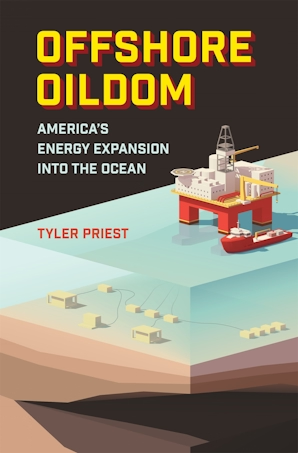
Tyler Priest, the leading historian on US offshore oil and gas operations, has published another gem. His book, Offshore Oildom, is a fascinating account of the history of the technologically innovative and economically important, yet highly controversial, OCS Oil and Gas program. His book is highly recommended.

Consider this recommendation by Daniel Yergin:

“Tyler Priest, a preeminent historian of energy and the environment, explores how a single well drilled off a pier near Santa Barbara in 1898 gave rise to a major American industry—offshore oil and gas. In spirited prose, Priest demonstrates how this U.S. industry was created not only by innovation, creative engineering, and complex execution; it was also the result of fierce political battles.” ~Daniel Yergin, Pulitzer Prize–winning author of The Prize: The Epic Quest for Oil, Money, and Power and The New Map: Energy, Climate, and the Clash of Nations

You can learn more here.

Read Full Post »

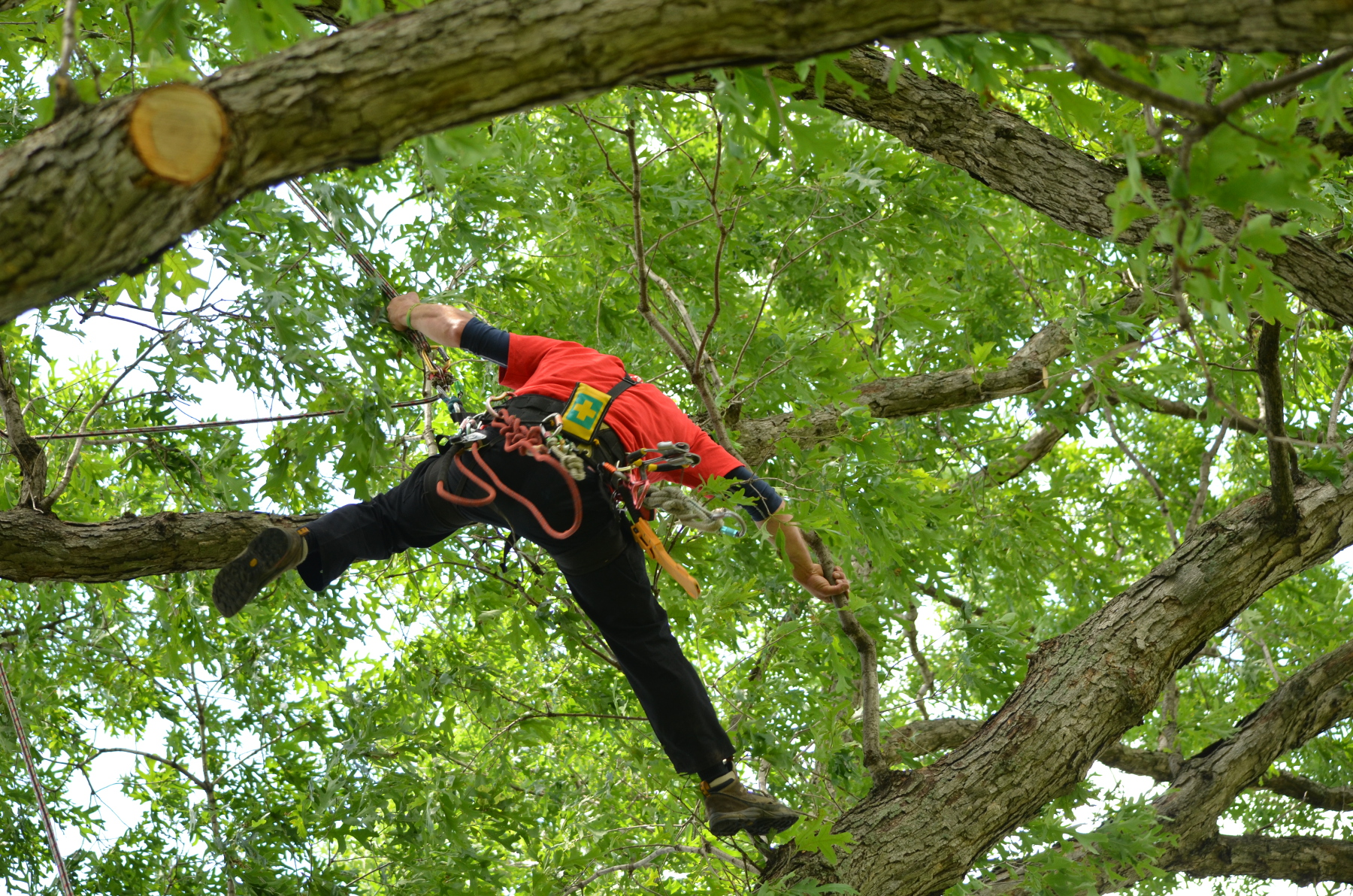
Earlier this week a tree service company was removing some large branches in our backyard. The 2 young workers stopped the job before they finished. They knocked on our door and told me that their foreman was off and they were uncomfortable tackling a large, high branch without him and a crane operator. They would come back with a full crew.

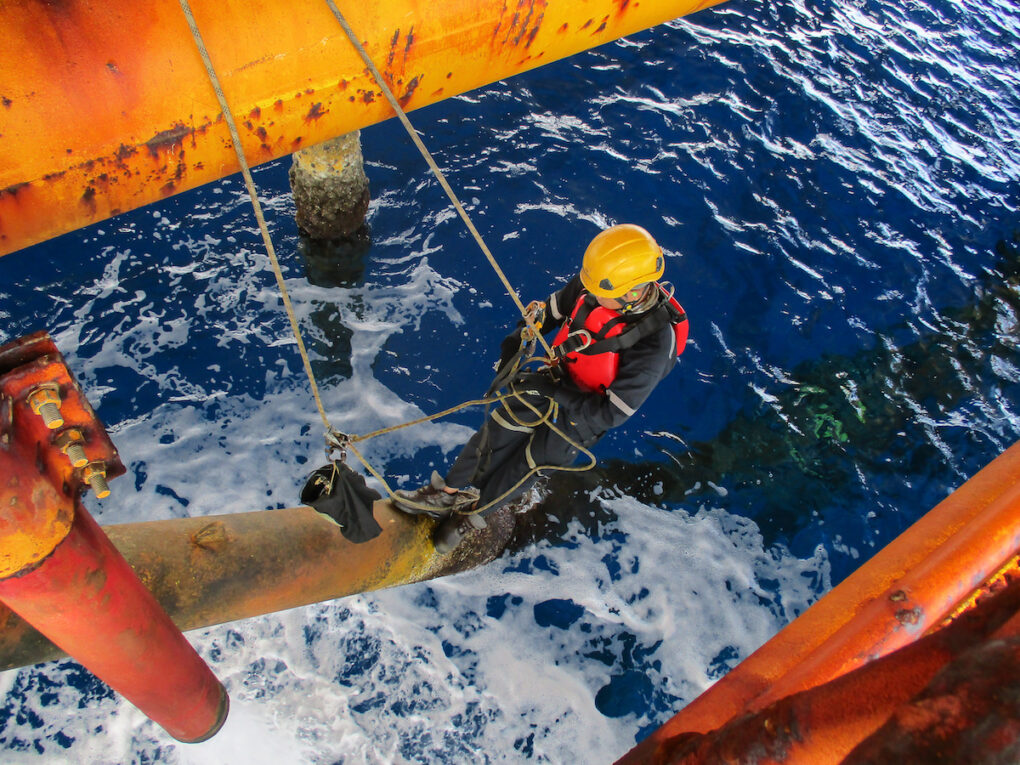
I congratulated them and told them they did exactly the right thing. I told them I was involved with offshore safety and many serious incidents would have been prevented if workers, with their employers encouragement, had been more assertive in stopping work. Developing that type of culture takes time and requires strong leadership and consistent, unambiguous messaging. Leadership matters, both at the site and in the office!

The Macondo well is a worst case example on many fronts, including the reluctance or inability of management and workers to stop taking actions that increased well control risks. Given the narrow pore pressure/fracture gradient, the prudent decision would have been to set a cement plug in the open hole and carefully assess next steps. However, delays and cost overruns were the overriding concerns, and well construction continued despite the long list of issues described here. Sadly, we know how that worked out.

Even after the well started to flow, the crew had time to actuate the emergency disconnect sequence and avert disaster. However, some combination of deficient training, uncertain authority, and fear of repercussions prevented that from happening.

Be it a small tree service company or a major oil company, safety culture development is a journey that has no end point and requires continuous leadership from everyone in the organization.

Read Full Post »

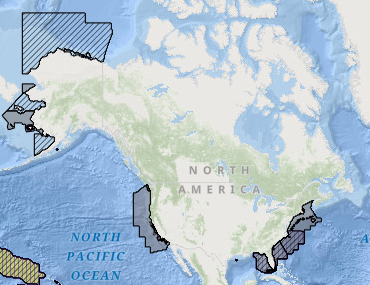
BOEM interactive map of areas where leasing is now prohibited (I.e everywhere but the Central and Western Gulf of Mexico and the Cook Inlet)

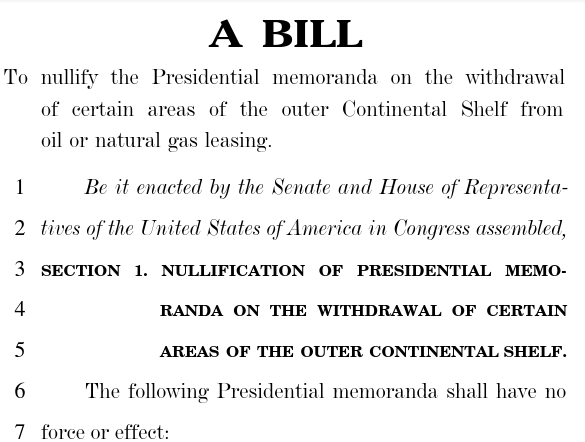
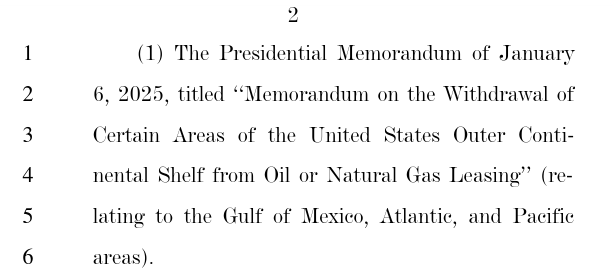
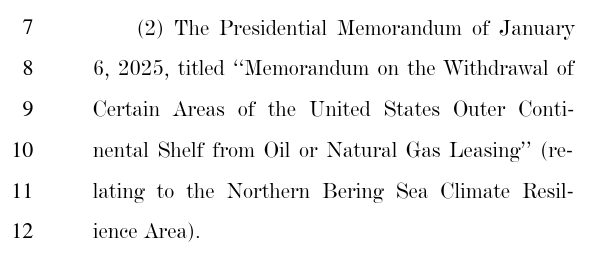
The Cruz-Arrington bill (pasted below), which would reverse the Biden oil and gas leasing bans, raises some interesting political questions:

  • Will Florida Republicans support this first step toward leasing offshore Florida, even if only tracts >100 miles from shore would be offered?
  • Will Mid- and South Atlantic State Republicans support the bill?
  • Will some Democrats, particularly those representing interior states, support the bill?

I suspect that the answer to each question is no, which means the bill will be difficult to pass.

If the bill should pass, President Trump would presumably nullify his own Atlantic and Eastern Gulf withdrawals, which would otherwise remain in effect through 2032.

50 wells were drilled in the Atlantic between 1975 and 1985. The drilling followed the oil embargoes, gas lines, and price surges in the 1970s. Waiting for similar turmoil to overturn the leasing bans would not be prudent given the time that is needed to issue, explore, and develop leases. The optimal approach would be limited, staged leasing to better assess the resource potential in these areas.

Read Full Post »

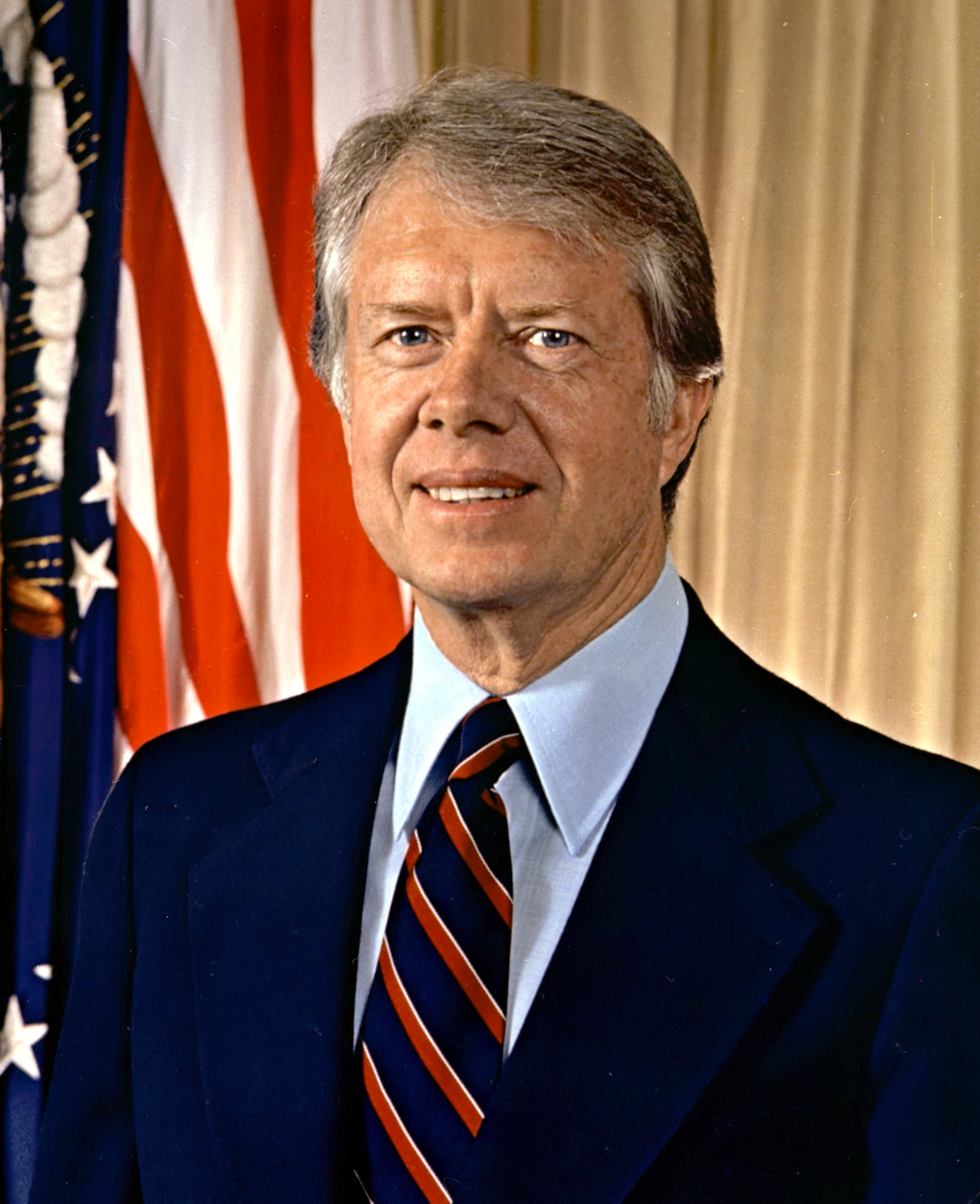
In honor of President Carter:

Opinions on Jimmy Carter’s presidency vary, but he merits praise for his administration of the OCS program from 1/1977 to 1/1981. Carter oversaw an active leasing program in all OCS regions. On the operations side, he appointed Don Kash to head the Conservation Division of the US Geological Survey, the OCS regulator at the time. Dr. Kash was an outstanding leader and a gifted communicator and program manager.

Some of the Carter administration’s impressive accomplishments during his 4 year term:

  • 15 lease sales including 3 offshore Alaska, 3 in the Atlantic, and 1 offshore California
  • Drilling activity in all 4 regions: GoM, Pacific, Alaska, and Atlantic
  • Natural gas discovery in the Mid Atlantic (Hudson Canyon Unit)
  • North, Mid, and South Atlantic District offices for permitting and inspections
  • 5300 well starts including 97 in water depths > 1000′
  • 314 new platforms including Cognac, the world’s first platform in > 1000′ of water
  • Comprehensive amendments to the OCS Lands Act (1978)
  • Annual natural gas production reached nearly 5 tcf (approximately 6 times current OCS gas production)
  • Annual oil production was approximately 1/2 current levels which is impressive given that the deepwater era was just beginning and shelf wells had relatively low productivity.

Thank you Jimmy. RIP.

Read Full Post »

Swimming upstream against the Federal policy current, Gulf of Mexico drilling is demonstrating impressive forward progress. Baker Hughes reports 22 active GoM rigs on 3/15/2024, an increase of 3 from the previous week.

Glancing at the charts, this appears to be the highest GoM rig count since Nov. 2019, and is double the recent low of 11 in 2022.

It’s unclear whether Baker Hughes is including the CCS drilling operation offshore Texas. If so, the actual oil and gas rig count is 21 rather than 22.

Baker Hughes also reports 1 active rig offshore California (decommissioning?) and 1 active rig offshore Alaska (Endicott or Northstar?)

Per Baker Hughes, no rigs are currently active offshore Canada.

Read Full Post »

For those interested in offshore history:

Read Full Post »

In addition to the details previously provided, some interesting insights from Envoi, agent for United Oil and Gas, follow:

  • Only 11 exploration wells have ever been drilled in the entire country (comprising an area of around 258,137 kmincluding all the offshore areas), all between 1955 and 1982
  • Hydrocarbon shows were observed in all but one of these wells despite not having tested valid structures, as is evident on the latest data
  • Just 2 of the 11 wells were drilled offshore
  • Extensive onshore fieldwork and seep analysis studies have confirmed mature Eocene and Cretaceous oil-prone source rock potential, with migrated oil identified in onshore wells and outcrop samples. These include Late Cretaceous (Cenomanian-Turonian) aged organic shales exhibiting total organic carbon (TOC) up to 8% with maturity.
  • Modelling also suggests significant oil potential exists in mature Cretaceous source kitchens in both the Walton and Morant basins while shallower Palaeogene shales with TOCs up to 15% could also locally be deep enough to be mature.
  • An independent Prospective Resources Audit completed by Gaffney Cline & Associates in December 2020 estimates that just 11 of the total 21 prospects & leads defined to date contain a combined total unrisked mean prospective recoverable resources in excess of 2.4 Billion STOOIP (stock-tank oil initially in place). Of this, 406 MMbbls is attributable to the Colibri Prospect alone, with an upside of 966 MMbbls STOOIP.
  • United is offering a material interest and potential operatorship to suitably qualified parties in the license in return for a commitment to fund a well to test the Colibri Prospect before January 2026, which would fulfill the obligations for the current Second Exploration Period of the Licence.

Read Full Post »

United Oil & Gas

Jamaican Energy Minister Daryl Vaz “cautiously anticipates a play-opening exploration well declaration by 2024.”

bnamericas

With extensive seismic data coverage, including 2,250 km2 of 3D data, numerous plays and prospects have already been identified and mapped across the area – leading to over 2.4 billion barrels unrisked mean prospective resources being assigned to the licence. The drill-ready, high-impact Colibri prospect alone contains mean prospective resources of 406 mmbbls.

United Oil & Gas

The Colibri prospect is in 750 m of water, and according to this article, would be developed with a tenstion-leg platform if a commercial discovery is made.

BOE will be following this interesting project closely.

Read Full Post »

Read Full Post »

Older Posts »