Feeds:
Posts
Comments

Posts Tagged ‘Newfoundland’

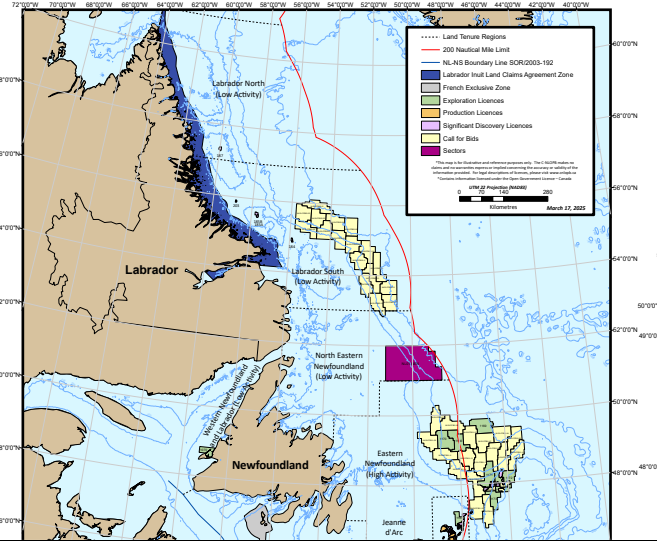
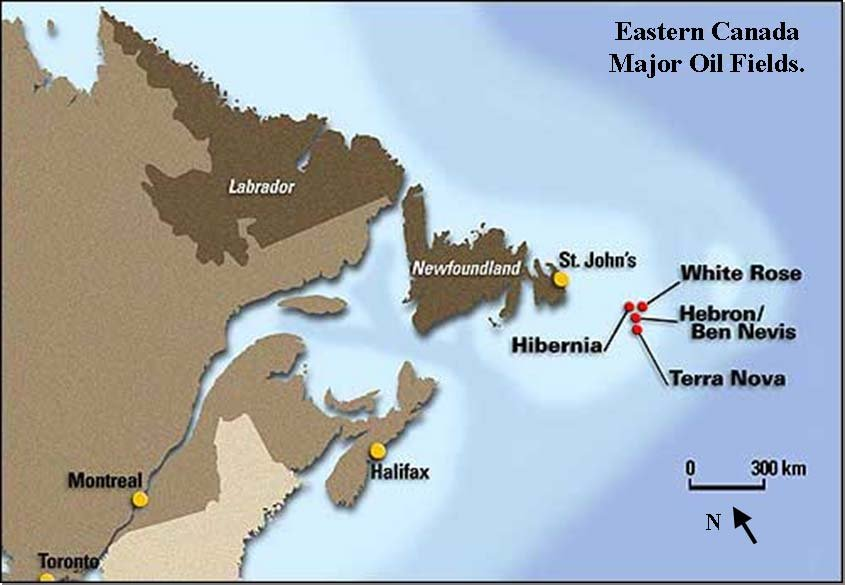
The Canada-Newfoundland Labrador Offshore Energy Regulator (C-NLOER) informs that once again no bids were received for tracts in the Eastern Newfoundland or Labrador South regions. According to this article, the outcome (no bids)was the same from 2021-2024.

Difficult operating conditions, high costs, and relatively modest oil price projections are no doubt factors contributing to the absence of bids. Energy NL has also pointed to the “complex, inconsistent and burdensome regulatory system” as a contributing factor.

Newfoundland’s newly elected Premier, Tony Wakeham, has said his Progressive Conservative Government will advocate for the cancellation of the emissions cap as it is a cap on production. He also supports incentives for offshore oil and gas projects such as an investment tax credit or the former Petroleum Incentive Program and indicated he would work with Energy NL to review incentives that could be implemented provincially.

The C-NLOER is committed to “review its land tenure system in collaboration with governments and others, to identify opportunities to enhance competitiveness in the Canada-Newfoundland and Labrador Offshore Area.”

On a separate policy matter, C-NLOER is applauded for announcing offshore safety/environmental incidents, including significant near misses, without delay. In the US, you have to scour BSEE investigation reports to find out about significant incidents or wait a year or more until the incident table is updated. This is inexcusable!
Read Full Post »

The International Regulators’ Forum Offshore Safety Conference, Oct. 9-10 in St. John’s Newfoundland, has an impressive agenda focusing on safety through innovation. Among the topics that caught my eye:

  • Human Factors & AI
  • Managing New Tech with Old Regulations
  • Regulatory Sandboxes: Capture vs. Collaboration
  • How can AI and emerging technologies be used in risk management trending and operations?
  • Why are we not learning from accidents?
  • Breakthroughs in investigation techniques and sharing

The first IRF Conference was held 20 years ago in London followed by the 2007 conference at the Trump International Resort in Miami (little did we know 😀). More historical background.

The informed, diverse viewpoints about managing and regulating offshore operations sets these conferences apart from your typical professional events. The 2025 conference is highly recommended for those interested in offshore operations, risk mitigation, and regulatory policy.

Read Full Post »

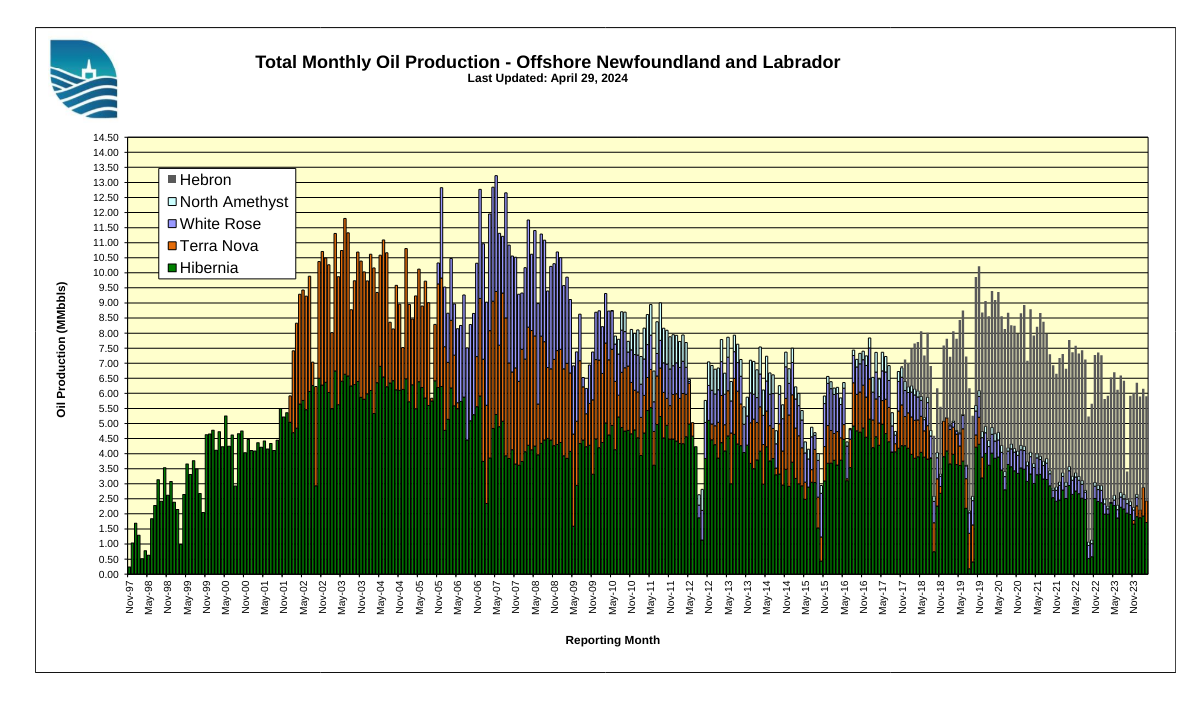
Offshore Newfoundland, a particularly hostile operating environment (“North Sea plus icebergs“), continues to be the only producing area in the North American Atlantic, a distinction that is unlikely to change for at least the next decade.

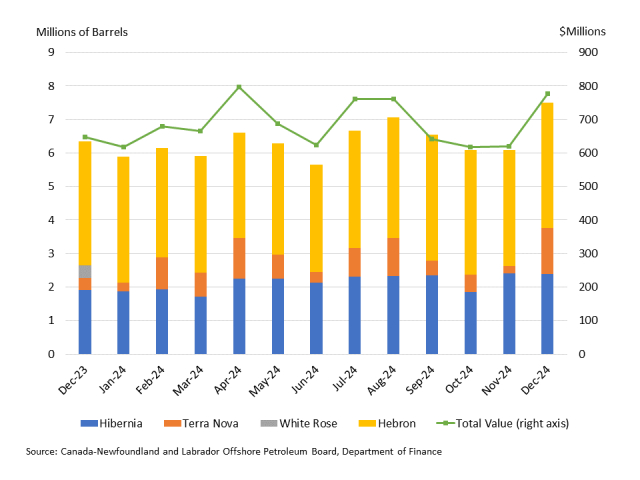
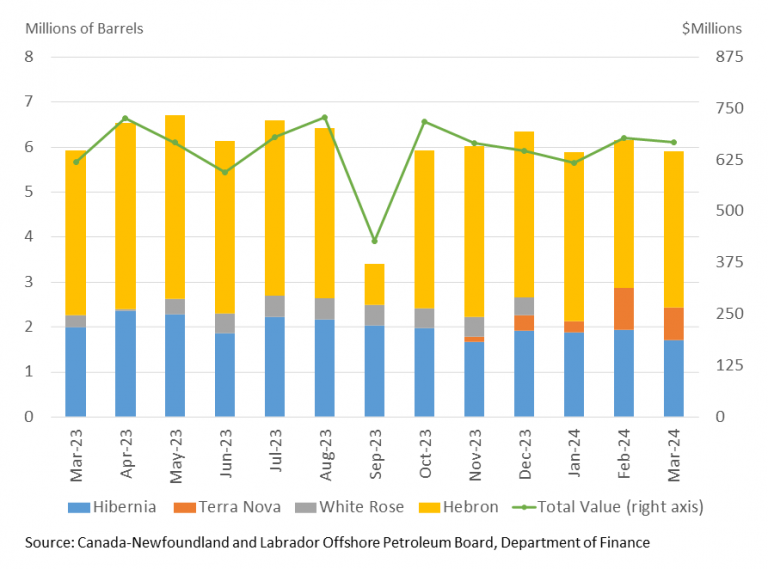
Production is holding firm and there was a nice bounce in December when 7.5 million barrels were produced (242,000 bopd ave.). December’s production was the highest since May 2022 and and was a respectable 57% of the May 2007 peak.

Most impressively, according to CNLOPB data, no fatalities or significant injuries occurred over the past 3 years.

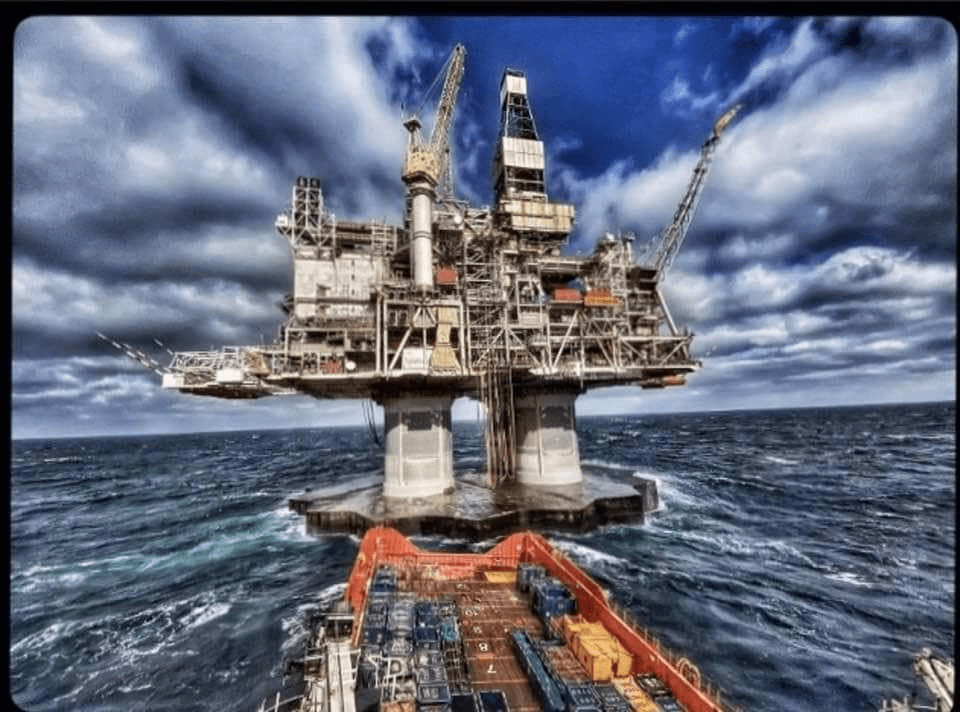
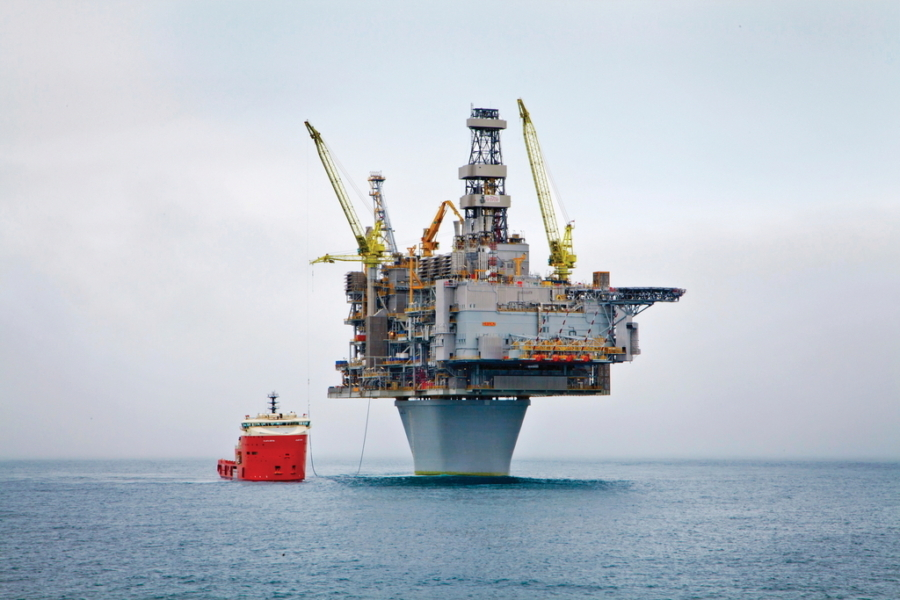
The pioneering Hibernia platform (pictured above), where Newfoundland offshore production began in Nov. 1997, keeps chugging along at 60 to 80,000 bopd. The Hibernia field has produced more than double the original resource estimate of 520 million barrels. Very impressive!

Hebron, the current top producer, continues to produce 100,000+ bopd

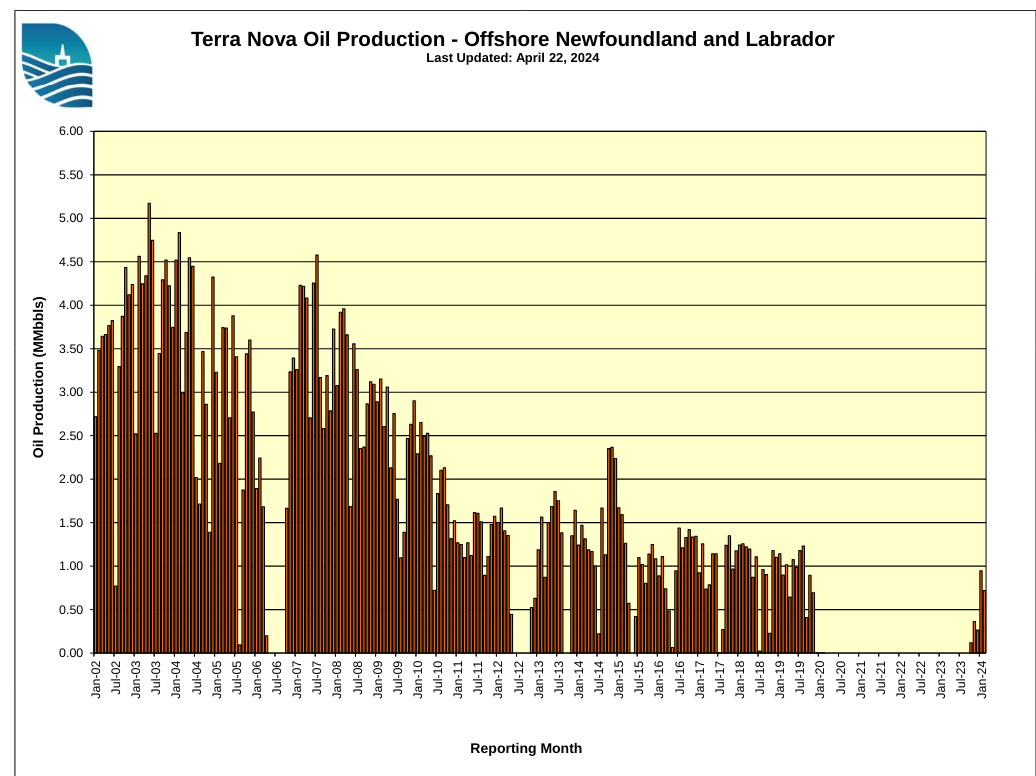
The Terra Nova field contributed ~40,000 bopd in Dec., the highest output since production resumed in late 2023 after extensive downtime to refurbish the FPSO.

Production remained offline at the White Rose project, which was shutdown at the end of 2023 for refurbishment of the SeaRose FPSO. Production is expected to resume during the first quarter of this year.

Newfoundland production data:

Read Full Post »

Details on the Ocean Ranger disaster, 15 Feb 1982

Read Full Post »

We have been closely watching Exxon’s high potential Persephone well in Newfounland’s Orphan Basin. Unfortunately, Exxon has announced that the well failed to discover commercial hydrocarbons.

While exploration technology has improved significantly, the success rate for wildcat exploratory wells is still only about 30%. According to Rystad, only eight of the 27 high-impact wells drilled in 2023 resulted in commercial discoveries.

In baseball terms, the smaller independents are typically singles hitters, drilling development wells and gleaning reserves from established fields. The majors tend to be home run hitters. They swing hard and often miss, but when they hit, the rewards are great!

The search for deepwater elephants will continue.

JPT

Read Full Post »

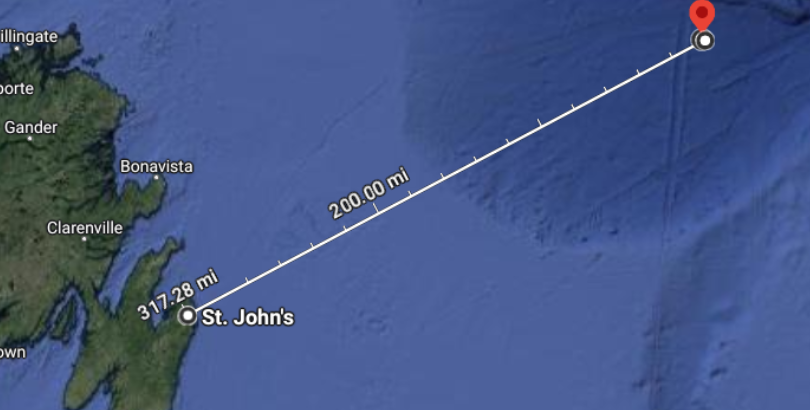
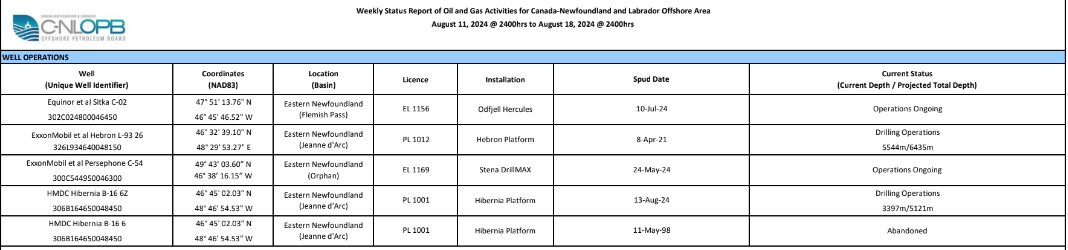
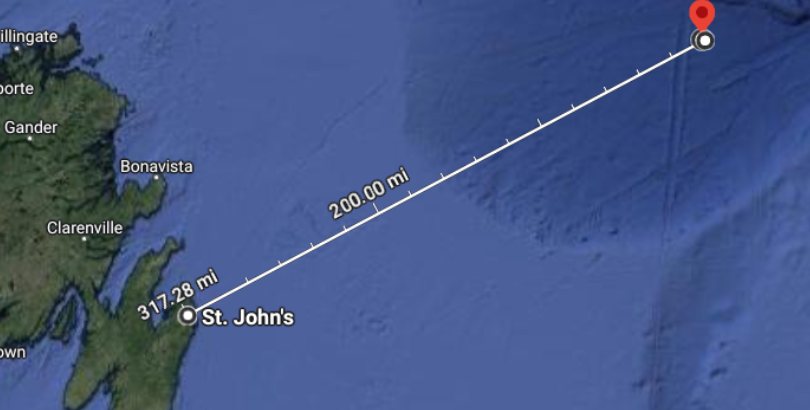
To find the sole exploratory well being drilled in the vast North American Atlantic, you have to exit “wind-only” US waters, head NE to St. John’s, NL (advancing your watch by 1.5 hours 😉), and transit another 317 miles NE to the Stena DrillMAX working for Exxon in the Orphan Basin.

The latest (8/20/2024) CNLOPB report (below) is that operations are ongoing. The well was spudded 3 months ago. That is about all they can disclose without compromising confidentiality. Even seemingly innocuous information like the current and projected well depth provides the opportunity to speculate about geologic conditions and current well activities.

We can assume that there have been no safety or environmental incidents to date, because the CNLOPB does a good job of posting such information in a timely manner.

Previous posts on this well

Read Full Post »

Hebron gravity based structure

While checking for updates on the important Orphan Basin well, I looked at Newfoundland production data and found it surprisingly encouraging:

  • The pioneering Hibernia field has produced more than double the original resource estimate of 520 million barrels, and is still chugging along at about 60,000 bopd.
  • Hebron, the current top producer, is holding strong at 100,000+ bopd.
  • White Rose, which was in danger of being abandoned, is poised for a renaissance with the installation of the West White Rose concrete gravity structure.
  • Terra Nova is once again producing at near 2019 levels after a four year hiatus. The Terra Nova story has many important technical, management, regulatory, safety, and logistical elements, and presents good case study opportunities for Newfoundland academics (Memorial University?).

With prospects for production at Bay du Nord brightening and interesting targets like the Orphan basin being explored, pessimistic forecasts for Newfoundland’s resilient offshore sector may be a bit premature.

Read Full Post »

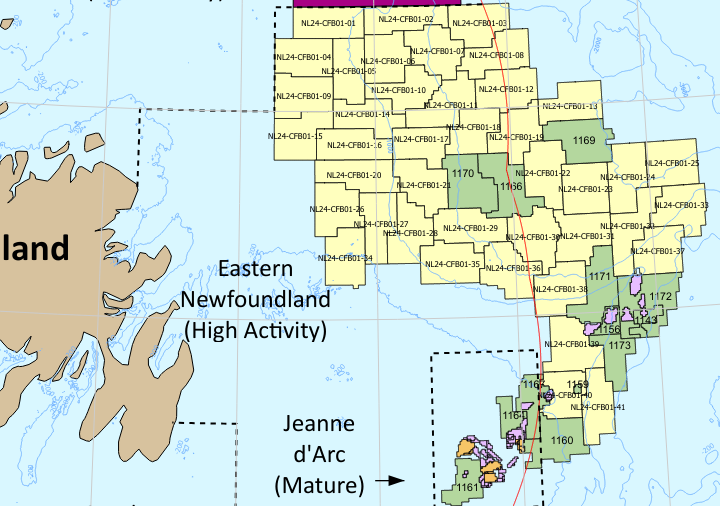
Per rig tracker data, the Stena DrillMAX has been on location at Exxon’s Orphan Basin wellsite since Sunday (19 May). The site is 317 miles (510 km) NE of St. John’s in Block 1169 (~3000 m water depth).

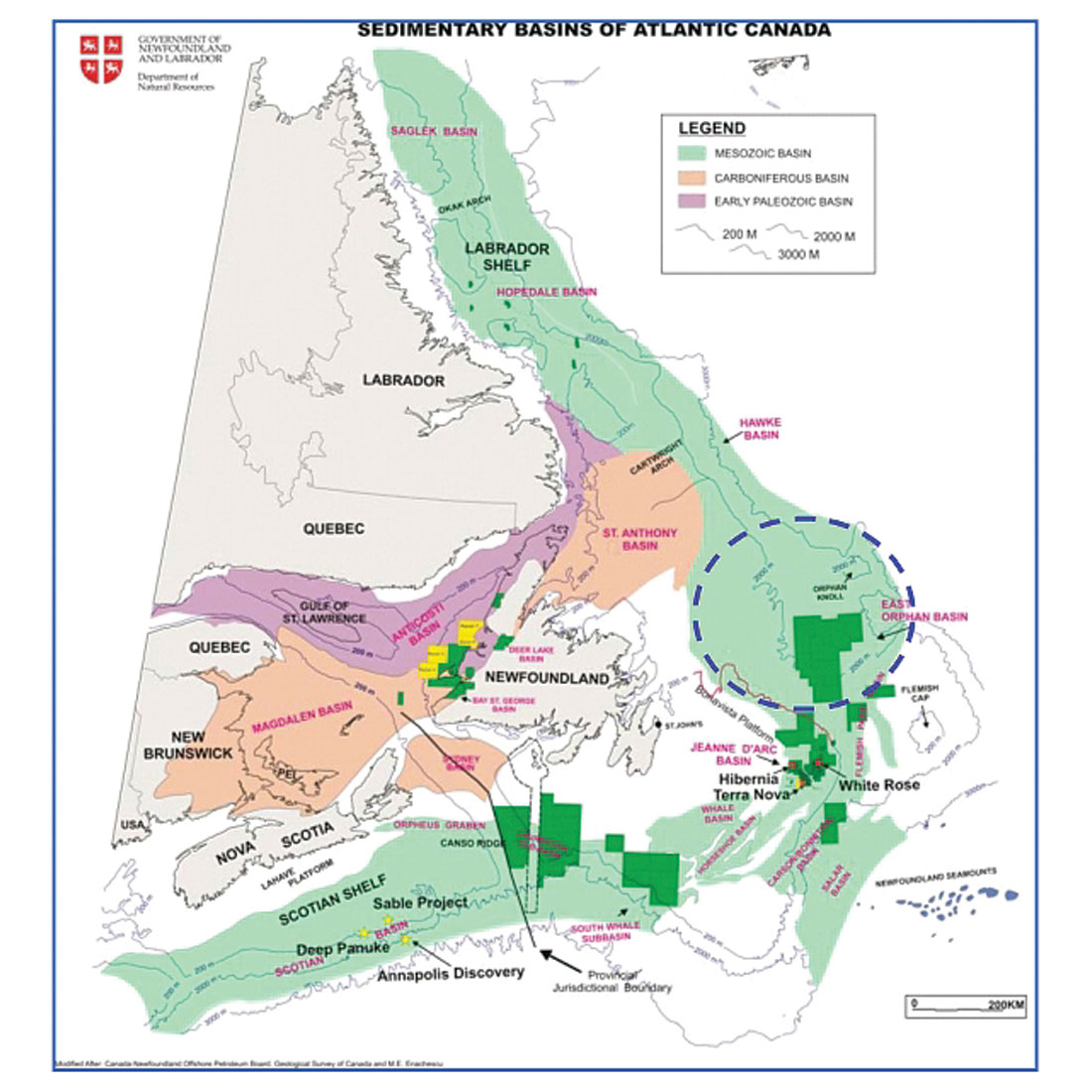
Per this very good resource assessment report for the Govt. of Newfoundland and Labrador, “the Orphan Basin area demonstrates a potentially prolific petroleum system with four main plays (reservoirs and associated seals) sourced by various source rocks (Upper Jurassic, Cretaceous, and Paleogene).

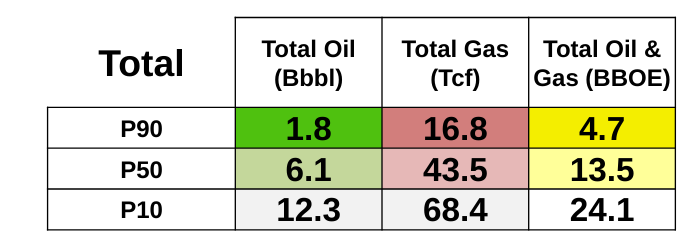
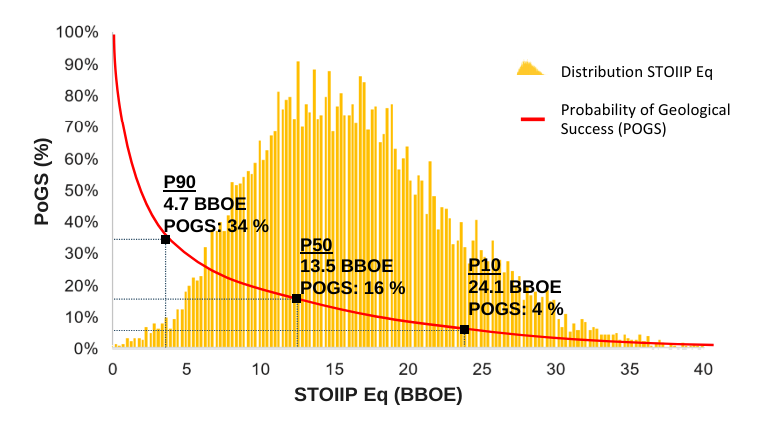
Unrisked resource estimates (theoretical pending confirmation by drilling) at the 90, 50, and 10% probability levels for the Orphan Basin blocks offered for licensing in Nov. 2022:

Taking into account the risks of the geologic model not accurately reflecting the reservoir, seal, charging, and trap components of the petroleum system, the probability of finding 13.5 billion drops to 16% (see plot below). This is still a high probability for a massive wildcat discovery.

This is why you move a state-of-the-art drillship thousands of miles to drill a single exploratory well at a remote location in the North Atlantic. The most likely outcome is negative or inconclusive findings, but the potential for such a major discovery justifies the investment.

The PGOS curve quantifies the probability of success in finding the identified volume of resources in the new Orphan Basin blocks (e.g. there is a 34% chance of finding 4.7 billion BOE and a 16% chance of finding 13.5 billion BOE).

Read Full Post »

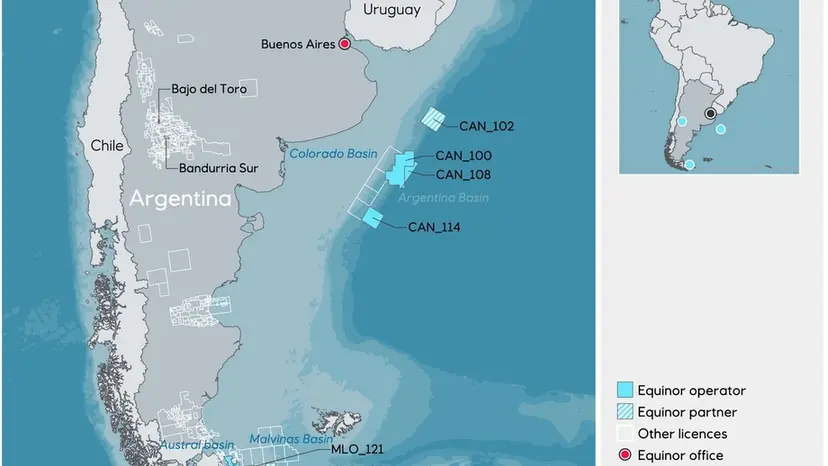
The Valaris DS-17 drillship is now on location to drill the Algerich-1 well for Equinor 315 km from Mar del Plata in 1527 m of water at Block CAN 100.

Concurrently, at the opposite end of the Pan American continents, the Stena DrillMAX is closing in on Exxon’s Orphan Basin location offshore Newfoundland to drill another high potential well.

Meanwhile, the US Atlantic is “wind-only,” despite high deepwater oil and gas potential. The late Paul Post, an esteemed colleague and the leading expert on the petroleum geology of the US Atlantic, believed the deepwater US Atlantic could contain >20 billion BOE. No other Pan American nation has completely closed its Atlantic margin to oil and gas exploration.

Can a nation with a debt of $35 trillion afford to ignore oil and gas resources that will remain in high demand for decades?

Read Full Post »

The DrillMAX is en route from Guyana to drill the Persephone wildcat well 500 km NE of Newfoundland in the highly prospective Orphan basin (3000 m water depth). This looks like the farthest from shore any well has been drilled in the Atlantic. The late spring date is prudent.This is definitely a well to watch because of the resource potential and difficult operating conditions.

Read Full Post »

Older Posts »