Feeds:
Posts
Comments

Posts Tagged ‘macondo’

A shortened and simplified summary from information provided in the DNV report:

  1. The Upper Variable Bore Rams (VBRs) were closed prior to the Emergency Disconnect Sequence (EDS) activation at 21:56 on April 20, 2010.
  2. A drill pipe tool joint was located between the Upper Annular Preventer (closed) and the Upper VBRs (also closed). Forces from the flow of the well pushed the tool joint into the Upper Annular element. Because the tool joint was trapped beneath the closed annular preventer (and could not move upward), forces from the flowing well caused the pipe to push upward and buckle.
  3. The drill pipe deflected until it contacted the wellbore just above the Blind Shear Ram (BSR).  The portion of the drill pipe located between the shearing blade surfaces of the BSR was off center and held in this position by buckling forces.
  4. A portion of the pipe cross section was outside of the intended BSR shearing surfaces and did not shear as intended.
  5. As the BSR closed, a portion of the drill pipe cross section became trapped between the ram block faces, preventing the blocks from fully closing and sealing.
  6. Since the deflection of the drill pipe occurred from the moment the well began flowing, trapping of the drill pipe would have occurred regardless of which means initiated the closure of the BSR.
  7. In the partially closed position, flow continued through the drill pipe trapped between the ram block faces and subsequently through the gaps between the ram blocks.
  8. When the drill pipe was sheared on April 29, 2010, using the Casing Shear Ram (CSR), the flow expanded through the open drill pipe at the CSR and up the entire wellbore to the BSR and through the gaps along the entire length of the block faces and around the side packers. The CSR was designed to cut tubulars, not seal the well bore.

sheared off-center drill pipe

Read Full Post »

Just released.

The DNV report will be discussed in the upcoming hearings:

The Bureau of Ocean Energy Management, Regulation and Enforcement (BOEMRE)/U.S. Coast Guard (USCG) Joint Investigation Team, which is examining the Deepwater Horizon explosion and resulting oil spill, today announced that it will hold a seventh session of public hearings the week of April 4, 2011. The hearings, which will focus specifically on the forensic examination of the Deepwater Horizon blowout preventer (BOP), are scheduled to take place at the Holiday Inn Metairie, New Orleans Airport, 2261 North Causeway Blvd., Metairie, La.

Read Full Post »

Professor Robert Bea

Bob Bea

Dr. Bob Bea, UC Berkeley Center for Catastrophic Risk Management, and his Deepwater Horizon Study Group have issued their final report on the Macondo blowout. I look forward to reading the full documents.

Bob has been at the vanguard on risk management issues for many years. While he jokes that there are two things engineers can’t deal with – uncertainty and people, Bob is an engineer who understands both! Kudos to Bob and his group for their leadership and initiative.

Read Full Post »

Per the Platts Oilgram report that we posted on 17 March, here is the complete court filing..

These are the additional tests recommended by BP’s consultant Ralph Linenberger:

  • Removal and forensic analysis of each annular element
  • Hydraulic signature testing of the annular preventer operator and ram preventers operators
  • Disassembly and inspection of the annular preventer and ram preventer bonnets
  • Laser scanning of (i) the entire BOP wellbore; (ii) the upper annular packer and upper annular cap; (iii) the inside of the riser kink; and (iv) the wellbore-facing surfaces of the casing shear ram bonnets
  • Hydraulic circuitry pressure test
  • ST lock circuit confirmation
  • Solenoid pie connector pin measurement and corresponding female receptacle analysis.

Is anyone else surprised that some (all?) of these tests hadn’t already been conducted? That would seem to be the biggest revelation from the BP court filing.

Read Full Post »

Déjà vu?

As was the case with Macondo, great minds have already figured out what went wrong at Fukushima and who is to blame.

Here’s what they tell us. Sound familiar?

  1. The company cut corners to save money!
  2. There wasn’t enough government oversight!
  3. Management failed to properly assess the risks!
  4. The regulator is corrupt!
  5. Warnings were ignored!
  6. The operation is not safe in that environment!
  7. The company and industry have a poor safety culture!
  8. Our country’s regulations are much more stringent!
  9. It couldn’t happen here!
  10. The threat is spreading; people in Panic-stan are in danger!

I’m no nuclear power advocate, but it would be nice if everyone focused on fixing the problem, protecting those who are truly endangered, and restroring some sense of normalcy in Japan. There will be plenty of time to investigate and find fault.

By the way, do you remember the fear mongering about Macondo oil on East Coast beaches?

Read Full Post »

From Platts Oilgram News:

BP seeks Macondo BOP access to perform tests Washington—BP is seeking access to the Deepwater Horizon blowout preventer so it can run tests the company says the joint investigation has failed to perform. BP filed a motion in US District Court for the Eastern District of Louisiana in New Orleans March 9, asking Judge Carl Barbierto allow the company access to the BOP after the joint investigation being run by the US Coast Guard and the Bureau of Ocean Energy Management, Regulation and Enforcement, is finished with it. The BOP, a five-story stack of valves, sat atop BP’s Macondo well in the Gulf of Mexicoand failed to suppress a blowout April 20,2010. The blowout killed 11 workers fromTransocean’s Deepwater Horizon rig and triggered a massive oil spill. The joint investigation, under the supervision of the Department of Justice, has been conducting tests on the BOP at a NASA facility in Michoud, Louisiana. DNV Columbus washired to conduct the forensic tests and BP,Transocean, and Cameron, which made the BOP, have been observing.The test results are supposed to be delivered to the joint investigation by March 20. Hearings on the BOP are scheduled for the week of April 4. In its motion, BP said it submitted to the Joint Investigation Team a list of highly technical tests it felt should be conducted, but that the final list of approved tests did not include several of the items BP and other companies had requested.“BP, however, believes that performance of these forensic activities will add value to an analysis of why the BOP did not work as intended on April 20, and recommends they be completed,” the company said in its court brief.— Gary Gentile

Read Full Post »

Summit Entertainment, Participant Media and Imagenation Abu Dhabi, have announced that they’ve acquired the film rights to a 2010 New York Times article on the BP oil spill.Forbes

This is the excellent New York Times piece referenced in the quote.

Read Full Post »

Jason Anderson, Dale Burkeen, Donald Clark, Stephen Curtis, Gordon Jones, Roy Wyatt Kemp, Karl Kleppinger, Blair Manuel, Dewey Revette, Shane Roshto and Adam Weise.

They are the 11 workers who died when the Deepwater Horizon burned and sank in the Gulf of Mexico last year.

Their names need to be stated, to be remembered, because they were clearly forgotten as the industry gathered for the CERAWeek conference in Houston this week. Houston Chronicle

Comment: The sad truth is that the Macondo tragedy would have received very little attention if the fatalities were not followed by a major oil spill.  There would have been no moratorium, no National Commission, no Chemical Safety Board review, and no Justice Department investigation.   The last major multi-fatality accident in the Gulf, the South Pass 60 B fire that killed seven workers in 1989, received almost no national attention.  A minor spill offshore California receives more coverage than a multi-fatality event in the Gulf.

When every casualty, every gas release, every well control incident, and every structural failure is fully and publicly reviewed, we will be well on our way toward preventing not only injuries and fatalities, but also spills and environmental damage.

Read Full Post »

The tragedy in Japan has added yet more uncertainty to nervous energy markets:
Japan will likely need more imported oil and natural gas due to closures of nuclear reactors caused by Friday’s earthquake and tsunami, but volumes can’t be calculated accurately as it is unclear how much industrial output has been affected by the disaster and how long power nuclear and thermal power plants will remain closed. Wall Street Journal
It’s much too early to gauge how the nuclear power industry, which some have touted as a model for safety achievement, will be affected.
    Standards news and discussion:
    Offshore Safety Institute?
    The CEOs of major oil and gascompanies will meet March 18 to decide how to proceed with the formation of a US offshore drilling safety institute, William Reilly, the co-chair of the National Oil Spill Commission, said March 8. Platts Oilgram News
    New twist in Cuban drilling drama – Petrobras relinquishes interest
    Marco Aurelio Garcia, foreign policy adviser to President Dilma Rousseff, told reporters in Havana exploratory work off Cuba’s northern coast had not shown good results and that Brazil wanted to concentrate on its own oil fields.
    Since BP’s disastrous Deepwater Horizon accident in the Gulf of Mexico last April, the risks of offshore oil drilling have been a hot topic. One place it isn’t questioned much is Brazil, whose oil production industry is one of the fastest-growing in the world because of vast new deepwater oil reservoirs discovered in the past five years.
    Mexican Deepwater Update (Platts Oilgram News)
    Pemex has just begun to explore in Mexico’s Gulf of Mexico waters deeper than 1,000 feet, but 28 billion undiscovered barrels of oilequivalent are thought to exist in that area, some of which borders US territorial waters. Pemex officials said the company is forging a development plan for its first deepwater field, Lakach, located northeast of the state of Veracruz in about 3,200 feet of water. First production is expected in 2015.
    Environmentalists are furious at a proposal by the petroleum company Shell to start exploration drilling off one of Western Australia’s most treasured reefs. Ningaloo Reef off the north-west coast, has been nominated for World Heritage listing.

Read Full Post »

Ohmsett

The seemingly endless crowing about the absence of improvements in spill response capabilities is a story by itself. This topic warrants a full discussion when time permits, but for now I’ll offer a few comments and observations:

  • The Macondo offshore spill response was unprecedented and impressive, and the lessons learned will be applied to improve spill response preparedness around the world.
  • Those who claim that there has been no progress in spill preparedness either have no real interest in spill response or have not been paying attention.
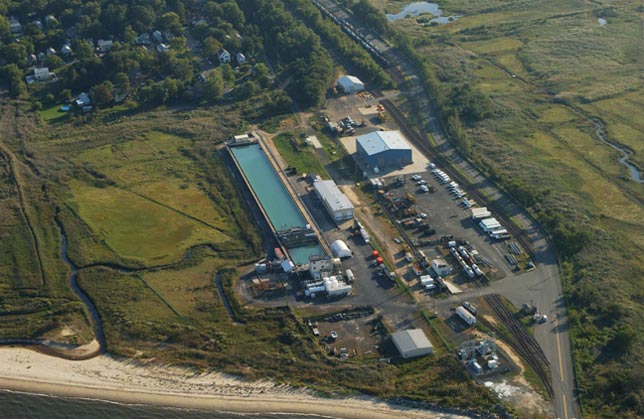
  • Even in the lean years following the Valdez oil spill research surge, the much-maligned MMS continued to conduct important burning, dispersant, remote sensing, and mechanical cleanup studies, while upgrading and expanding the use of the nation’s major oil spill response test facility – Ohmsett (pictured above).  This research was effectively applied during the Macondo spill and smaller, less publicized incidents. Click here for a nice summary of the program and here for the very extensive list of projects and links to the reports. Domestic and international partnerships, most notably with Norway and Canada, helped sustain this important research.
  • Despite periodic attempts to reprogram Ohmsett funding, MMS was able to continue to support this outstanding research facility.  Learn more about Ohmsett.
  • During the blowout, the networks featured the snake oil salesmen and hucksters who peddle super-sorbents and oil-consuming substances during every major spill.  That time should have been given to response experts and serious oil spill researchers.
  • Former industry executives with no real spill response experience trumpeted, without any documentation, claims of extraordinary recovery rates elsewhere (usually in places where no one gets to watch). Their favorite concept, supertanker response systems, received a lot of air time until the “Whale” tanker-skimmer flopped as predicted.
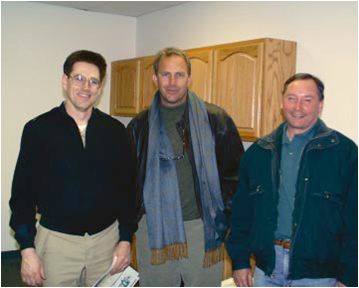
  • You would think that Kevin Costner’s very good separator (tested at Ohmsett in 1999!) was the only advance in response technology. Perhaps more movie and TV stars should get involved with spill response. Charlie (Oil) Sheen would no doubt attract interest to the cause. 🙂

NWS Earle Executive Officer Claudill, Kevin Costner, and Ohmsett Manager Bill Schmidt (1999 photo at Ohmsett)

Read Full Post »

« Newer Posts - Older Posts »