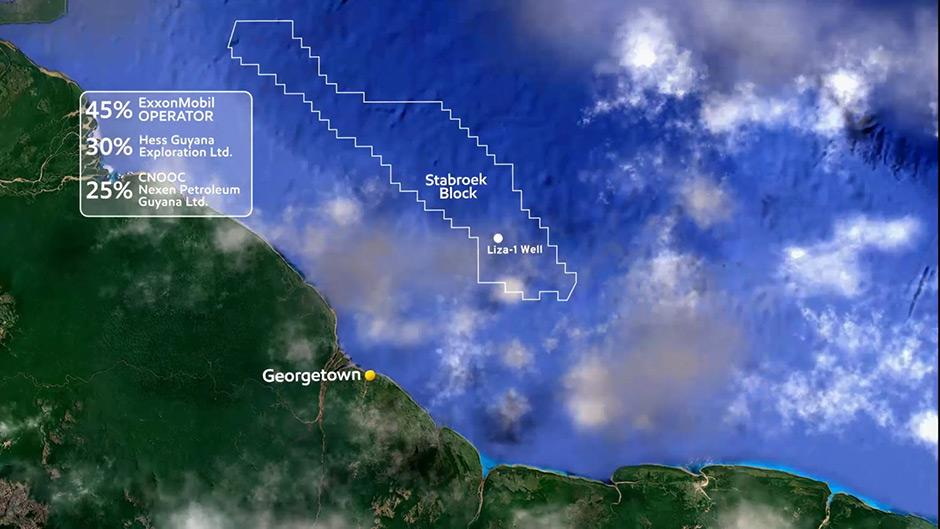
OilNow has posted a good Guyana update. Production should reach 620,000 bopd in Q1 and grow to >1.2 million bopd in 2027/28. The growth in production is plotted below.


Neighboring countries in the Caribbean region are taking notice!
Posted in Guyana, Offshore Energy - General, tagged Guyana, oil production on January 5, 2024| Leave a Comment »
OilNow has posted a good Guyana update. Production should reach 620,000 bopd in Q1 and grow to >1.2 million bopd in 2027/28. The growth in production is plotted below.
Neighboring countries in the Caribbean region are taking notice!
Posted in Guyana, tagged Exxon, Guyana, Maduro, offshore oil, OilNow, Stabroek, venezuela on December 8, 2023| Leave a Comment »
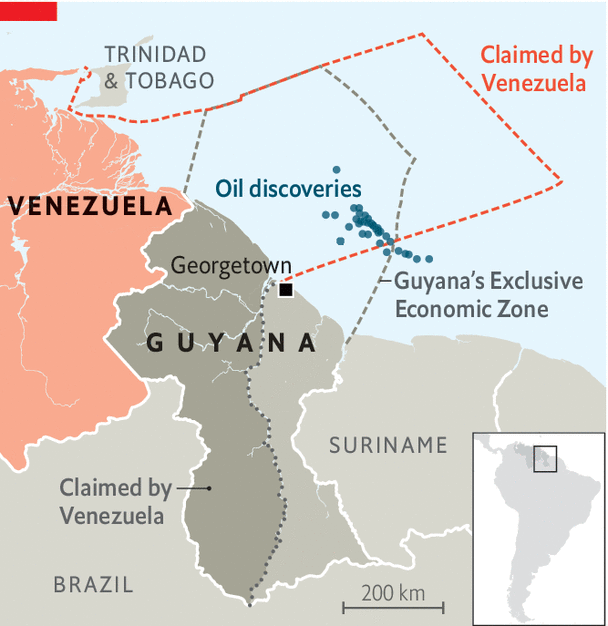
If we pause any of our developments, Maduro succeeds. He has no right in international law to tell the people of Guyana, a sovereign country, how to pursue its affairs.
And that is why we are forging ahead with our development in all 83,000 square miles…if we get paralyzed by this at the government level then we will fall prey to what he is trying to achieve.
Guyana’s Vice President, Dr. Bharrat Jagdeo
Posted in Guyana, Offshore Energy - General, tagged Esequiba, Essequibo, Guyana, Maduro, venezuela on December 6, 2023| Leave a Comment »
How can the US be relaxing sanctions on this thug?
Venezuela’s state-run companies will “immediately… proceed to give operating licenses for the exploration and exploitation of oil, gas and mines in our Guayana Esequiba,” Maduro said.
Any other firms operating in the area will have three months to withdraw from the territory, he explained, adding that a zone of integral defense of ‘Guayana Esequiba’ would be created.
lianglj0.hott.es

.
Posted in Guyana, Offshore Energy - General, tagged Essequibo, Guyana, oil theft, venezuela on December 4, 2023| Leave a Comment »

Per AP, The National Electoral Council claimed to have counted more than 10.5 million votes even though few voters could be seen at polling sites throughout the voting period for the five-question referendum.
This claim sees like a joke, but President Maduro’s intentions are not:
“It has been a total success for our country, for our democracy,” Maduro told supporters gathered in Caracas, the capital, after results were announced.
AP News
Posted in Guyana, Offshore Energy - General, tagged Essequibo, Guyana, oil theft, referendum, venezuela on December 3, 2023| Leave a Comment »
Posted in Barbados, Guyana, Jamaica, Offshore Energy - General, tagged Barbados, economic growth, Grenada, Guyana, Jamaica, offshore oil on November 30, 2023| Leave a Comment »
Linking a good article from our friends in Guyana.
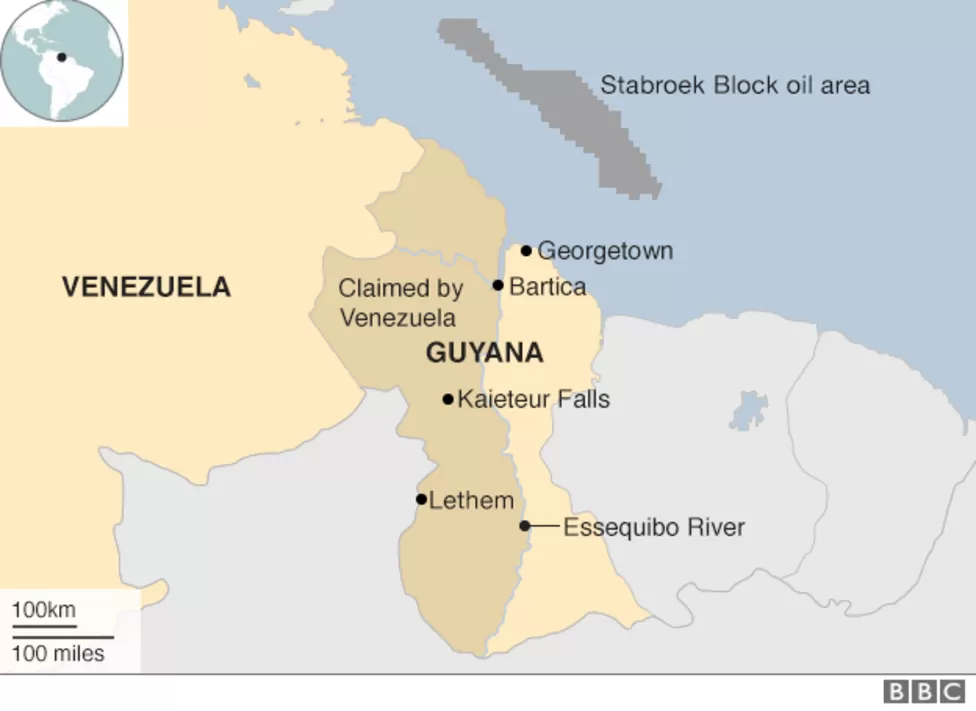
Nestled on the northern tip of South America, the small nation of Guyana, now the fastest growing economy in the world, will become the continent’s second biggest oil producer by 2027.
OilNow Guyana
Neighboring countries in the Caribbean region including Jamaica, Barbados, and Grenada are taking notice. And then there is Venezuela ….
Posted in Guyana, Offshore Energy - General, tagged Guyana, referendum, territory claim, venezuela on November 7, 2023| Leave a Comment »
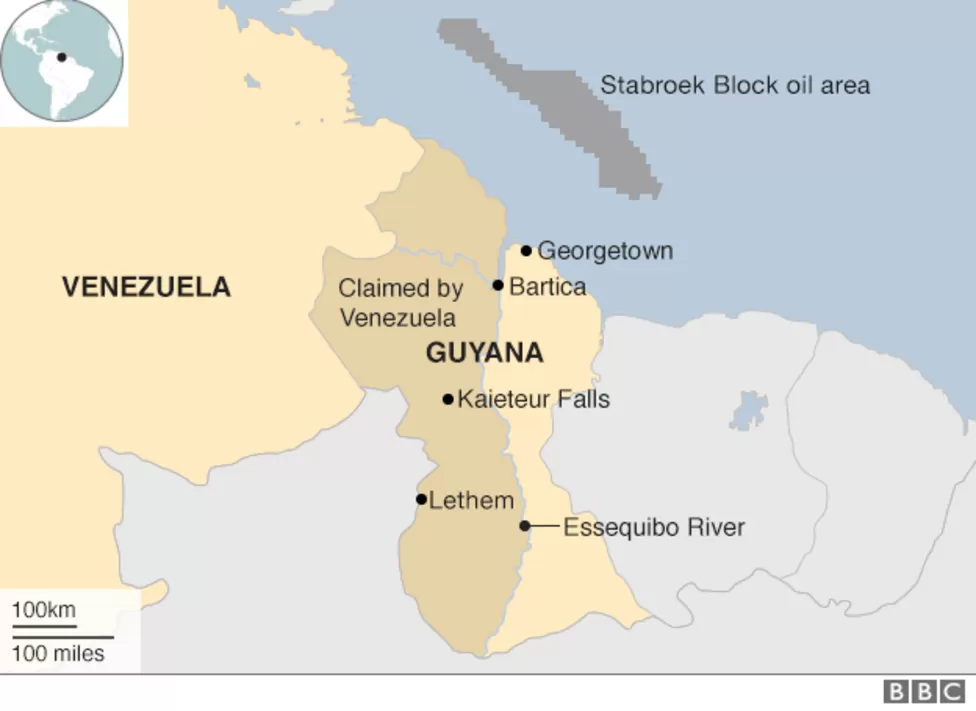
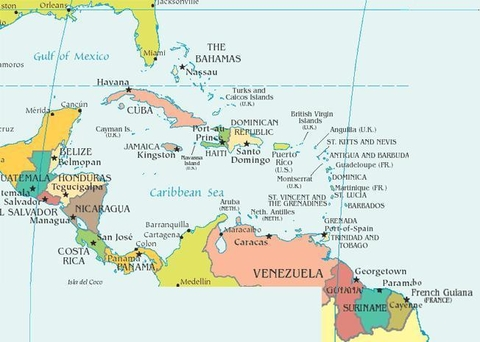
Having severely damaged their own oil industry, the government of Venezuela is intent on taking control of Guyana’s offshore resources. Venezuela seeks to annex 2/3 of Guyana and the adjacent offshore territory. The existing boundary was settled in accordance with international law in 1899.
Venezuela’s next step is to hold a referendum on assuming control of the contested territory. How thoughtful 🙄
“Question 5 proposes the creation of Venezuelan state of Guyana Essequibo and an accelerated plan for giving Venezuelan citizenship and identity cards to the Guyanese population.”
I suspect that very few Guyanese are interested in Venezuelan citizenship.
Ambassador Brian A. Nichols, Assistant Secretary for Western Hemisphere Affairs at the U.S. Department of State, emphasized that “efforts to infringe upon Guyana’s sovereignty are unacceptable.”
Venezuela’s referendum is scheduled for December 3.
Posted in Gulf of Mexico, Guyana, Offshore Energy - General, Uncategorized, tagged Chevron, deepwater development, Gulf of Mexico, Guyana, Hess, merger, Stampede on October 23, 2023| Leave a Comment »

Posted in Guyana, Offshore Energy - General, tagged Guyana, Mass Maritime, Noble Corp., scholarships on September 29, 2023| Leave a Comment »

Per OilNow, Noble Corp. is awarding 4 scholarships to 4 students to attend Massachusetts Maritime Academy to earn degrees in Maritime Transportation or Maritime Engineering. The first 2 students are pictured above at Mass Maritime.
The selection process was highly competitive, as it should be, with more than 100 applicants.
The students will intern for Noble in the summers, and have positions with the company after graduation. This is a great opportunity for the students and a smart move by Noble.
(As an aside, my wife, whom I met during the exploratory drilling on Georges Bank in the 1980s, is a native Cape Codder, and her mother once taught at Mass Maritime. I’m sure the students from Guyana will do well there, and will adapt to the brisk Buzzards Bay winters 😀)

Posted in Guyana, Offshore Energy - General, tagged Guyana, licensing round, OilNow, Sispro on September 18, 2023| Leave a Comment »
Good for Guyana and good for offshore energy!

In Guyana’s inaugural offshore licensing round, Sispro Inc. stands out as the only Guyanese company among the bidders. Located in South Cummingsburg, Georgetown, this indigenous start-up is a stand-out. So, who are the locals behind it?
Founded by four women – Dr. Melissa Varswyk, Abbigale Loncke-Watson, Dr. Ayodele Dalgety Dean, and Dee George, Sispro has leadership with diverse backgrounds in finance, health, education, energy, and human rights.
OilNow, Guyana
Interesting:
Out of the 14 bids made in Guyana’s inaugural offshore licensing round, Sispro was the only individual bidder, with others bidding as groups.
And it looks like they have assembled a capable, mostly Guyanese, team.

