
Posts Tagged ‘Gulf of Mexico’
Only about 1/4 of GoM oil production remains shut-in from Ida
Posted in Gulf of Mexico, hurricanes, Offshore Energy - General, oil, tagged Gulf of Mexico, Hurricane Ida, oil production on September 17, 2021| Leave a Comment »
GoM reserves tick upward after long decline
Posted in energy policy, Gulf of Mexico, Offshore Energy - General, oil, tagged BOEM, Gulf of Mexico, oil and gas reserves on September 14, 2021| 1 Comment »
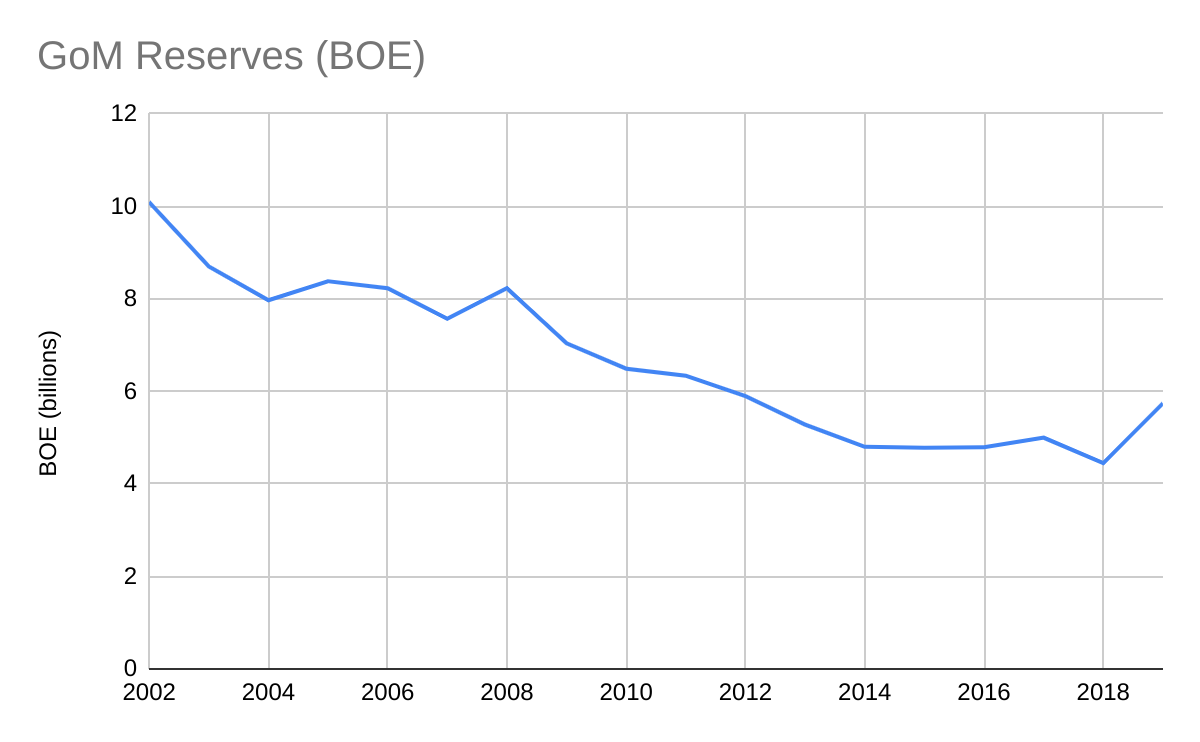
BOEM just released their update of Gulf of Mexico OCS oil and gas reserves as of 12/31/2019. Oil reserves increased by 35.2% as a result of 6 new fields being added.
The reserve additions are necessary and welcome given the high depletion rates from 2002 to 2018 when reserves (plotted above) declined steeply while production rates held steady or increased. The concerns about the sustainability of current GoM production rates, as expressed in our 7/26/2021 post, remain given the historically low levels of exploratory drilling. For the reasons presented in that post, our view is that the importance of GoM production will increase, not decrease, over the next decade.
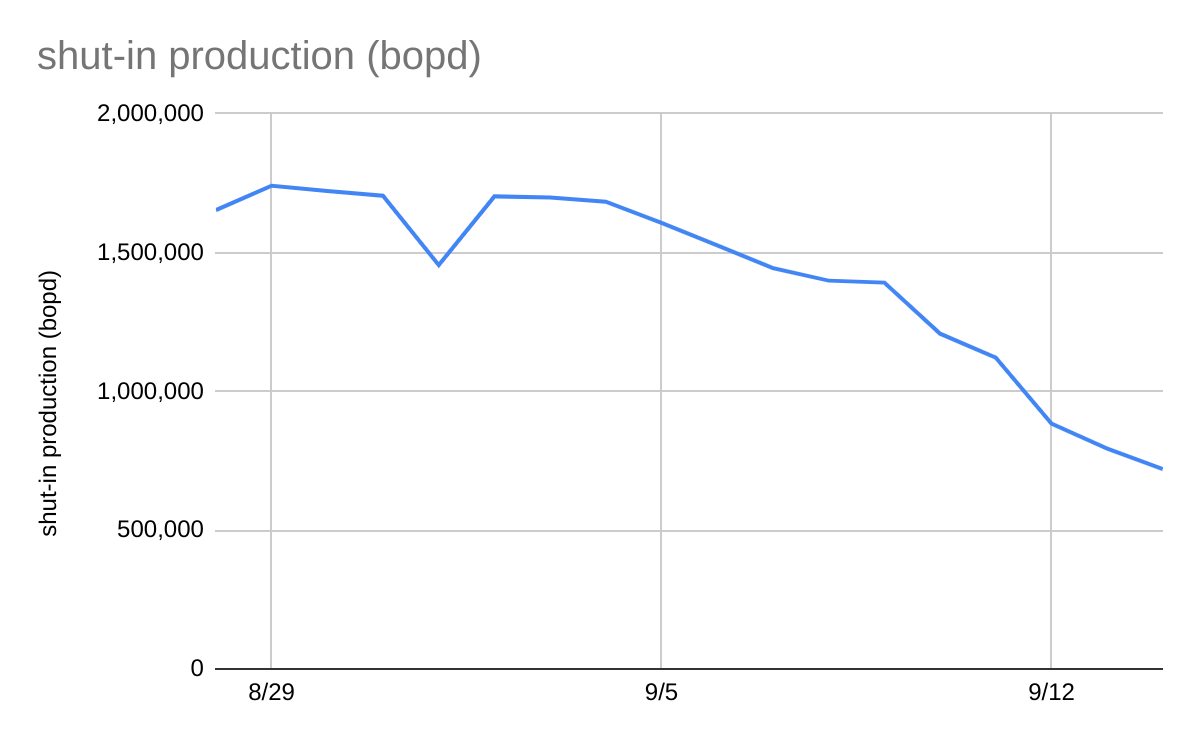
About 80% of GoM oil production is still shut-in
Posted in Gulf of Mexico, hurricanes, Offshore Energy - General, oil, tagged Gulf of Mexico, Hurricane Ida, oil production on September 7, 2021| Leave a Comment »
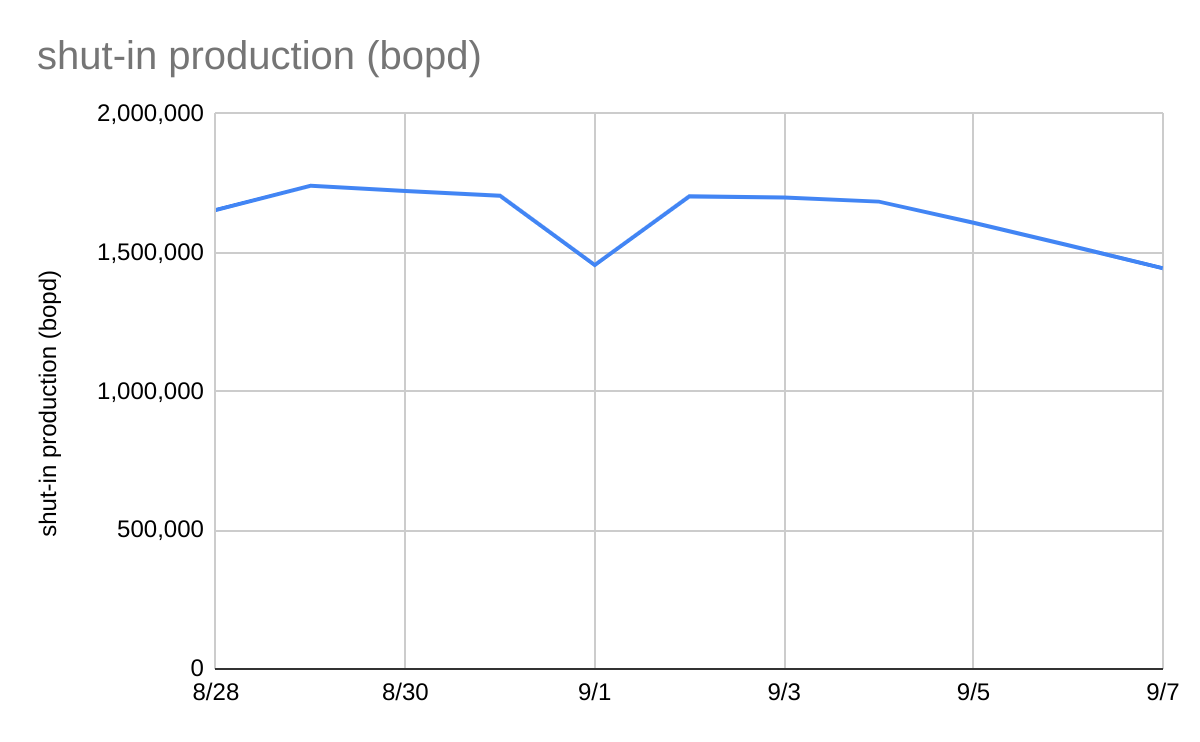
As expected given the magnitude and track of Ida, the necessary inspections, and the onshore damage, most GoM production remains shut-in. (BSEE data)
Small reduction in shut-in volumes
Posted in Gulf of Mexico, hurricanes, Offshore Energy - General, oil, tagged Gulf of Mexico, Hurricane Ida, offshore oil, shut-in production on September 3, 2021| Leave a Comment »
Shell reports damage to WD 143 Hub
Posted in Gulf of Mexico, hurricanes, Offshore Energy - General, oil, tagged Gulf of Mexico, Hurricane Ida, Mars, Olympus, Shell, Ursa, WD 143 on September 3, 2021| Leave a Comment »
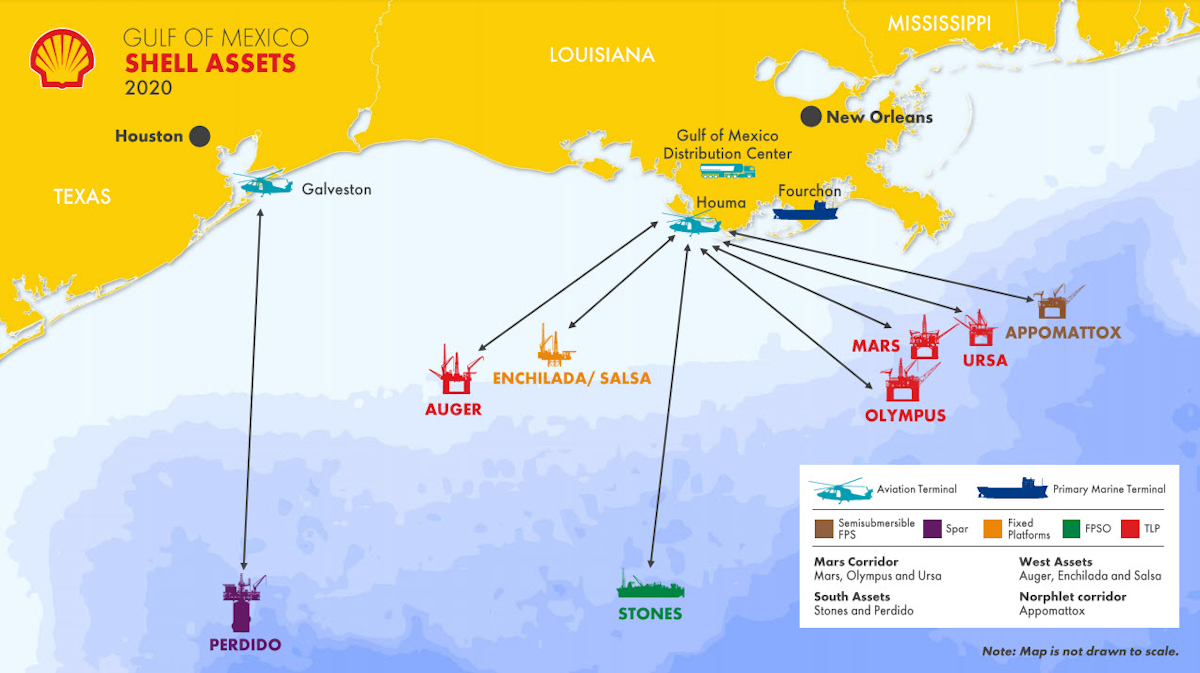
Shell Offshore Inc. (Shell), a subsidiary of Royal Dutch Shell plc, conducted an initial flyover of our assets in the path of Hurricane Ida. During this initial flight, we observed damage to our West Delta-143 (WD-143) offshore facilities. When it is safe to do so, we will send personnel offshore to provide a closer inspection of these facilities to understand the full extent of the damage and the degree to which our production in the Gulf of Mexico will likely be impacted.
Shell news release
This is a very significant report given the importance of the WD 143 platform in transferring all production from Shell facilities in the “Mars corridor.” These facilities include the Mars, Olympus, and Ursa platforms.
Shut-in Volumes Increase
Posted in Gulf of Mexico, hurricanes, Offshore Energy - General, oil, tagged Gulf of Mexico, Hurricane Ida, oil production, shut-in on September 2, 2021| Leave a Comment »
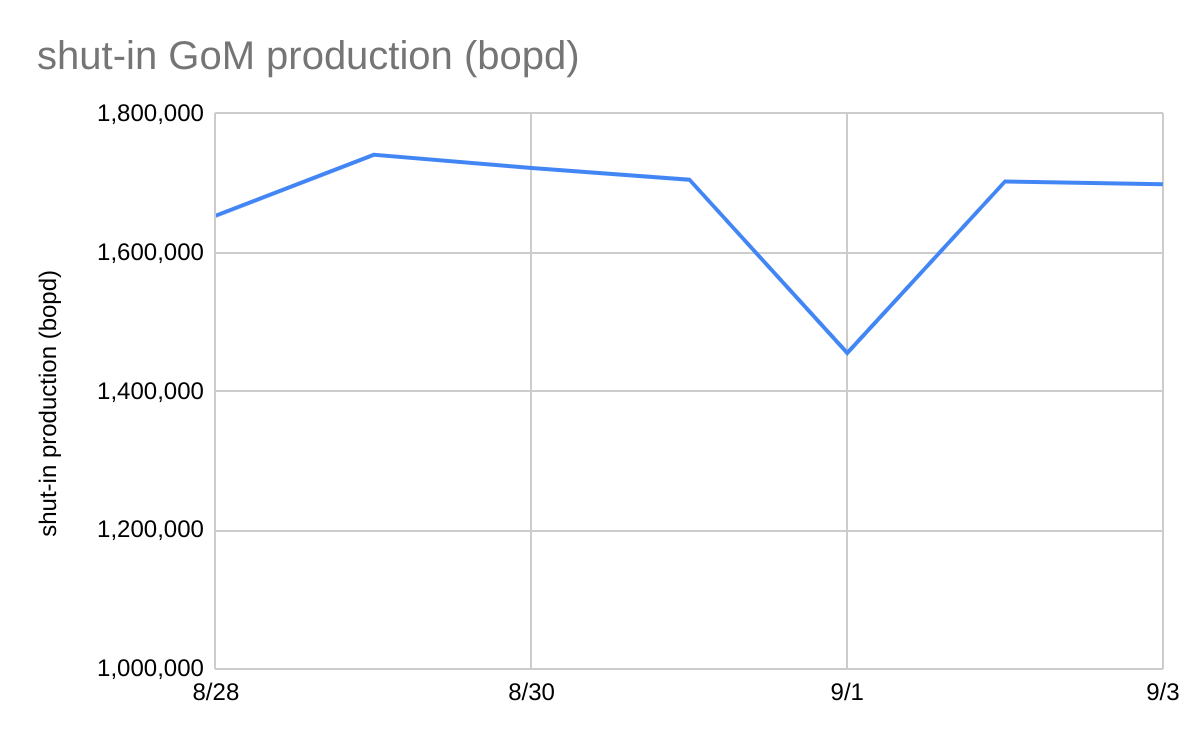
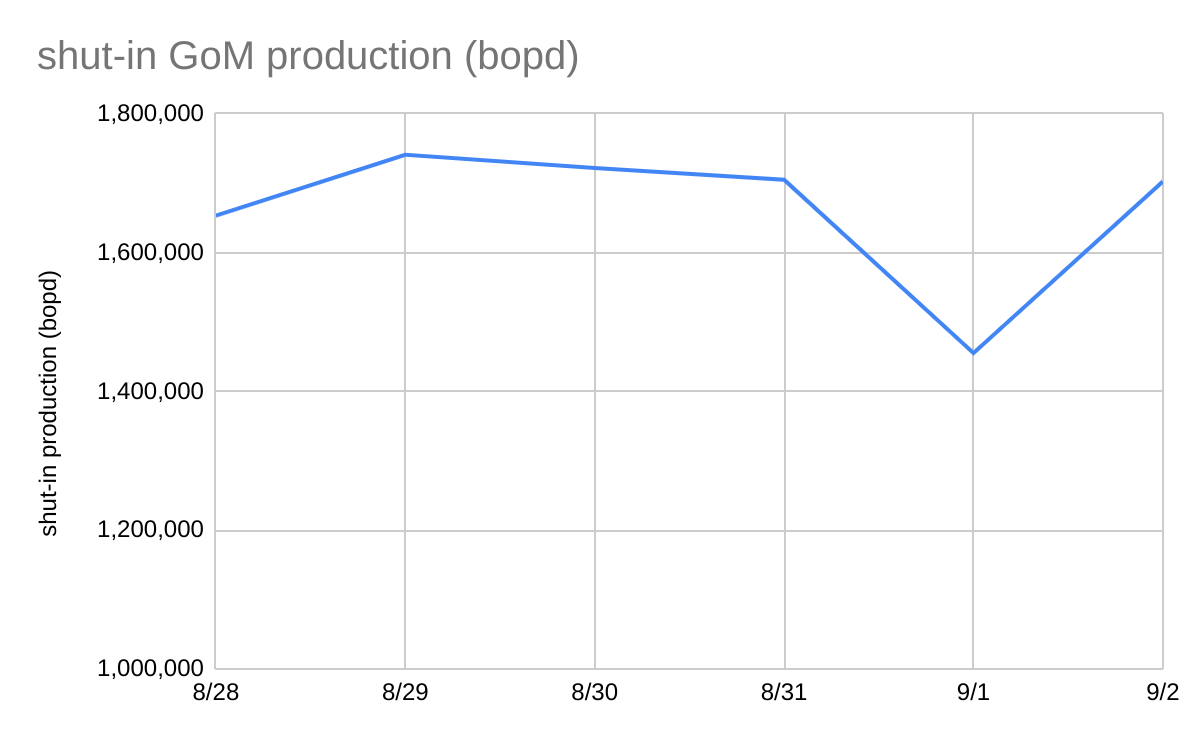
In a bit of a surprise, the volume of shut-in GoM oil production rebounded to more than 1.7 million BOPD (see BSEE’s 9/2 update). Because several deepwater platforms had reportedly resumed production, the sharp increase in shut-in volumes could have something to do with downstream facility damage or bottlenecks. The daily Ida shut-in volumes are plotted below.
Record of Decision for Gulf of Mexico Lease Sale 257 is a Positive Step
Posted in gas, Gulf of Mexico, Offshore Energy - General, oil, Regulation, tagged BOEM, DOI, Gulf of Mexico, Record of Decision, Sale 257 on September 1, 2021| Leave a Comment »
In light of the ongoing litigation regarding the Department of the Interior’s “leasing pause,” DOI’s Record of Decision for Sale 257 is most encouraging. The viewpoints expressed in the two quotes below are fundamental to the future of the OCS Oil and Gas Program. Hopefully, all parties can put aside their differences and build upon these consensus views.
While offshore exploration and development cannot be made risk free, OCS oil- and gas-related activities can be conducted safely and responsibly with strong regulatory oversight and appropriate measures to protect human safety and the environment.
ROD, p. 5
The decision to hold Lease Sale 257 recognizes the role that GOM oil and gas resources play in addressing the Nation’s demand for domestic energy sources and fosters economic benefits, including employment, labor income, and tax revenues, which are highest in Gulf Coast States and also distributed widely across the United States. Revenues from offshore oil and gas lease sales support national conservation programs and coastal resiliency for applicable coastal states and political subdivisions under the Gulf of Mexico Energy Security Act of 2006.
ROD, p. 7
Noble Comments on Status of Rigs
Posted in drilling, hurricanes, tagged Globetrotter !!, Gulf of Mexico, Hurricane Ida, Noble on August 29, 2021| Leave a Comment »
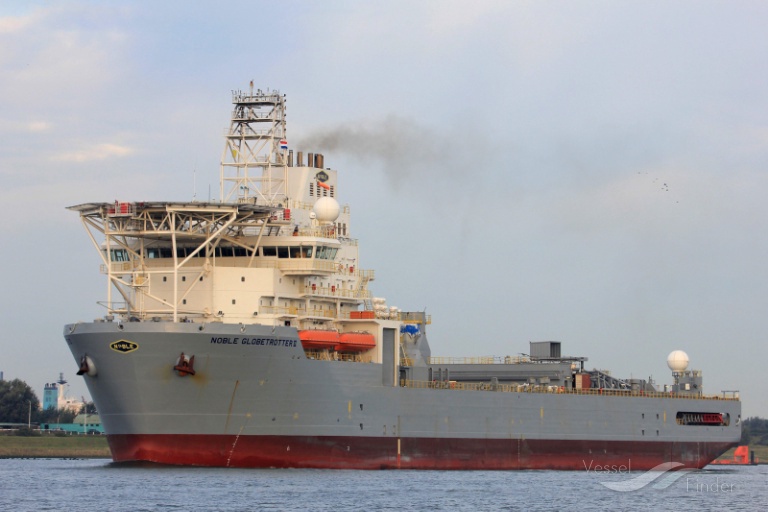
Noble doesn’t address the rumored disconnect and relocation issues, but in a carefully worded statement confirms that the Globetrotter II encountered hurricane conditions.
SUGAR LAND, Texas, Aug. 29, 2021 /PRNewswire/ — Noble Corporation (NYSE: NE, “Noble” or the “Company”) today announced that all personnel onboard the Pacific Sharav, Noble Globetrotter I, and Noble Globetrotter II ultra-deepwater drillships in the US Gulf of Mexico are safe and accounted for following Hurricane Ida. Each rig successfully secured its respective well in progress and took evasive actions to avoid the storm’s path. Of the three, the Noble Globetrotter II is the only vessel that encountered hurricane-force conditions. The vessel maintained stability throughout the weather event and is operating on its own power with functional marine and safety systems. A full assessment of its condition will be completed as soon as the weather clears.
BSEE Gulf of Mexico Region Director Lars Herbst to retire at the end of the year
Posted in Gulf of Mexico, Regulation, Uncategorized, tagged BSEE, Gulf of Mexico, IRF, Lars Herbst, macondo on August 26, 2021| Leave a Comment »
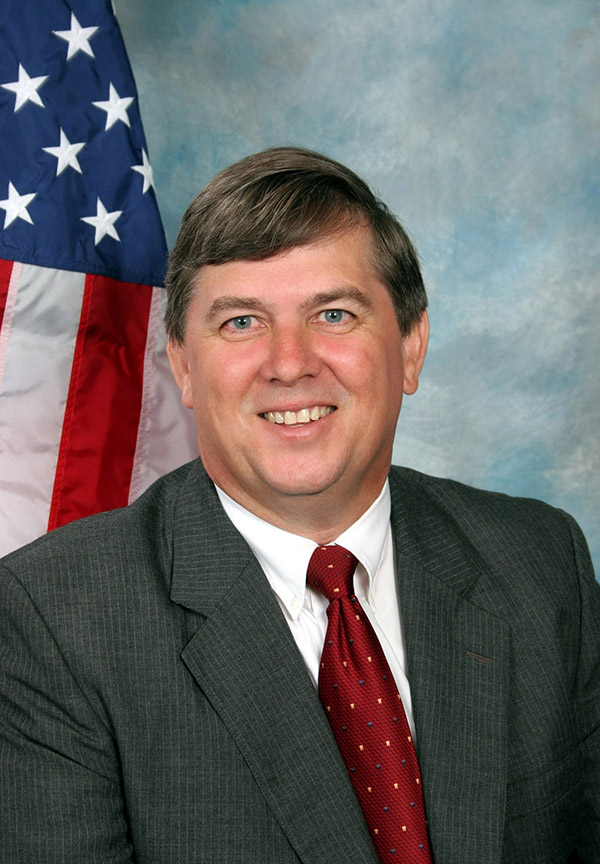
After an amazing 38 year career with MMS and BSEE, Lars Herbst has announced that he will retire at the end of 2021. Lars had important technical and managerial roles in the development of the deepwater Gulf of Mexico, the response to major hurricanes including Ivan, Katrina, and Rita, controlling the Macondo blowout and addressing the related regulatory issues, and the offshore industry’s response to the COVID-19. Lars was an active participant in the International Regulator’s Forum and is recognized worldwide for his operational and regulatory expertise. Best wishes to Lars as he transitions to the next phase of his life.
 Bud's Offshore Energy (BOE)