Both discoveries are near the company’s Ram Powell platform, where future production will flow via subsea tiebacks.
The Lime Rock prospect was acquired in Lease Sale 256 in November of 2020.
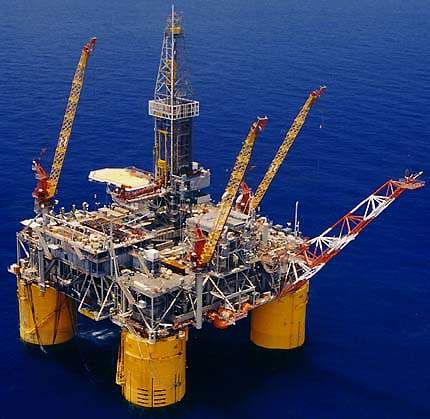
The new discoveries will help sustain production at Ram Powell, an early tension leg platform that has produced more than 250 million boe.
Ram Powell was the deepest production facility in the world (water depth of 3216′) when it was installed by Shell in 1997.
Access to nearby resources through regular lease sales facilitates continued production from existing platforms, reducing costs and environmental impacts.
BOE is reviewing BSEE compliance data and available incident reports for 2022. The Honor Roll companies will be announced later this month. Our preliminary finding is that 9 of the more than 120 operating companies met the high standard that we have established for this recognition. Our criteria:
Must average <0.3 incidents of noncompliance (INCs) per facility-inspection. Note that each facility-inspection may include multiple types of inspections (e.g. production, pipeline, pollution, Coast Guard, site security, etc). On average, each facility-inspection included 3.25 types of inspections in 2022. (Here is a list of the types of inspections that may be performed.)
Must operate at least 3 production platforms and have drilled at least one well (i.e. you need operational activity to demonstrate compliance and safety achievement).
May not have a disqualifying event (e.g. fatal or life-threatening incident, significant fire, major oil spill). Due to the extreme lag in updates to BSEE’s incident tables, investigation and news reports are used to make this determination.
Pacific and Alaska operations are considered separately.
This was the second crash for the operator (Rotorcraft) in two weeks, its second fatal for the year, and the third in the Gulf of Mexico since October.
On December 15, a Rotorcraft Leasing Bell 206L-4 with three aboard crashed while taking off from a platform 35 miles south of Terrebonne Bay, Louisiana. In that accident, one of the helicopter’s skids caught under the helipad’s perimeter railing, and the aircraft fell into the water below. (We have concerns that yesterday’s incident may have had a similar cause.)
On October 26, a Westwind Helicopters Bell 407 with three aboard crashed into the Gulf 25 miles south of Morgan City, Louisiana after the pilot apparently experienced an in-flight medical emergency and told his front seat passenger he “was not going to make it” and then slumped over the controls. The front-seat passenger then attempted to gain control of the helicopter prior to the water impact. After several hours, both passengers were rescued with serious injuries, but the pilot died. (This is why I never liked single pilot aircraft.)
Another of the company’s Bell 407s crashed on January 14 near Houma, Louisiana, killing both occupants. A witness to the accident said the helicopter appeared to dive nose-down into terrain. To date, investigators in that accident have not discovered any mechanical or structural failure that would account for that crash.
Get to work HSAC, NTSB, BSEE, USCG, FAA, and all others who are involved with offshore helicopter safety.
Not a word about this tragedy on the Rotorcraft, Walter Oil & Gas, or BSEE websites, and no public statements can be found. At a minimum, one would have expected condolences to the families and a commitment to find out what happened and prevent recurrences.
#BreakingNews@USCG searching for 4 people aboard a downed helicopter in the Gulf of Mexico approximately 10 miles offshore Southwest Pass, LA. The helicopter reportedly was in the process of departing an oil platform when it crashed.
Carbon-Zero US LLC of Dallas (a Cox Oil affiliate) has applied for up to $12 million in U.S. Department of Energy funds to develop a pilot sequestration hub in offshore storage fields about 20 miles from Grand Isle, according to officials from Cox Operating LLC, the Dallas operator that owns some of the storage fields.
Cox Operating LLC will “repurpose facilities and equipment” for the carbon storage project, according to a news release.
Should this company be authorized to repurpose Gulf of Mexico facilities for carbon sequestration?
Per BSEE Incident of Non-Compliance (INC) data for 2022, Cox had more component shut-in INCs (132) than any other company. Cox was second to the Fieldwood companies in the number of warning and facility shut-in INCs, and in the total number of INCs. 48% of the Cox INCs required either a component or facility shut-in.
Cox had an INC/facility-inspection ratio of 0.77, nearly 50% higher than the GoM average of 0.53.
Per the posted BSEE district investigation reports for 2022, Cox was responsible for 9 of the 30 incidents that were significant enough to require investigation. That is more than twice as many as any other company (next highest was 4).
The incidents included 3 serious injuries, 2 fires, a large gas leak, and oil spills of 114, 129, and 660 gallons. Per the posted reports, only one other company had an oil spill of >1 bbl. (Note: Only spills of > 1 bbl are routinely investigated by BSEE. One bbl = 42 gallons.)
While INCs were issued for only 3 of the 9 Cox incidents, a review of the reports suggests that INCs should have been issued for at least 4 of the other incidents.
Cox operates 375 platforms with installation dates as early as 1949. 134 of their platforms are > 50 years old. Only 66 were installed in the last 20 years and only 6 in the last 10 years (most recent December 2014). How will the carbon sequestration plans affect their massive decommissioning obligations?
Many of the Cox platforms were assigned by predecessor lessees. Those predecessors can only be held responsible for the decommissioning of facilities they installed, not for more recent wells or platforms and not for facilities that are repurposed for carbon sequestration.
Also, as noted in the discussion of Exxon’s 94 Sale 257 oil and gas leases, a competitively issued alternate use RUE is required (30 CFR § 585.1007) before sequestration operations may be conducted on an oil and gas lease.
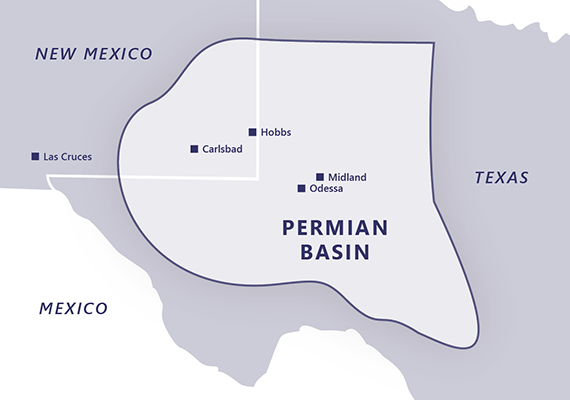
Like its salty neighbor to the east, the Permian Basin of west Texas and southeastern New Mexico has been proclaimed dead on many occasions. Such proclamations of their demise, however, are mere exaggerations as the Gulf of Mexico and the Permian Basin continue to thrive.
These historic oil and gas production powerhouses have delivered to global markets billions of barrels of oil and trillions of cubic feet of natural gas over the past century. Through the booms and the busts, the resiliency of each was made possible by the combination of ingenuity and perseverance and by advancements in techniques and technologies.
Thirty years ago the Gulf of Mexico was called “the Dead Sea” because of the decline in drilling and production activity. Deepwater technology reversed that trend and led to record Gulf of Mexico oil production averaging 1.9 million BOPD in 2019.
Similarly, horizontal drilling and hydraulic fracturing technology launched the shale revolution, and Permian oil production has risen impressively to 5.4 million BOPD.
Both the Permian and the GoM have the potential to sustain or increase production. The Permian Basin, much of which is privately owned, is more adaptable to market conditions and less exposed to political risks. The offshore program is dependent on effective long-term planning and supportive lease management policies. Unfortunately, the proposed 5 year leasing plan suggests a commitment to throttling offshore production rather than sustaining it. When will our energy policy pendulum swing back to a more balanced position?
On September 14, 2022, BOEM announced that 307 high bids from Lease Sale 257 in the Gulf of Mexico were accepted. BOEM also announced that one high bid was rejected for not providing the public with fair market value. BOEM has not identified the rejected bid.
Per BOEM’s Lease Area Block Online Query file, 306 Sale 257 leases were effective on Oct. 1, 2022. A comparison of these data with the sale results identified 2 Sale 257 leases that have not been awarded:
lease
block
high bidder(s)
bid
comments
G37261
GC 70
BHP
$3.6 million
lone bid; 7th highest bid in sale
G37294
GC 777
BP (75%), Talos (25%)
$1.8 million
2 bids; next highest $1.185 million
So one of these 2 bids was rejected and the other has lease not yet been awarded for some reason (or perhaps there has been a clerical/IT issue).
Which bid was rejected? I would guess it was the BHP bid even though that bid was the 7th highest bid in the entire sale. The fact that this bid was $2.5 to $3 million higher than the other 7 BHP bids (all of which were accepted) tells us that the company valued this tract highly. Perhaps BOEM, which has all of the geologic data, thought the value was even higher, which is why the bid may have been rejected.
There was another bidder (Chevron) for the BP/Talos tract, so the competition makes it less likely that the bid would have been rejected.


 Bud's Offshore Energy (BOE)