Feeds:
Posts
Comments

Posts Tagged ‘fire’

The Piper Alpha fire was the worst disaster in the history of offshore oil and gas operations and sent shock waves around the world. Eight months later another interactive pipeline-platform fire killed 7 workers at the South Pass 60 “B” facility in the Gulf of Mexico. A US Minerals Management Service task group reviewed the investigation reports for both fires and recommended regulatory changes with regard to:

  1. the identification and notification procedures for out-of-service safety devices and systems,
  2. location and protection of pipeline risers,
  3. diesel and helicopter fuel storage areas and tanks,
  4. approval of pipeline repairs, and
  5. location of ESD valves on pipelines.

Paul Schneider and I wrote a paper on the task group’s findings and that paper was published in Offshore Operations Post Piper Alpha (Institute of Marine Engineers,1991). The proposed regulations that followed summarized these findings and can be be found at this Federal Register link.

Lord Cullen’s comprehensive inquiry into the Piper Alpha tragedy challenged traditional thinking about regulation and how safety objectives could best be achieved, and was perhaps the most important report in the history of offshore oil and gas operations. Per Cullen:

Many current safety regulations are unduly restrictive because they impose solutions rather than objectives. They also are out of date in relation to technological advances. Guidance notes lend themselves to interpretations that discourage alternatives. There is a danger that compliance takes precedence over wider safety considerations and that sound innovations are discouraged.

Cullen advocated management systems that describe the safety objectives, the system by which those objectives were to be achieved, the performance standards to be met, and the means by which adherence to those standards was to be monitored. He called for safety cases that describe major hazards on an installation and provide appropriate safety measures. Per Cullen, each operator should be required in the safety case to demonstrate that the safety management systems of the company and the installation are adequate to assure that design and operation of the platform and its equipment are safe.

Links for the full Piper Alpha Inquiry: volume 1 and volume 2
Read Full Post »

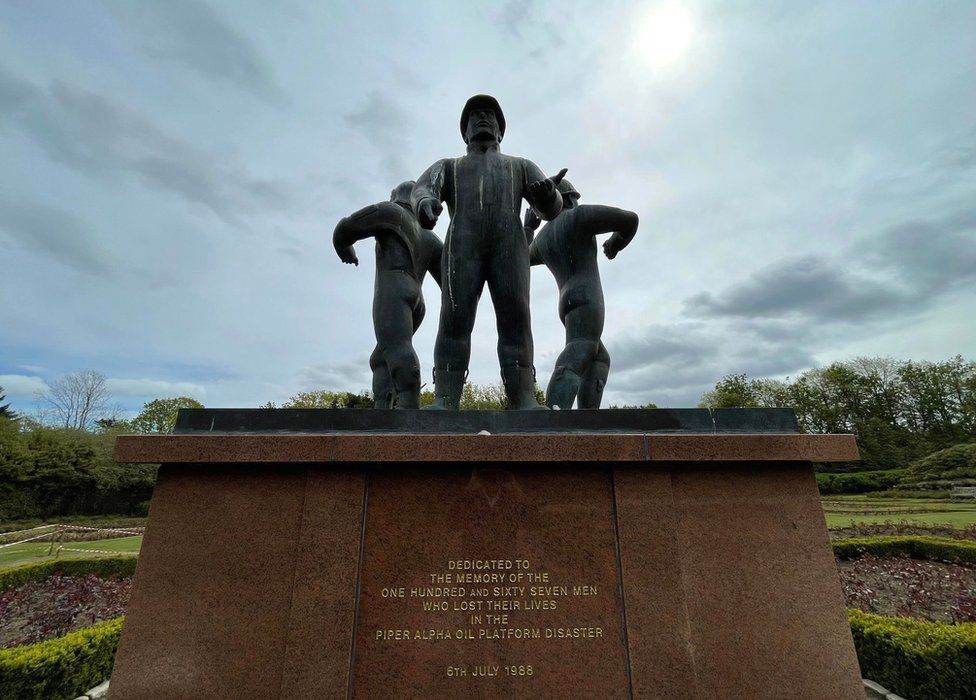
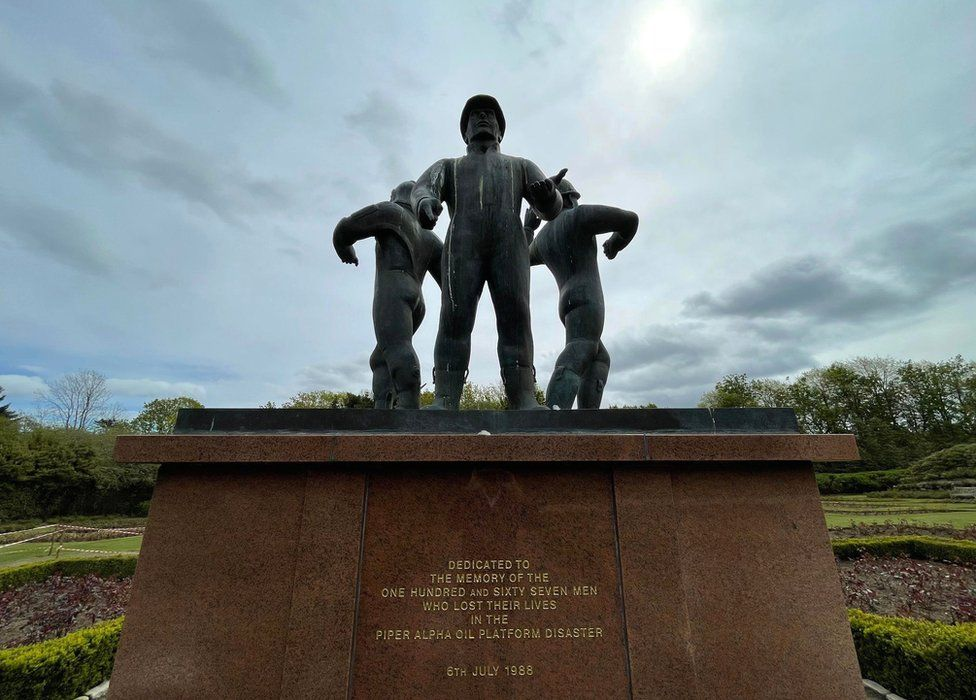
Piper Alpha Memorial Garden, Aberdeen, Scotland
Scottish Hazards

In terms of the total number of fatalities, the Piper Alpha fire was the worst disaster in the history of offshore oil and gas operations and sent shock waves around the world. Eight months later another interactive pipeline-platform fire killed 7 workers at the South Pass 60 “B” facility in the Gulf of Mexico. A US Minerals Management Service task group reviewed the investigation reports for both fires and recommended regulatory changes with regard to:

  1. the identification and notification procedures for out-of-service safety devices and systems,
  2. location and protection of pipeline risers,
  3. diesel and helicopter fuel storage areas and tanks,
  4. approval of pipeline repairs, and
  5. location of ESD valves on pipelines.

Paul Schneider and I wrote a paper on the task group’s findings and that paper was published in Offshore Operations Post Piper Alpha (Institute of Marine Engineers,1991). The proposed regulations that followed summarized these findings and can be be found at this Federal Register link.

Lord Cullen’s comprehensive inquiry into the Piper Alpha tragedy challenged traditional thinking about regulation and how safety objectives could best be achieved, and was perhaps the most important report in the history of offshore oil and gas operations. Per Cullen:

Many current safety regulations are unduly restrictive because they impose solutions rather than objectives. They also are out of date in relation to technological advances. Guidance notes lend themselves to interpretations that discourage alternatives. There is a danger that compliance takes precedence over wider safety considerations and that sound innovations are discouraged.

Cullen advocated management systems that describe the safety objectives, the system by which those objectives were to be achieved, the performance standards to be met, and the means by which adherence to those standards was to be monitored. He called for safety cases that describe major hazards on an installation and provide appropriate safety measures. Per Cullen, each operator should be required in the safety case to demonstrate that the safety management systems of the company and the installation are adequate to assure that design and operation of the platform and its equipment are safe.

Links for the full Piper Alpha Inquiry: volume 1 and volume 2
Read Full Post »

14.07.2011 | On Wednesday 13 July, a fire broke out in the compressor area of Valhall PCP. Today the Petroleum Safety Authority Norway (PSA) will send two representatives to Valhall to investigate the incident.

The fire, which was reported to the authorities yesterday afternoon, started at around 4.40 p.m. A standby vessel was deployed to put out the fire and at 6.45 p.m. it was confirmed that the fire had been extinguished. All personnel were evacuated and there were no injuries.

link

Read Full Post »

Per Upstream:

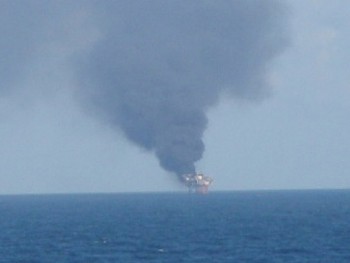
A fire at BP’s Valhall oil platform off Norway in the southern part of the North Sea forced the UK supermajor to halt production and evacuate the facility today. 

Valhall Complex (www.mfox.nl)

Read Full Post »

Reposted from Platt’s Oilgram News (31 January 2011):

Brazil’s Petrobras said January 28 it was forced to shut output at its Cherne II production platform after a January 19 fire on the structure, one of the oldest working in the offshore Campos Basin. The fire in an oil transfer pump unit was brought under control without injuries to crew members, damage to the environment or major structural damage to the platform, Petrobras said in a statement. The platform was producing about 9,300 b/d of crude oil when output was shut, Petrobras said, adding the field should be ready to restart production on February 1. Brazilian oil regulators, the country’s navy and environmental officials, and Petrobras technicians are investigating the cause of the fire, Petrobras said. The platform is one of two in the Chernefield, which recorded output of about 22,000 b/d of crude in November. Brazil’s petroleum regulator had an on-site inspection of the platform scheduled for June.—Jeb Blount

Read Full Post »

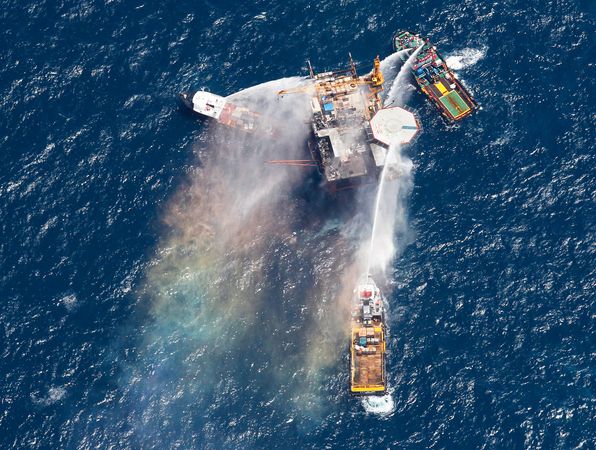
While this accident has almost nothing in common with the Macondo disaster and would have received little attention if it occurred before April 20th, the Mariner fire deserves close scrutiny.  Thirteen workers had to jump into the Gulf and the platform was badly damaged (destroyed?).  This was a major accident that could have been much worse.

Read Full Post »

Fire on Mariner Platform, Vermilion 380 from CultureMap.com

Summary of what we know:

-Mariner Energy production platform in Vermilion Block 380 in the Gulf of Mexico

-13 workers rescued; no reported casualties

– light sheen one mile long by 100′ wide was reported (the Coast Guard subsequently said there was no spill)

-fire was extinguished Thursday afternoon

-recent production rate reported to be 9.2 million cubic feet of gas per day and 1400 barrels of oil per day

-water depth of approximately 340,’ about 100 miles offshore

-fire reported to have started on a platform deck away from the wellheads at 0930 CDT

-crew reported to have been painting and sandblasting at the time.

-fire reported to have been from flammable material in storage on the platform

-wells have been shut-in (presumably ESD actuated subsurface safety valves)

-The Coast Guard and BOEMRE will investigate

Representatives Henry A. Waxman, Bart Stupak, and Edward J. Markey from the House Energy and Commerce Committee sent a letter to Mariner requesting a briefing by Sept. 10.

picture from NationalGeographic.com

Read Full Post »

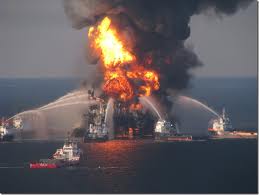
Fighting Deepwater Horizon Fire

This question is receiving a lot of attention since the topic was discussed at the Department of the Interior – Coast Guard investigation.

To the best of my knowledge, this concern was first raised by a one of our very smart and experienced contributors, Dr. Malcolm Sharples, who did not wish to be identified at the time.  Malcolm is now comfortable being identified, and I thought I would draw attention to his insightful comment.  See item 3 in this 30 April post.

Read Full Post »