
Feeds:
Posts
Comments

Posts Tagged ‘energy’

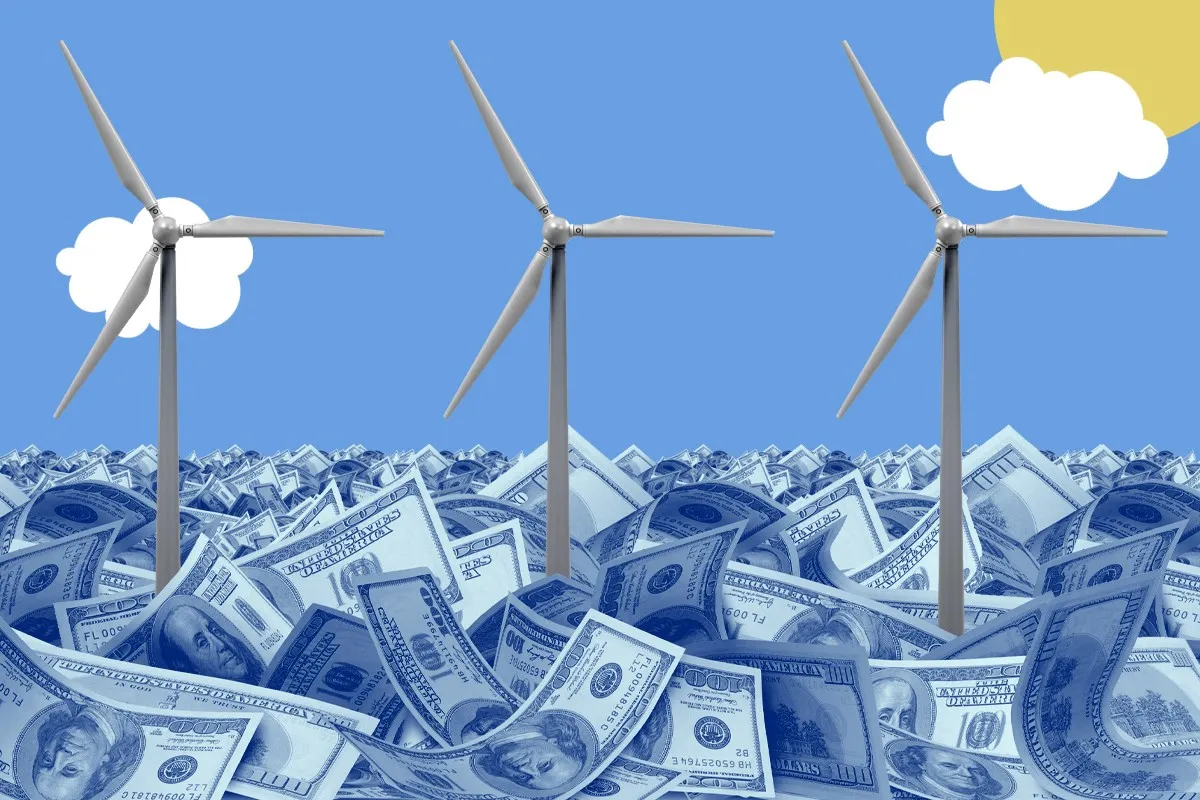
Equinor (2/3 Norwegian govt owned) is increasing its position in Ørsted (50.1% Danish govt owned). Given the ownership structure, public money is at risk for both countries.

The comments below are from a DN Norway article. They were made by CEO Torgrim Reitan after Equinor announced that the company will contribute NOK 10 billion (USD 1 billion) in Ørsted’s special share offering.

Given that the value of their initial NOK 26 billion (USD 2.6 billion) investment in Ørsted last fall has almost been cut in half, this is a bold move by Equinor. The company has been sharply criticized for its wind investments by private Norwegian investors.

“We want a closer partnership with Ørsted. We are two leading companies in offshore wind, and we believe a closer collaboration could create significant value for both Ørsted’s and our own shareholders.”

“This industry is now going through its first real crisis. That makes it quite clear what’s needed. We know a lot about this from oil and gas. What often happens in such times is consolidation.”

“We want a closer partnership with Ørsted. We are two leading companies in offshore wind, and we believe a closer collaboration could create significant value for both Ørsted’s and our own shareholders.”

“In recent weeks, we’ve had conversations with Ørsted management, and we’ve also had conversations with the Danish state. But the discussions have primarily been with Ørsted.”

“Ørsted is in a difficult situation right now. For us, as an industrial and long-term owner, it’s important to be supportive and helpful in such a situation. That’s why we’re putting in nearly a billion dollars.”

“This is a difficult decision, because clearly a lot of equity capital needs to be raised, but we have a fundamental belief in the industry, and also in the company. Ørsted’s underlying portfolio is a strong one.”

“Going forward, this will increase our debt ratio somewhat—maybe by about two percentage points. But we’re starting from a very low debt ratio. So we can manage this within our financial framework. As for capital distribution in 2026 and beyond, we will remain competitive.”

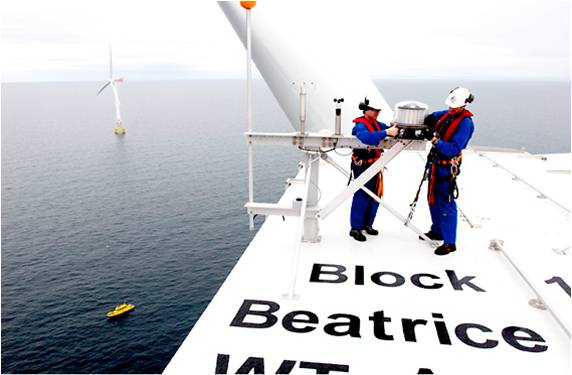
Meanwhile, Equinor is the only major oil company that remains invested in US offshore wind energy. Equinor’s Empire Wind project continues to be highly divisive.

Read Full Post »

Our Scottish contributor, JL Daeschler, brought this brilliant Sunday Times piece by Gillian Blowditch (pictured) to my attention. A few excerpts follow, but I recommend that you read the entire column.

“I’m writing this column from Applecross in the Scottish Highlands, where the view from the window is of the Cuillins. These immutable behemoths squat beneath an expanse of sky in which the light is invariably diffuse. It never gets old.” (I second that emotion!)

“Renewables are a vital part of our energy mix, but they require gas-fired back-ups. Yet, instead of tapping into our North Sea reserves, we’re committed to importing foreign gas. It’s not just an issue around energy security and cost, it affects our trade deficit and competitiveness against countries using cheaper, home-grown supplies. It increases our dependence on foreign supply chains.”

Meanwhile, we risk losing the valuable skills and expertise we have built up over 50 years of North Sea exploration. We are all paying the price for this obsession through higher energy bills and job losses.”

It is difficult to imagine a world in which it makes sense to import oil and gas but not produce it, while forcing our skilled workforce to work offshore in far flung corners of the globe, especially when we are importing from Norway, which is extracting oil and gas from the same seabed for which we are refusing to grant licences.”

According to a Survation poll commissioned by the Aberdeen & Grampian Chamber of Commerce and published last week, 68 per cent of voters want the country’s demand for oil and gas to be produced domestically, rather than imported.”

We all want to protect our environment and Scotland, with its vast natural resources and expertise in energy, should be leading the way. Instead, we have squandered an opportunity in favour of a facile show of moral posturing.”

Read Full Post »

link

Title: Temporary Withdrawal of All Areas on the Outer Continental Shelf from Offshore Wind Leasing and Review of the Federal Government’s Leasing and Permitting Practices for Wind Projects

Main points:

  • New leases: Immediately withdraws all OCS areas from wind leasing
  • Existing leases: Secretary of the Interior shall conduct a comprehensive review of the ecological, economic, and environmental necessity of terminating or amending any existing wind energy leases, identifying any legal bases for such removal, and submit a report with recommendations to the President
  • Review of Leasing and Permitting Practices:  The Secretary of the Interior, the Secretary of Agriculture, the Secretary of Energy, the Administrator of the Environmental Protection Agency, and the heads of all other relevant agencies, shall not issue new or renewed approvals, rights of way, permits, leases, or loans for onshore or offshore wind projects pending the completion of a comprehensive assessment and review of Federal wind leasing and permitting practices. 

Read Full Post »

A senior administration official who is familiar with the executive actions and authorized to brief Fox News Digital said Trump on day one will end “Catch and Release;” pause all offshore wind leases; terminate the electric vehicle mandate; abolish the Green New Deal; withdraw from the Paris Climate Accord; and take several major steps to assert presidential control over the federal bureaucracy.

The senior official told Fox News Digital that the energy executive order deals with “every single energy policy,” and addresses liquid natural gas, ports, fracking, pipelines, permitting and more, while also terminating President Biden polices he said “have constrained U.S. energy supply.” 

Read Full Post »

Previewing his speech at a New York City fundraiser last night, Obama said he wants to break “the pattern of being shocked at high prices and then, as prices go down, being lulled into a trance.”

“Let’s actually have a plan,” he said. “Let’s, yes, increase domestic oil production, but let’s also invest in solar and wind and geothermal and bio-fuels and let’s make our buildings more efficient and our cars more efficient.” USA Today

Encouraging.

Read Full Post »

Speakers list and link to live streaming

The Subcommittee on Energy and Power announces a multi-day hearing on “The American Energy Initiative.”  The first day of the hearing will be on Thursday, March 17, 2011, at 9:00 a.m. in 2123 Rayburn House Office Building.  It will focus on oil supplies, gasoline prices, and jobs in the Gulf of Mexico.


Read Full Post »

The tragedy in Japan has added yet more uncertainty to nervous energy markets:
Japan will likely need more imported oil and natural gas due to closures of nuclear reactors caused by Friday’s earthquake and tsunami, but volumes can’t be calculated accurately as it is unclear how much industrial output has been affected by the disaster and how long power nuclear and thermal power plants will remain closed. Wall Street Journal
It’s much too early to gauge how the nuclear power industry, which some have touted as a model for safety achievement, will be affected.
    Standards news and discussion:
    Offshore Safety Institute?
    The CEOs of major oil and gascompanies will meet March 18 to decide how to proceed with the formation of a US offshore drilling safety institute, William Reilly, the co-chair of the National Oil Spill Commission, said March 8. Platts Oilgram News
    New twist in Cuban drilling drama – Petrobras relinquishes interest
    Marco Aurelio Garcia, foreign policy adviser to President Dilma Rousseff, told reporters in Havana exploratory work off Cuba’s northern coast had not shown good results and that Brazil wanted to concentrate on its own oil fields.
    Since BP’s disastrous Deepwater Horizon accident in the Gulf of Mexico last April, the risks of offshore oil drilling have been a hot topic. One place it isn’t questioned much is Brazil, whose oil production industry is one of the fastest-growing in the world because of vast new deepwater oil reservoirs discovered in the past five years.
    Mexican Deepwater Update (Platts Oilgram News)
    Pemex has just begun to explore in Mexico’s Gulf of Mexico waters deeper than 1,000 feet, but 28 billion undiscovered barrels of oilequivalent are thought to exist in that area, some of which borders US territorial waters. Pemex officials said the company is forging a development plan for its first deepwater field, Lakach, located northeast of the state of Veracruz in about 3,200 feet of water. First production is expected in 2015.
    Environmentalists are furious at a proposal by the petroleum company Shell to start exploration drilling off one of Western Australia’s most treasured reefs. Ningaloo Reef off the north-west coast, has been nominated for World Heritage listing.

Read Full Post »

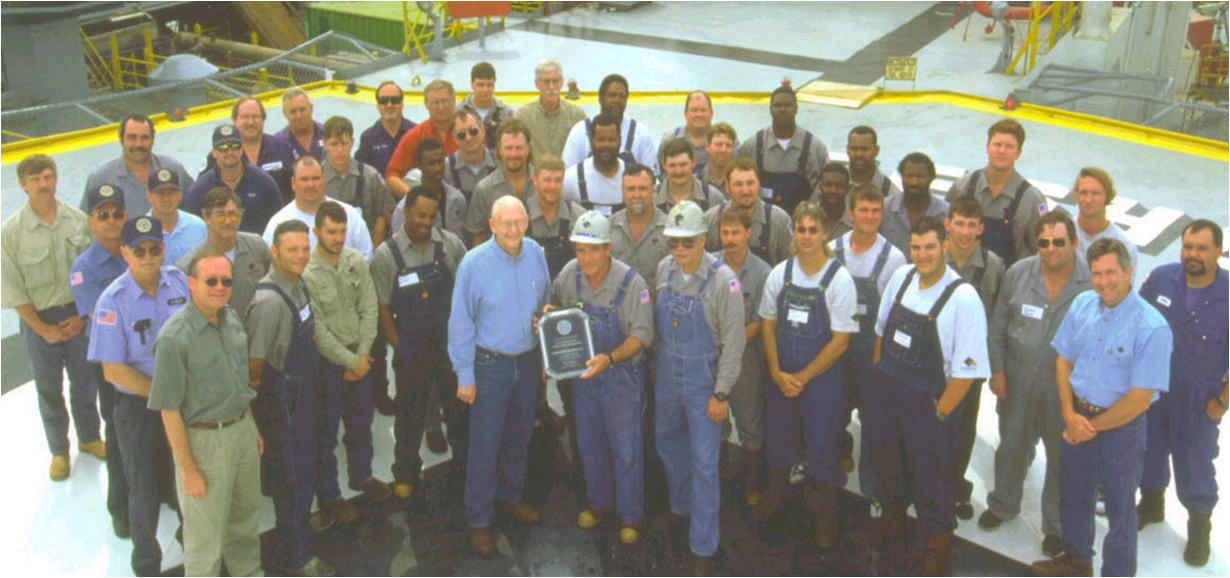
Diamond Offshore Workers Receiving SAFE Award Recognition

On Labor Day 2010, BOE is proud to salute the thousands of dedicated offshore professionals, in the US and around the world, who work in remote locations under challenging conditions to provide energy for our economy and our way of life. Regardless of one’s opinion about oil and gas operations, wind projects, and other sources of offshore energy, we should all appreciate the important contributions made by offshore workers.

While investigations and enforcement actions are necessary, positive recognition is even more important, especially at times like these.  The overwhelming majority of offshore workers do their jobs conscientiously and carefully, and make every effort to protect their colleagues and the environment.  It is these workers who are most at risk when an accident occurs, not those of us who are sitting behind a desk philosophizing and pontificating. Their lives and the lives of their friends and colleagues are threatened when accidents occur, their “back yard” is polluted when oil is spilled, and their jobs are at stake if offshore exploration and development are curtailed.

Fortunately for us, energy exploration and production doesn’t stop on holidays. Whether they are working or enjoying the day with their friends and families, BOE wants offshore workers to know that we appreciate their important contributions.  Happy Labor Day!

Read Full Post »

Offshore Energy Awakening?

When you wake up after a long nap (in this case 25 years), you don’t just leap out of bed.  You first squint at the light, yawn, flex an arm, stretch your legs, and prepare to rise and actually do something.  The President’s decision to open a small slice of the Atlantic to  exploration and consider new areas in the Atlantic and Eastern Gulf of Mexico in the new 5- Year Program may seem modest, but it demonstrates that the nation is waking up to the importance of our offshore energy resources.  After 25 years of neglect, almost everyone agrees that US energy policy has been an economic and national security disaster.  More and more Americans are also recognizing that denying access to offshore resources is not in the best interest of the environment – regionally, nationally, and globally.

Some political leaders remain in dreamland as evidenced by the large blue areas in the map below.  When you have cried “wolf” about offshore drilling for your entire political career, you either believe what you have been preaching or are concerned about the political implications of changing your position.  However, demonizing offshore energy development is no longer a smart political strategy, and the views of these anti-energy stalwarts may finally be challenged, even in their own states and districts.

We operations, safety, pollution prevention, and regulatory professionals have to hold up our end.  Safety disasters or pollution spectaculars are not acceptable.  We need to examine our programs, operations, and incidents openly and honestly, and anticipate what might go wrong.  When an accident occurs, we need to learn what happened and why, and make sure it doesn’t happen again – anywhere in the world.

Read Full Post »

In 1973, while a graduate student at Penn State, I wrote a paper entitled “The Use of Natural Gas in Improving Air Quality.”  My professor, Richard Gordon, a terrific economist who greatly influenced my thinking about energy, liked the paper but thought I was too optimistic about the availability of natural gas.  The sense at the time was that natural gas was a premium energy source in short supply.

Fast forward to 2010.  Another Penn State professor, Terry Englander, estimates recoverable natural gas resources of 500 tcf for the Marcellus shale alone.  Annual gas consumption for the entire US is only about 23 tcf.  The whole world consumed about 113 tcf in 2008.

Dan Yergin is calling it the natural gas revolution.   Boone Pickens has called the US the “Saudi Arabia of natural gas.”  In addition to the shale gas, we have huge Alaskan gas reserves awaiting a pipeline (the economic viability of which may be threatened by the major discoveries in the lower 48). Prospects for ultra-deep gas in the Gulf of Mexico are also looking brighter in the wake of McMoRans major deep gas discovery.  There is excellent natural gas potential in the eastern Gulf near major gas markets, and at least one Atlantic state (Virginia) has expressed interest in renewed exploration in the Atlantic.

Given the dearth of good economic news, why isn’t more attention being given to this natural gas bonanza?  Boone Pickens and others are doing their part, but there should be a national dialogue on how we can use these resources to improve our economy, energy security, and the environment.

How about a parade down Constitution Avenue to celebrate our good fortune?

Celebrating the Natural Gas Revolution?

Read Full Post »