Feeds:
Posts
Comments

Posts Tagged ‘Coast Guard’


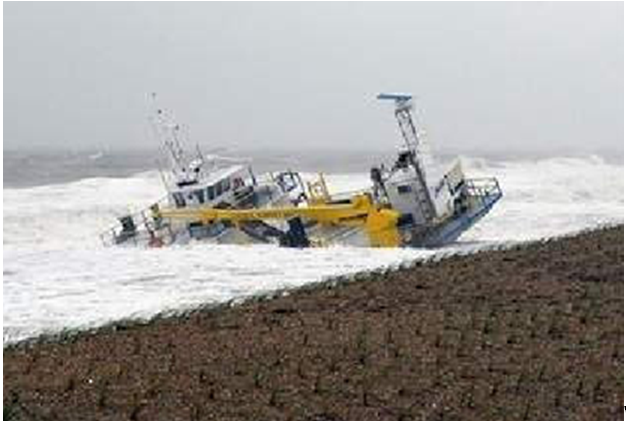
Liftboat Russell Peterson, May 12, 2008


Malcolm Sharples reminds us that the Coast Guard still hasn’t completed the investigation of the tragic liftboat accident in May 2008. The boat was conducting research for a proposed offshore wind project.  Why the delay?

Here is more information from Malcolm:

Liftboat  Russell W. Peterson damaged in storm, 1 person died, 1 person injured ; “One dead, one rescued as research vessel sinks off Rehoboth”.  One crewman died today after gale force winds pounded a specialized research ship that was launched in March to study Delaware’s offshore wind power resources, forcing the Coast Guard to pull two crewmen from the sinking vessel. Coast Guard Petty Officer Nick Cangemi said one of the two crew members of the RV Russell W. Peterson did not have any vital signs when a helicopter arrived on the scene this morning. “We took both people to the hospital in Maryland, where the hospital declared one of the gentlemen deceased,” Cangemi said. They were taken to Peninsula Regional Medical Center in Salisbury, MD.  The ship was left adrift and ran aground at Bethany Beach.
Read Full Post »

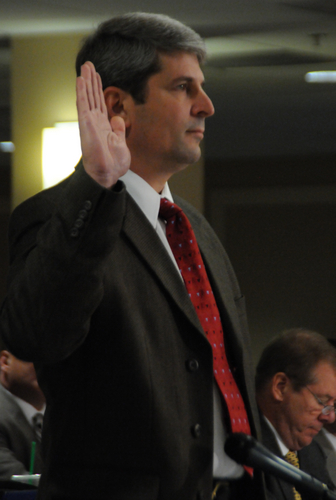
There were so many simultaneous activities — starting with the displacing of mud to the pumping of fluids overboard — it was difficult to see what was going on. John Gisclair, Sperry Sun (see Times Picayune summary of yesterday’s BOEM-Coast Guard hearing)


John Gisclair


Too much at once? Hurrying to finish the job? Cost concerns?  No one in charge? Distracted by managers visiting the rig? One or more of these human and organizational factors appears to have contributed to the blowout.

Similarly, the rigid commitment to “batching” the development wells (for efficiency reasons) seems to have been a factor contributing to the Montara blowout in the Timor Sea.  If after removing the corrosion cap on the production casing, the work on the H1 well had continued in series (i.e. casing tied-back, BOP installed, and well secured) before moving on to another well, this blowout may have been prevented.

At both Macondo and Montara, time pressures (perceived or real) may also have affected the way negative-pressure tests were conducted or assessed.  These tests should have detected the influx of hydrocarbons via the shoe track.

Read Full Post »

  • C-SPAN has opted not to cover this weeks BOEMRE – Coast Guard Macondo hearings.  Instead, they are presenting recordings of political rallies, assorted senatorial and gubernatorial candidate debates, and similar fare.  In other words, all three channels will be dedicated to the usual political posturing that already receives non-stop national coverage, and the investigation into one of the more significant accidents in US history will be ignored.
  • Why does it take 3 weeks to post the transcripts of these hearings? The Australians posted each Montara transcript within hours after the day’s session ended.

Read Full Post »

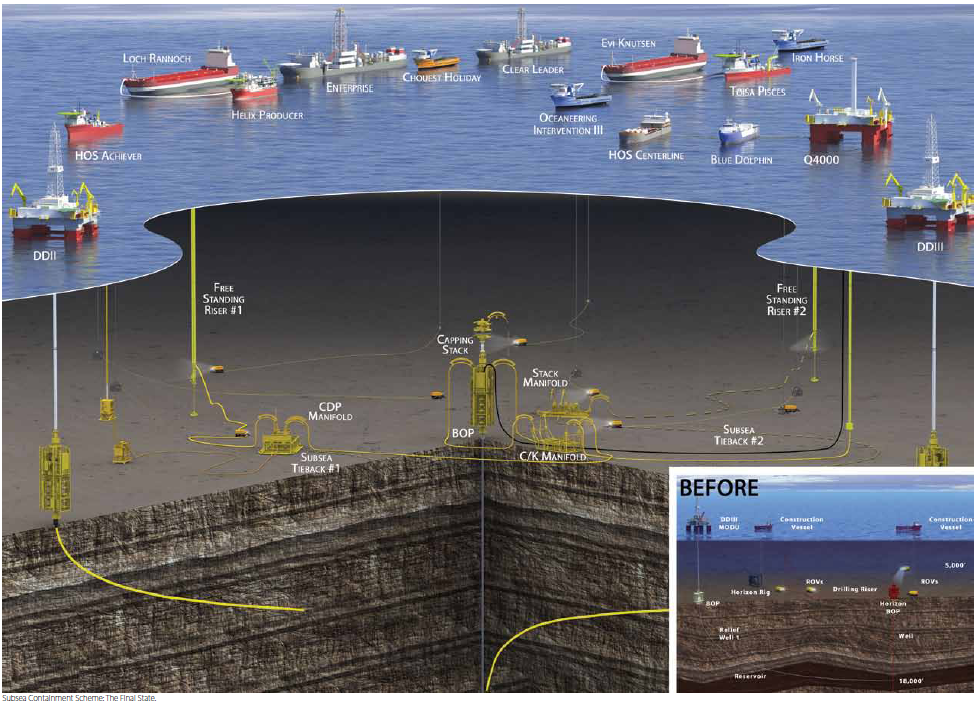
BP has issued a report on the response capabilities and innovative new technology and procedures demonstrated following the Macondo blowout. While the report is somewhat promotional (understandably), the information is summarized and compiled in a useful manner and underscores the magnitude of the response.  Although most close observers probably have issues with certain actions taken by BP or the Unified Command, one cannot deny the unprecedented size and complexity of the response.  We can only imagine how chaotic this response could have been if the operator did not have the resources and the will to mount such an enormous effort.

I hope BP will be similarly forthcoming with the results of their internal review of the blowout’s causes.  When will that very important report be released?

At some point, BP’s candid observations on the functioning and effectiveness of the Unified Command system would also be helpful. The more we can learn about the differences of opinion and problems that arose during the response, the better we can prepare for future incidents.  Will any of the official investigations be looking into these aspects of the response?  At BOE, we are particularly interested in the well intervention, capping, containment, and relief well decisions.

Read Full Post »

Jim Magill with unidentified official

After an outstanding 22-year career, Jim Magill is retiring from the US Coast Guard on 27 August.  Among other important responsibilities, Jim worked closely with the Minerals Management Service on OCS oil and gas issues, served as  Executive Director of the National Offshore Safety Advisory Committee, and developed regulations for offshore rigs and platforms.

For most of his career, Jim worked on the Coast Guard’s epic Subchapter N rule for offshore facilities.  For reasons beyond Jim’s control, completion of this rule was excruciatingly slow, even by Federal rulemaking standards.  To give you a sense of how slow this process has been, we annotated the timeline on this geologic time chart! 🙂

Timeline for the Coast Guard's Subchapter N Rule (click on figure to enlarge)

We know Jim will enjoy his new home, golf, consulting, and all of his “retirement” endeavors; and Subchapter N will now be someone else’s problem!

Read Full Post »

We believe that we should not start the static kill operation until we have installed the last liner run in the bottom of the relief well.  Admiral Allen

Comment: This is understandable given the potential for communication between the 2 wells at or near the reservoir level.

– There has been some media talk about allowing the well to flow during a possible hurricane evacuation.  I don’t see any direct quotes from Admiral Allen that specifically say that, so I hope these media reports are inaccurate.  As indicated in previous posts, this is an unnecessary measure that could be viewed as irresponsible.

-Safety Leadership has been a major emphasis of drilling contractor training programs in recent years.  Transocean’s program is summarized here.  Safety leaders create an environment in which each employee is comfortable raising any and all concerns without fear of repercussions.  Safety leaders are also encouraged to raise safety issues with the companies that contract their rigs.  Judging by comments at the BOEMRE-CG Macondo hearings, some DWH employees were not comfortable raising safety concerns to their supervisors or the operator.   During the Montara blowout hearings, there was evidence of similar reluctance on the part of contract employees.   Drilling and other contractors need to take a close look at their Safety Leadership programs and find out why these entrenched attitudes persist.

Read Full Post »

The Washington Salute - "You Did It!"

Not surprisingly, the finger pointing in Washington is as out-of-control as the well that precipitated it.  This public spectacle is now more closely followed than the actual spill response.  As a result, perceptions become reality and reality is altered to support perceptions.

If you want to participate in the bash-fest and dare to compete with Washington’s best, here are some tips:

  1. Shoot high; go after the top dogs.  Blast President Obama, President Bush, and every other President going back to James Buchanan.  Why did Buchanan allow Colonel Drake to drill the first oil-well in Buchanan’s home state of Pennsylvania in 1859.  Why wasn’t he more visible when the well started to flow?  Where was his leadership?  Did you see the mess? No wonder they call it Oil Creek.
  2. Criticize every Secretary of the Interior starting with Albert Fall who in 1922 leased, without competitive bidding, the Teapot Dome fields to Harry Sinclair of Sinclair Oil. Talk about the culture of corruption which Fall fostered and the Department’s inability to clean house.
  3. Humiliate every employee of the MMS.  When you are pointing the finger, don’t worry about getting the bureau’s name right (90% of the critics don’t).  Feel free to call it the Minerals and Mining Service, Marine Minerals Survey, Mineral Management Service (which mineral?), Minerals Management Services (which services?) or any other name you can say with a snarl.  Be sure to make some juvenile comment about how the MMS is literally in bed with industry.  Don’t bother to read the investigation reports which show how few people were actually involved and are much less sensational than the media accounts.
  4. Take a cheap shot at the Coast Guard by shouting that the military needs to take over the spill response.  Sadly, even some retired military officers have made such comments.  They should know better.
  5. Take shots at whale lovers.  If it weren’t for them we could go back to burning whale oil.
  6. Criticize alternative energy proponents for the slow pace of renewable energy development.  Point out how Cape Wind has been dragging their feet on the Nantucket Sound project.  (BTW, it was the maligned employees of MMS who took the initiative, on their own, to draft the legislation that provided a framework for offshore renewable energy development.  Were it not for their leadership, renewable energy development would have been even further delayed.)
  7. Take a few swipes at BP, Transocean, Halliburton, and Cameron, but save your best shots for other oil industry targets.  BP et al are too easy for the real pros.  Talk about your vast experience in working with this industry.  If that’s too big of a stretch, even by Washington standards, talk about your friend or relative who worked in the industry.
  8. Point to past incidents regardless of their relevance.  Disregard historical data that contradict your position.
  9. Don’t criticize US energy consumption, at least not if you have any political ambitions.  Consumption is fine; production is the problem.
  10. Lastly, take your shots with great confidence.  Style is more important than substance.  Be loud and certain.

Remember Harry Truman’s sage advice:

“If you want a friend in Washington,” he once said, “get a dog.”

Read Full Post »

For almost 220 years the Coast Guard has been rescuing distressed mariners, defending our borders, protecting our maritime interests, and responding to environmental threats.  With regard to the latter, the Coast Guard is once again demonstrating outstanding leadership in directing the unprecedented national response to the Macondo spill.

I worked closely with Coast Guard personnel throughout my career, both in the field and at the headquarters level, and was extremely impressed with their dedication and professionalism.  This military service sometimes goes unnoticed and performs many thankless tasks, like the major spill response it is engaged in today.  On Memorial Day, we salute the Coast Guard for its sacrifice and public service.  Well done!

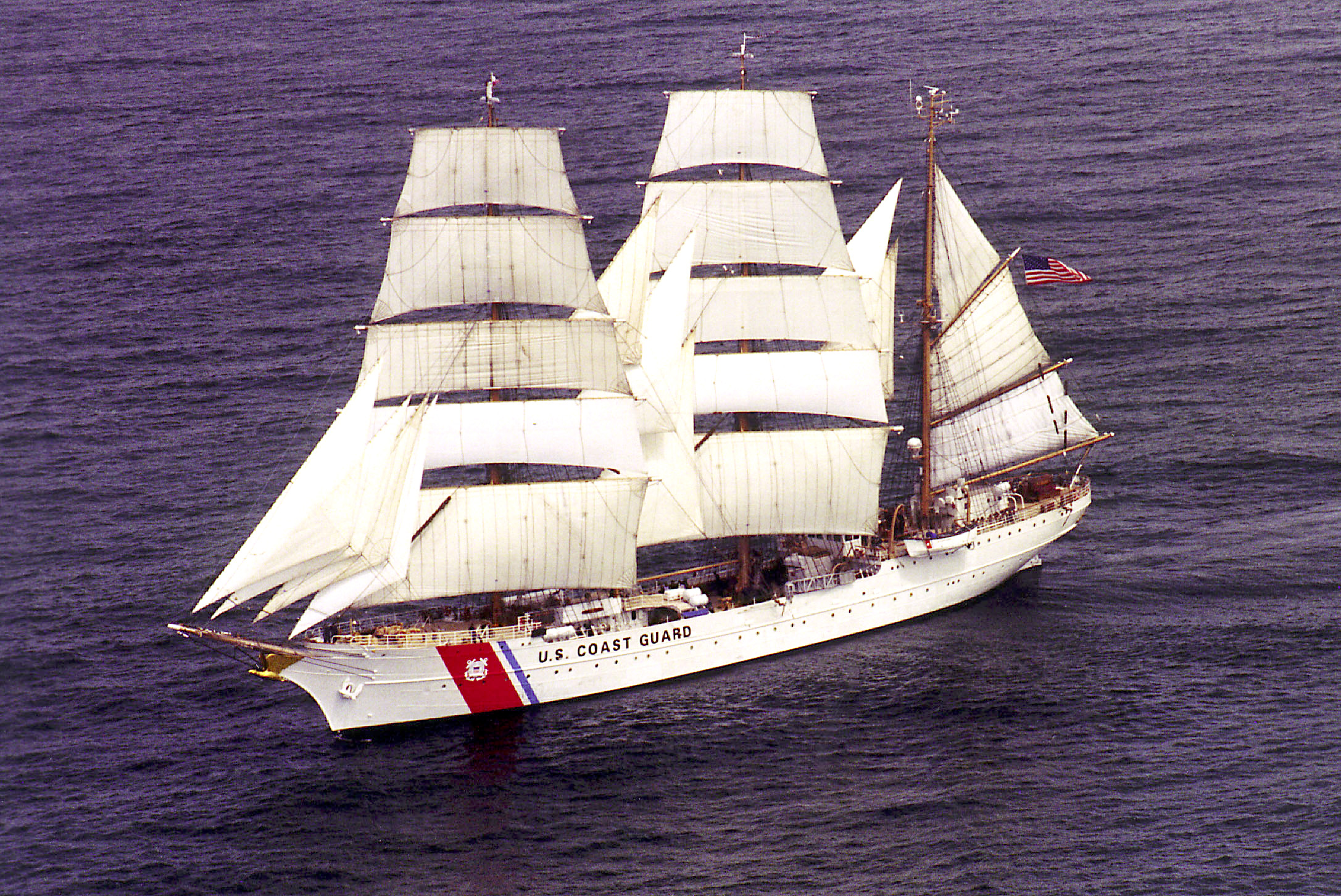
Coast Guard Eagle - tall ship and training vessel

Read Full Post »

This is the nightmare scenario that we supporters of offshore oil and gas development dreaded and worked so hard to prevent – workers missing, fire raging, and oil flowing.  Santa Barbara, Ixtoc, and most recently Montara were horrible drilling blowouts, but no lives were lost.  Barring an Earth Day miracle, or series of miracles, that will not be the case this time.

BP and Transocean are not rogue companies.  BP had a near flawless safety and compliance record in US waters over the past 2 years.  Transocean is a respected drilling contractor.  The Deepwater Horizon is a modern mobile drilling unit, and was staffed with a skilled and competent crew.  So what went wrong?  Is the challenge of drilling deep beneath the earth from a floating facility in thousands of feet of water too great to achieve the level of perfection that is necessary and expected?  I don’t think so, but we clearly have a lot of soul searching to do.

For now, the focus must be on the search for the missing workers and regaining control of the well.  We can count on the Coast Guard, which is once again providing outstanding leadership during a crisis, to do everything possible to find the workers.  With regard to the well, an ROV must successfully actuate a ram on a BOP stack located on the ocean floor.  If that doesn’t work, we are in for a long siege.

Read Full Post »

« Newer Posts