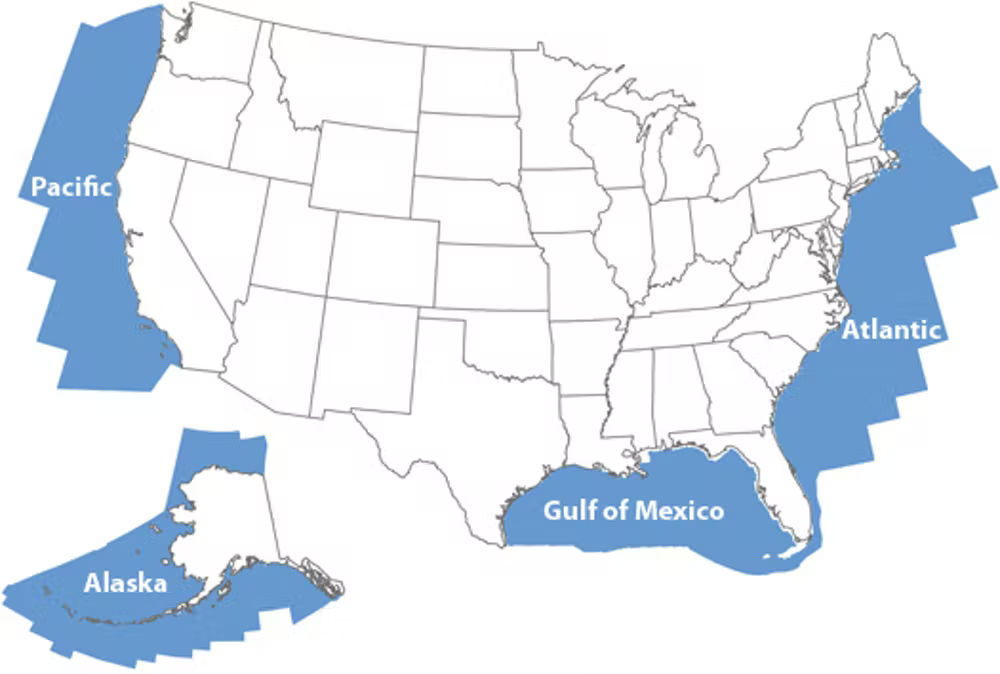
Ignore the significant oil and gas potential of arctic and subarctic Alaska, the Atlantic, the Pacific, and the Eastern Gulf of Mexico (where the best prospects are >125 miles from the coast of Florida).
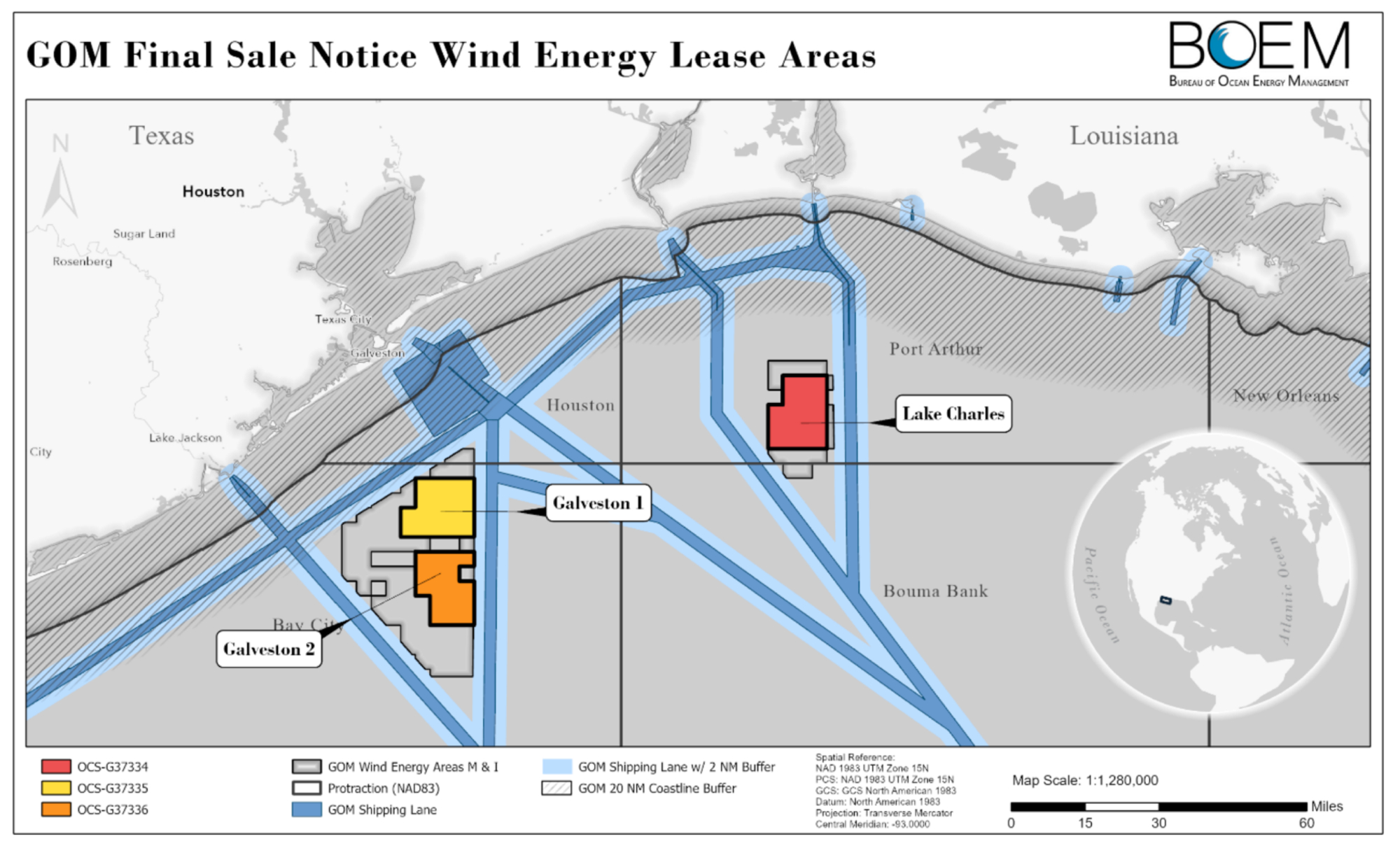
BOEM’s Final Sale Notice for the upcoming Gulf of Mexico wind auction identifies 3 lease areas (see map below). Wind operations in these areas should not significantly conflict with other GoM activities, including oil and gas operations.
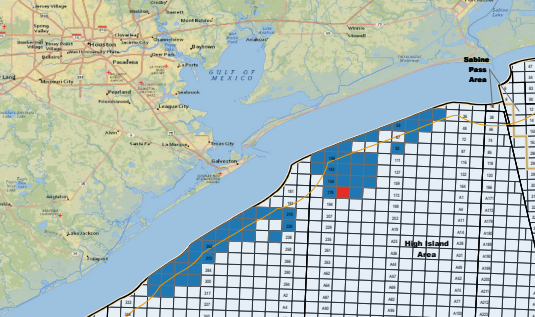
Those who followed Exxon’s recent lease acquisitions may be amused by the map below from BOEM’s siting analysis document. The 94 Exxon leases acquired at Oil and Gas Lease Sale 257 (yellow blocks) are misidentified as “Carbon Capture Lease Blocks.” As has been discussed at length on this blog (most recently here), Sales 257 and 259 were oil and gas lease sales. Although Exxon’s intentions are now well known, they may not conduct carbon sequestration operations on these leases unless they are competitively reissued or converted. (Is BOEM’s siting document implying that conversion of the Exxon leases is a fait accompli?) The regulations for such conversions, and for CCS operational activities, have yet to be promulgated. A draft of these regulations is expected later this year, and the comments should be spirited and diverse.
ENERGYWIRE has reported that the Department of the Interior will publish the legislatively mandated carbon sequestration rule later this year. Given that even close followers of the OCS program were completely unaware of the enabling legislative provisions prior to their enactment, the proposed DOI rule will provide the first opportunity to formally comment.
Within the oil and gas industry and the environmental community, there are considerable differences of opinion about carbon sequestration in general, and more specifically, offshore sequestration. All interested parties are encouraged to submit comments on these important regulations.
Some background information on the sequestration legislation and subsequent actions:
amend the OCS Lands act to authorize “the injection of a carbon dioxide stream to sub-seabed geologic formations for the purpose of long-term carbon sequestration.”
exempt CO2 injection from the restrictions on ocean dumping by stipulating that such injection “shall not be considered to be material (as defined in section 3 of the Marine Protection, Research, and Sanctuaries Act of 1972.” Without this exemption, CO2 streams would clearly be “material,” as defined in 33 U.S.C. 1402, and would be subject to the stringent requirements of that act.
direct that “not later than 1 year after the date of enactment of this Act, the Secretary of the Interior shall promulgate regulations to carry out the amendments made by this section.” (This deadline has been missed, which is rather common for such directives.)
3/29/23: Exxon bid at Sale 259 on 69 nearshore tracts with little oil and gas potential. Once again, this was strictly an oil and gas lease sale and Exxon’s CCS intentions were clear. Nonetheless, the leases were awarded.
Exxon and other companies intend to commercialize carbon sequestration, and Exxon projects an astounding $4 trillion CCS market by 2050. Such a market will of course be dependent on mandates and subsidies, and the costs will ultimately be borne by taxpayers and consumers.
Is it not a bit unsavory and hypocritical for hydrocarbon producers to capitalize on the capture and disposal of emissions associated with the consumption of their products? Perhaps companies that believe oil and gas production is harmful to society should exit the industry, rather than engage in enterprises that sustain it.
Last week, BOEM announced the acceptance of all 69 of Exxon’s Sale 259 carbon sequestration bids. This is despite these facts: (1) Exxon’s intentions were known, (2) there were no provisions for CCS bidding in the Notice of Sale, (3) no environmental review of CCS leasing was conducted, and (4) there are no procedures for evaluating CCS bids.
Absent some type of legislative maneuver, carbon sequestration is not authorized under these leases. If Exxon is just acquiring the leases for evaluation purposes in preparation for a possible CCS sale in the future, their lease acquisitions may be okay. If they are planning on retaining these leases for actual sequestration operations, that is not okay, at least not until a competitive process has been established for awarding or reclassifying such leases.
It’s also noteworthy that there was a second bidder for one of the blocks (in red above). Presumably that company, Focus Exploration, was interested in acquiring the tract for oil and gas exploration purposes. However, the Focus bid was a bit lower, so Exxon got the tract.
In addition to the 94 nearshore Texas leases Exxon acquired in Sale 257, the company was the sole Sale 259 bidder for all but one of 69 nearshore Texas blocks. The exception was High Island 177 (in red above). So who gets that lease?
the company (Exxon) that was the sole participant in a de facto CCS sale (bid of $182,750)
the company (Focus Exploration) that was participating in the announced oil and gas lease sale (bid of $145,177)
If Exxon is just acquiring these leases for evaluation purposes in preparation for a possible CCS sale in the future, their lease acquisitions may be okay. If they are planning on retaining these leases for actual sequestration operations, that is not okay, at least not until a competitive process has been established for awarding or reclassifying such leases. To date, no lease terms or bid evaluation procedures have been proposed for carbon sequestration leases; nor has an environmental review been conducted pursuant to NEPA.
What a completely pointless exercise! £20 Billion on a Carbon Capture Storage Plan. I wonder which private companies and individuals are being awarded these insane contracts I really do feel like Alice at times like these, except this is no Wonderland! 1984 more like…. pic.twitter.com/PCVTgETM1W
On September 14, 2022, BOEM announced that 307 high bids from Lease Sale 257 in the Gulf of Mexico were accepted. BOEM also announced that one high bid was rejected for not providing the public with fair market value. BOEM has not identified the rejected bid.
Per BOEM’s Lease Area Block Online Query file, 306 Sale 257 leases were effective on Oct. 1, 2022. A comparison of these data with the sale results identified 2 Sale 257 leases that have not been awarded:
lease
block
high bidder(s)
bid
comments
G37261
GC 70
BHP
$3.6 million
lone bid; 7th highest bid in sale
G37294
GC 777
BP (75%), Talos (25%)
$1.8 million
2 bids; next highest $1.185 million
So one of these 2 bids was rejected and the other has lease not yet been awarded for some reason (or perhaps there has been a clerical/IT issue).
Which bid was rejected? I would guess it was the BHP bid even though that bid was the 7th highest bid in the entire sale. The fact that this bid was $2.5 to $3 million higher than the other 7 BHP bids (all of which were accepted) tells us that the company valued this tract highly. Perhaps BOEM, which has all of the geologic data, thought the value was even higher, which is why the bid may have been rejected.
There was another bidder (Chevron) for the BP/Talos tract, so the competition makes it less likely that the bid would have been rejected.
When can we expect a statement from Exxon on their intentions for the 94 blocks they acquired? Those 94 blocks (31% of the entire sale) are the elephant in the room, yet we have heard nothing from the company. Given Exxon’s apparent interest in using these leases for CCS purposes, and the tax credits and Federal funding associated with CCS projects (as per the Infrastructure Bill and Inflation Reduction Act), clarification regarding Exxon’s intentions would seem to be appropriate.
Pursuant to section 50264(b) of the Inflation Reduction Act of 2022 (Pub. L. No. 117-169), Congress has directed BOEM to award leases to the highest valid bidders in Lease Sale 257, which was held on November 17, 2021. Consistent with this direction, BOEM has accepted 307 of the highest valid bids, totaling $189,888,271.
A total of 33 companies participated in the lease sale, generating $191,688,984 in high bids for 308 tracts covering 1.7 million acres in federal waters in the Gulf of Mexico. One bid was rejected for not providing the public with fair market value.
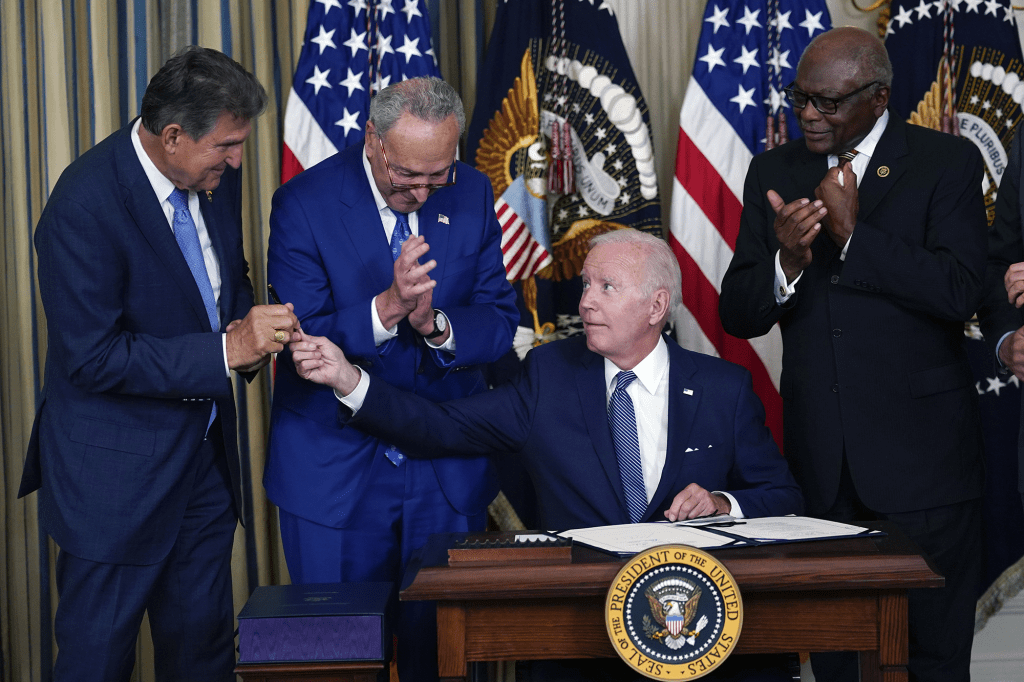
Per legislation signed by the President on Aug. 16, 2022:
(b) LEASE SALE 257 REINSTATEMENT.— (1) ACCEPTANCE OF BIDS.—Not later 30 days after the date of enactment of this Act, the Secretary shall, without modification or delay— (A) accept the highest valid bid for each tract or bidding unit of Lease Sale 257 for which a valid bid was received on November 17, 2021; and (B) provide the appropriate lease form to the winning bidder to execute and return.