In addition to the settlement with the Dept. of Justice, the pipeline operator has reached settlements with the State and County. In addition to a $4.9 million fine, the company agreed to inspection and leak detection measures similar to those in the Federal settlement.
Posts Tagged ‘California’
Still waiting for the investigation report on the Huntington Beach pipeline spill, but Amplify settles with State and County governments
Posted in California, oil spill response, pipelines, Regulation, tagged Amplify, California, Huntington Beach, Orange County, pipeline spill on September 9, 2022| Leave a Comment »
California says YES to offshore drilling…
Posted in California, energy policy, Offshore Energy - General, tagged Andrew Meredith, California, offshore drilling, Rock Zierman, SB953 on May 21, 2022| Leave a Comment »
Not really, but current economic and energy security realities doomed a bill to prohibit drilling and production in State waters. Strong quotes from bill opponents:
“SB 953 was held because it didn’t work — it was going to cost the state billions of dollars for a symbolic victory,” Andrew Meredith, president of the State Building and Construction Trades Council of California, said in a statement. “The California Senate is rightfully more concerned with actually improving the plight of workers and our environment than chasing headlines.”
Politico
“I think most legislators understand that every barrel of oil we don’t produce here under our strict environmental rules must be imported by foreign tankers floating offshore in our crowded ports from Iraq, Saudi Arabia, or the Ecuadorian rainforest,” California Independent Petroleum Association CEO Rock Zierman said in a text message.
Politico
Workshop to advance California offshore decommissioning, April 21, 2022, Newport Beach
Posted in California, conferences, decommissioning, tagged California, decommissioning, Orange County Coastkeeper on January 25, 2022| Leave a Comment »
Per our post about old disputes preventing common sense decommissioning solutions for offshore California facilities, we were pleased to learn that an Orange County Coastkeeper’s workshop will address the flaws in the California’s unworkable rigs-to-reefs program with the objective of advancing decommissioning programs.
Coastkeeper’s upcoming Retiring Offshore Rigs Summit, or ROR, comes roughly ten years after Coastkeeper’s Rigs to Reef Conference in 2010. While that conference succeeded in passing new decommissioning and artificial reef enhancement laws, the language was not workable. In the decade since that legislation, known as AB 2503, or the “California Marine Resources Legacy Act” was signed into law, it was never implemented by the state.
Orange County Coastkeeper
Link for further information on the workshop.
Previous posts on California decommissioning:
- John Smith’s excellent presentation on the decommissioning outlook and challenges
- Old disputes prevent common sense solutions
- The Troubling Case of Platforms Hogan and Houchin
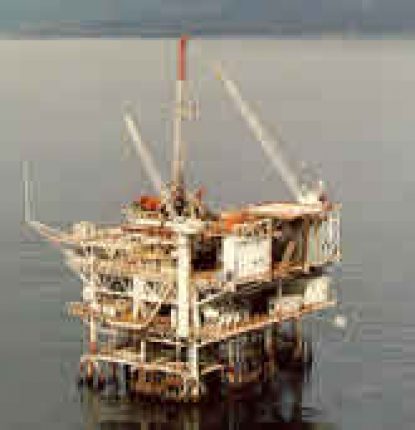
Eva joins the long list of shut-in platforms offshore California
Posted in California, Offshore Energy - General, pipelines, tagged California, pipeline spill, Platform Eva on December 27, 2021| 2 Comments »


Per the LA Times, a DCOR pipeline has been identified as the source of a sheen in California State waters near Bolsa Chica State Beach. The pipeline transports oil from Platform Eva. All platform and pipeline operations in the vicinity have ceased.
California Decommissioning: old disputes prevent common sense solutions
Posted in California, decommissioning, energy policy, rigs-to-reefs, tagged California, decommissioning, rigs to reefs on November 30, 2021| Leave a Comment »
Despite scientific support, California’s “rigs to reefs” program has made little progress. Comments in yesterday’s LA Times article help explain why:
Fed by concerns from some environmental advocates and a skepticism about the motives of California’s billion-dollar oil industry, the Rigs to Reefs program that passed in 2010 was so complicated by political compromise that the permitting process became almost unworkable, (State Sen.) Hertzberg said.
Not a single oil company has applied in the history of the program, according to the State Lands Commission, which has jurisdiction over state waters.
LA Times
“Oil companies want a clear path to compliance,” he said. “They’re operating in many cases at a loss, but it’s cheaper to operate at a loss than it is to face millions for decommissioning.”
Gary Brown, Orange County Coastkeeper
Jerry Schubel on the benefits of rigs-to-reefs programs
Posted in California, decommissioning, energy policy, Offshore Energy - General, rigs-to-reefs, tagged California, decommissioning, Jerry Schubel, rigs-to-reefs on November 2, 2021| Leave a Comment »
Veteran marine science advocate Jerry Schubel, former president of Long Beach’s Aquarium of the Pacific, is among those pushing for offshore oil platforms to be transformed for new ocean uses. He points out that the underwater portion of the structures already are a boon to marine life.
“They have enormous value as ecosystems because of the life that has grown on and around them,” he said.
He points out that other states have rigs-to-reefs programs — and California does as well, though it needs funding before it can function. Once the ball gets rolling, oil companies could be tapped to cover costs with fees drawn from the money they would save by not having to haul dismantled rigs ashore. Schubel estimated that turning platforms into reefs could cut decommissioning costs in half.
But Schubel says artificial reefs should be just the beginning. How about fish farms? Research labs? Windmills? Hotels for divers?
“The uses,” he said, “are limited only by our imagination.”
Orange County Register
Well said Dr. Schubel! For a full list of alternative uses for offshore platforms see the official Rigs-to-Reefs+++ page.
Calls for the cancellation of Pacific OCS leases
Posted in accidents, California, Offshore Energy - General, pipelines, tagged Beta Unit, California, lease cancellation, pipeline spill on October 22, 2021| Leave a Comment »

A group of environmental organizations demanded Wednesday that the Biden administration suspend and cancel oil and gas leases in federal waters off the California coast after a recent crude oil spill.
NBC LA
While not the disaster that some had predicted, this spill is another setback for California offshore production. However, cancellation of the remaining producing leases would be a very difficult and costly proposition for the Federal government. At this time, the Beta Unit operator appears to be minimally responsible for the spill, so what would be the basis for cancelling those leases? Cancelling other producible leases would be even more problematic.
CALIFORNIA OCS PLATFORM DECOMMISSIONING OUTLOOK AND CHALLENGES
Posted in California, decommissioning, Offshore Energy - General, tagged California, decommissioning, John B Smith on September 24, 2021| Leave a Comment »

For those interested in California offshore decommissioning, attached is an excellent update presented at a 2020 forum by my former colleague John Smith.
Hogan and Houchin Part II: California State Waters
Posted in California, decommissioning, offshore, Offshore Energy - General, tagged California, Hogan, Houchin, MMS, Signal Hill, State Lands Commission on September 22, 2021| Leave a Comment »
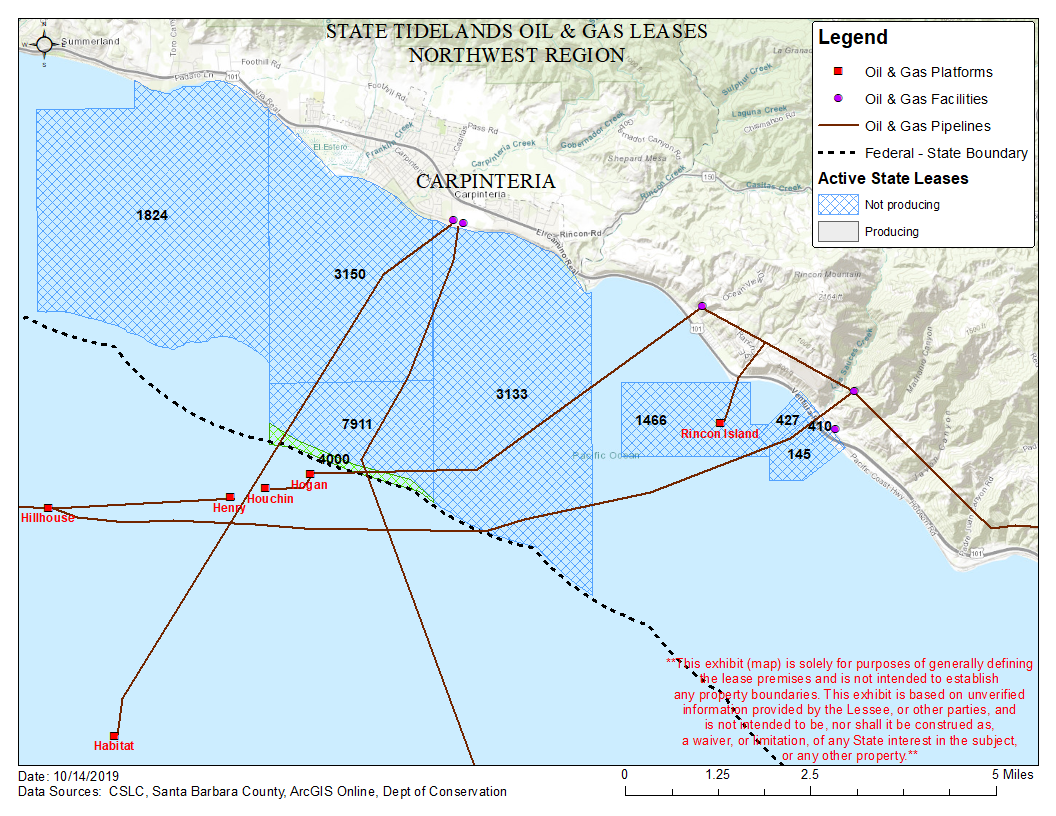
The troubled past of Platforms Hogan and Houchin extends into California State waters. In the 1990’s, Signal Hill and affiliates launched plans to drill directionally from Hogan into adjacent State leases 4000, 7911, and 3133 (see map above). These plans were dubious from the outset given MMS (Federal regulator) concerns about Hogan’s structural integrity. The planning process was never successfully concluded and the 3 State leases were terminated in 2019. For full details see this California State Lands Commission report:
In a related action, the State is suing Signal Hill for unpaid rentals on the pipeline lease that carried production from Hogan to shore. The amount due is approximately $287,000.
Rigs to Readiness!
Posted in California, tagged California, exercise, Hogan, Marines, Pacific, security on July 13, 2011| Leave a Comment »

Platform Hogan, Santa Barbara Channel
A Marine with the 11th Marine Expeditionary Unit’s maritime raid force searches the oil platform Hogan for threats during an exercise July 10. The MRF, along with a section of the unit’s aviation combat element, Marine Medium Helicopter Squadron 268 (Reinforced), and command element, are taking part in a large-scale exercise with ocean and urban-based scenarios.
 Bud's Offshore Energy (BOE)