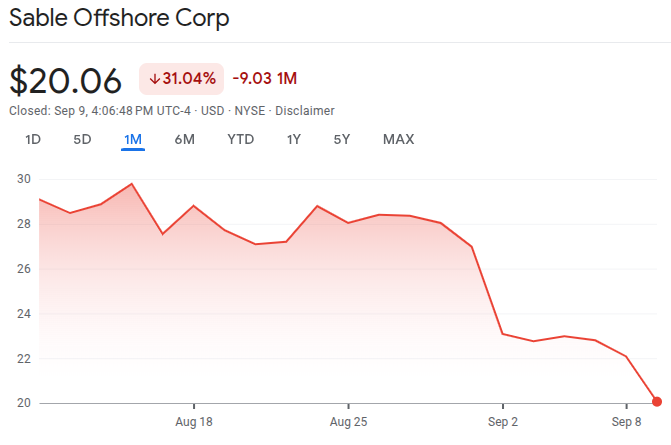
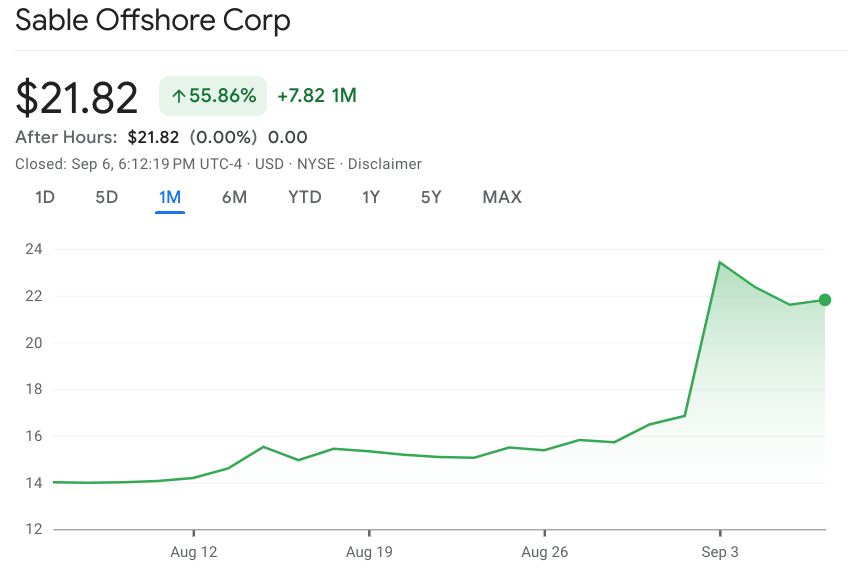
Sables’ share price sank on Tuesday following reports from Bloomberg and others that Governor Newsom is proposing new restrictions on California’s offshore oil industry. With Sable Offshore as a primary target, stricter requirements for restarting inactive intrastate oil pipelines would be imposed. •
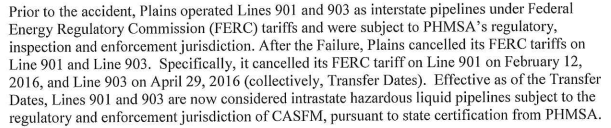
This could trigger yet another legal battle or increase the complexity of those that are ongoing. The onshore pipeline, now owned by Sable Offshore, was originally classified as an interstate pipeline under Federal jurisdiction. However, following the 2015 Refugio oil spill, it was reclassified as an intrastate pipeline via a 2016 letter of understanding signed by representatives of the Federal Office of Pipeline Safety (DOT-PHMSA) and the Office of the State Fire Marshal (pertinent text pasted below).
Given that the Sable pipeline will carry OCS production, it would seem to fundamentally be an interstate line (Federal jurisdiction), as it was when owned by Plains. Could DOT reverse the 2016 letter agreement? That is conjecture for the attorneys and courts to consider.
Meanwhile, below is an upbeat Sable video on the pipeline!
“The State Fire Marshal stated on February 25 — during a packed-house meeting at La Cumbre Junior High School — that he would not issue Sable authorization to restart production at the Santa Ynez Unit until all outstanding permit issues between Sable and the eight state agencies with oversight authority are resolved.“
Although Sable has a good defense against the Coastal Commission’s accusations, that statement by the Fire Marshal is ominous.
More bad news for Sable: The Center for Biological Diversity suit challenging the Federal government’s extension of the 16 Santa Ynez Unit leases is not going well. The government requested a voluntary remand of BSEE’s 2023 approval because “BSEE plans to reconsider its decision in light of Plaintiffs’ claims and conduct additional analysis, as warranted, under OCSLA and NEPA.”
In the attached decision, shared by John Smith, the judge denied the Federal government’s request. This does not bode well for the Federal government’s case going forward.
Senator Schiff and 22 California representatives sent the attached letter to Gov. Newsome urging him to:
Require the Fire Marshal to reconsider the state waiver for the pipeline, conduct environmental review, and hold a public hearing;
Require a coastal development permit for restart of the pipeline;
Require State Parks to conduct environmental review and hold a public hearing prior to deciding whether to approve a new easement for the pipeline through Gaviota State Park.
The good news for Sable: Despite the bluster in the letter’s opening paragraphs, none of the requests to Gov. Newsome are knockout punches. The first two relate to matters that have already been addressed and Sable is in a favorable position. The third, the Gaviota State Park easement renewal, is currently under review and should not be a decisive blow.
The bad news for Sable: Punches will continue to be thrown even after production resumes (should that ever actually happen.)
The California Coastal Commission, which exercises enormous power and limited restraint, is making headlines for preventing SpaceX, arguably America’s most extraordinary company, from increasing the number of satellite launches from the Vandenberg Space Force Base, a Federal facility. The Coastal Commission made this decision just 3 days before SpaceX’s awe inspiring rocket booster catch in Texas:
Sable Offshore, despite being spawned by super-major Exxon, is a relative minnow compared to SpaceX, at least politically. The restart of production from Sable’s Santa Ynez Unit is facing another obstacle now that the Coastal Commission has entered the fray.
Sable argues that repair and maintenance activities are exempt from Coastal Act permitting requirements, and have been conducted under their existing permits for 35+ years.
The Commission does not like to see its authority questioned, and is influenced by groups whose sole objective is to prevent the restart of production. We’ll see how this sorts out.
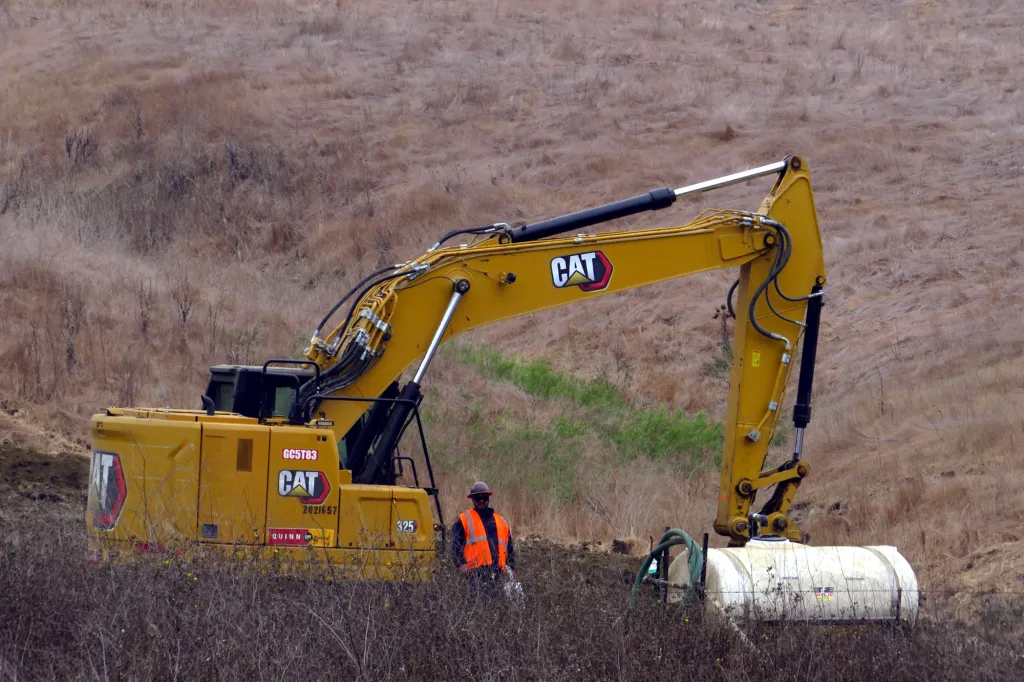
Center for Biological Diversity photo of pipeline repair work as published by Noozhawk
Meanwhile, Elon Musk did not hold back after the Commission’s decision not to allow an increase in the number of launches from Vandenberg:
“The California Coastal Commission should be dissolved as an organization. An utterly insufferable and misanthropic group of Karens if there ever was one! Their idea of the perfect coastline is one where there are zero humans or even signs of human! Anyone who has had any dealings with them will attest to this. They should not exist.”
“If we continued to fight this out in court, [Sable] likely would have sought to recover lost revenue from the pipeline not being in operation,” said Supervisor Steve Lavagnino. “That could amount to millions of dollars the County would be on the hook for.”
The Environmental Defense Center and others are calling for the County to retract their agreement with Sable and hold a public hearing on the matter. That appears to be unlikely.
Remaining hurdles for Sable include approval by the State Fire Marshall after the valves are installed and operational, State Lands Commission approval of lease assignments from Exxon to Sable, and approval of the oil spill contingency plan by the State Dept. of Fish and Wildlife.
Sable believes they can resume production this year. That seems unlikely, but a 2025 restart is now a distinct possibility.
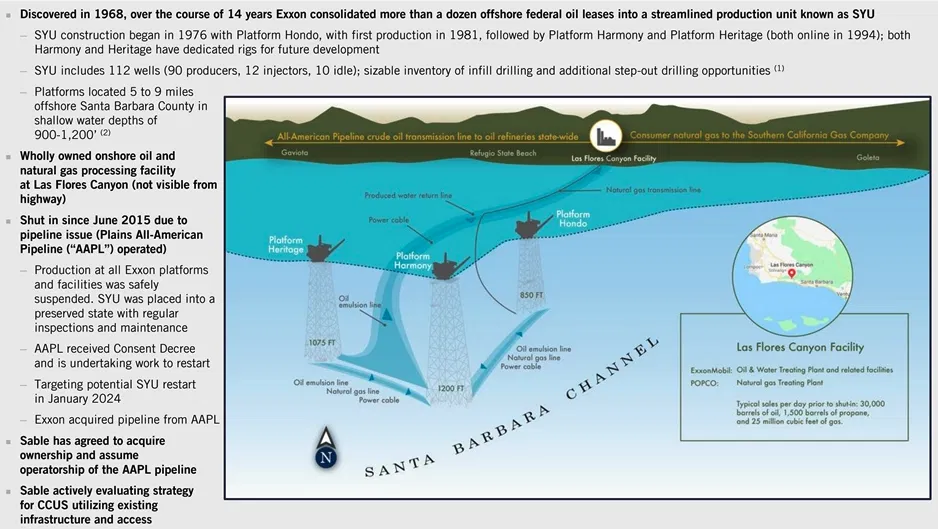
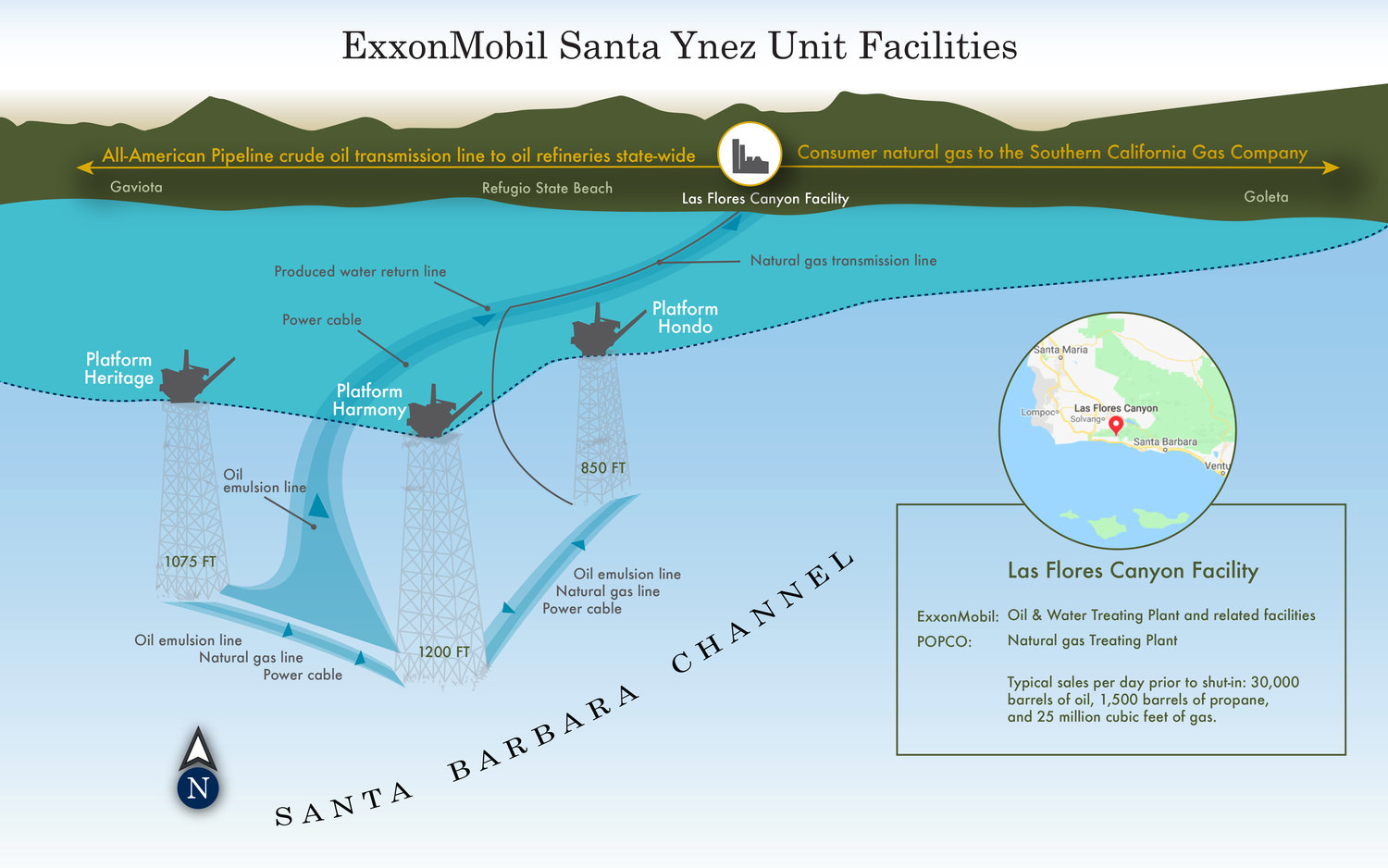
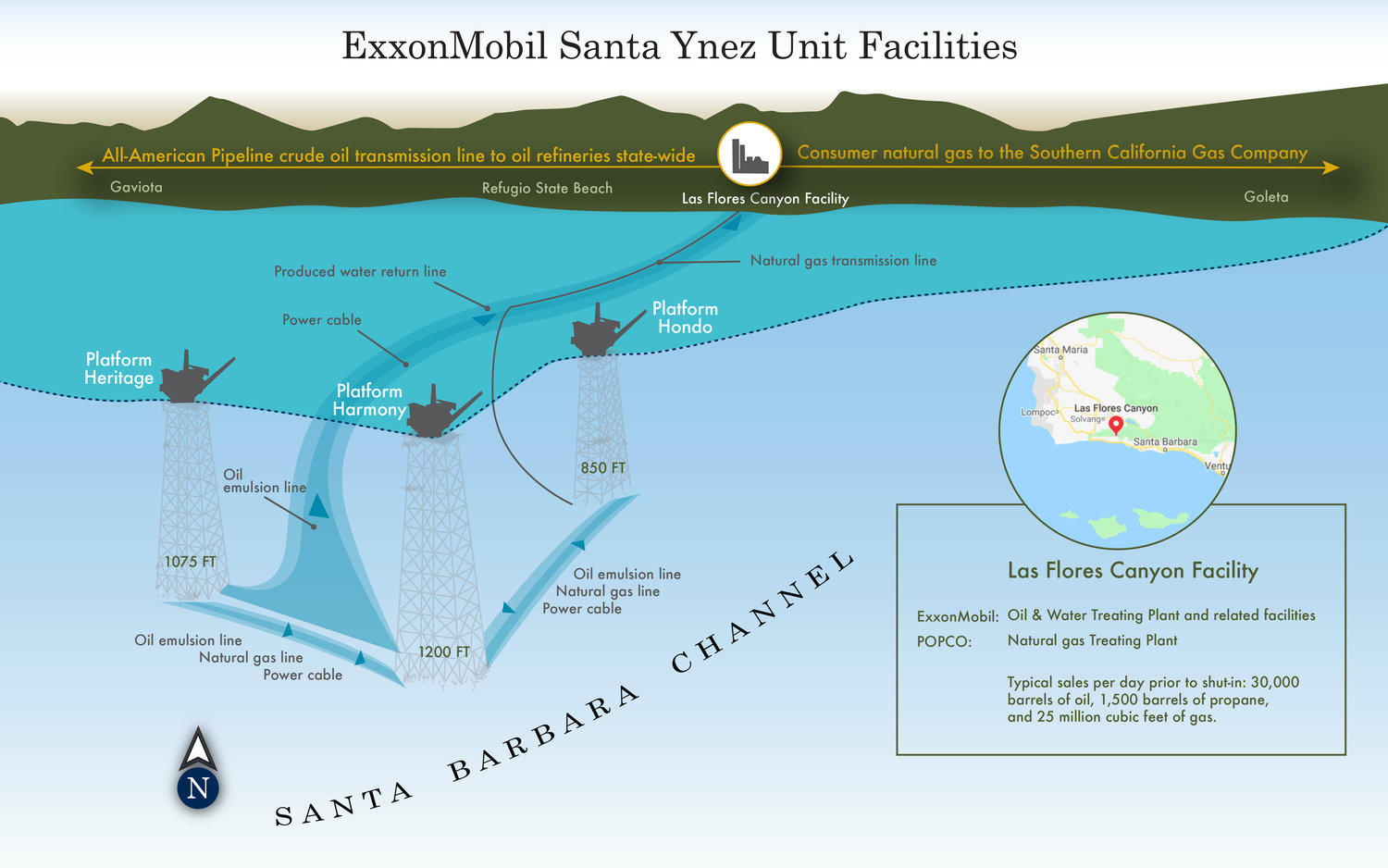
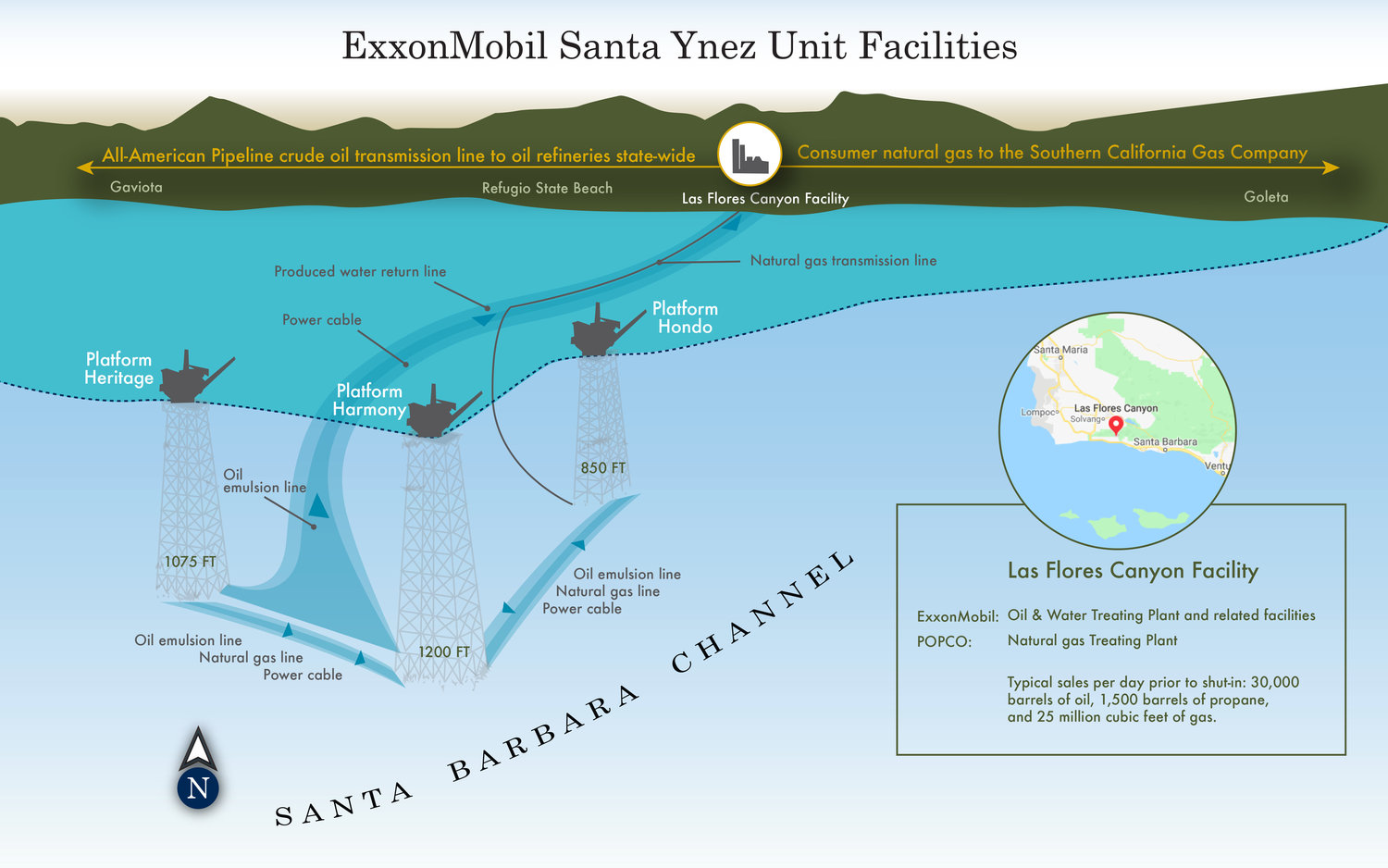
Sable’s stock price soared after the company reached an agreement with Santa Barbara County that will allow them to comply with the California Fire Marshall’s requirement to install shutdown valves on the onshore pipeline that failed in 2015. That pipeline is necessary to transport production from the Santa Ynez Unit, which is currently operated by Sable.
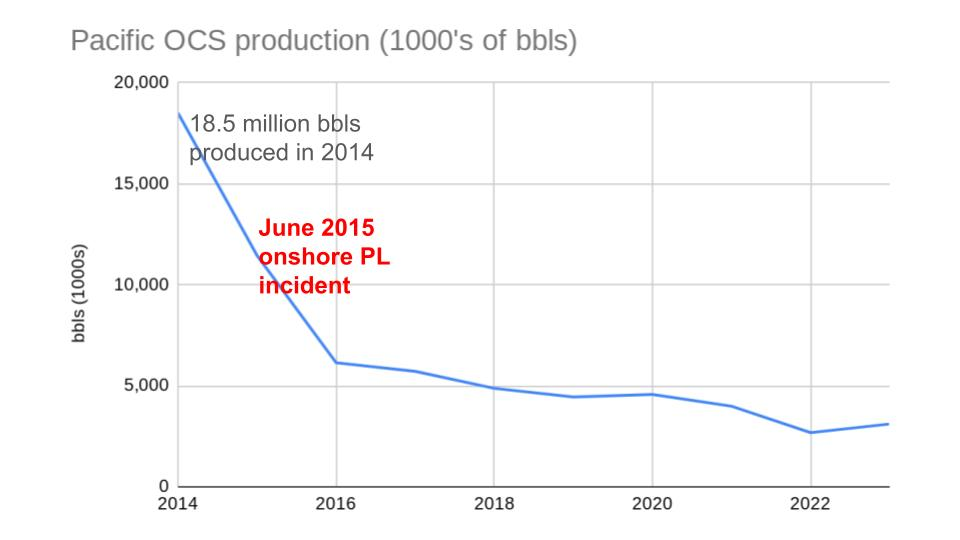
The significance of a resumption of SYU production is illustrated in the chart below. The 3 SYU platforms accounted for more than 2/3 of Pacific OCS production before the Refugio pipeline spill in June 2015.
This agreement with the County is a major step forward, but there are still regulatory and legal hurdles to clear before production resumes.
In the SEC filing that announces the agreement with Santa Barbara County, Sable affirms their 2024 restart expectations. However, a resumption of production in 2024 is highly unlikely given the administrative challenges that remain. A restart in 2025 would be a major accomplishment and a very good outcome for Sable.
Pasted below is the full text of the SEC filing (emphasis added):
Santa Barbara County (the “County”), on August 30, 2024, acknowledged that the County does not have jurisdiction over Pacific Pipeline Company’s (“PPC”) installation of 16 new safety valves in the County along PPC’s Las Flores Pipeline System (the “Pipeline”) in accordance with Assembly Bill 864. The County’s acknowledgement was delivered in the form of a conditional settlement agreement dated August 30, 2024 (the “Safety Valve Settlement Agreement”) among the County, PPC and PPC’s parent company Sable Offshore Corp. (“Sable”), and a subsequent acknowledgement by the County’s planning and development staff.
The Safety Valve Settlement Agreement is predicated upon a prior settlement agreement between PPC’s predecessor in interest, Celeron Pipeline Company, and the County in a federal case styled Celeron Pipeline Company of California v. County of Santa Barbara (Case No. CV 87-02188), which was executed in 1988.
Pursuant to the Safety Valve Settlement Agreement, PPC agreed to the following additional surveillance and response enhancements in the County:
i. PPC will create a Santa Barbara County-based Surveillance and Response Team, trained in PPC’s Tactical Response Plan, which will be responsible for timely initial incident response and equipped with key resources to deploy in early containment, particularly for those regions of the Pipeline between Gaviota and Las Flores Canyon;
ii. PC will provide Santa Barbara first responders with additional training and equipment to assist in PPC’s incident response efforts; and
iii. PPC will undertake the following Pipeline system enhancements: (1) install and operate and maintain primary and secondary Operations Control Centers in Santa Barbara County, and (2) refurbish the Gaviota pump in its existing station.
PPC, Sable and the County have further agreed, in the Safety Valve Settlement Agreement, to file a stipulation to dismiss the pending lawsuit, Pacific Pipeline Company and Sable Offshore Corp. v. Santa Barbara County Planning Commission and Board of Supervisors (Case No. 2:23-cv-09218-DMG-MRW) within 15 days of final installation of all 16 underground safety valves in the County.
Sable affirms that initial restart of production from Sable’s Santa Ynez Unit is expected in fourth quarter 2024.
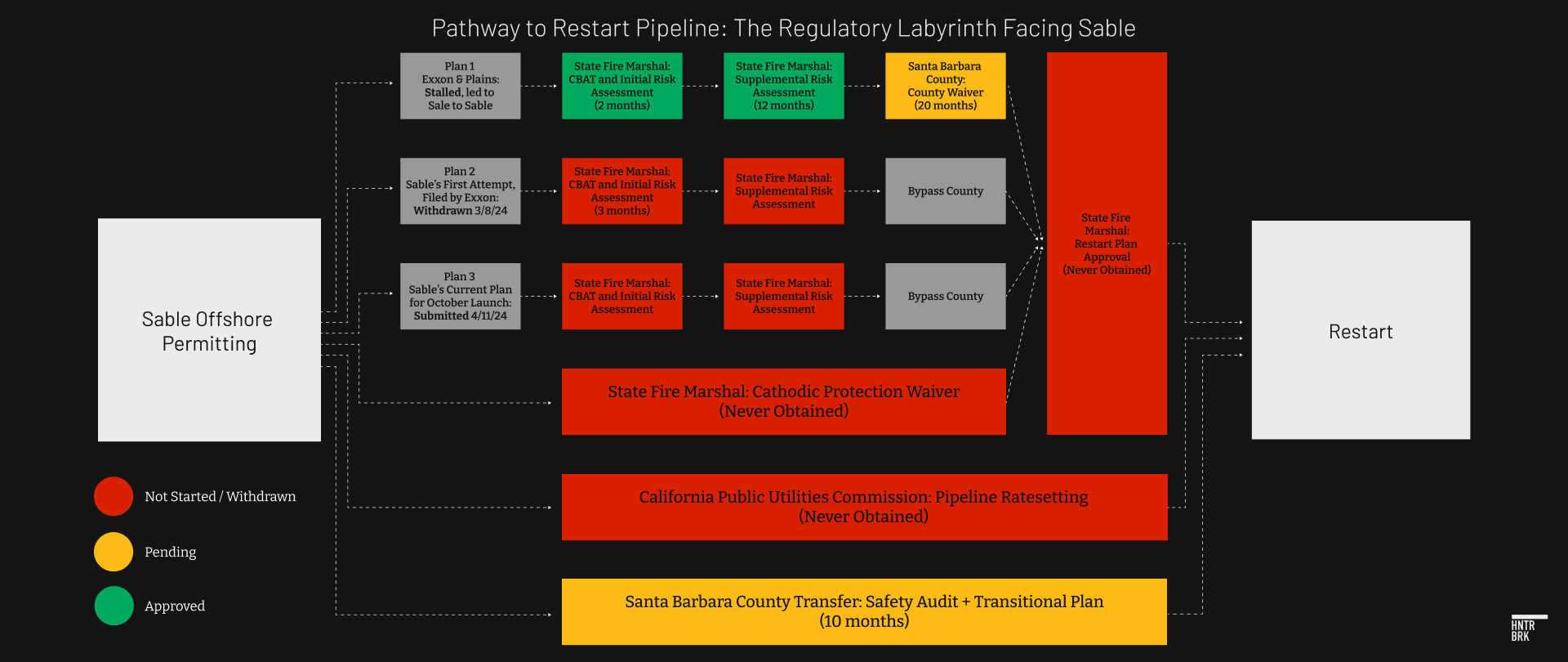
An assessment prepared for Hunterbrook Capital draws the same conclusions regarding the prospects for production, calling the restart “a pipe dream” (presumably the pun was intended given the pipeline permitting quagmire). Hunterbrook’s chart (pasted below) illustrates the regulatory labyrinth facing Sable.
Hunterbrook has also flagged Sable’s ability to continue as a “going concern.” That may be a valid concern, but Sable’s success is very much in Exxon’s best interest. Exxon must have evaluated Sable and been comfortable with their management. Otherwise, they wouldn’t have made the deal.
Does Exxon want the massive SYU headache to revert back to their portfolio, as provided for in their agreement with Sable, if production doesn’t restart by January 1, 2026? Unless Exxon thinks they have a better option than Sable, they will presumably be flexible about the deadline.
Meanwhile, a judge denied the temporary restraining order requested by Sable to prohibit release of redacted portions of their oil spill contingency plan. Sable had argued that revealing “trade secrets” and specific locations and vulnerabilities of the pipelines could pose a “threat to national security.”
Earlier this month we awarded a Chutzpah Award to groups that helped block every attempt to resume production in the Santa Ynez Unit and are now suing to terminate the leases for non-production.
We now learn that the State Fire Marshall has rejected the resumption of production because Sable, the current operator, is not installing automatic shutdown valves on the oil pipeline. The catch is that Sable was denied permits needed to install the valves. So, on the one hand the Fire Marshall is requiring shutdown valves (a reasonable requirement), and on the other hand the County is prohibiting the installation of those valves!
According to the Fire Marshall’s office, this is the first time a company has been denied permits to install valves mandated by the State – yet another dubious distinction for the Santa Ynez Unit.
 Bud's Offshore Energy (BOE)