Feeds:
Posts
Comments

Posts Tagged ‘accidents’

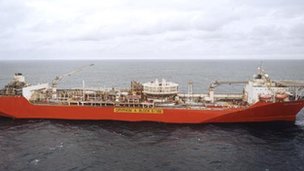
Gryphon Alpha FPSO

A BBC report (forwarded by Cheryl Anderson) indicates that 70+ workers were safely evacuated from the Gryphon Alpha Floating Production Storage and Offloading facility in the UK sector of the North Sea. Four of the FPSO’s ten mooring lines failed in 30-foot seas and high winds which allowed the vessel to roll up to 12 degrees.  40 essential personnel remained aboard the facility.

While mooring system failures have been relatively common during hurricanes and other major storms (in the Gulf of Mexico, this problem was addressed through comprehensive MMS-industry programs after the 2005 hurricane season), such failures are much less common at floating production facilities. We await the findings of the UK’s inquiry.

Read Full Post »

From Platts Oilgram News (3 February 2011):

Mitsui affiliate MOEX Offshore has received invoices from BP seeking $2.64 billion in reimbursement related to the Macondo oil spill in the US Gulf of Mexico, Mitsui said February 2.

A wise attorney (not an oxymoron :)) recently mentioned that you had to be very careful about ventures that you are buying into (as a partner) or selling into (as a contractor or manufacturer). If something horrible happens, your company’s economic future could be jeopardized, even if your role was rather small.

Read Full Post »

The future pace of drilling approvals in the Gulf of Mexico might be slowed less by new laws or regulations stemming from last year’s massive spill but by a decades-old law that opens the door to longer environmental reviews and litigation. New York Times

We know the NEPA process is slow and repetitive, but how much value is added? NEPA reviews don’t improve well integrity, BOP performance, or safety management programs; nor do they even address these fundamental safety and pollution prevention considerations, at least not in a substantive way.  Why not publish a single, comprehensive online environmental review for drilling and production operations in the region?  The review would cover all possible impacts for every type of operation. This detailed “living document” would be continuously updated as new environmental information is acquired, technology advances, and regulations and standards are updated.  The public could comment on specific operations as they are proposed, and could otherwise comment on the document at any time. Periodic public meetings could be held as necessary and desirable.

Read Full Post »

The Government is ordered to pay legal fees for Hornbeck Offshore Services and several other companies that sued over the moratorium.

Read Full Post »

Reposted from Platt’s Oilgram News (31 January 2011):

Brazil’s Petrobras said January 28 it was forced to shut output at its Cherne II production platform after a January 19 fire on the structure, one of the oldest working in the offshore Campos Basin. The fire in an oil transfer pump unit was brought under control without injuries to crew members, damage to the environment or major structural damage to the platform, Petrobras said in a statement. The platform was producing about 9,300 b/d of crude oil when output was shut, Petrobras said, adding the field should be ready to restart production on February 1. Brazilian oil regulators, the country’s navy and environmental officials, and Petrobras technicians are investigating the cause of the fire, Petrobras said. The platform is one of two in the Chernefield, which recorded output of about 22,000 b/d of crude in November. Brazil’s petroleum regulator had an on-site inspection of the platform scheduled for June.—Jeb Blount

Read Full Post »

A little bit of information on the BOP “forensic” testing from the Louisiana Record:

Justice Department attorney Michael Underhill said that a forensic report on the failed blowout preventor (BOP) which led to the Deepwater Horizon explosion and subsequent Gulf of Mexico oil spill should be finished in March.  Underhill spoke at a status conference for the BP multidistrict litigation in Judge Carl Barbier’s chambers at U.S. District Court for the Eastern District of Louisiana.

Barbier expressed concern over reports that the testing for the BOP and the cement used in drilling the Deepwater Horizon was falling behind. Underhill stated that the testing on the BOP should be done by the first week of March, but that’s “not a promise.” Underhill stated that the BOP investigation has already cost millions of dollars and has involved laser scanning all the equipment removed from the device. He also said that the forensic report on the BOP should be done by the end of March.

Read Full Post »

Good Financial Times article:

A plan to create a safety organisation for deep-water drilling is being drawn up by leading oil companies and could be launched within weeks, in an attempt to restore public confidence in the industry after last year’s BP oil spill in the Gulf of Mexico.

However, a division has emerged over whether the new body should be part of the American Petroleum Institute, the industry group that was strongly criticised by the official National Commission inquiry into the Deepwater Horizon disaster.

Stay tuned; this will be interesting.

Read Full Post »

While thunder-snow created a surreal setting outside, the scene was rather predictable inside as the National Commission co-chairs testified before the House Natural Resource Committee.  Members acknowledged the Commission’s service, questioned qualifications, expressed frustration with the “permitorium,” raised concerns about our economic and energy future, and disputed the conclusion that “systemic industry failures” contributed to the disaster.  Others suggested that Macondo safety issues had not been resolved, that the risks associated with offshore drilling were not being managed properly, and that everyone else in the world regulates offshore operations more effectively than the US (or at least their disasters have been less recent).

Putting all that aside, I was pleased by the interest of the members in the BOP failure. They seem to share our frustration with the delays in the BOP examination/testing/forensics/autopsy. Perhaps the Committee can determine the status of this very important aspect of the investigation, and provide a summary of what has happened since the stack was recovered and what work remains to be accomplished. That would seem to be a reasonable request.

Read Full Post »

From the State of the Union address:

The Interior Department is in charge of salmon while they’re in fresh water, but the Commerce Department handles them when they’re in saltwater. I hear it gets even more complicated once they’re smoked. President Obama

While this comment drew laughs from the audience, the regulation of salmon is rather straightforward compared to the extraordinarily complex regulatory regime for offshore facilities and pipelines. The first and most important recommendation in my testimony before the Senate Energy and Natural Resources Committee last May was as follows:

Streamline the OCS regulatory regime to minimize the potential for gaps, overlap, and confusion.  Because of the complexity of the OCS regime, regulatory and industry personnel spend too much time resolving and coordinating administrative and procedural matters.  This time would be better spent focusing on mission critical safety issues.   A single agency should be responsible and accountable for safety and pollution prevention at offshore facilities, and should draw on the expertise of other agencies and organizations as necessary to achieve performance objectives.

If we are to achieve our safety, pollution prevention, efficiency, and energy production objectives, the OCS regulatory regime must be consolidated and simplified.

Read Full Post »

Bob Graham and William Reilly will testify.

Schedule (Eastern Time):

0930 – Senate Energy and Natural Resources Committee – live streaming

1400 – House Natural Resources Committee – broadcast live on C-SPAN3

The questioning should be pretty lively, especially at the House hearing.

Read Full Post »

« Newer Posts - Older Posts »