“The Deepwater Horizon BOP was unreasonably dangerous, and has caused and continues to cause harm, loss, injuries, and damages to BP (and others) stemming from the blowout of Macondo well, the resulting explosion and fire onboard the Deepwater Horizon, the efforts to regain control of the Macondo well, and the oil spill that ensued before control of the Macondo well could be regained,” BP said in the suit.
Posted in accidents, well control incidents | Tagged accidents, blowouts, BOP, Deepwater Horizon, drilling, Gulf of Mexico, macondo, offshore oil, oil spill, safety, well control | 6 Comments »
Per the Citizens Voice, no injuries were reported
The Atgas 2H well operated by Chesapeake Energy in Leroy Township blew out at around 2 a.m., according to Bradford County Emergency Management Agency Deputy Director Skip Roupp.
The well was in the process of being hydraulically fractured and Roupp characterized the spilled fluid as “mostly water … with some contaminants” but he did not know the exact composition of the fluid.
“Evidently the crack is in the top part of the well below the blowout preventer,” he said, referring to a device used in emergency situations to choke off flow from a well. “They don’t really know what happened yet because they don’t have it controlled yet.”
Posted in accidents, natural gas, well control incidents | Tagged accidents, blowout, Marcellus Shale, Pennsylvania, shale gas | Leave a Comment »
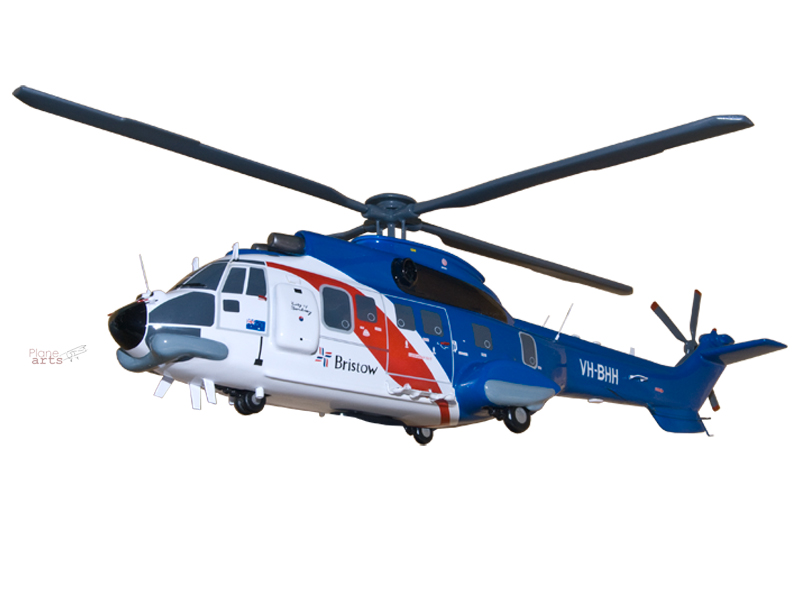
Congratulations to Bristow for winning the 2011 National Ocean Industries Association (NOIA) Safety-in-Seas Award. Bristow, a helicopter company, was recognized for its “Target Zero” program.
I was honored to serve as one of the judges, and Bristow is a most deserving recipient of this prestigious award. To the best of my knowledge, the Safety-in-Seas program, which began in 1978, is the oldest safety award program for offshore oil and gas operations.
I would also like to congratulate the other Safety-in-Seas nominees. All of the nominations were outstanding. While we must learn from accidents and failures, we can also learn from successes. The achievements of outstanding companies and safety leaders deserve attention and recognition.
KATC.com provides more information on Bristow’s selection:
“Target Zero” is a comprehensive cultural and training system that seeks to achieve zero accidents, zero harm to people and zero harm to the environment across Bristow’s operations. Building on statistical data that indicated human error contributed to 4 out of 5 accidents or incidents, Bristow’s “Target Zero” has reduced the rate of air accidents in for example the Gulf of Mexico from 2 reportable air accidents and one air incident in 2007 to zero accidents or incidents, with similar results in subsequent years. Bristow has achieved a 47% improvement year on year in Lost Work-time Cases, with overall improvement from 2007 – 2009 of 88%. When it comes to the environment, Bristow’s “Target Zero has maintained a record of zero environmental incidents and has stepped up pro-active efforts to ensure this stays constant.
Posted in Uncategorized | Tagged accidents, Bristow, Gulf of Mexico, helicopters, NOIA, safety, Safety in Seas Award, Target Zero | Leave a Comment »
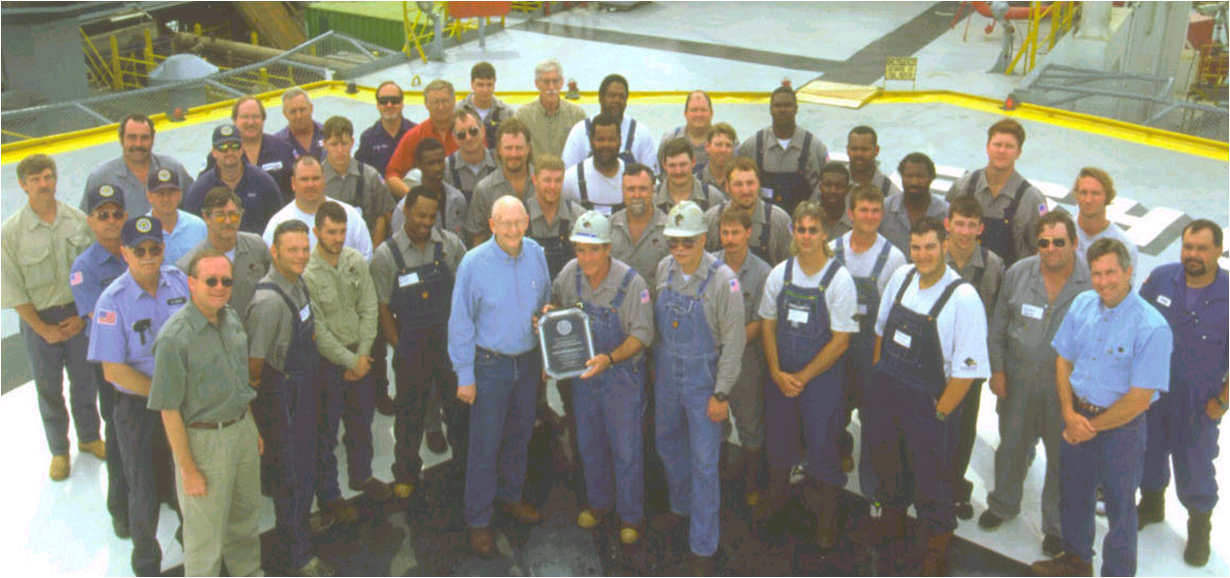
Proposal: Let’s make April 20th International Offshore Safety Day to honor those who have been killed or injured, to recognize the many workers who provide energy for our economies and way of life, and to encourage safety leadership by all offshore operators, contractors, and service companies.
Discussion: April 20th is, of course, the anniversary of the Macondo tragedy in the Gulf of Mexico. Eleven men died on the Deepwater Horizon that day. Many other offshore workers have died or been injured exploring for and producing offshore energy. 167 workers were killed when Piper Alpha exploded in 1988, 84 died when the Ocean Ranger sank in 1982, 123 perished when the Alexander Kielland capsized in 1980, 17 died in a helicopter crash off Newfoundland in 2009, 11 died when the Petrobras 36 sank in the Roncador field in 2001, and many others have been killed working offshore. Some of these accidents, like last summer’s fatality on the Jack Ryan offshore Nigeria, receive no public notice. Others like the fall in the Gulf on Monday or the recent diver fatality in the North Sea receive just a brief mention.
In addition to honoring those killed or injured, Offshore Safety Day would draw attention to the importance of offshore workers, their dedication and commitment, progress that is being made in addressing offshore safety risks, and the outstanding safety management efforts of leading companies around the world. It’s time for a day to honor offshore workers!
Posted in Uncategorized | Tagged accidents, Brazil, Canada, Deepwater Horizon, Gulf of Mexico, International Offshore Safety Day, Newfoundland, North Sea, safety | 2 Comments »
An employee on a non-producing offshore natural gas platform died after falling through a deck opening on Monday, the U.S. offshore drilling regulator said.
The employee of Alliance Oilfield Services was working on a Hilcorp Energy platform in 375 feet of water about 129 miles off the Louisiana coast in the Gulf of Mexico, the Bureau of Ocean Energy Management, Regulation and Enforcement said in a statement. Hilcorp and Alliance are both privately-held companies. Reuters
Posted in accidents | Tagged accidents, Alliance, fall, fatality, Gulf of Mexico, Hilcorp Energy | Leave a Comment »
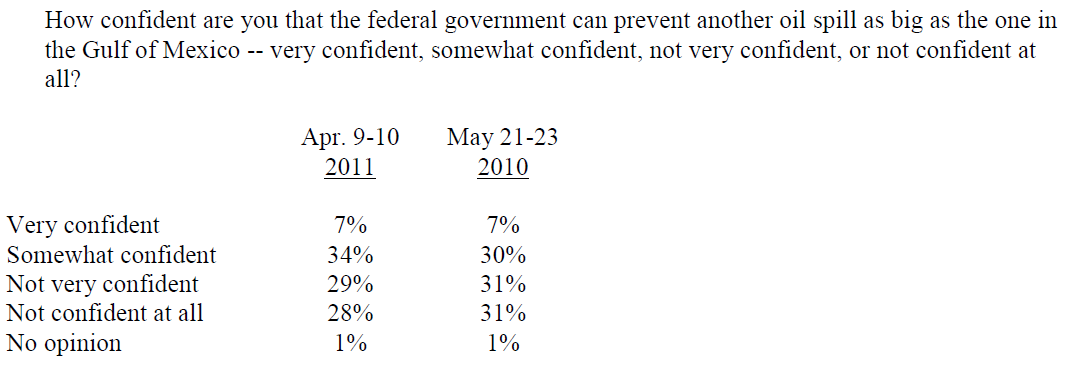
A CNN/Opinion Research Corporation survey released Tuesday indicates that 69 percent of Americans favor increased offshore drilling, with just over three in ten opposed. That 69 percent is up 20 points from last June, while the oil spill was still in progress, and is back to the level of support seen in the summer of 2008.

Confidence in government has shown a less significant increase.
Posted in drilling, offshore, Offshore Energy - General | Tagged CNN poll, drilling, offshore drilling, offshore oil | Leave a Comment »
Jupiter Flotel
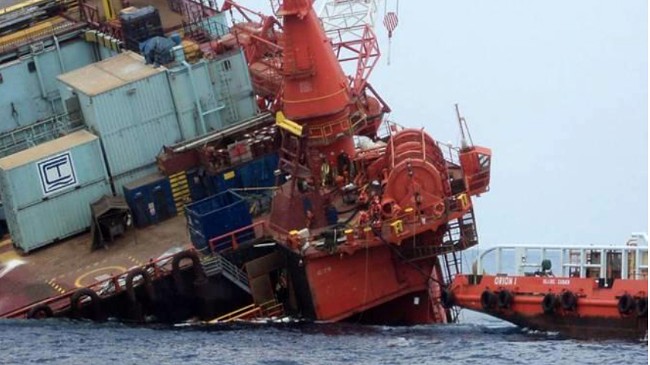
….interest in offshore accidents quickly diminishes. The Pemex Jupiter semisubmersible quarters facility sank last week with 713 workers aboard (fortunately all were safely evacuated). This stunning near-disaster received minimal coverage. Follow-up reports are non-existent. As our friend JL Daeschler asked, how does a flotel capsize in calm conditions and shallow water? What went wrong and why? Let’s hope that a comprehensive investigation is conducted and that the findings are shared worldwide (unlike Venezuela’s handling of the Aban Pearl sinking).
As we have noted before, Macondo would have disappeared from the news within a week if the deadly fire and explosion had not been followed by a sustained oil spill. The only investigation would have been by Coast Guard and the Minerals Management Service (which would likely still exist). There would have been no National Commission, National Academy, Chemical Safety Board, or congressional investigations, and prosecution by the Justice Department would have been unlikely.
In the US, offshore spills are media events; other accidents are not. How much attention did the horrific fire and explosion that killed seven workers on the South Pass 60 B Platform receive in 1989? Virtually none. How about the lives lost in helicopter crashes? While the crash that killed 17 off Newfoundland in 2009 has been well studied and reported, offshore helicopter crashes in the US receive almost no attention. Ditto for crane accidents. If we want to build a proper safety culture, we need to pay as much attention to the low-profile accidents as we do the pollution spectaculars, and everyone needs to participate.
Posted in accidents | Tagged Flotel, Jupiter, macondo, offshore oil, oil spill, Pemex, safety, sinking | 2 Comments »

- Require that a Central Gulf of Mexico (GoM) oil and gas lease sale be held within 4 months of enactment, and that a second sale for that area be held within 12 months.
- Require that a Western GoM sale be held within 8 months of enactment.
- Stipulate that prior environmental reviews would satisfy NEPA requirements for the GoM sales.
- Require that a Virginia offshore sale be conducted within 1 year of enactment. [Comment: While I support a sale offshore Virginia, I do not believe this can be accomplished in one year.]
- Require that specified volumes of oil and gas (per estimates made by MMS in 2006) be made available for leasing.
- Set offshore production goals.
- Give credits (for use in paying lease bonuses) to companies for costs associated with pre-sale seismic surveys. [Comment: If the legislation provides reasonable assurance that lease sales will be held, why are the seismic survey credits needed? The seismic data will have a high commercial value. Collection of these data should not have to be subsidized by the Federal government.]
- Require that DOI act on drilling applications within 60 days.
- Extend the term leases where the approval of drilling applications was delayed following the Macondo blowout.
- Make the 5th Circuit Court the venue for any civil actions involving GoM energy projects.
- [Comment: The important question is not the number of days that the regulator should be given to review applications, but whether a complex permit review and approval process is the optimal regulatory approach. A lesson learned from virtually every major accident, from Santa Barbara through the Ocean Ranger, Alexander Kielland, Piper Alpha, and Macondo, is that command and control regulation is not in the best interest of offshore safety. Industry should not rely on government to manage its operations and government should focus on safety achievement, not directing the day-to-day activities of offshore companies. Over the long-term, the US would be better served if regulatory resources were dedicated to risk assessment, data analysis, assessment of operator and contractor management systems, targeted inspections and audits, participation in standards development and research, and safety leadership.]
Posted in Uncategorized | Tagged drilling, House Natural Resources Committee, leasing, macondo, offshore drilling, offshore oil, permitting, Regulation, safety | Leave a Comment »

can something be done about the Customs mess at Washington Dulles? The long delays are not a good way to greet international visitors or welcome home returning Americans.
Posted in Uncategorized | 6 Comments »
In the 21st licensing round, additional requirements have been introduced with regard to the qualifications of the licensees that will undertake particularly demanding deep-water drilling operations or drill in areas in which high temperature/high pressure (HTHP) conditions are expected. Under these licences, there must be at least one competent partner in addition to the operator. The partner must have drilled at least one well as an operator on the Norwegian Continental Shelf, or have similar relevant experience from another offshore petroleum province.
I had never thought about a requiring a partner, and specifying the qualifications that the partner must have. This makes some sense in that the operator will not only have internal oversight, but also oversight by the partner(s). The result is a verification program administered by competent partners who have an incentive to ensure safe operations. Interesting approach.
Posted in Norway | Tagged licensing, Norway, partner qualifications | Leave a Comment »

