Feeds:
Posts
Comments

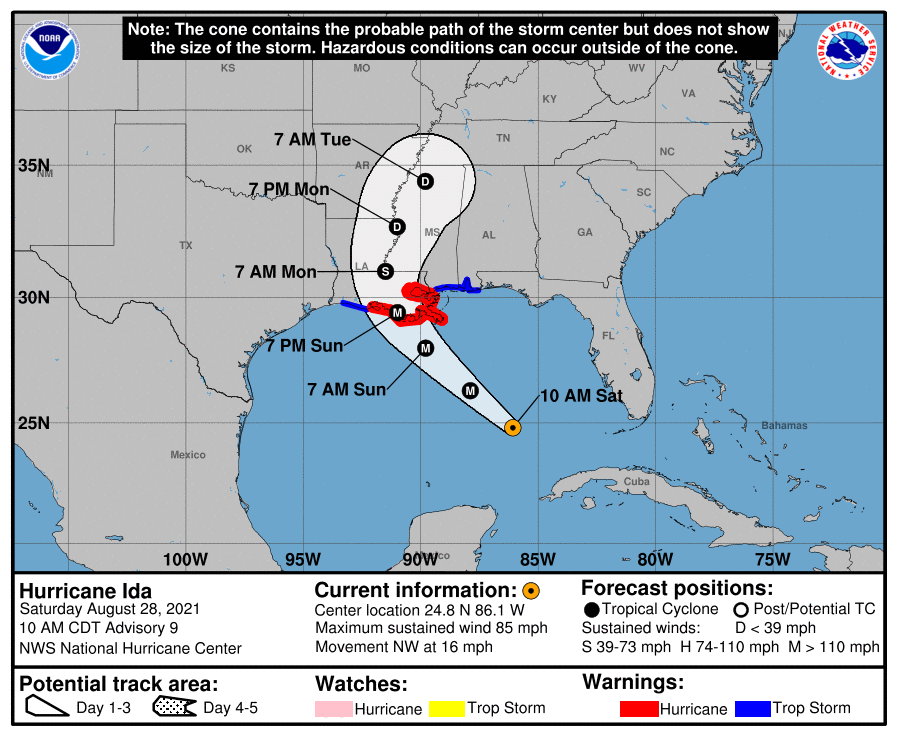
Per BSEE’s 8/28 update, 90.84% of GoM oil production is reported to be shut-in. Given that there is some uncertainty in both the numerator (production shut-in) and the denominator (base production), there is a margin of error (~5%?) in that figure. The large discrepancy in the % of manned facilities evacuated (only 50) and % of oil production shut-in (90+) illustrates the dominance of deepwater facilities, mostly shut-in, in GoM oil production.

image
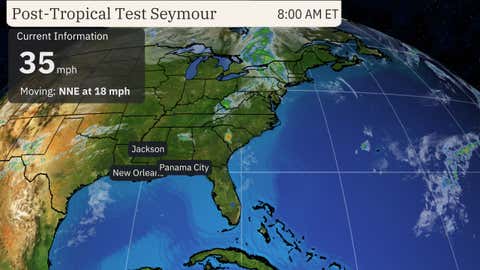
Map from Weather.com

In light of the projected storm track for Ida, forecasting uncertainty, and the need to err on the side of caution in making evacuation and shut-in decisions, particularly for deepwater facilities, look for at least 75% of Gulf of Mexico oil production (approximately 1.3 million BOPD) to be shut-in temporarily.

After an amazing 38 year career with MMS and BSEE, Lars Herbst has announced that he will retire at the end of 2021. Lars had important technical and managerial roles in the development of the deepwater Gulf of Mexico, the response to major hurricanes including Ivan, Katrina, and Rita, controlling the Macondo blowout and addressing the related regulatory issues, and the offshore industry’s response to the COVID-19. Lars was an active participant in the International Regulator’s Forum and is recognized worldwide for his operational and regulatory expertise. Best wishes to Lars as he transitions to the next phase of his life.

This graphic update gives a better sense of the horrific tragedy that unfolded:

MEXICO CITY (AP) — Mexico’s state-owned oil company said Tuesday the possible remains of two missing subcontractors had been found on one of its oil platforms in the Gulf of Mexico following a weekend fire.

Pemex Director Octavio Romero said the apparent remains were found in a control room on the platform where temperatures reached around 1,800 degrees (1,000 degrees Celsius). Such heat would have burned the bodies beyond recognition.

Given the magnitude of the event, the restart schedule seems pretty aggressive. Hopefully, the risks have been fully assessed and the resumption of production is not being rushed.

Pemex said that by Aug. 30 it hoped to restore all of the 421,000 barrels per day in production knocked out by the blaze.

AP News

the Mexican government’s recent decision to anoint Pemex operator of the billion barrel Zama field would seem to merit further scrutiny. Houston-based Talos Energy discovered the Zama field in 2017. The field underlies both Pemex and Zama acreage, and there are common reservoirs. Per Bloomberg:

Mexico’s energy ministry has designated Petroleos Mexicanos as the operator of the country’s largest oil discovery by private companies, in the latest sign of the government’s nationalist approach to the energy industry.

Talos said it was “very disappointed” with the decision and will explore “legal and strategic options” regarding Zama. The company added that the energy ministry had informed Talos of its “sudden” decision only three days after the driller received a letter directly from Pemex arguing for operatorship.

Bloomberg, 7/5/2021

The Mexican government’s decision is indicative of the Lopez Obrador administration’s commitment to rolling back the reforms that had encouraged private sector participation in Mexican offshore exploration and development.

Questions had already been raised about Pemex’s ability to fund Zama development and operate the field safely. This week’s deadly incident and a July pipeline fire add to those concerns. In light of the background political and financial issues, will it be possible to for Pemex and the Mexican regulators to conduct a fully independent investigation of the tragic fire that just occurred?

  1. 5 workers killed – 4 contractors and one Pemex employee
  2. 6 workers injured, one in critical condition
  3. 2 workers are missing
  4. The fire occurred in the power generation and compression area of the platform
  5. Contractors Cotemar and BMCI were performing maintenance at the time of the incident
  6. The fire has now been extinguished
  7. No reports of an oil spill
  8. Massive loss of production – 421,000 BOPD shut-in

Defensive and rather shameful comments by the CEO:

“There is not a problem of lack of investment, there is not a problem of lack of resources,” Romero said. “The oil industry is a risky industry. We have had accidents, which in numbers are less than in previous years.”

Reuters

Comprehensive and timely incident data are critical for risk assessments, preventing recurrences, training and safety management programs, assessing the performance of the industry and individual companies, and driving safety culture. The National Academies 2021 review of BSEE’s inspection program included a number of recommendations related to data management including this one:

Recommendation 2. To further its goal of increasing data transparency and facilitating its internal and external use, BSEE should invest in more advanced and creative data collection, analytic and visualization tools, and infrastructure; corresponding data management, analysis, and evaluation capabilities among its personnel; and an outward-facing, online data system that can be navigated with ease and kept current across all fields for the purpose of encouraging and facilitating safety analyses.

National Academies Report, 2021

Unfortunately, BSEE’s incident data are not updated and posted in a timely manner. As we approach September 2021, the 2020 incident statistics are still not publicly available. These incidents include at least one rig fatality that neither BSEE nor the Coast Guard announced at the time of occurrence one year ago today (8/23/2020) or subsequently. The only public information about this fatality is the following self-serving statement by the operator:

“This is a routine operation that was executed with no time pressure as the rig disconnection had been decided well in advance,” Total said.

Upstream

A 37-year old man died, but according to the operator there is nothing to see here. This is not the type of statement you would expect from a company with a leading safety culture.

The keystone of BSEE’s primary mission, protecting workers and the environment, is timely incident information that is regularly reviewed and updated. Continuous improvements in safety are dependent on continuous improvements in data management and analysis. BSEE can do much better, as can other regulators, the offshore industry, and those of us who are interested and concerned observers.
A Coast Guard MH-65 Dolphin helicopter crew from Air Station Houston, Texas, medevacs an oil rig crew member experiencing a cardiac event on the Hoover-Diana oil platform, 150 miles east of Corpus Christi, Texas, Aug. 19, 2021. The helicopter crew successfully transported the man to the University of Texas Medical Branch in Galveston, Texas, in stable condition. (U.S. Coast Guard video, courtesy Sector/Air Station Corpus Christi)

US Coast Guard

But what happened to industry medevac capabilities? Or is this simply a matter of Hoover-Diana’s isolation?

For the better part of two months now, four of the five wind turbines at America’s first offshore wind farm haven’t been spinning. 

Workers at the Merkur wind farm in the German North Sea found signs of stress fatigue on the support structures of the “helihoist” platforms on some of the project’s GE Haliade turbines. 

The Providence Journal, 8/14/2021

Comments:

  1. Ørsted was prudent to shutdown the turbines to conduct precautionary inspections.
  2. Press reports imply that Ørsted was slow to advise the public about the reasons for the shutdown.
  3. The shutdown raises questions about the reliability of wind-centric regional power grids.
  4. Given the questions that have arisen regarding the regulation of offshore wind projects (this wind farm is in Rhode Island State waters), the absence of any comments from State and local officials was noteworthy. It’s unclear what, if any, role the State had in the shutdown decision.
  5. Hurricane Henri may give the wind farm a bit of a test this weekend.

The Department of the Interior (Interior) confirmed today that the Department of Justice (DOJ) has appealed the preliminary injunction entered by the district court in Louisiana v. Biden, which enjoined Interior from implementing the pause in new federal oil and gas leasing …

DOI statement 8/16/21

The day after the fall of Kabul and 5 days after the White House urged OPEC to increase production, DOI reiterated the Administration’s support for a pause in oil and gas leasing on Federal lands (including the OCS). Given the increased risk of long-term oil supply uncertainty, rigid support for a blanket leasing pause would not seem to be a prudent policy position at this time.

DOI argues that greenhouse gas (GHG) emissions must be curtailed, but reductions in domestic production would increase the demand for imports with higher GHG intensity. Reductions in deepwater Gulf of Mexico production, which has low GHG intensity and other environmental advantages (few dispersed facilities distant from shore), would be particularly detrimental. Of course, any public policies that discourage natural gas production would also have distinct air emissions costs.

If supply restrictions increase the price of oil, net reductions in oil consumption and GHGs could be achieved. However, as evidenced by the recent appeal for increased OPEC production, higher oil prices are not consistent with Administration policy.