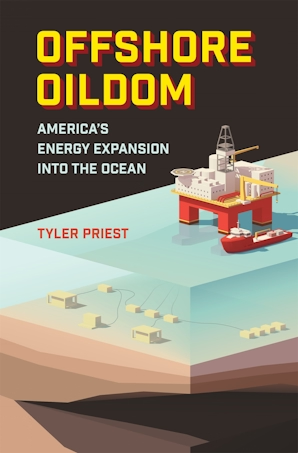
Tyler Priest, the leading historian on US offshore oil and gas operations, has published another gem. His book, Offshore Oildom, is a fascinating account of the history of the technologically innovative and economically important, yet highly controversial, OCS Oil and Gas program. His bookis highly recommended.
Consider this recommendation by Daniel Yergin:
“Tyler Priest, a preeminent historian of energy and the environment, explores how a single well drilled off a pier near Santa Barbara in 1898 gave rise to a major American industry—offshore oil and gas. In spirited prose, Priest demonstrates how this U.S. industry was created not only by innovation, creative engineering, and complex execution; it was also the result of fierce political battles.” ~Daniel Yergin, Pulitzer Prize–winning author of The Prize: The Epic Quest for Oil, Money, and Power and The New Map: Energy, Climate, and the Clash of Nations
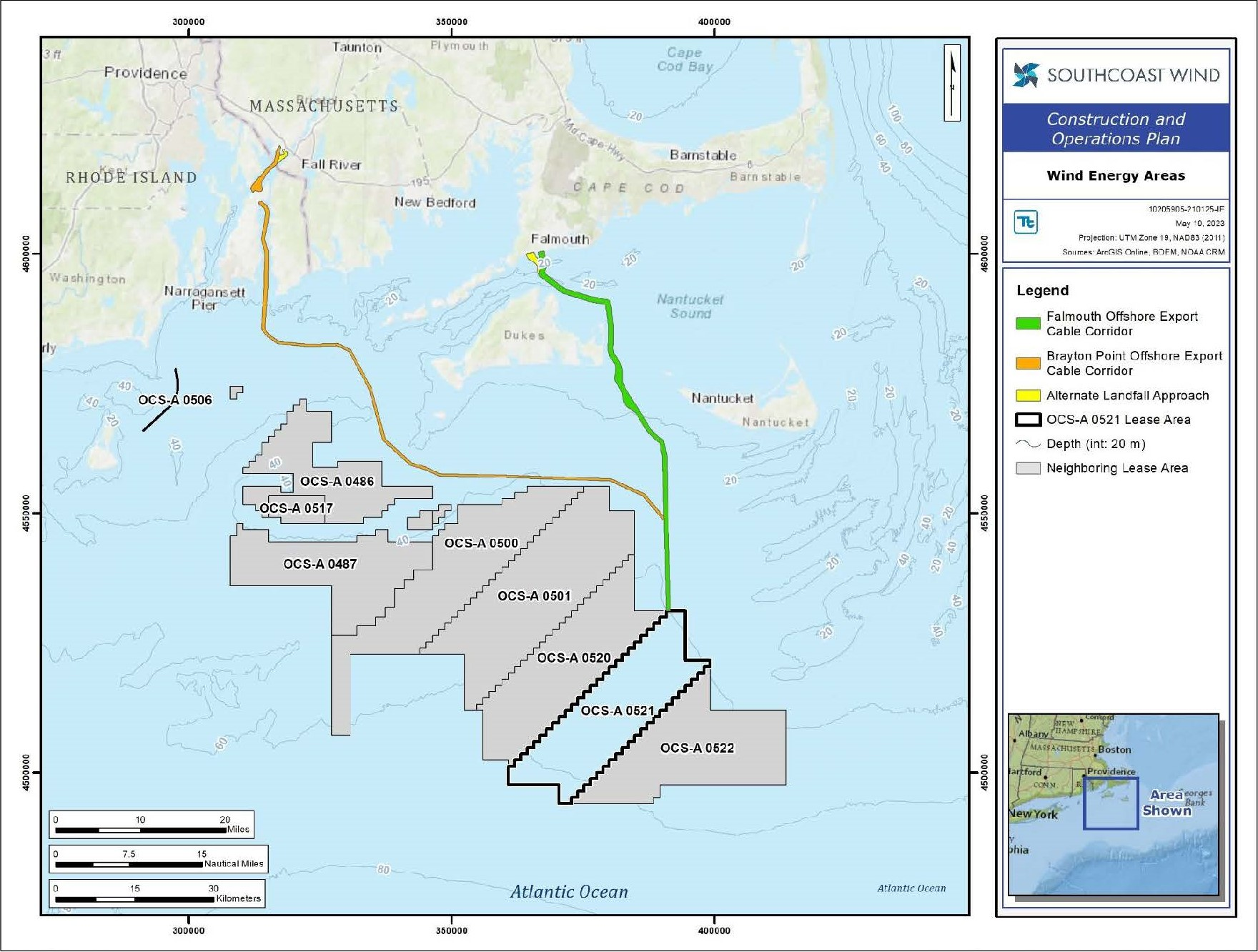
The Construction and Operations Plan (COP) for the SouthCoast Wind project was approved during the last week of the Biden Administration. That approval has been challenged by the Town and County of Nantucket. Ocean Wind, a joint venture of EDP Renewables (Portugal) and ENGIE (France), is the leaseholder.
It is ORDERED that the case be REMANDED to BOEM for reconsideration of its decision and that proceedings in this court are STAYED until further order of the court. It is further ORDERED that, on or before January 3, 2026, and every 60 days thereafter, the parties shall file a joint status report indicating the status of BOEM’s remand proceedings. It is further ORDERED that on or before 30 days following the issuance of a decision by BOEM, the parties shall file a joint status report informing the court if further proceedings are necessary and, if so, providing a proposed schedule for those proceedings.
The UK Met Office told Recharge that the historic trend of wind speeds in Britain was downwards. “The UK annual mean wind speed from 1969 to 2024 shows a downward trend, consistent with that observed globally. There have been fewer occurrences of maximum gust speeds exceeding 40/50/60 knots in the last two decades compared to the 1980s and 1990s.”
Citigroup informs that load factors for both onshore and offshore wind are falling behind capacity growth in Britain’s turbine fleet.
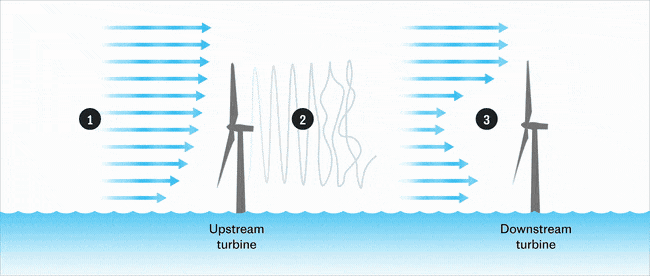
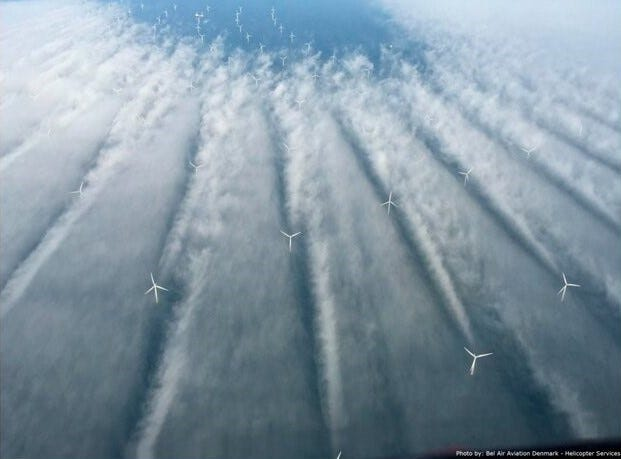
Per the Citigroup analysts, the increasing focus on wind wakes in UK waters has led to a ballooning number of disputes between developers.
In addition to wake losses, local turbulence in the wake regions creates significant unsteady fatigue loads on the downstream turbines, which shorten their working life.
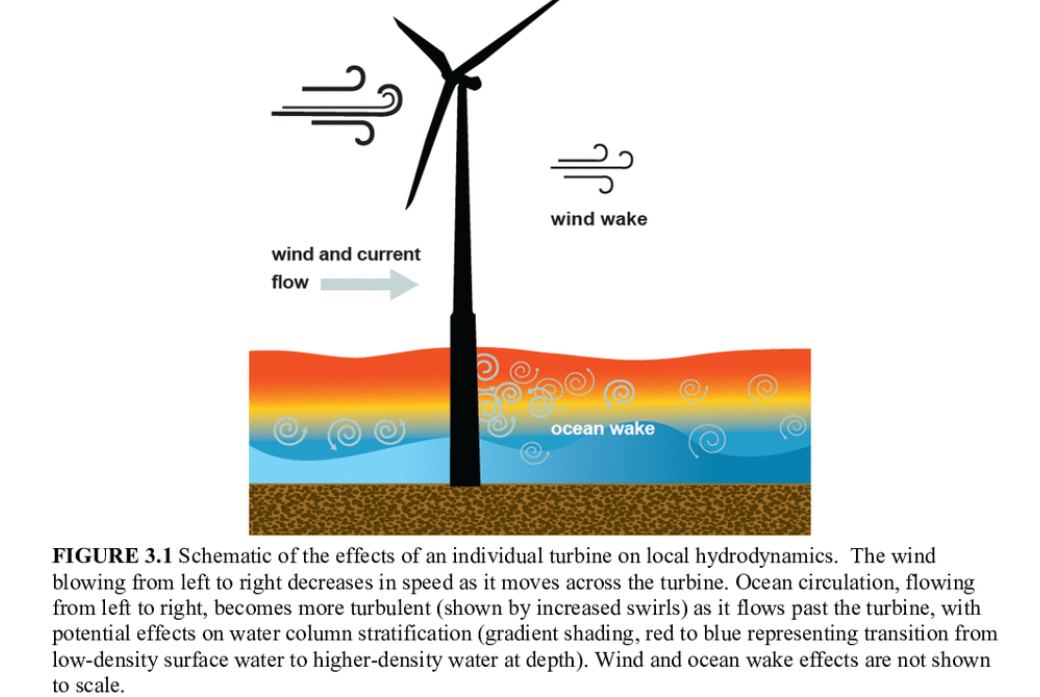
A recent study shows that hydrodynamic conditions in the ocean altered by wind wakes can strongly influence marine primary production (phytoplankton).
The US National Academy of Sciences advised BOEM about the hydrodynamic effects of wind turbines and the potential implications for the endangered North Atlantic right whale (see figure below).
The attached legal petition from Save LBI and Green Oceans, asserts that BOEM improperly amended OCS wind leases at the end of the previous Administration.
The amended language makes it more difficult to cancel leases by stipulating that an OCS wind lease must be suspended for 5 years before it can be cancelled, and that in the event of cancellation, the lessees must be compensated.
The sentence of concern:
Any cancellations are subject to the limitations and protections contained in subsections 5(a)(2)(B) and (C) of the Act (43 U.S.C. § 1334 (a)(2)(B) and (C)). (Those subsections are pasted at the end of this post in their entirety.)
Compensation could be very costly to the Federal govt (taxpayer) given the wild (irrational?) bidding for some leases and subsequent planning and development costs.
See Section 8 of this lease for an example of the amended language. Note that the lease changes are not highlighted or otherwise identified; nor was there any public notice of this change.
The petitioners are requesting that the new lease language be rescinded and that cancellation language in the lease be aligned with the regulations.
(B) that such cancellation shall not occur unless and until operations under such lease or permit shall have been under suspension, or temporary prohibition, by the Secretary, with due extension of any lease or permit term continuously for a period of five years, or for a lesser period upon request of the lessee;
(C)that such cancellation shall entitle the lessee to receive such compensation as he shows to the Secretary as being equal to the lesser of (i) the fair value of the canceled rights as of the date of cancellation, taking account of both anticipated revenues from the lease and anticipated costs, including costs of compliance with all applicable regulations and operating orders, liability for cleanup costs or damages, or both, in the case of an oilspill, and all other costs reasonably anticipated on the lease, or (ii) the excess, if any, over the lessee’s revenues, from the lease (plus interest thereon from the date of receipt to date of reimbursement) of all consideration paid for the lease and all direct expenditures made by the lessee after the date of issuance ofsuch lease and in connection with exploration or development, or both, pursuant to the lease (plus interest on such consideration and such expenditures from date of payment to date of reimbursement), except that (I) with respect to leases issued before September 18, 1978, such compensation shall be equal to the amount specified in clause (i) of this subparagraph; and (II) in the case of joint leases which are canceled due to the failure of one or more partners to exercise due diligence, the innocent parties shall have the right to seek damages for such loss from the responsible party or parties and the right to acquire the interests of the negligent party or parties and be issued the lease in question;
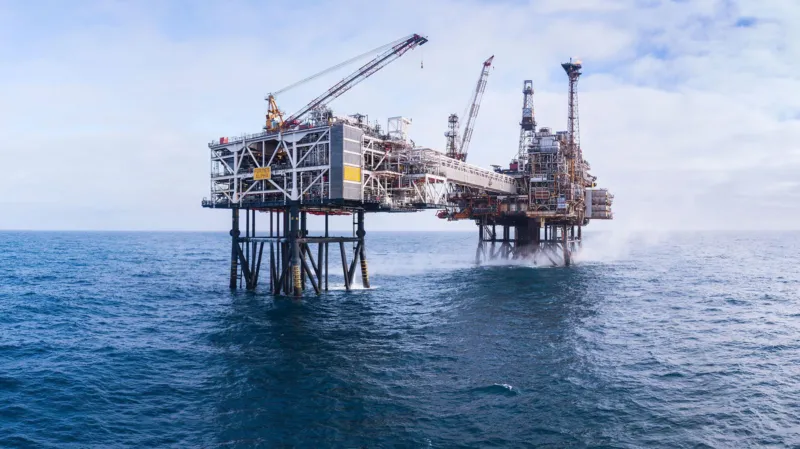
Queen Elizabeth inaugurated Forties field production.
Marking the Forties field’s half-century, the current operator Apache said it stood as a testament to Scottish grit, industrial excellence, and enduring human spirit.
In November 2024 Apache said it had suspended new drilling and would end all its operations in the North Sea by 2029. ☹
Bucks Fizz performed on a Forties field platform in the 1980s
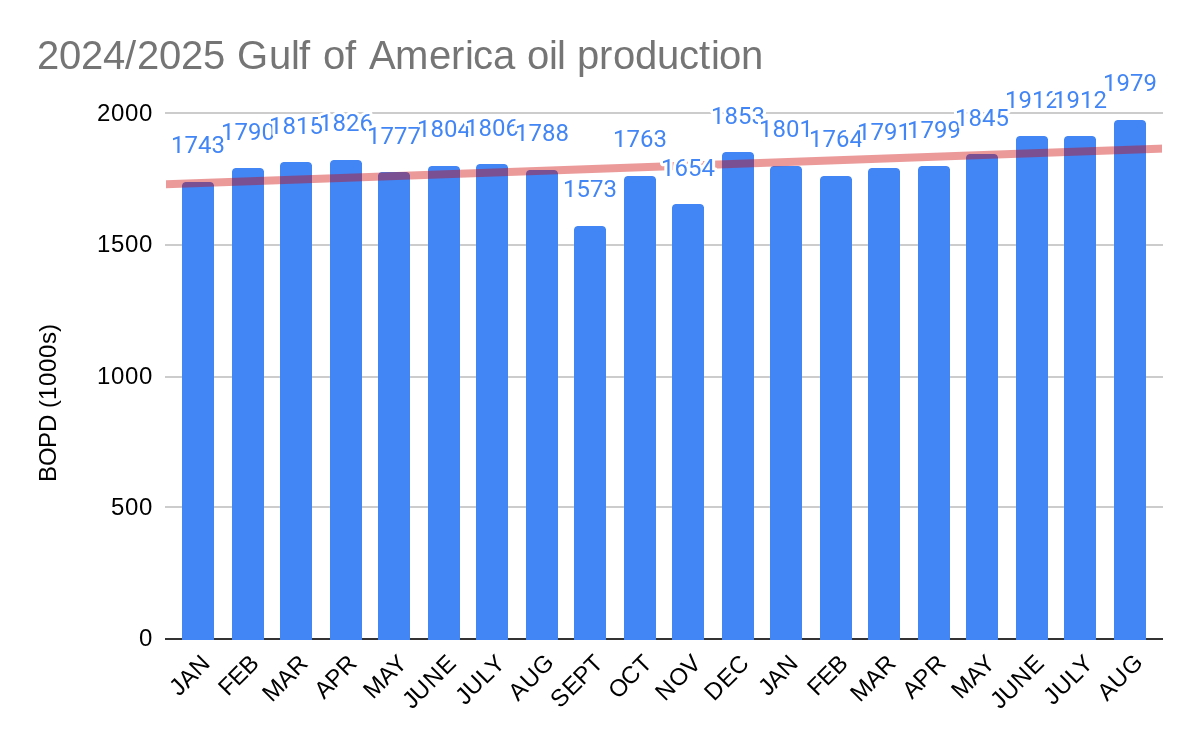
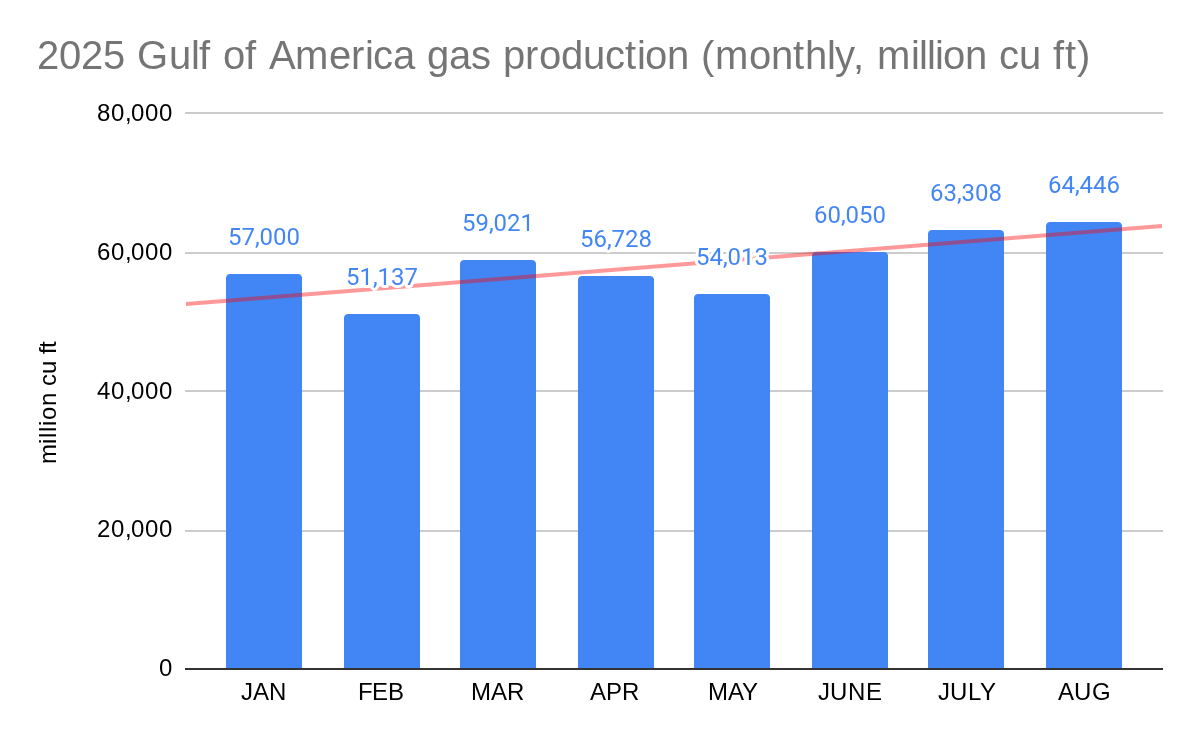
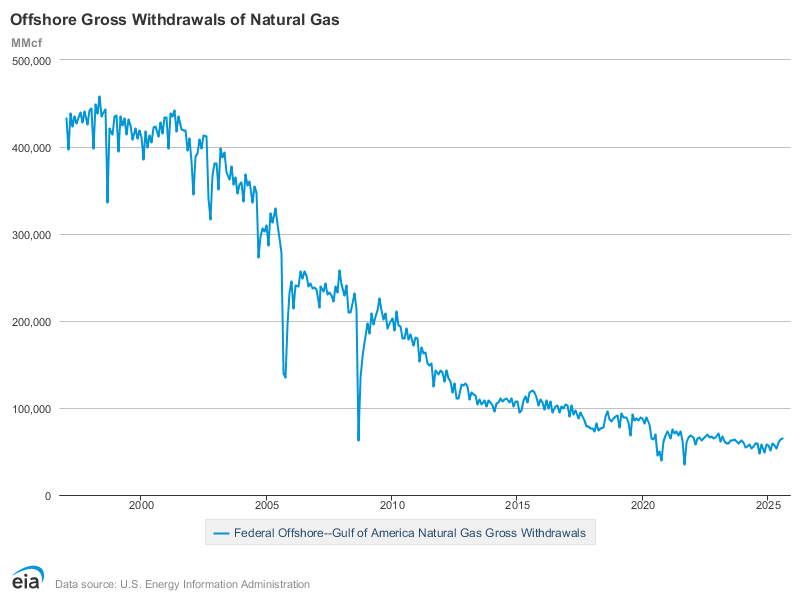
Gas production, which is now overwhelmingly from oil wells, also ticked up. However, gas production remains at historically low levels. (See charts below.)
Time to take another look at ultradeep shelf gas? More on this in a later post.
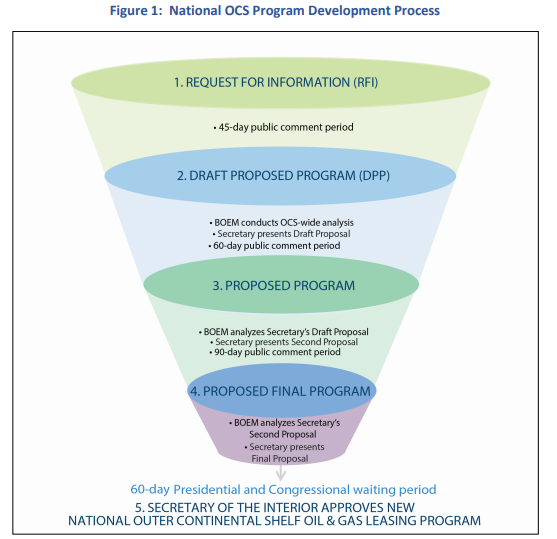
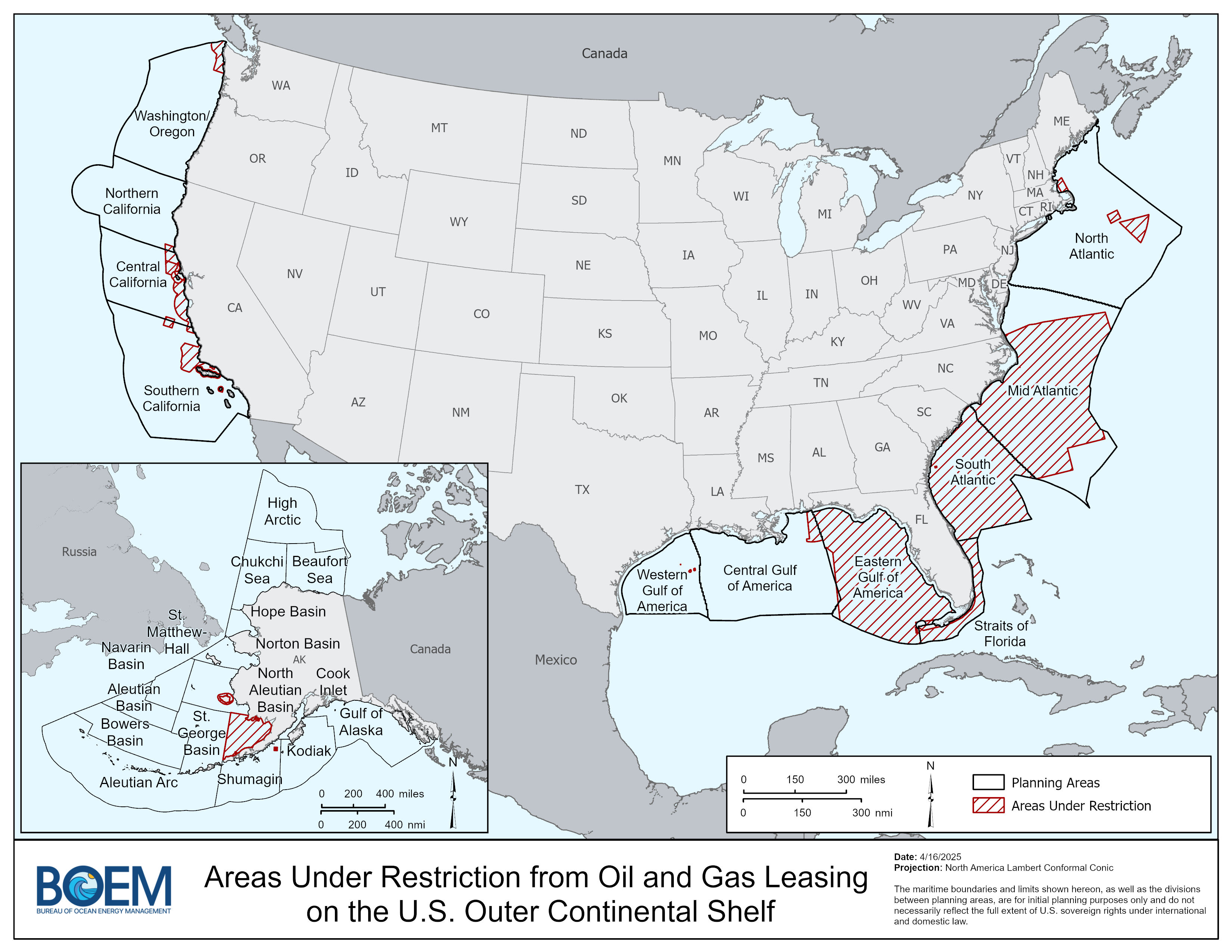
A leaked Dept. of the Interior (DOI) document will likely have little in common with the Draft Proposed Program (DPP, step 2 above). The DPP decisions will be made by the President, not by DOI staffers or managers.
According to media reports, the leaked document includes lease sales offshore New England, the Carolina’s and California. Unless the President revokes his own 2020 withdrawals, the Carolina’s are off-limits until 2032. Ditto for the Eastern Gulf within 125 miles from Florida. (See the map below.)
Including North Atlantic and offshore California in the DPP would unleash a firestorm of opposition. In the case of the North Atlantic, the acreage may not be sufficiently prospective to justify the fight.
To the extent that marine sanctuary determinations do not preclude California offshore leasing, the litigation and legislative battles probably would. In the unlikely event that a sale could be held, who would bid? Who wants to be the next Sable?
The Beaufort Sea is the most likely frontier area to be included in the DPP given plans to open ANWR, operational history, resource potential, and State support.
Assuming the South Atlantic withdrawal could be partially lifted, a small, targeted lease sale would be of great interest to petroleum geologists and could have significant economic and national security implications. The late Paul Post, the foremost expert on the petroleum geology of the US Atlantic, saw great potential in the paleo deep- and ultra-deepwater areas. He advocated exploration concepts proven successful in analogous West African and South American settings where massive discoveries have been made. Samuel Epstein, another prominent petroleum geologist, also believes the deepwater Atlantic has great resource potential.
Finally, the extent of the Florida buffer needs to be considered given the high resource potential of the Eastern Gulf. Be it 75, 100, or 125 miles, leasing beyond that buffer should be a priority.
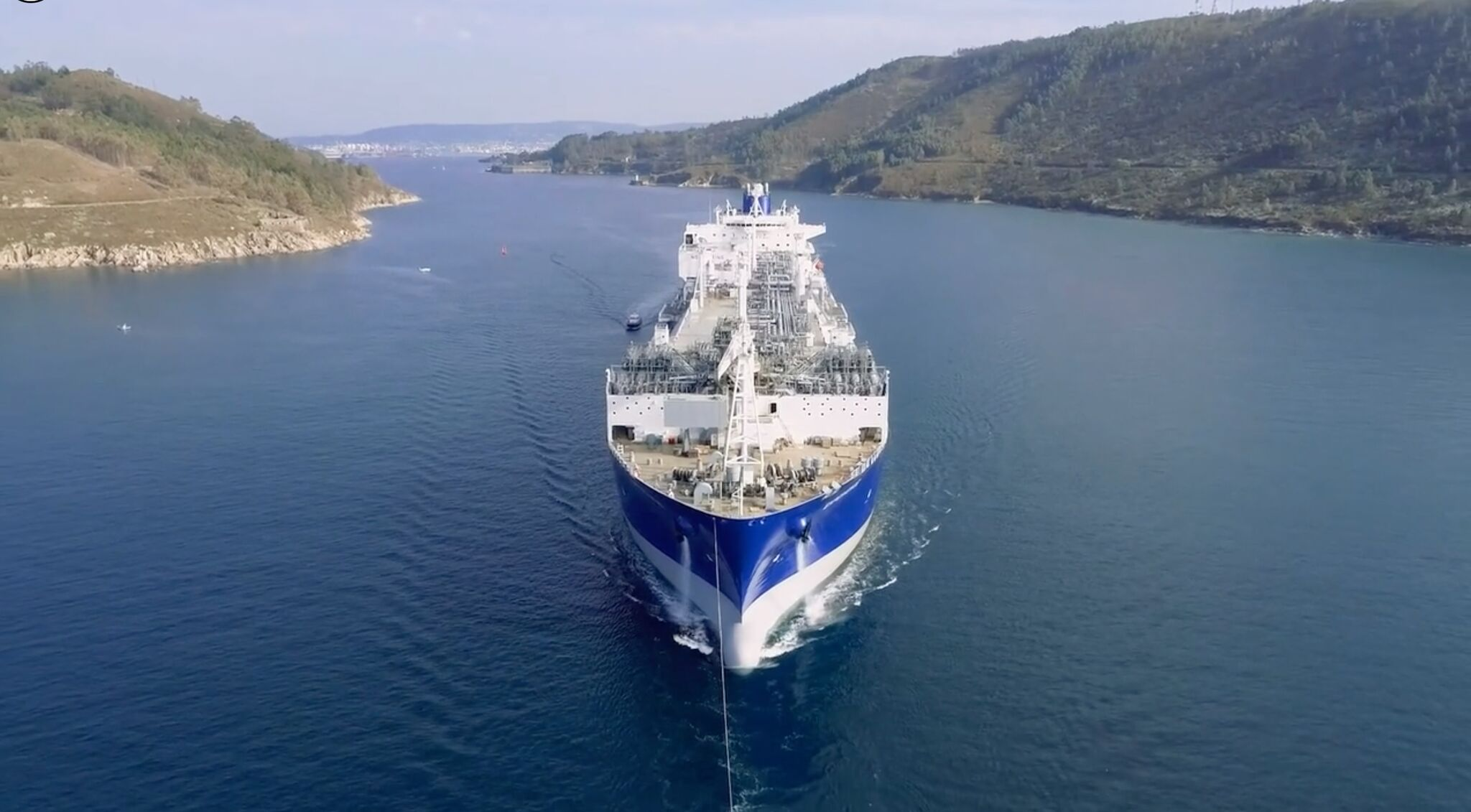
Excellerate Hull 3407, the company’s newest floating storage and regasification unit (FSRU), will be delivered to Iraq in 2026.
Why would a major oil and gas producer like Iraq be dependent on LNG imports?
Pipeline infrastructure limitations
High flaring rates: Iraq flared 625 bcf in 2023 which is almost equal to their total gas consumption (682 bcf). Iraq plans to eliminate routine flaring by 2028 (delayed from earlier targets).
Risks associated with gas imports from Iran.
And the Commonwealth of Massachusetts? Why would a state in the world’s no.1 gas producing country and not far removed from the massive Marcellus Shale reserves be importing LNG?
Firstly, Massachusetts is a wonderful place in many ways: beaches, mountains, islands, history, arts and culture, universities, charming villages, commercial fishing, recreational and professional sports, and more. I thoroughly enjoyed living on Cape Cod and was blessed to meet my wife there.
Pipeline restrictions have limited the flow of gas from Pennsylvania (Marcellus) and elsewhere.
Massachusetts is the only state with significant LNG imports.
Per EIA data, Massachusetts imported 13.2 bcf of LNG in 2023, accounting for about 87% of total U.S. LNG imports that year.
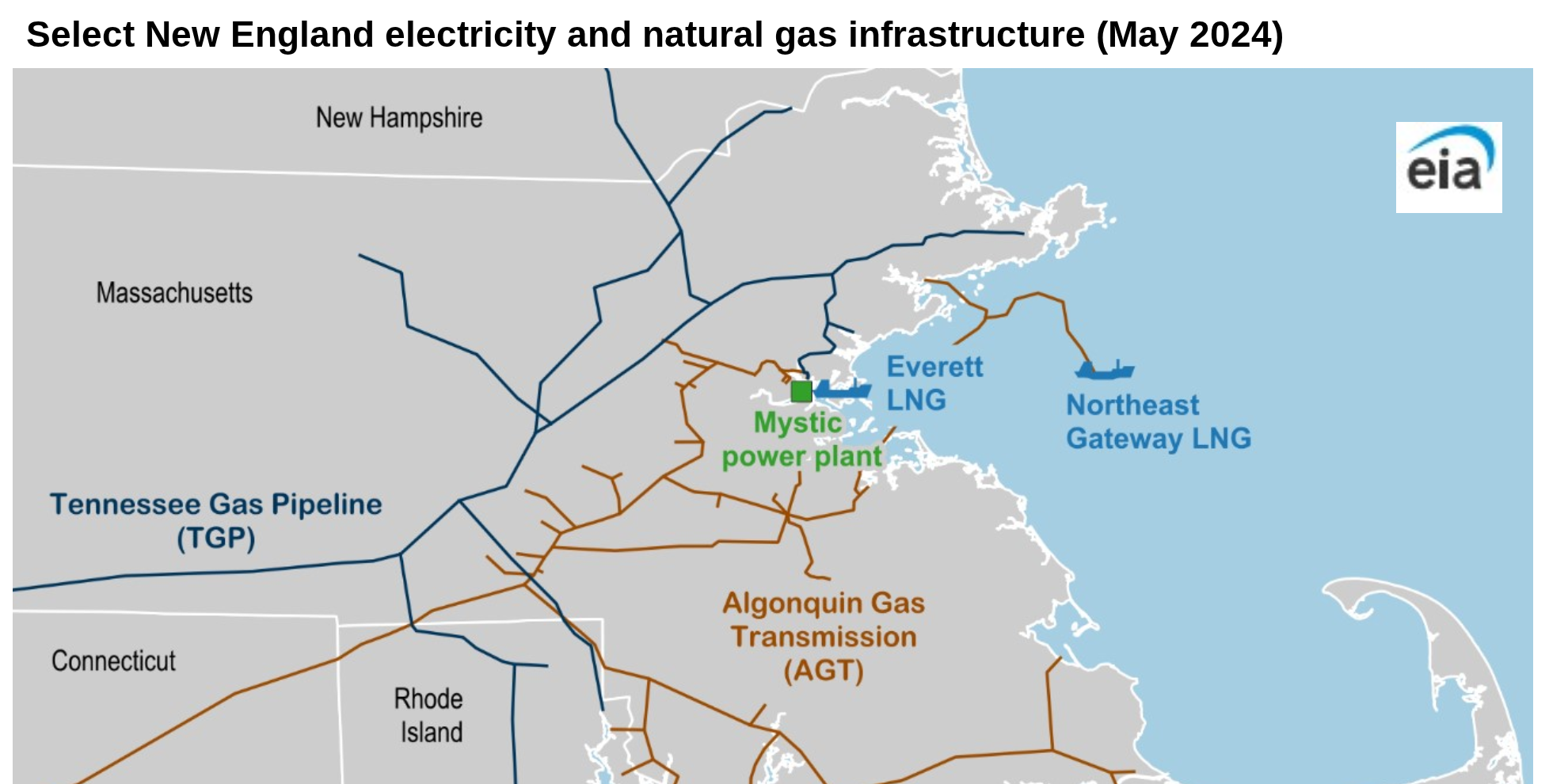
Most imports are through the Everett Marine Terminal near Boston. Imports through the offshore Northeast Gateway LNG terminal have been limited in recent years. (See map below).
Imports are seasonal, peaking in winter months, with most supply originating from Trinidad.
Recently, Governor Healy has made more encouraging statements regarding natural gas policy. She says she never stopped gas pipelines from entering the state and calls natural gas an “essential energy source.”
Attached is a court filing challenging Delaware’s approval of the Coastal Construction Plan for that project. Some interesting points from the filing:
Maryland local governments declined to allow the transmission lines from the Maryland Offshore Wind Project to come ashore in their jurisdictions.
The Governor of Delaware agreed to allow the transmission lines to make landfall at the Delaware Seashore State Park.
The transmission pipelines would then traverse the adjacent Delaware Bays, to an inland substation, from which the power would be sent to Maryland.
US Wind applied for a number of permits from the Delaware Department of Natural Resources (DNREC) specific to horizontal directional drilling, laying cable pipelines, and other coastal construction activity.
The approval process, including provisions for public input, was not consistent with State regulations.
The Secretary’s decision to issue the beach construction permit is supported virtually exclusively by documents which were submitted by US Wind after the close of public comment.
Decommissioning and financial assurance information, a favorite BOE topic for both wind and oil/gas, was submitted after the close of the public record.





 Bud's Offshore Energy (BOE)
Interesting case: Delaware litigation on approval of the Coastal Construction Permit for the Maryland Offshore Wind Project
October 29, 2025 by offshoreenergy
The Dept. of the Interior is currently reconsidering approval of the Construction and Operations Plan for the Maryland Offshore Wind Project (US Wind).
Attached is a court filing challenging Delaware’s approval of the Coastal Construction Plan for that project. Some interesting points from the filing:
Posted in Offshore Wind, Regulation, decommissioning, energy policy | Tagged decommissioning, Maryland Offshore Wind, court filing, US Wind, Delaware litigation, Coastal Construction Plan, public comment | Leave a Comment »