Feeds:
Posts
Comments

This intelligence leak seems rather convenient in that it absolves both the US and Ukrainian governments, but who knows?

U.S. officials said that they had no evidence President Volodymyr Zelensky of Ukraine or his top lieutenants were involved in the operation, or that the perpetrators were acting at the direction of any Ukrainian government officials.

New York Times

Meanwhile, Seymour Hersh is promising a followup Nord Stream report next week.

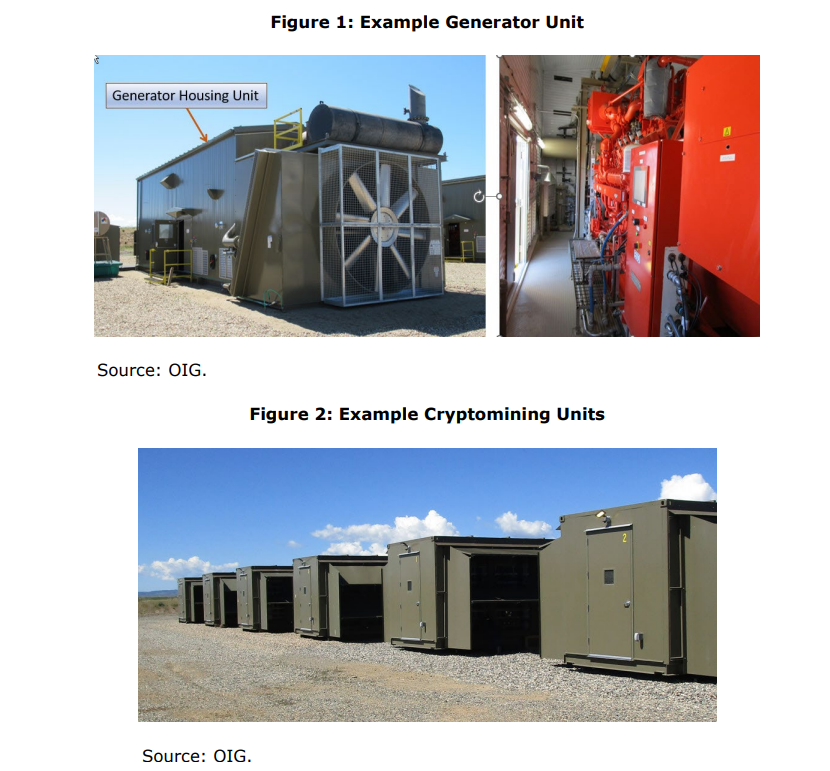
We learned that Federal mineral lease operators are diverting natural gas from those leases to power electric generators for cryptomining operations without paying gas royalties. (Note: Per the report, these operations were onshore. No evidence of offshore cryptomining was provided.)

Inspector General, US Dept. of the Interior

The Inspector General recommended that the Dept. of the Interior issue guidance to affected bureaus regarding cryptomining operations, including guidance addressing potential land use concerns, safety risks, environmental impacts, and royalty collection requirements.

In responding to the recommendation, DOI commented that “BSEE and BOEM recognize that the remote location of offshore facilities could potentially be used to facilitate clandestine, nefarious activity – including cryptomining.”

While that potential certainly exists, the probability of evading royalty payments by using produced gas to cryptomine at OCS facilities is extremely low:

  • To evade royalty payments, the crytomining would have to take place upstream from any sales or allocation meter.
  • Space on OCS facilities is extremely limited, and cryptomining units are not compact.
  • Costs associated with transporting and installing the units would be significant.
  • A surge in lease-use gas or a significant reduction in sales gas would be noticed by ONRR accounting systems.
  • Avoiding royalty payments would be a criminal penalty with enormous implications for the responsible companies.
  • OCS facilities are visited at least annually by knowledgeable BSEE inspectors, who would identify and question any such equipment additions.
  • In the unlikely event that an OCS cryptomining activity went unnoticed, it’s highly likely that an offshore worker would contact the OIG or BSEE.

Presentations from the January 2023 HSAC meeting have now been posted. None of the presentations addresses the tragic crash in the Gulf of Mexico on 29 December. This is understandable given the ongoing investigation.

Attached is an update from the Helideck Committee which also addresses wind farm issues.

An internal memo from the U.S. Interior Department suggesting that the agency set the highest possible royalty fee on potential oil and gas development before last year’s Cook Inlet lease sale is drawing blowback from the Democratic chair of the Senate Energy and Natural Resources Committee.

West Virginia Sen. Joe Manchin said in a statement he was “appalled” by the memo, which he said was leaked and prioritized a “radical climate agenda” over the energy needs of Alaskans and the U.S.

Anchorage Daily News

From the decision memo:

While a 16 ⅔ percent royalty may be more likely to facilitate expeditious and orderly development of OCS resources and potentially offer greater energy security to residents of the State of Alaska, a reasonable balancing of the environmental and economic factors for the American public favors the maximum 18 ¾ percent royalty for Cook Inlet leases.

Sale 258 Decision Memo

The lower royalty rate probably would not have made much difference in the outcome of this sale, which only drew one bid, but the attitude expressed in the decision memo is rather disappointing given the Department’s mission, as expressed in the OCS Lands Act, to make resources available for expeditious and orderly development.

What might have made the sale more attractive was royalty suspensions, Option D.5.b (below). This would have been the best means of supporting the objectives of Senator Manchin, the other authors of the congressional leasing mandate, and the State of Alaska.

Option D.5.b: Offer Royalty Suspensions
BOEM could offer royalty suspensions with the goal of making resources available for expeditious and orderly development. However, BOEM does not recommend royalty suspensions as the recommended lease term options are expected to balance the goals outlined earlier in this memo

Sale 258 Decision Memo

Those who are concerned by the Sale 258 Decision Memo should be more troubled by the Proposed 5 Year Leasing Plan, most notably this stunning sentence which justifies the minimalist plan and signals a phasing out of offshore oil and gas leasing:

The long-term nature of OCS oil and gas development, such that production on a lease can continue for decades makes consideration of future climate pathways relevant to the Secretary’s determinations with respect to how the OCS leasing program best meets the Nation’s energy needs.

5 Year Leasing Program, p.3

“I am of a firm view that the world will need oil and gas for a long time to come,” (Shell Chief Executive) Sawan, who started the job on Jan. 1, told Times Radio in the U.K. on Friday. “As such, cutting oil and gas production is not healthy.

Back in 2021, Shell predicted that its own oil production would decline every year and drop by as much as 18% by 2030. BP had a similar outlook, but CEO Bernard Looney rolled back its climate targets this year and said it will increase investment in exploration and production.

BP and Shell have trailed their U.S. peers in price to earnings ratios. Analysts have said investors interested in exposure to oil and gas have shunned them for putting more money into renewables, while investors focusing on environmental concerns haven’t rewarded them. That’s kept European energy firms trading at a discount.

Barron’s

It will never happen, but a separate company composed of BP and/or Shell upstream US assets would be very attractive to investors.

Lawrence Livermore is receiving attention for concluding that the Covid pandemic most likely arose from a laboratory leak in Wuhan.

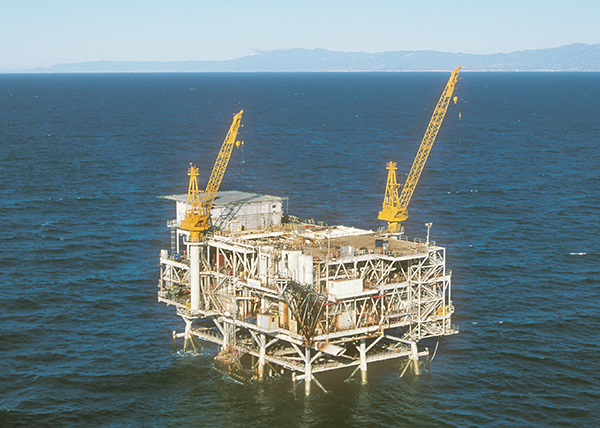
This reminded me of an important Lawrence Livermore project that was funded by the Minerals Management Service in 1995. The study considered seismic hazard criteria for offshore platforms on the California OCS. My colleague Dr. Charles Smith, a structural engineer, had an important role in this research. Charles had been instrumental in the establishment of an earthquake measurement network in the Pacific Region. The measurement system at Platform Grace in the Santa Barbara Channel  successfully recorded 5 earthquakes and the structural responses at multiple locations on the platform.

Lawrence Livermore and the other national laboratories have many outstanding scientists and engineers. The national labs do excellent work, although their studies are a bit pricey 😉

Platform Grace

A group of international shipping companies and their subsidiaries tentatively agreed Wednesday to pay $96.5 million to Houston-based Amplify Energy Corp. to dismiss one of the last remaining lawsuits over the oil spill, which sent at least 25,000 gallons of crude into the waters off Huntington Beach in October 2021.

LA Times
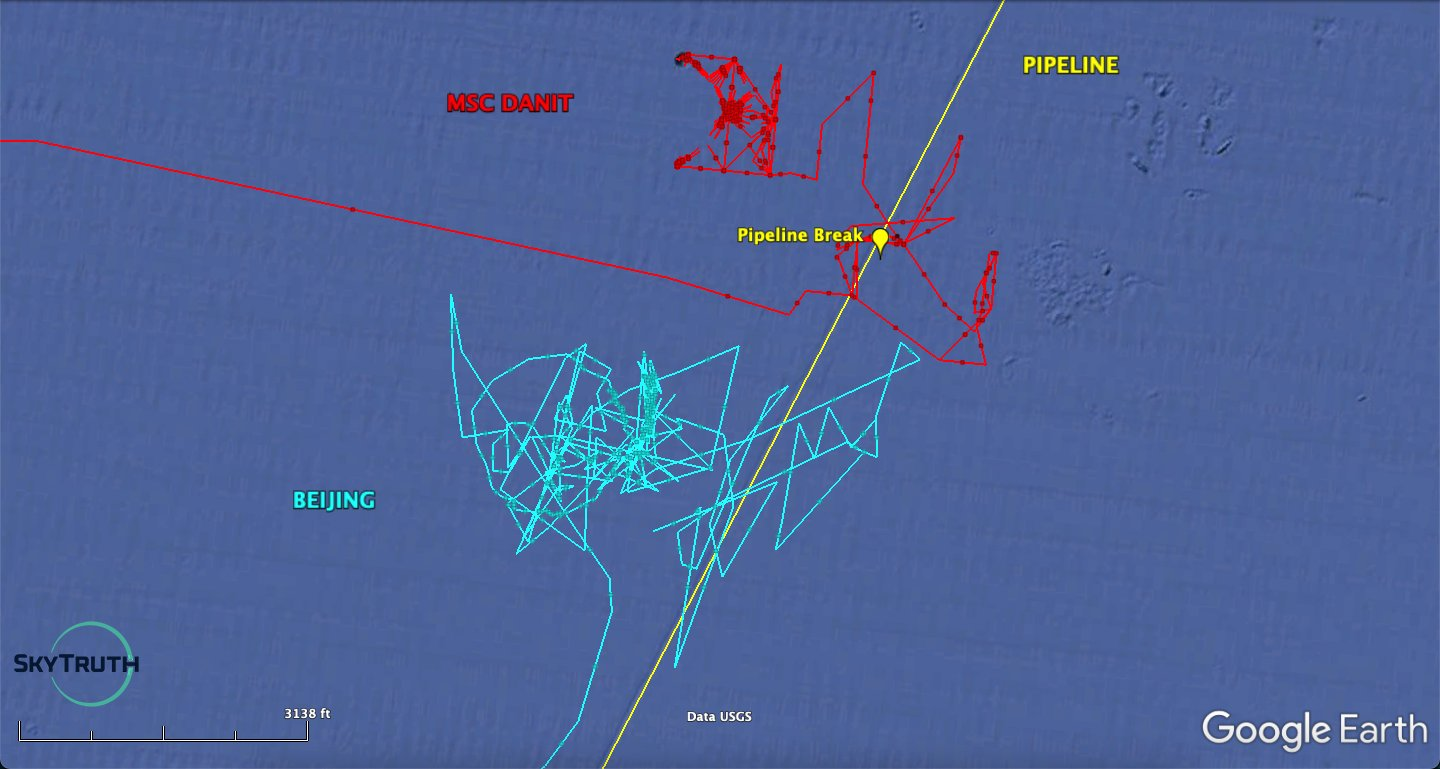
MSC Danit and Beijing were ID’d by Sky Truth as likely dragging anchors over the damaged Beta Unit pipeline

Although the Coast Guard’s investigation report has yet to be published, available information suggests that the pipeline was well maintained and that Amplify’s Beta Unit facilities had a good safety and compliance record. Absent the anchor dragging captured in the above image, a spill would have been highly unlikely. The large settlement in favor of Amplify is therefore quite understandable.

Whoever blew up the Nord Stream pipelines was not entirely successful in that one of the Nord Stream 2 lines was apparently undamaged. What is next for that line? Will the two Nord Stream 1 and the other Nord Stream 2 pipelines be repaired?

Some may not be aware that the Chinese government, through a fully owned subsidiary of the China National Offshore Oil Corp. (CNOOC), is a leaseholder in the US Gulf of Mexico. Per BOEM records, CNOOC Petroleum USA Inc currently has ownership in 12 OCS leases. Most significantly, CNOOC holds 21% interest in the Appomattox Field, operated by Shell, and a 25% working interest in Stampede, operated by Hess. Peak oil production for these projects is expected to be 175,000 bopd for Appomattox and up to 80,000 bopd for Stampede.

CNOOC acquired the Gulf of Mexico properties through its purchase of Nexen, a Canadian company, in 2013.

The state-owned Chinese oil explorer surrendered operating control of those assets to quell U.S. national security concerns, said two people familiar with the agreement who asked not to be named because the terms aren’t public.

FInancial Post

Reuters has reported that CNOOC is considering an exit from its operations in the US, Canada, and the UK because of sanctions concerns. JPMorgan is reportedly assisting with the sale of the US assets.

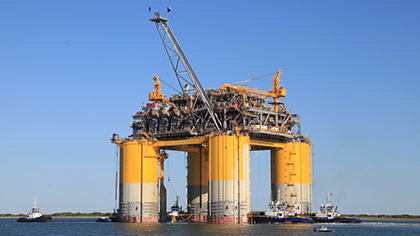
Stampede TLP

Comments on 2022 oil production: