2023 vs. 2025: Not so subtle changes

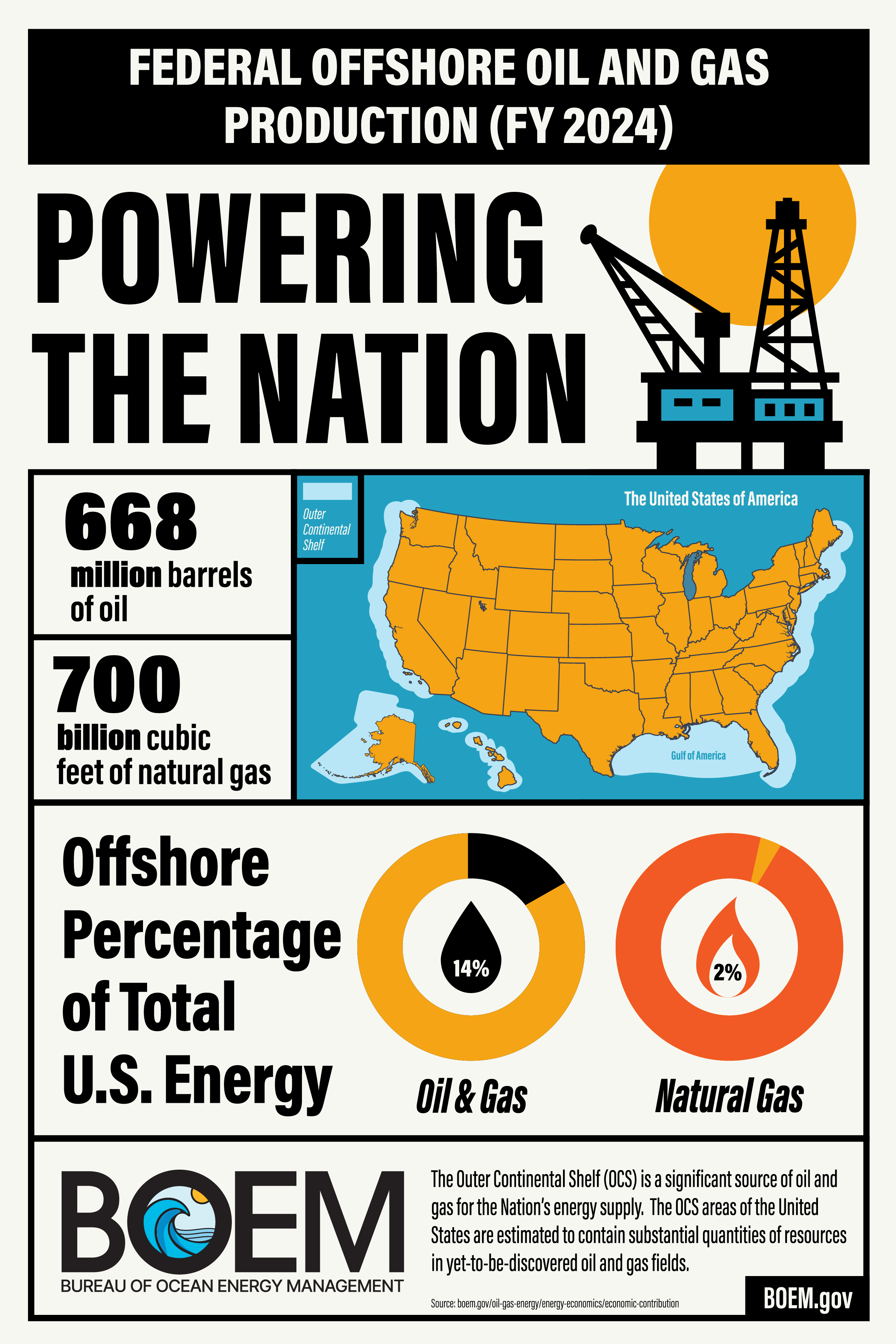


BTW, the new BSEE logo appears to have been influenced by the masterpiece Rig at Sunset 👍 😉

Posted in energy policy, Offshore Energy - General, Offshore Wind, Uncategorized, tagged BOEM, BSEE, OCS energy, policy changes, wind vs. oil and gas on August 8, 2025| Leave a Comment »
2023 vs. 2025: Not so subtle changes
BTW, the new BSEE logo appears to have been influenced by the masterpiece Rig at Sunset 👍 😉
Posted in energy policy, Offshore Wind, Regulation, tagged COP approval, litigation, Ocean City MD, Offshore Wind, US Dept. of the Interior, US Wind on August 7, 2025| Leave a Comment »
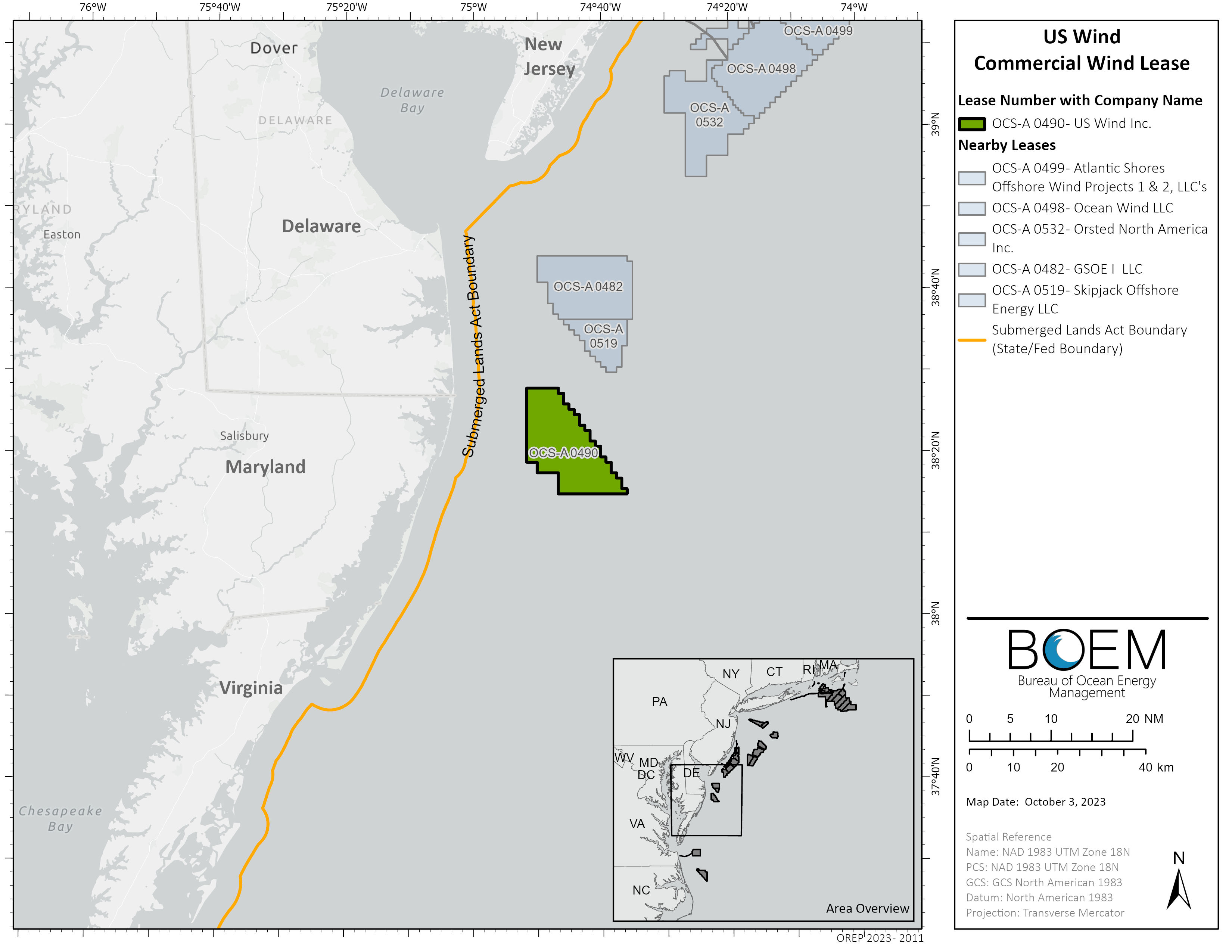
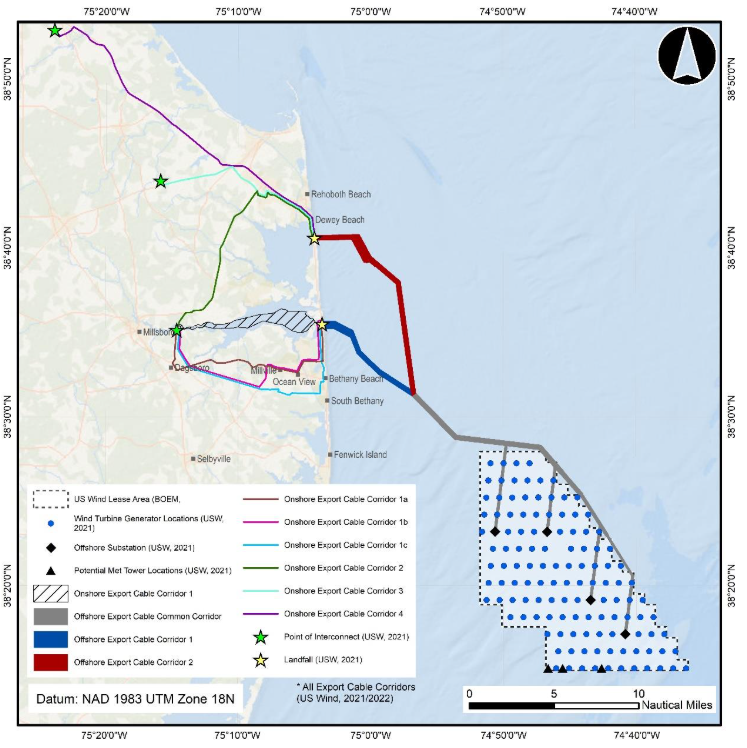
A new court filing (attached) informs that the Dept. of the Interior is reconsidering the Construction & Operations Plan (COP) approval for US Wind’s Maryland Offshore Wind (“MarWin”) Project (maps above). That approval is the subject of litigation filed by Ocean City MD and others.
The key section of the Federal government’s filing is pasted below.
Posted in Offshore Wind, energy policy, climate, tagged Vineyard Wind, Nantucket, climate change, historic preservation, Dawn Hill, Select Board on August 6, 2025| Leave a Comment »
Victoria Bonnet’s piece in the Nantucket Current challenges certain assertions made at the Select Board’s July 29 press conference. Key points:
“The government documents for ALL the Atlantic projects make it clear that there will be no benefit to climate change from implementing wide scale offshore wind.”
“And how is it possible that an attorney representing an island that is receiving the full brunt of the environmental impacts from this massive industrial project is lecturing the press that historic preservation can co-exist with offshore wind? The sight of just the first 40 towers from Vineyard Wind makes it clear they can’t.”
“Blindly following public relations statements about offshore wind as a critical solution to climate change that must be implemented immediately is how we got here in the first place. It has become clear that Nantucket receives no benefits from, but is significantly harmed by, Vineyard Wind. Our Select Board’s role should not be to advocate for any energy source that harms Nantucket.”
“Dawn Hill, a signatory to the Good Neighbor Agreement and the current Select Board Chair, was a bright spot in the meeting. Her acknowledgment that the project is way more impactful than communicated at the time the Good Neighbor Agreement was signed gives hope that more rational thinking and action is on the way.“
Posted in climate, energy policy, Offshore Wind, tagged Denmark, electricity imports, Jens Christiansen, Wind Energy on August 6, 2025| Leave a Comment »
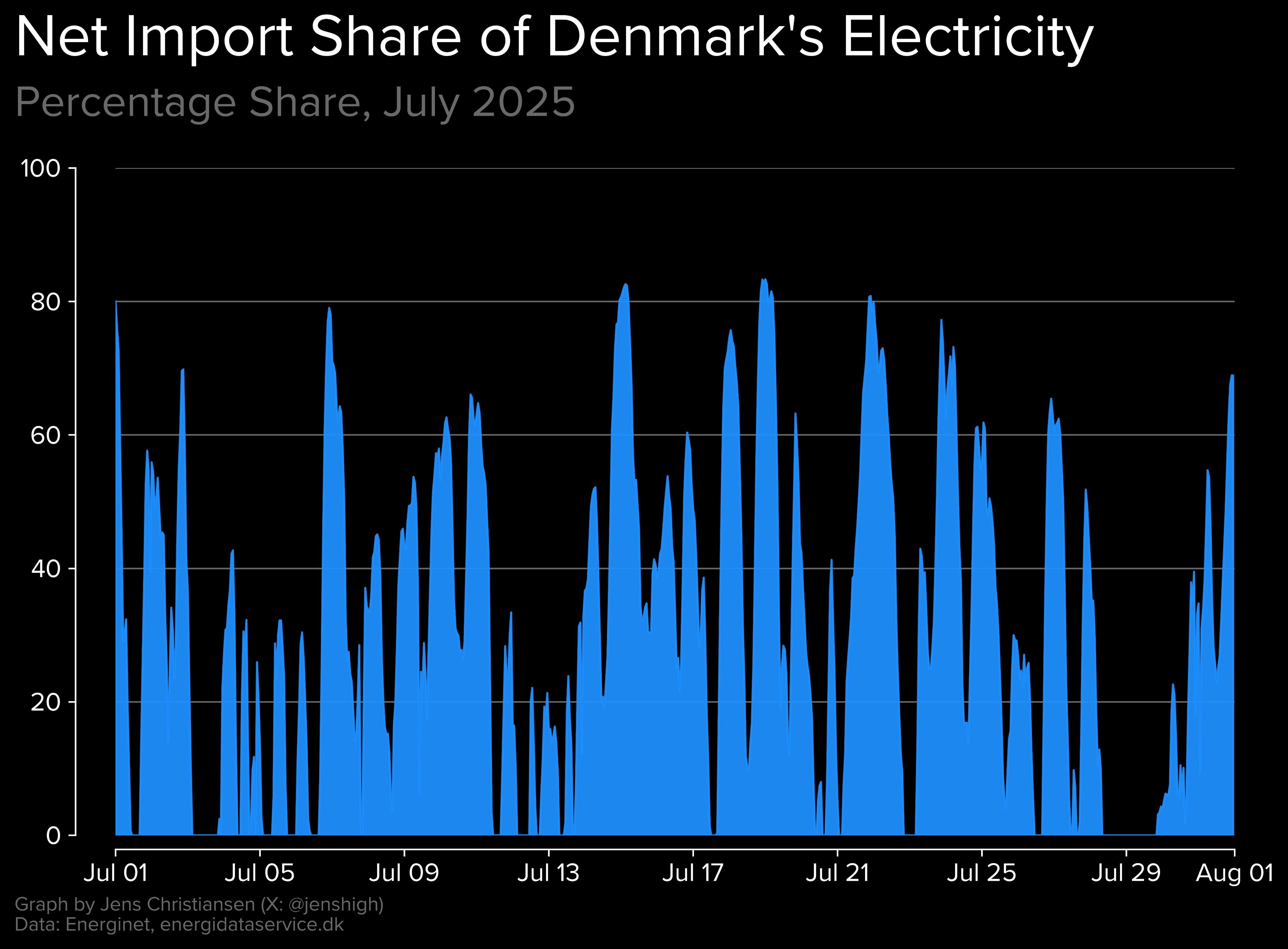
As indicated in the Jens Christiansen graphic above, Denmark’s net imports exceeded 80% of demand several times in July. Per Jens, a Danish physicist, “this is the downside of being a wind leader we have to talk about.”
Posted in decommissioning, energy policy, Offshore Wind, Regulation, tagged decommissioning, financial assurance, MV Times, transparency, turbine production data, Vineyard Wind on August 4, 2025| Leave a Comment »
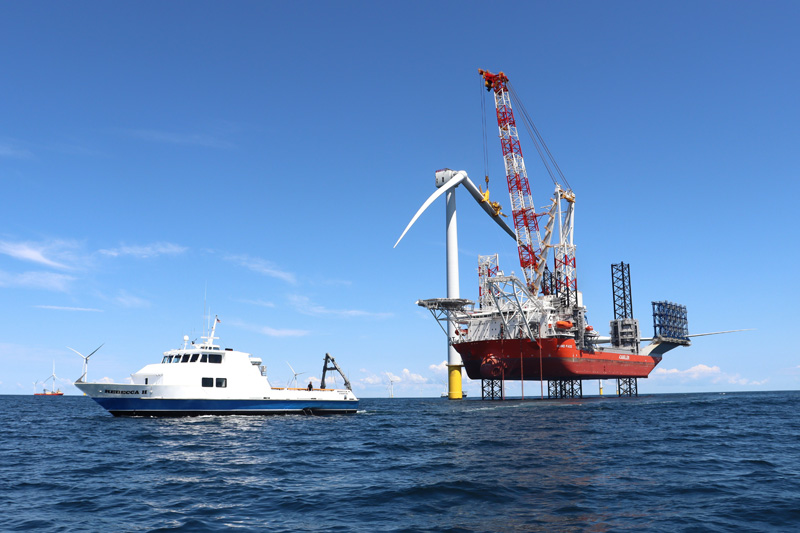
MV Times: “The recent site visit raised questions on the production of the wind farm. The Times has been able to neither verify the report independently nor confirm disparities between visuals on the ground and the Iberdrola report.”
An MV Times photo of a Vineyard Wind substation is pasted below. These substations are large structures. Per the Construction and Operations Plan (COP) for Vineyard Wind, the topsides for a conventional electrical service platform (ESP) (also known as an offshore substation or OSS) are 45 x 70 x 38 m, which is larger in surface area than a typical 6-pile oil and gas platform (~30 x 30 m), and is comparable in size to a large jackup drilling rig.
Decommissioning financial assurance requirements were relaxed to reduce development costs, thus increasing taxpayer liability risks. This policy decision should be reviewed.

Posted in energy policy, Offshore Wind, tagged BOEM, de-designating, designated wind energy areas on July 30, 2025| Leave a Comment »

“By rescinding WEAs, BOEM is ending the federal practice of designating large areas of the OCS for speculative wind development, and is de-designating over 3.5 million acres of unleased federal waters previously targeted for offshore wind development across the Gulf of America, Gulf of Maine, the New York Bight, California, Oregon, and the Central Atlantic.”
Posted in Offshore Wind, energy policy, tagged Vineyard Wind, Nantucket, Good Neighbor Agreement, press conference, 15 demands, Dawn Hill on July 30, 2025| Leave a Comment »
On Tuesday morning, the Nantucket Select Board blasted Vineyard Wind and gave the company 2 weeks to respond to their 15 demands. The Nantucket Current provides good coverage of the press conference. The specific demands are listed below.
I observed the press conference on the Town’s YouTube channel, and my sense is that this may be Vineyard Wind’s last chance to amicably resolve these issues. Board member Dawn Hill, who now regrets signing the increasingly unpopular Good Neighbor Agreement with Vineyard Wind, didn’t hold back when she said:
“These wind turbines are bigger, brighter, and much more impactful than we ever thought, and not to mention the environmental hazard from failures. But my choice would be with our new, federal administration to really wake up and try and put an end to these things, because they’re not worth it to the coast of the United States.”
Posted in energy policy, Offshore Wind, Regulation, tagged Empire Wind, NOAA, petition to revoke LOA, Save the East Coast - NJ on July 28, 2025| Leave a Comment »
The attached petition from Save the East Coast Inc. et al requests that NOAA revoke the Empire Wind Letter of Authorization using the emergency authority delineated at 50 C.F.R. § 216.106(f).
This is a strong filing, but revocation would be difficult given the extensive development activity to date and the Administration’s decision in May to allow the project to go forward.
Posted in Offshore Wind, tagged construction update, New Bedford Light, Vineyard Wind on July 25, 2025| Leave a Comment »
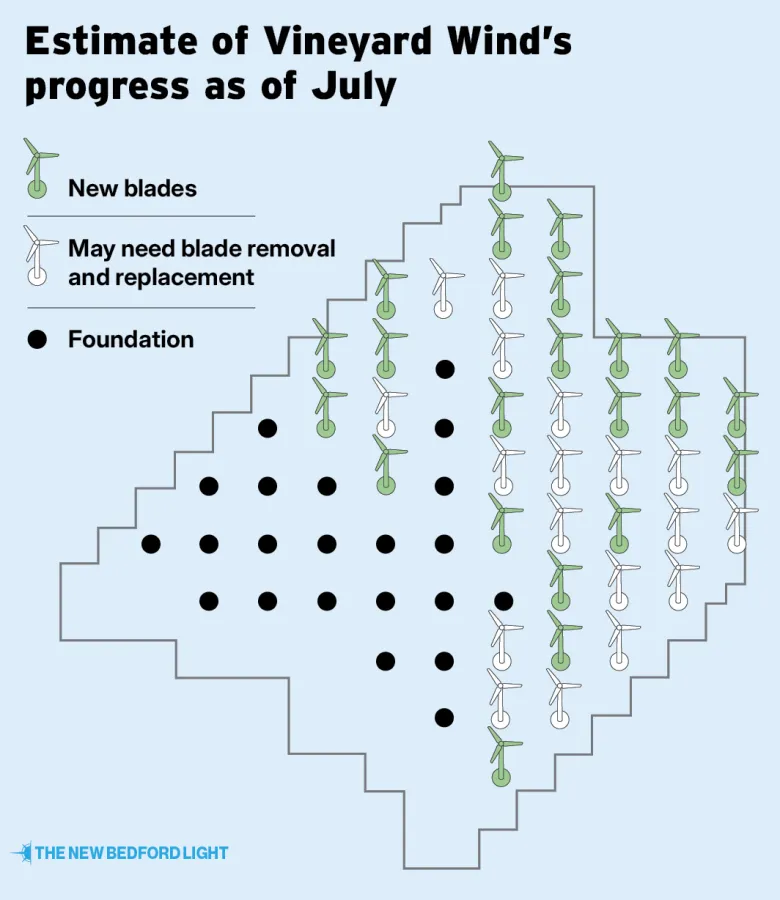
Given the absence of updates from Vineyard Wind and its regulators, the excellent reporting by local media like the New Bedford Light and Nantucket Current is much appreciated.
Posted in accidents, energy policy, Offshore Wind, tagged press conference, Town of Nantucket, turbine blade failure, Vineyard Wind on July 25, 2025| Leave a Comment »
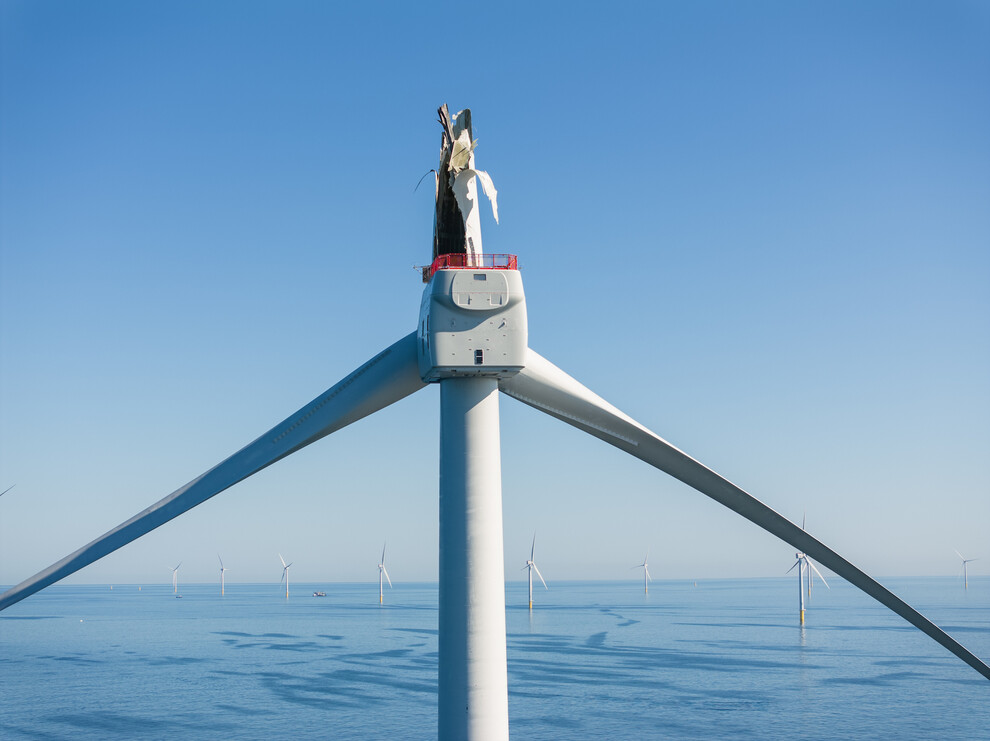
Nantucket Current: Nantucket officials and attorneys will hold a press conference next Tuesday, July 29th, at 9:30 a.m. regarding “Vineyard Wind’s failure to meet its legal and public commitments to the community.”
Meanwhile, is this a satisfactory response from BSEE to the Current’s inquiry regarding the bureau’s long delayed report on the turbine blade incident?
“BSEE’s comprehensive and independent investigation is ongoing,” an agency spokesperson wrote in an email to the Current on Tuesday. “There is no timetable for the completion of the investigation, as BSEE focuses on ensuring that the investigation is thorough and complete.”
 Bud's Offshore Energy (BOE)