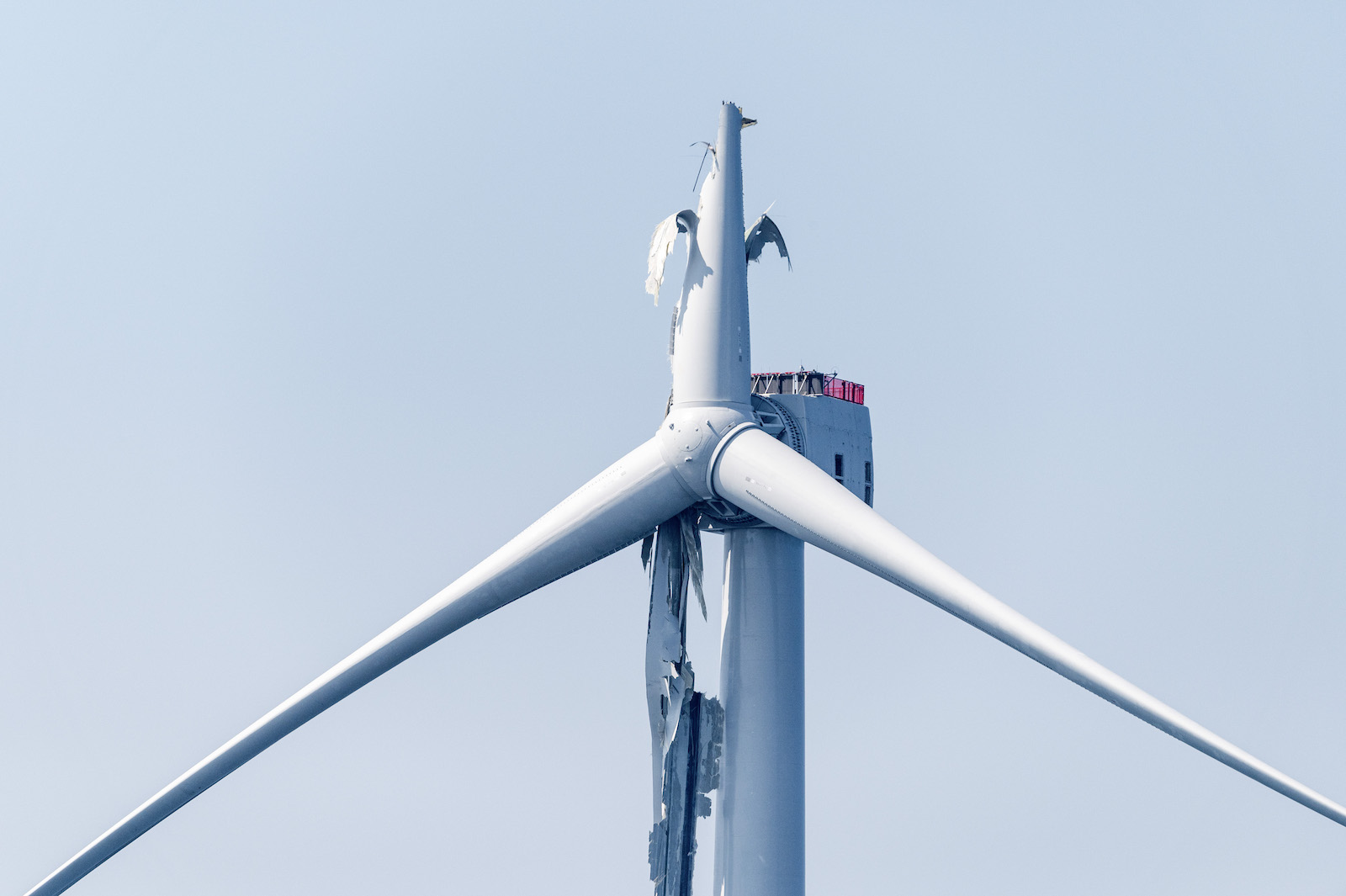
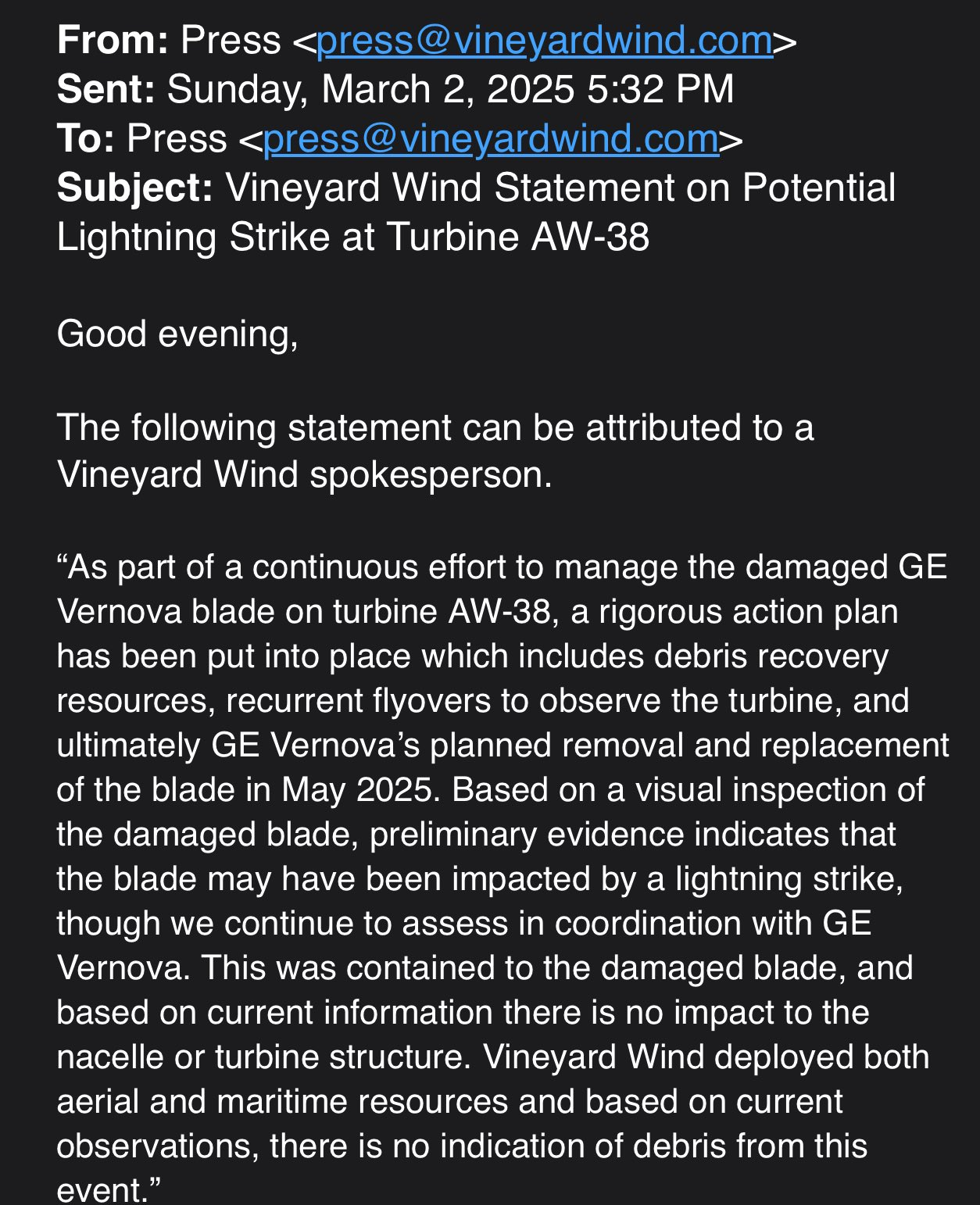
The same Vineyard Wind turbine blade that failed last summer has now been struck by lightning:
“Lightning struck the fractured stub of Vineyard Wind’s broken turbine blade in the early morning hours on Friday (2/27), according to representatives from Vineyard Wind and the Coast Guard. It was the remnants of the broken blade that snapped this July that were still attached to the turbine.”
“It appears the town (Nantucket) was not informed of the lightning strike by Vineyard Wind until it received media inquiries about it, over 48 hours after it happened.”
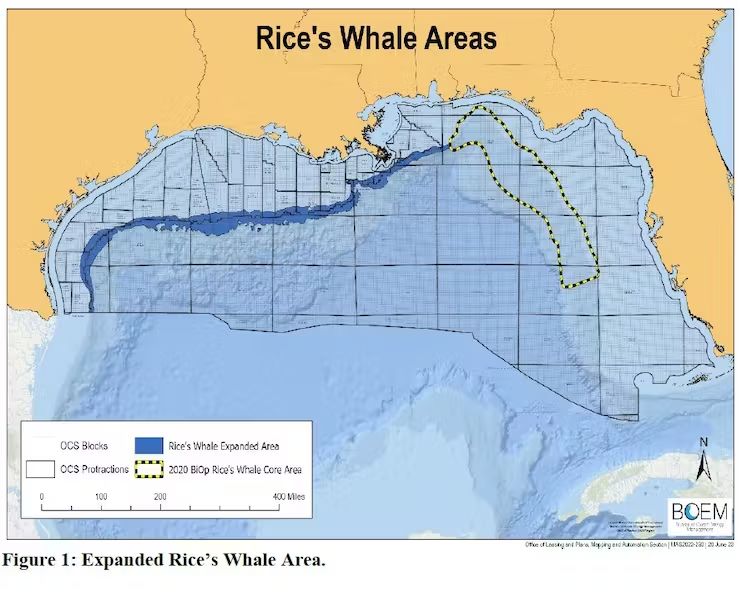
Although Rice’s Whale lease stipulations were deleted from Sale 261 leases by court order, similar NTL restrictions remained in effect for all oil and gas operations in the Gulf of America. Those NTL restrictions, some of which may be excessive and premature, have now been rescinded.
A previous post compared the Rice’s Whale restrictions applicable to Gulf oil and gas operations with the less onerous Right Whale restrictions for the Atlantic wind industry.
Of course, this is not the end of the Rice’s Whale dispute. A Federal judge in Maryland has ordered the National Marine Fisheries Service’s (NMFS) to prepare a new biological opinion that better protects the Rice’s whale. The deadline for the new biological opinion was extended to May 21, 2025. After that date, no new Gulf leases may be issued and no new operating plans may be approved pending a new biological opinionthat is acceptable to the Court.
Groups and individuals opposing Atlantic wind projects sent the attached letter to Interior Secretary Doug Bergum asking for the withdraw of wind permits.
The groups cite serious problems with the National Marine Fisheries Service (NMFS) Letters of Authorization (LOA) for Incidental Take of endangered and threatened species. The LOAs authorized cumulative Takes of 548 individuals from a population of around 338.
The groups’ “no list” (project analysis deficiencies):
No EIS for the NMFS Incidental Take Authorization
No consideration of the impact of harassment in the Biological Opinion including cumulative impacts
No harassment authorization for the turbine installation ship
No consideration of using suction caissons instead of pile driving
No consideration of sediment plumes from ocean currents flowing through wind facilities
No assessment of a project’s contribution to the overall effects of multiple wind projects
No consideration of continuous operating noise
No consideration of physical presence-based harassment
We “feel misled” Nantucket Select Board member Dawn Hill Holdgate gives State Rep Thomas Moakley and State Sen. Julian Cyr an earful on Vineyard Wind.
“We as a board, and the community at large even more vehemently, really feel misled by the representations we were given back in 2020…”
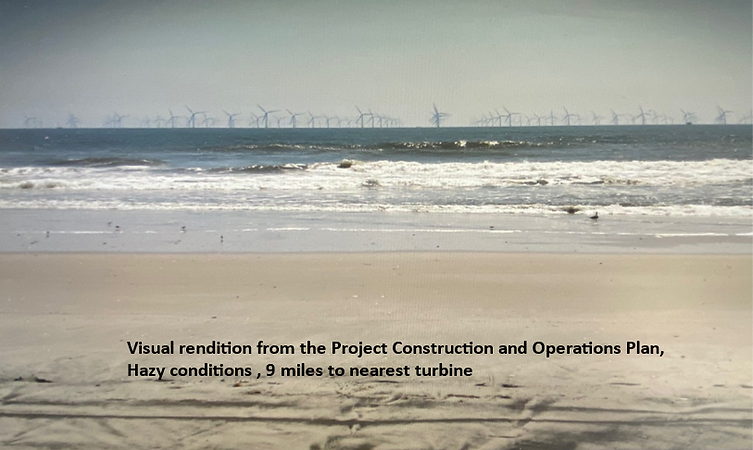
“The visual simulations we were given were not accurate.”
“The promises on the lighting, they have been fully lit for quite a long time now. That never should have happened.”
“The safety and the environmental impacts on the sea life are just far greater than the information we were provided when we were offered a financial settlement based on just the visual impact on our historic landmark, which is far more impactful than the simulations we were shown.”
Blade replacement update: “They’ve removed four complete sets to date,” Nantucket Select Board chair Brooke Mohr said tonight. That would mean 12 of the 66 compromised blades Vineyard Wind is required to remove have been taken down.
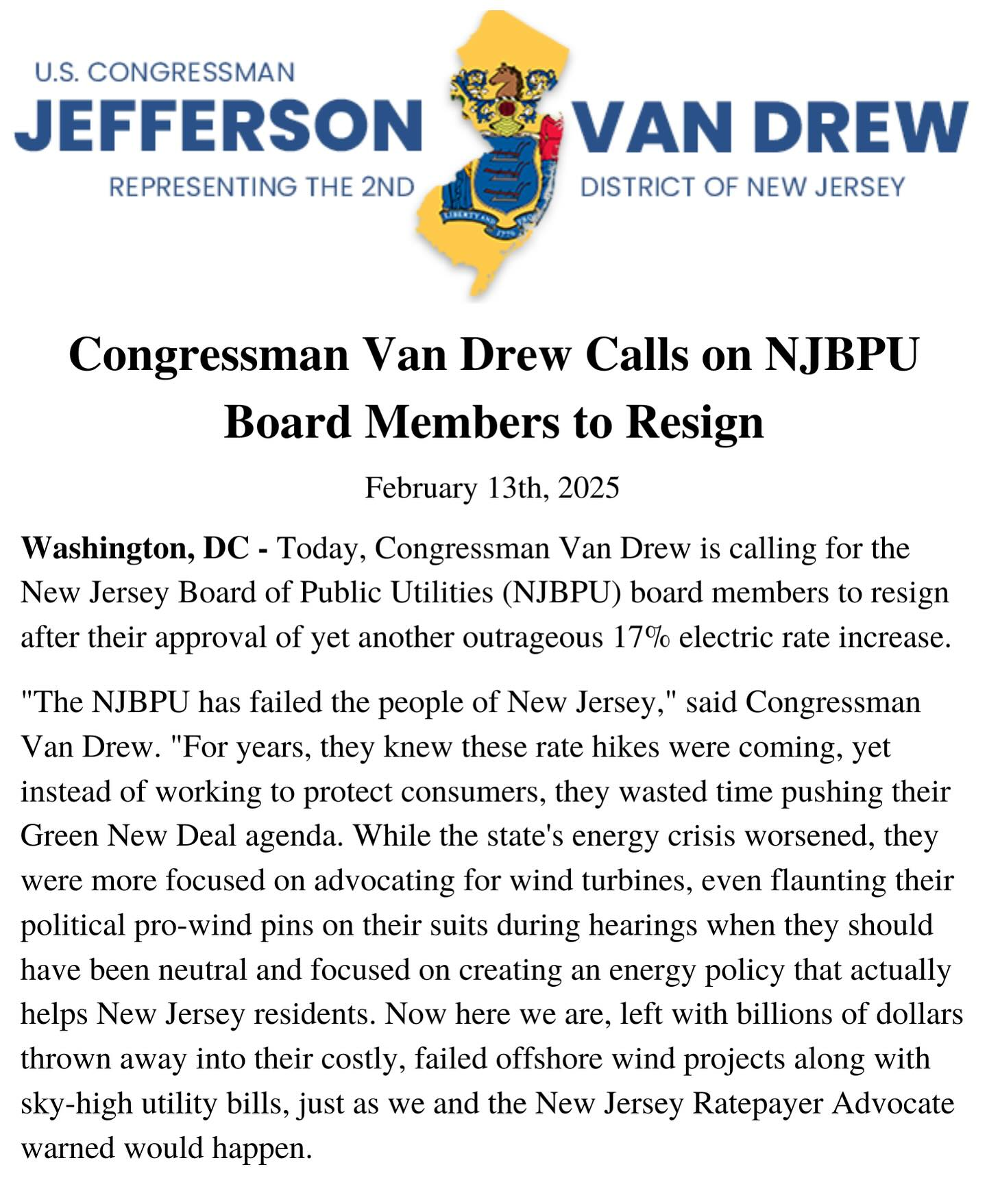
WSJ: “How many multibillion-dollar projects must go bust before a Governor comes to his senses? The answer is blowing in the wind, but New Jersey’s Phil Murphy doesn’t seem to be listening.”
Ouch!:Note how it’s always the developers that give up on these projects and never the state, despite the awful prospects for ratepayers. Gov. Murphy has treated renewable energy as a sacred cause no matter the costs since 2018. That includes a bill he signed to let Ørsted pocket federal credits it had promised to pass on to customers, though he clawed money back when the projects died.”
“The NJ Board of Public Utilities will not proceed with an award in New Jersey’s fourth offshore wind solicitation,” said Christine Guhl-Sadovy, President, New Jersey Board of Public Utilities.
Not a single offshore wind turbine will be installed offshore New Jersey during the reign of Gov. Murphy, a leading proponent of offshore wind. How much did his wind advocacy cost NJ taxpayers?
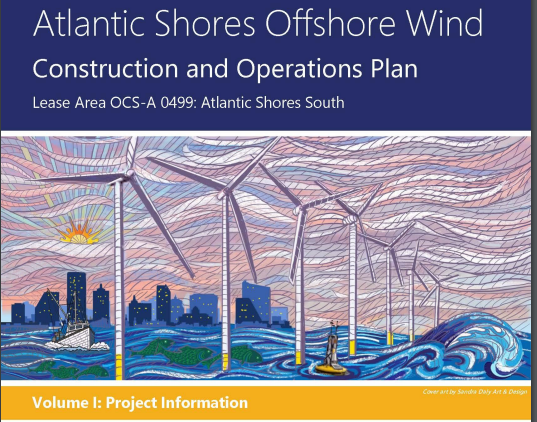
In their quarterly earnings report released on Jan. 30, Shell disclosed a $996 million impairment associated with their withdraw from the controversialAtlantic Shores wind project offshore New Jersey.
Shell is no longer a participant in any US offshore wind projects. This leaves Equinor (2/3 Norwegian govt ownership) as the only major oil company pursuing US offshore wind development.
Those Atlantic states that have linked their economic future to offshore wind better be reassessing their energy strategy.
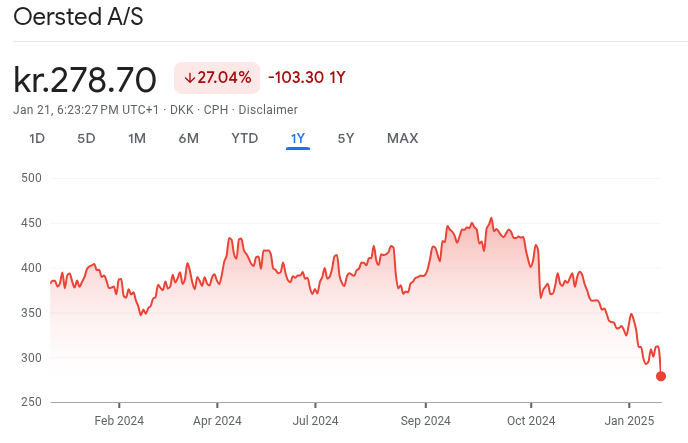
Equinor’s investment of over 26 billion kroner in the Danish wind power company Ørsted has so far been a financial disaster – and now it’s going from bad to worse.
“We are very negative about the whole green initiative, as the return on the investments they make is far too low. When they also buy minority stakes in other green companies that we cannot count on, such as Ørsted, it means that we would rather own other oil companies.” Gaute Eie, Eika Kapitalforvaltning
The market has long been concerned that Equinor will throw money at renewable projects with low or no profitability.
In a recent note, Pareto analysts Tom Erik Kristiansen and Olav Haugerud point out that the Ørsted writedown does not bode well for Equinor’s own US projects either. They foresee a writedown of up to $1.1 billion, given that Equinor faces the same type of challenges as Ørsted.
Eie believes there is no reason why Equinor in particular should have a green initiative:
Aker BP is not doing green, Vår Energi is not doing green, and all the big oil companies are going back on this. Then we’ll see if Equinor has the guts to buy even more Ørsted shares, because now it’s 35 percent cheaper. If they do, we’ll have even fewer Equinor shares.
Sissener believes Equinor should rather focus on dividends and concentrate on oil and gas projects.
– We generally stay away from companies where the state is a major owner, because there you have to be so politically correct all the time. What we need are shareholder-friendly board representatives who know how to run a business and maintain control. In a broader perspective, this helps to destroy trust in Norwegian business.
Withdrawal from the Paris Climate Change Agreement:The US Ambassador to the UN shall immediately submit formal written notification of the US withdrawal from the Paris Agreement under the United Nations Framework Convention on Climate Change.
Regulatory Freeze: Agencies may not propose or issue a rule until approved by a Presidential appointee. OMB may exempt emergency or urgent rules (déjà vu for regulators 😉).
Alaska: Withdraws a Secretarial Order intended to halt ANWR oil and gas leasing. Rescinds cancellation of ANWR leases.
Encourage energy exploration and production on Federal lands and waters, including on the Outer Continental Shelf.
Eliminate the electric vehicle (EV) mandate.
Requires immediate review of actions that could burden the development of energy resources.
Develop and begin implementing action plans to suspend, revise, or rescind all unduly burdensome agency actions.
Revoke climate change and “clean energy” EOs.
Terminate all activities, programs, and operations associated with the American Climate Corps (RIP 😉).
Expedite and simplify permitting processes.
Facilitate the permitting and construction of interstate energy transportation and other critical energy infrastructure, including pipelines.
Disband the Interagency Working Group on the Social Cost of Greenhouse Gases.
Terminate the Green New Deal.All agencies must immediately pause the disbursement of funds appropriated through the Inflation Reduction Act of 2022 (Public Law 117-169) or the Infrastructure Investment and Jobs Act (Public Law 117-58).
The Secretary of Energy is directed to restart reviews of applications for LNG export projects as expeditiously as possible.




 Bud's Offshore Energy (BOE)