Feeds:
Posts
Comments

Archive for the ‘Regulation’ Category

15,531 of the 15,537 comments on the bid adequacy rule were from a single organization, Friends of the Earth. I have no problem with the Friends of the Earth campaign given that their comment letter is pertinent to the topic. Their main point is that the bid adequacy process fails “to factor in the climate and social costs of continued Outer Continental Shelf oil and gas lease sales into the bid process.” Although that may be a reasonable position, those issues are addressed in the programmatic and sale specific environmental reviews which factor into when and where sales are held, tract exclusions, special lease stipulations, and the comprehensive operating regulations. Once bids are submitted, the issue (and the sole purpose of the bid adequacy rule) is whether those bids represent fair market value for the oil and gas resource potential of the leases being offered.

Given that 96.3% of the US OCS is off-limits to oil and gas leasing, only 0.7% is currently open to exploration, and the new 5 year plan includes the fewest lease sales in OCS program history, it’s rather a stretch to argue that environmental concerns are not being prioritized.

The State of Alaska submitted very good comments (attached) that point to the historical differences in Gulf of Mexico and Alaska leasing. The State argues that a simpler approach to determining fair market value would encourage exploration and development on offshore lands that have seen little of either in recent years. Knowing BOEM’s expectations prior to the sale, perhaps through higher minimum bid requirements, would ensure that companies do not underbid and that tracts are successfully leased.

The Gulf of Mexico leasing program of today is looking more like the frontier area leasing of the past. As previously noted, the uncertainty regarding future sales changes the historic GoM leasing dynamic. The next opportunity for purchasing unleased GoM tracts is now a troubling unknown. This would seem to make it less prudent to reject bids based on uncertain prospect evaluations. Absent leasing and exploration, the true resource and revenue potential will never be known.

It was good to see the strong comments submitted by my former Minerals Management Service colleagues Dr. Marshall Rose and Ted Tupper. Marshall, who was our Chief Economist, commented that the proposed rule did not identify the problem and explain how the rule addressed that problem. Ted, a senior statistician, points to past failures of the bid adequacy process and proposes specific changes. It’s great to see the passion that our retired employees have for the program they were so instrumental in developing and managing.

The rule was finalized without any substantive changes.

Read Full Post »

The attached BSEE Safety Alert addresses chronic and persistent helideck issues that pose significant risks to offshore workers. Meanwhile, we are still waiting for the final NTSB report on the tragic 12/29/2022 helideck incident that killed the helicopter pilot and 3 passengers.

Read Full Post »

Cox proposes to sell its Gulf of Mexico assets to W&T Offshore for $88.5 million. The bankruptcy case docket has 64 pages of linked documents including many objections to the terms of the sale.

The bankruptcy court’s priorities should be 1) minimizing safety and environmental risks and 2) protecting the public from the massive decommissioning liabilities.

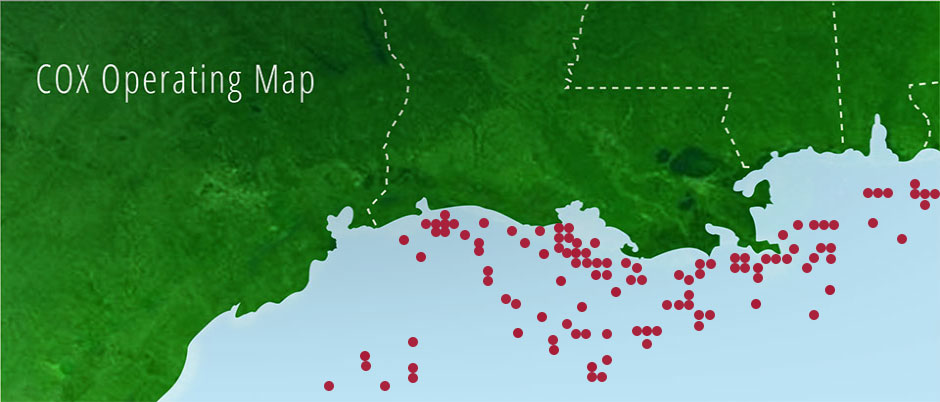
Per the latest BOEM information, Cox and affiliates Energy XXI and EPL operate 477 platforms, which is 31% of the Gulf of Mexico total! (See the related information posted last June.) BSEE estimates that the decommissioning costs for these platforms will exceed $4.5 billion!

Per BSEE data, Cox and its affiliates were cited for 780 incidents of noncompliance (violations) in 2023. They thus accounted for 43% of all 2023 GoM INCs.

Questions:

  • How will taxpayers be protected from Cox’s $4.5+ billion decommissioning obligations?
  • What is the plan for both safely decommissioning facilities and operating those that remain?
  • Why was Cox allowed to continue expanding GoM operations without demonstrating financial assurance and operational competence?
  • Why did BOEM propose to eliminate consideration of a company’s compliance record in determining the need for supplemental financial assurance?
  • How was a failing operator (Cox) selected just 8 months ago for a Federally funded (DOE) project to repurpose GoM facilities for carbon sequestration purposes?

The Cox bankruptcy is yet another costly lesson for Federal regulators. Moving forward, decommissioning and lease assignment policies must prioritize safety, environmental protection, and protection of the public’s financial interests.

Read Full Post »

BOEM diminishes the credibility of their important (and generally excellent) scientific, lease administration, and regulatory work with over-the-top wind energy promotion. The tweet below is a recent example.

This is not a good look for the bureau that is expected to objectively evaluate offshore wind projects. Leave the hype to the wind industry and its NGO supporters.

Read Full Post »

Below is a report summary that was referenced in the Office of the Inspector General, Dept. of the Interior, Semiannual Report to Congress (9/30/2023). The summary does not identify the company that committed the violations.

Failing to identify the responsible company is not in the best interest of the OCS program or the many operators and contractors that are committed to safe operations and compliance with the regulations.

The subject violations were on the Federal OCS and were serious enough to be investigated by the IG. The public has a right to see the full report. (See also the discussion about the failure to release the IG report on the misuse of the decommissioning account for Platforms Hogan and Houchin.)

Presumably, BSEE has issued civil penalties, so we may be able to piece this case together when those penalties have finally been paid.

Summary: Offshore Servicing Company Failed to Conduct Mandated Safety Tests and Submitted False Information to BSEE
Report Date: August 29, 2023 Report Number: 20-0425

The OIG investigated allegations that an offshore oil and gas servicing company bypassed safety valves and falsified mandated safety tests associated with an oil and gas production platform located in the Gulf of Mexico. The safety tests are required by Federal regulations enforced by the Bureau of Safety and Environmental Enforcement (BSEE) to ensure that equipment aboard the platform functions properly and prevents the discharge of hydrocarbons into Federal waters.

We found that the servicing company did not perform the mandated safety tests but submitted documentation to BSEE that falsely represented that the safety tests had been conducted. We also determined that multiple safety valves aboard the offshore platform were bypassed and remained in that condition for at least 59 days but potentially as long as 223 days. We presented our findings to the U.S. Department of Justice, which declined prosecution.

This is a summary of an investigative report we issued to the Director of BSEE for action as deemed appropriate.

Read Full Post »

link: Investigation of May 15, 2021, Fatality, Eugene Island Area Block 158 #14 Platform

Firstly, taking 2.5 years to publish an investigation report is unacceptable for an organization with BSEE’s talent, resources, and safety mandate. Unfortunately, such delays now seem to be the rule as the summary table (below) for the last 4 panel reports demonstrates. The most recent report implies that the actual investigation was completed in 2-3 months. Why were another 2+ years needed to publish the report? (Note that the lengthy and complex National Commission, BOEMRE, Chief Counsel, and NAE reports on the Macondo blowout were published 6 to to 17 months after the well was shut-in.)

incident datereport dateelapsed time (months)incident type
5/15/202110/31/202329.5fatality
1/24/20217/24/202330fatality
8/23/20202/15/202330fatality
7/25/20202/15/202331spill
Four most recent BSEE panel reports

The subject (May 2021) fatality occurred during a casing integrity pressure test, and some of the risk factors were familiar:

  • The operator, Fieldwood Energy, was facing bankruptcy, and had a poor performance record.
  • The platform was installed 52 years prior to the incident, and had been shut-in for more than a year.
  • The well of concern (#27) was drilled in 1970, sidetracked in 1995, and last produced in February 2013.
  • Diagnostic tests clearly demonstrated communication between the tubing, production casing, and surface casing.

In light of the known well integrity issues and the absence of production for more than 8 years, the prudent action would have been to plug and abandon the well in a timely manner. However, under 30 CFR 250.526 as interpreted at the time, Fieldwood had another option – submit a casing pressure request to BSEE to confirm the integrity of the outermost 16″ casing and (per p. 10 of the report) “continue to operate the well in its existing condition.” Given that the well had not produced for 8 years and that the platform had been shut-in for more than a year, the option to continue operating the well should not have been applicable.

The only issue for Fieldwood to resolve with the regulator should have been the timing of the plugging operation. Additional well diagnostics would only serve to create new risks and further delay the well’s abandonment.

The resulting pressure test of the outermost (16″) casing was solely for the purpose of confirming a second well bore barrier. Per the report (p.10), there is a “known frequency of outermost casings in the GOM experiencing a loss of integrity as a result of corrosion.” Whether or not the 16″ casing passed the test, the inactive well had clear integrity issues and should have been plugged.

Fieldwood proceeded with the pressure test rather than correcting the problem. The regulations, as interpreted, thus facilitated the unsafe actions that followed. These factors heightened the operational risks:

  • Extensive scaffolding and a standby boat were needed for the test.
  • Process gas via temporary test equipment was used to conduct the test.
  • The Field-Person In Charge (PIC) heard about the test for the first time on the morning of the incident.
  • The PIC and victim had no procedures to follow, and had to figure out how to conduct the test on the fly.
  • A high pressure hose was connected without a pressure regulator or pressure safety valve.
  • The digital pressure gauge had two measurement modes, one to display pressure in psi and the other in bars. (One bar is equivalent to 14.5 psi. Assuming that the readings were in psi rather than bars would thus result in serious overpressure of the casing.)

Seconds after the victim told the field-PIC the pressure was 175 psi (presumably 175 bar and 2538 psi), the casing ruptured. The force of the explosion propelled the victim into the handrail approximately 4 feet away, which bent from the impact. The victim’s hardhat was projected 60 to 80 feet upwards, lodging into the piping.

The investigation report fails to address the wisdom of conducting the pressure test and the regulatory weaknesses that enabled Fieldwood to defer safety critical well plugging operations. The pressure test option in 30 CFR § 250.526, was not intended for long out-of-service wells with demonstrated well integrity issues. The only acceptable option was corrective action (plugging the well) without further delay. The pressure test option added risks without addressing the fundamental problem and helped enable the operator to further delay decommissioning obligations.

The report also fails to address the lease administration practices that enabled a problem operator to expand their lease holdings. Indeed, BOEM’s inexplicable proposal to eliminate a company’s performance record in determining the need for supplemental bonding would exacerbate the risk of more such incidents. (See these comments on the BOEM proposal).

Postscript: According to BOEM data, the lease where the fatal incident occurred expired on 7/31/2021. Per the BSEE Borehole and structures files, neither the platform (#14) nor any of the other 4 structures remaining on the lease have been removed, and the well (#27) has yet to be plugged.

Read Full Post »

An excellent compliance and incident update by Jason Mathews is attached. BSEE’s focus on risk assessment, compliance and incident trends, high potential near-misses, medivac capabilities, hot work safety, lifting operations, and gas releases is encouraging. Good work by the folks in BSEE’s Gulf of Mexico Region.

Observations:

  • Zero 2023 occupational fatalities through Q3. Hoping this holds through the end of the year and beyond.
  • INCs/component are down but INCs/inspection are slightly higher. This may imply a relative increase in the inspection of high component deepwater facilities.
  • No. of hours worked is increasing; good sign for the offshore program.
  • Hand and finger injuries are driving up the injury count.
  • Well control incidents are stable at a low level.
  • Improved fire data help facilitate risk assessments
  • No YTD explosions
  • No. of collisions is down
  • 10 YTD spills> 1 barrel (total volume not specified)
  • Some evidence of decline in lifting incidents in Q2 and Q3
  • Gas releases are up (aging facilities, decommissioning related?)

Read Full Post »

BSEE shouldn’t have to issue guidance about helicopter loading precautions that every worker and visitor should be taught before going offshore, but apparently they do. See the safety alert that is attached below.

In this alarming near-miss event, a helicopter was stationed on the facility’s helideck and a crew member approached the aircraft from the rear, entering the rotor arc area before the rotor blades had come to a complete stop. This unsafe action posed a significant threat to the safety of all personnel involved. An offshore helideck assistant repeated the unsafe behavior by approaching the helicopter from the rear, entering the vicinity of the tail rotor, and positioning themselves within the main rotor’s danger zone immediately after the helicopter had landed on the facility’s helideck.

Meanwhile, we are still awaiting the final report on the tragic crash at the West Delta 109 A platform last December. Why is this taking so long?

Read Full Post »

I take it that since the 5th Circuit stayed both the 9/21 and 9/25 orders, the mandate to hold the sale by 11/8 is also stayed. Ergo, it is assumed that the sale will be delayed pending a decision on the merits of the injunction. Oral arguments are scheduled for 11/13.

If the 5th Circuit’s decision facilitates timely resolution of the Rice’s whale deletions and stipulations, delaying the sale is probably the best outcome. Otherwise, the level of uncertainty would be unacceptable for many bidders.

Read Full Post »

Not a lawyer, but I take this to mean that the Judge’s injunction has been suspended and DOI may delete acreage and include the Rice’s whale stipulations in Sale 261 leases. The sale will be held on Nov. 8.

ORDER:
IT IS ORDERED that the preliminary injunction entered by the Memorandum Order of September 21, 2023, as amended by the motions panel’s order of September 25, 2023, is STAYED pending the merits panel’s decision on appeal.
LYLE W. CAYCE, CLERK
United States Court of Appeals

Read Full Post »

« Newer Posts - Older Posts »