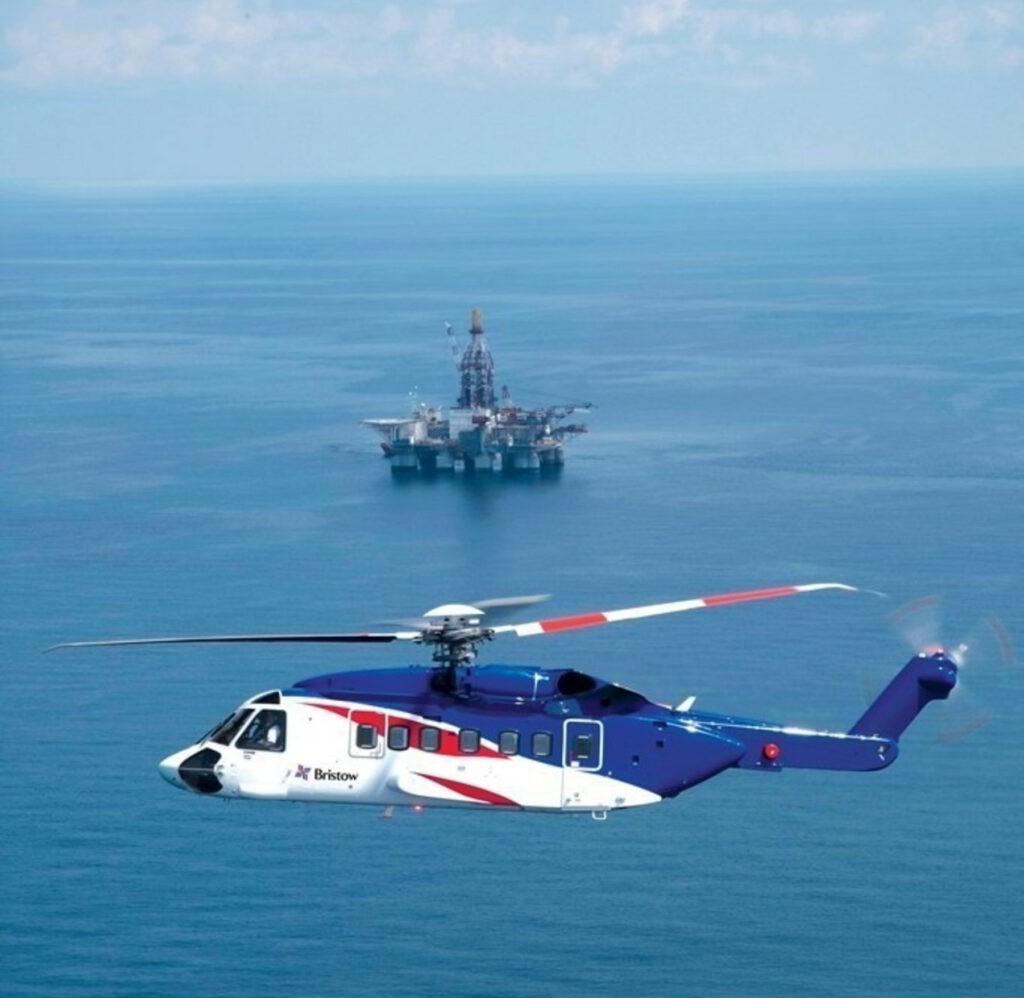
One person has died following the helicopter crash outside Bergen in Norway on the night of Wednesday 28th February. The helicopter was on a training assignment for Equinor ’s SAR service for the Oseberg area in the North Sea.
Search and rescue service is critical to offshore safety, and North Sea operators have excellent SAR capabilities. Sadly, one person died and five were injured (two seriously) when a Sikorsky S-92 helicopter, owned by Bristow and under contract to Equinor, crashed offshore Bergen last night. The crew was training to serve offshore workers in need.
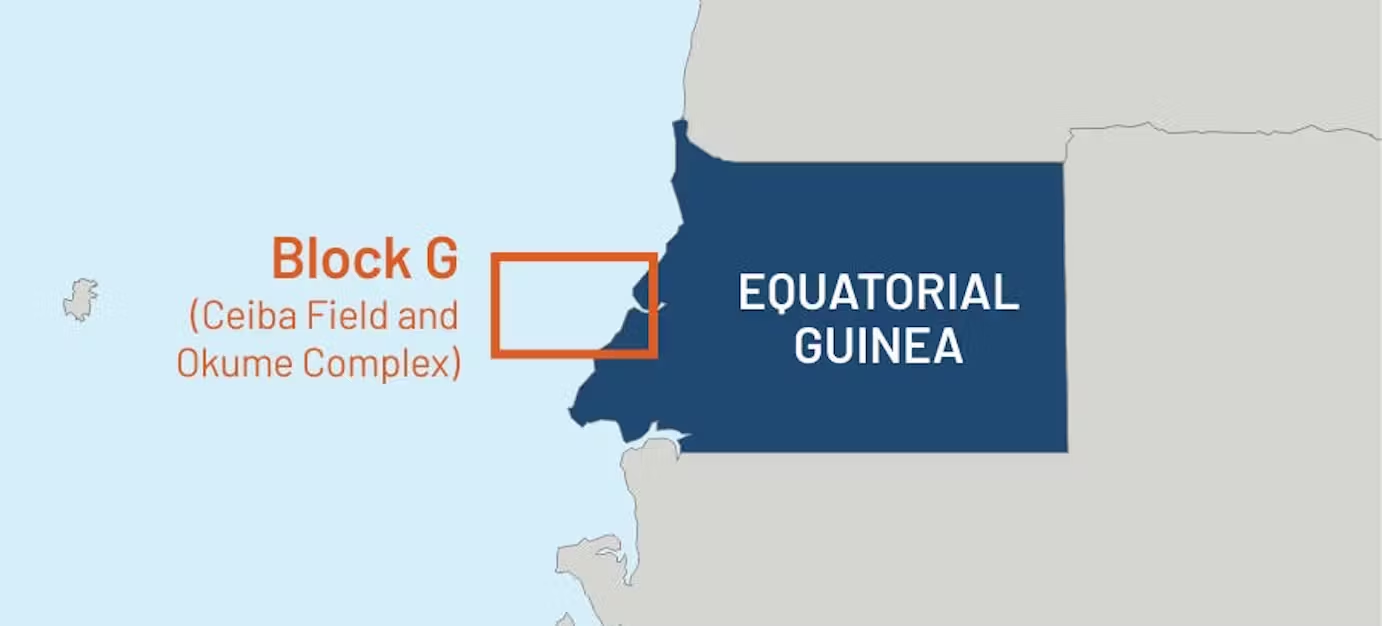
Last summer, Trident Energy exercised multiple options for the use of the Island Innovator semi-submersible (pictured above), extending the duration of the Equatorial Guinea contract to approximately 230 days.
The rig arrived in Equatorial Guinea in Nov. 2023.
On 7 Feb, a Trident team briefed Equatorial Guinea Minister of Mines and Hydrocarbons Antonio Oburu Ondo about problems with the Innovator’s BOP system. Apparently, Island Drilling, the rig owner, was not present at that meeting.
Mr. Ondo subsequently reported that the BOP had serious problems and failed to respond to control system commands.
Trident terminated the rig contract on safety grounds.
Island has publicly responded that (1) the Trident statements are inaccurate, (2) there have been no critical safety incidents, (3) the BOP has been checked and tested by the OEM representative on the rig and declared safe and ready for operations, and (4) they will challenge the contract termination.
Questions & comments:
Since the rig had just arrived on location, the BOP issues were presumably identified during onboard stump testing. Were corrective measures discussed? Why was contract termination deemed necessary?
Island’s statement indicates that the rig was tested with the OEM representative present. Presumably those tests were in accordance with API S53 or the ISO equivalent.
Had inspections and maintenance also been conducted in accordance with the standard? Did Trident inspect the rig and review maintenance and testing records before signing the contract?
Have other companies had similar issues with the Innovator? None have been identified in my web search.
Was a bridging document in place to address differences in Trident/Island management systems? If so, what does that document say about BOP inspection and oversight.
Why was the drilling contractor not present at the meeting with the Equatorial Guinea authorities? Was Island advised that the contract was being terminated prior to that meeting? Did the authorities speak with Island to hear their side of the story?
Does the contract provide for mandatory arbitration in the event of such disagreements?
Could other factors have influenced the cancellation decision? I was involved with an arbitration case involving an operator that used safety issues as the reason for terminating an expensive long-term rig contract. The arbitration panel ruled in favor of the drilling contractor resulting in a very large payment to the rig owner. Ironically, serious safety violations by the operating company (but not the drilling contractor) were identified during the arbitration process.
Island Drilling is a Norwegian Company with an experienced management team. The Innovator has conducted operations in the Norwegian and UK offshore sectors. These factors typically imply a strong commitment to safe operations.
Hopefully, we’ll be able to learn more about the specifics of this dispute in the near future.
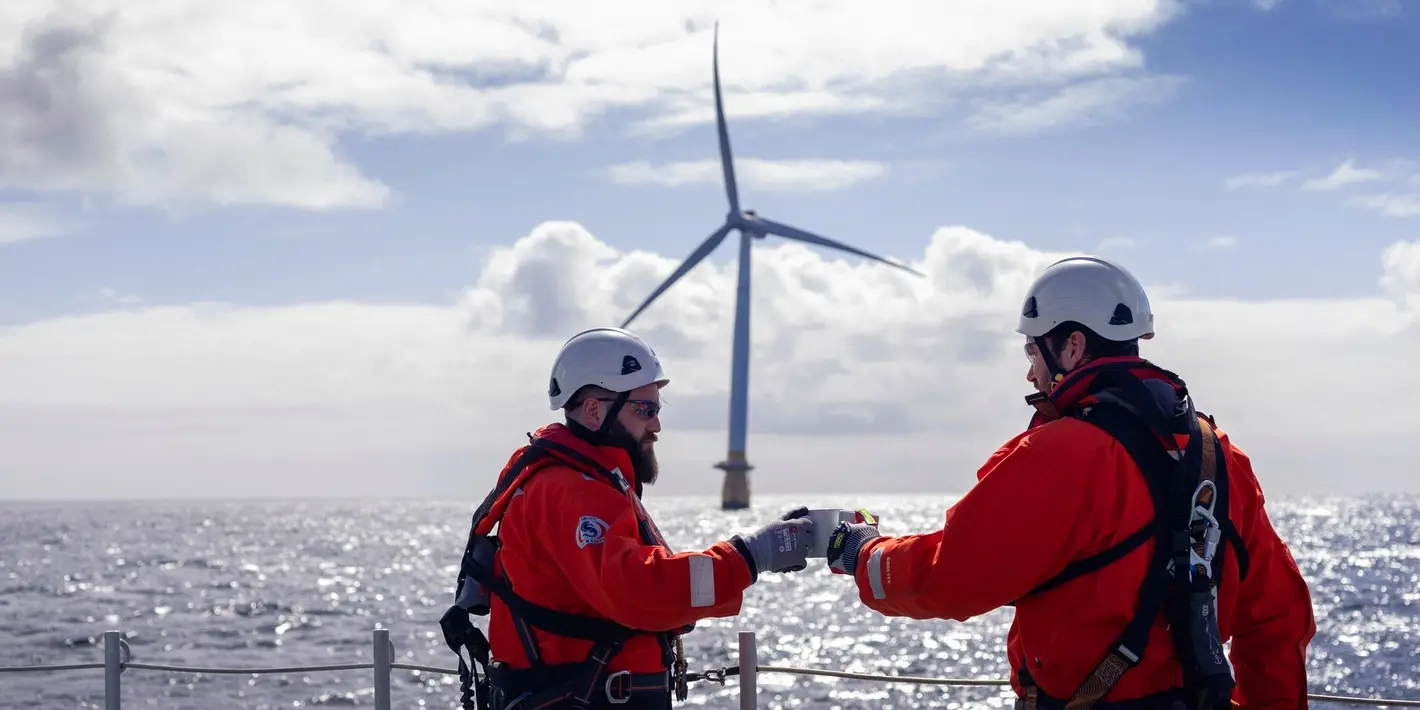
It’s prudent, if not imperative, to tow floating wind turbines to sheltered coastal locations for major maintenance. For that reason, Hywind, the world’s first floating wind farm will be offline for up to 4 months this summer.
Hywind Scotland‘s operator, Norwegian power giant Equinor, says that operational data has indicated that its wind turbines need work. The pilot project has been in operation since 2017.
The five Siemens Gamesa turbines will be towed to Norway this summer. An Equinor spokesperson said, “This is the first such operation for a floating farm, and the safest method to do this is to tow the turbines to shore and execute the operations in sheltered conditions.”
Published data indicate that Hywind has been the UK’s best performing offshore wind farm. Performance data for Hywind, and a chart illustrating the capacity factors since commissioning, are posted below. The 2024 capacity factor will, of course, be substantially reduced as a result of the essential offsite maintenance.
capacity factor = total energy generated/(hours since commissioning x capacity)
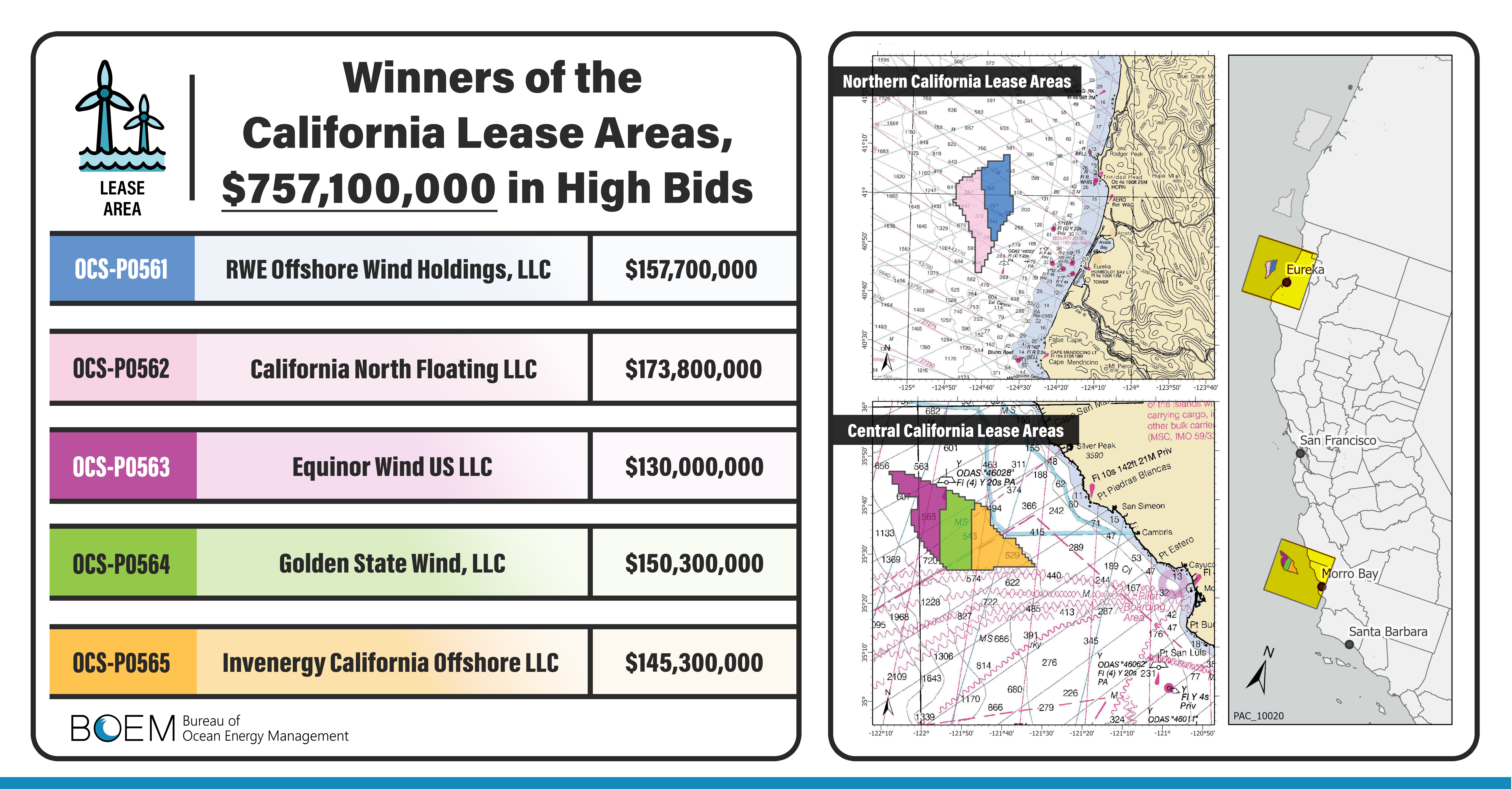
The first US floating turbines are expected to be at these California offshore leases, and Hywind operator Equinor is one of the lessees:
Given the financial challenges facing the offshore wind industry, the still emerging technology, and the risks inherent in California offshore development, the amounts bid on these leases only 13 months ago are stunning.
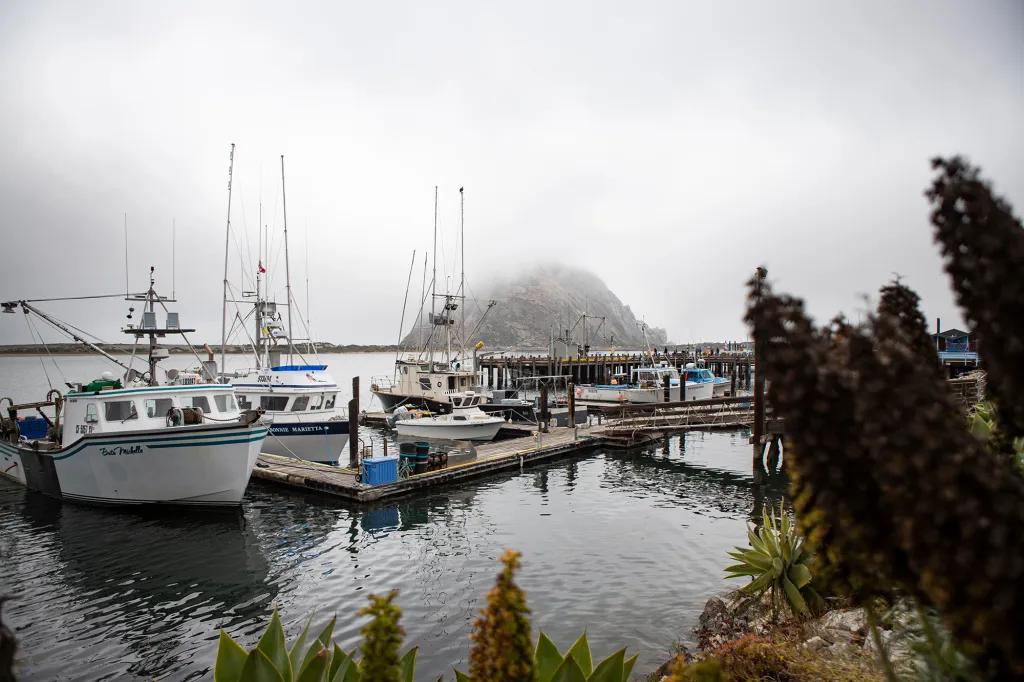
Some Central Coast residents are not enamoured with “another attempt to industrialize the coast.” Although the turbines will be >20 miles offshore, they will have to be towed to shore for major maintenance. For the Central California leases, nearby harbor areas like Morro Bay (pictured below) would be overwhelmed by the large structures and the maintenance and repair operations. Towing the towers to LA/Long Beach, albeit rather distant from the leases, would seem to be the preferred option for such work.
Ironically, a report for BOEM, points to synergies between the offshore wind industry and oil and gas decommissioning industry. Such synergies will only be possible if longstanding oil and gas decommissioning obstacles are satisfactorily addressed and the offshore wind projects proceed as planned.
Which will come first – platform decommissioning or wind turbine commissioning? For those young enough to find out, what is the over-under for the years until (1) half of those platforms are decommissioned, and (2) half of the wind turbines commissioned? Any number <10 is unrealistic for either.
The Gulf of Mexico and Norwegian branches of the offshore family have a long record of technological innovation and production leadership.
As a followup to our last GoM-Norway update, the respective oil production rates are presented below. The Gulf of Mexico now has a small edge as a result of new production from deepwater facilities.
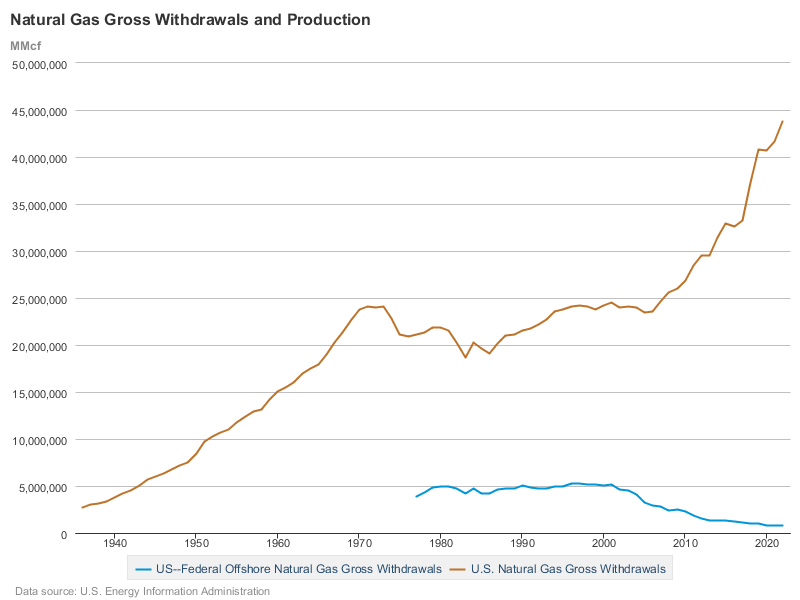
Natural gas is a different story, and Norway’s offshore gas production is much higher. US gas production (second chart below) has been dominated by the onshore sector since advances in horizontal drilling and well stimulation procedures triggered the shale gas revolution twenty years ago.
If you get a chance to visit Stavanger, the Norwegian Oil Museum is highly recommended. See the short video below.
OSLO, June 28 (Reuters) – Norway’s government said on Wednesday it has given approval for oil companies to develop 19 oil and gas fields with investments exceeding 200 billion Norwegian crowns ($18.51 billion), part of the country’s strategy to extend production for decades to come.
“These are projects that will contribute to a continued high and stable output from Norway’s continental shelf as well as employment and value creation,” Minister of Petroleum and Energy Terje Aasland told a news conference.
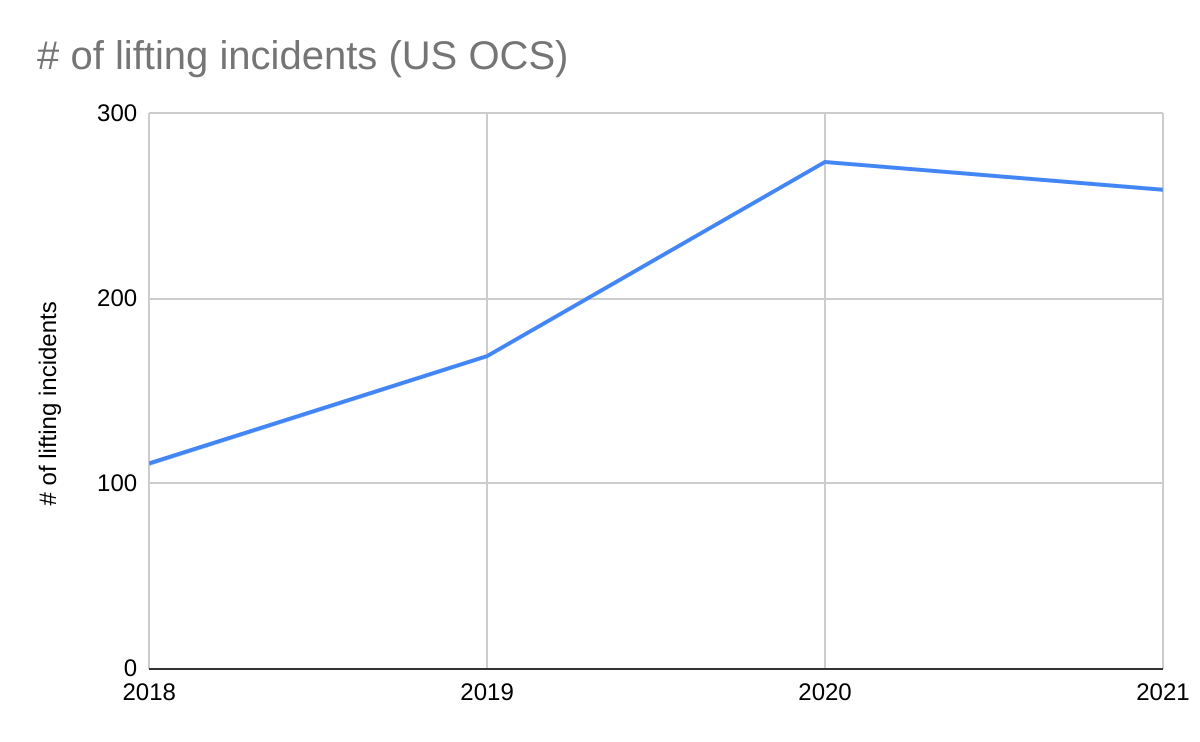
A recent fatal incident involving a person working on an offshore oil and gas facility has provided a tragic reminder of the risks of work involving the rigging, manipulation and movement of loads, including people and equipment.
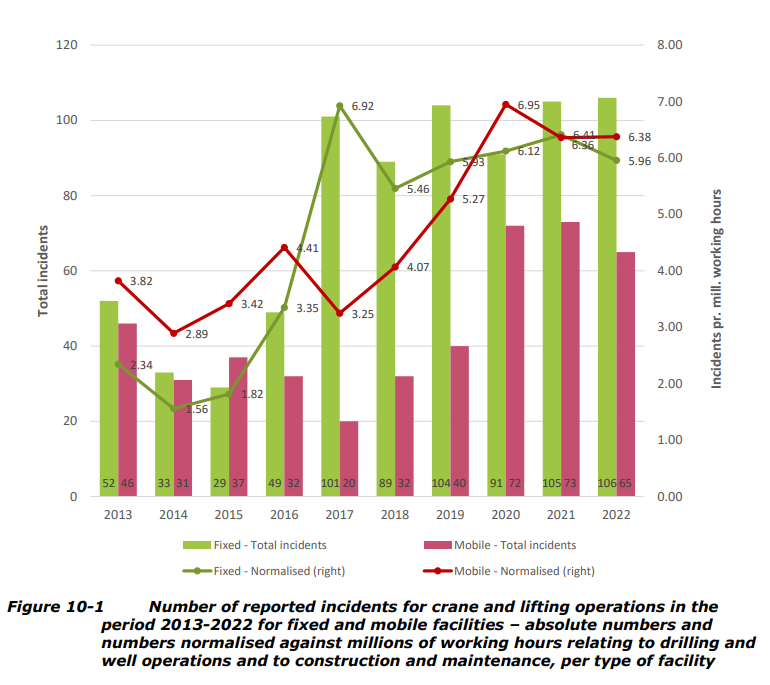
Despite the international focus on lifting operations over the past 30 years, Norwegian and US data do not suggest improved performance. PSA Norway’s “Trends in risk level on the Norwegian Continental Shelf” report shows an increase in lifting incident rates for both fixed and mobile facilities over the past 10 years (first chart below).
Similarly, recent lifting data from BSEE’s incident tables (summary below) and Jason Mathew’s June 2022 presentation (pages 48-63) suggest that lifting risks are not being effectively mitigated. Why are industy/regulator messages regarding hazard identification and controls not achieving the desired results? Perhaps a fresh look and renewed dialogue are needed.
Crane or personnel/material handling incident (as used in 30 CFR 250.188(a)(8)) refers to an incident involving damage to, or a failure of, the crane itself (e.g., the boom, cables, winches, ballring), other lifting apparatuses (e.g., air tuggers, chain pulls), the rigging hardware (e.g., slings, shackles, turnbuckles), or the load (e.g., striking personnel, dropping the load, damaging the load, damaging the facility) at any time during exploration, development, or production operations on the OCS. This includes all incidents of shock loading that, upon inspection, reveals damage to any part of the crane, lifting apparatus, rigging hardware, or load. Personnel handling incidents include events involving swing ropes, personnel baskets, and any other means to move personnel. Material handling incidents include any activities involving the loading and unloading of material and moving it on, off, or around an OCS facility.
Oil and Energy Minister Terje Aasland takes over the constitutional responsibility for the Petroleum Safety Authority with effect from 11 May 2023. Labor and Inclusion Minister Marte Mjøs Persen previously held responsibility. With this, the government wishes to strengthen comprehensive and good management of HSE, safety and preparedness on the Norwegian continental shelf.
The transfer of responsibility to the Ministry of Oil and Energy (OED) is in line with the main principle in Norwegian administration that one ministry and one cabinet minister have the constitutional responsibility for the sector as a whole.
The Petroleum Safety Authority and the Norwegian Petroleum Directorate, the resource management agency, now report to the same ministry. Prior to a December 2003 decree that established the PSA, both the safety and resource functions were administered by the NPD.
Could this be the start of a trend toward better coordination of regulatory and resource management functions? If so, that would be a positive development. Fragmented oversight is neither in the best interest of safety nor resource management. (More on this in an upcoming post.)
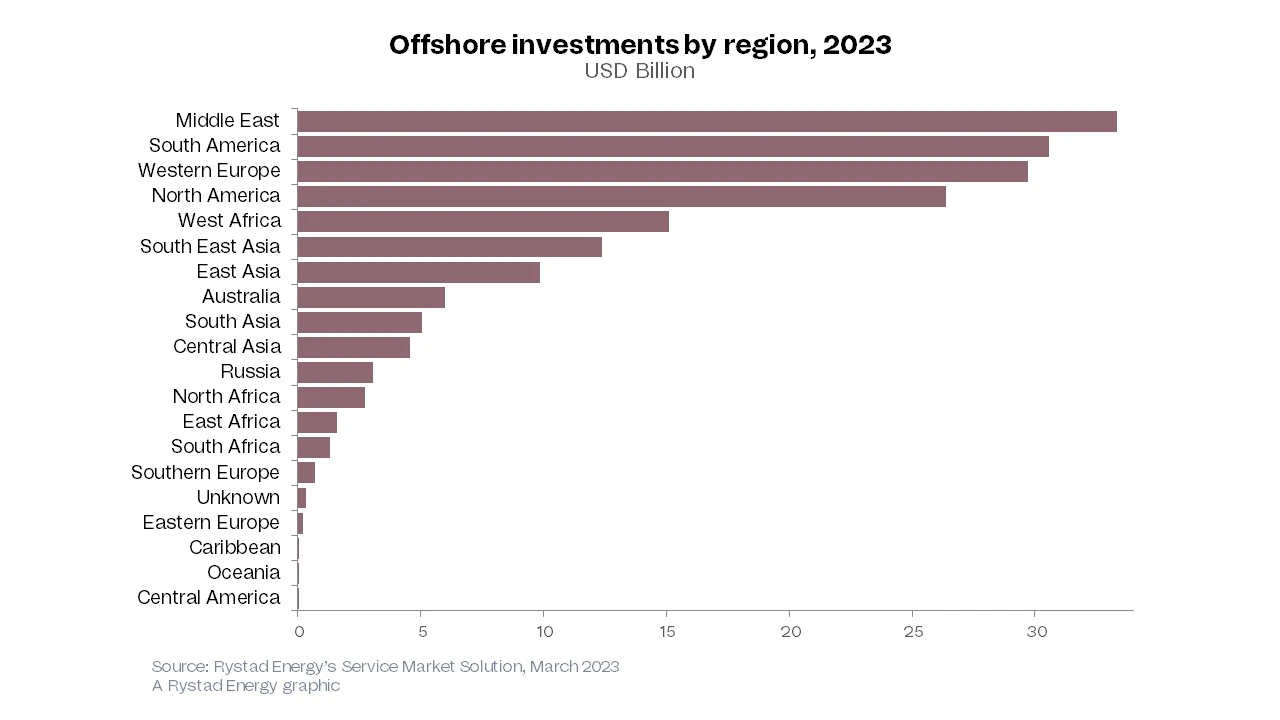
The offshore oil and gas (O&G) sector is set for the highest growth in a decade in the next two years, with $214 billion of new project investments lined up. Rystad Energy research shows that annual greenfield capital expenditure (capex) broke the $100 billion threshold in 2022 and will break it again in 2023 – the first breach for two straight years since 2012 and 2013.
Offshore activity is expected to account for 68% of all sanctioned conventional hydrocarbons in 2023 and 2024, up from 40% between 2015-2018.
8 “bombs” were placed near the island of Bornholm in the Baltic Sea, six of which exploded in a rather flat area. The explosives destroyed three of the four Nord Stream 1 and 2 gas pipelines. (This explains why one of the four pipelines wasn’t damaged. Presumably, concerns about the unexploded ordinance have been addressed by Sweden.)
Norway identified a relatively shallow area (80m water depth) near Bornholm.
It only took a few hours to place the explosives
No one in Congress was informed of the plan
In response to criticism about his reliance on unidentified sources, Hersh said that many of his articles were dependent on such sources. If his sources were named, they would be fired or worse.
Below is a very good Jeffrey Sachs interview (new) with appropriate pushback from the host Freddie Sayers. Nothing really new, but both Sachs and Sayers are informed and articulate. Worth viewing.