She is, of course, correct in asserting that markets determine energy prices, as they should. She is wrong in implying that OPEC alone controls oil prices. (Is she aware that the country she serves is a major oil producer?). She earns the Not My Job Award for implying she is powerless to influence energy prices and laughing about it (an added bit of chutzpah that greatly impressed the NMJA selection panel).
Archive for the ‘energy policy’ Category
Not My Job Award for Energy Secretary Granholm
Posted in energy policy, tagged Not My Job Award, Secretary Granholm on November 9, 2021| Leave a Comment »
Proposed EPA rule prohibits venting of associated gas
Posted in energy policy, Gulf of Mexico, natural gas, Offshore Energy - General, Regulation, tagged Argonne, BSEE, EPA, flaring, methane, venting on November 4, 2021| Leave a Comment »
Among other provisions, EPA’s proposed rule, issued on 11/2/2021, specifies that associated gas be handled as follows:
Route associated gas to a sales line. If access to a sales line is not available, the gas can be used as an onsite fuel source, used for another useful purpose that a purchased fuel or raw material would serve, or routed to a flare or other control device that achieves at least 95 percent reduction in methane and VOC emissions.
Because the Dept. of the Interior has jurisdiction over air emissions on most of the Gulf of Mexico OCS, I assume this proposed rule does not apply to those facilities. However, the EPA proposal is not entirely clear in that regard. If the EPA proposal does not apply, will BOEM/BSEE be proposing similar restrictions in their regulations?
MMS/DOI considered prohibiting venting, but determined that adding flaring capability was not feasible for many shelf platforms, and for some platforms there would have been a net increase in emissions. That said, venting is not insignificant. A 2017 Argonne study indicated (table 2) that, for shelf platforms from 2011 through 2015, more than 3 times as much gas was vented as was flared. More recent data should be reviewed to get a better sense of the costs, benefits, and safety considerations associated with achieving further reductions in venting.
Current flaring/venting regulations for OCS facilities are here.
Forbes: “This is not OPEC’s fault”
Posted in energy policy, Gulf of Mexico, Offshore Energy - General, tagged offshore oil, OPEC, US oil production on November 3, 2021| Leave a Comment »
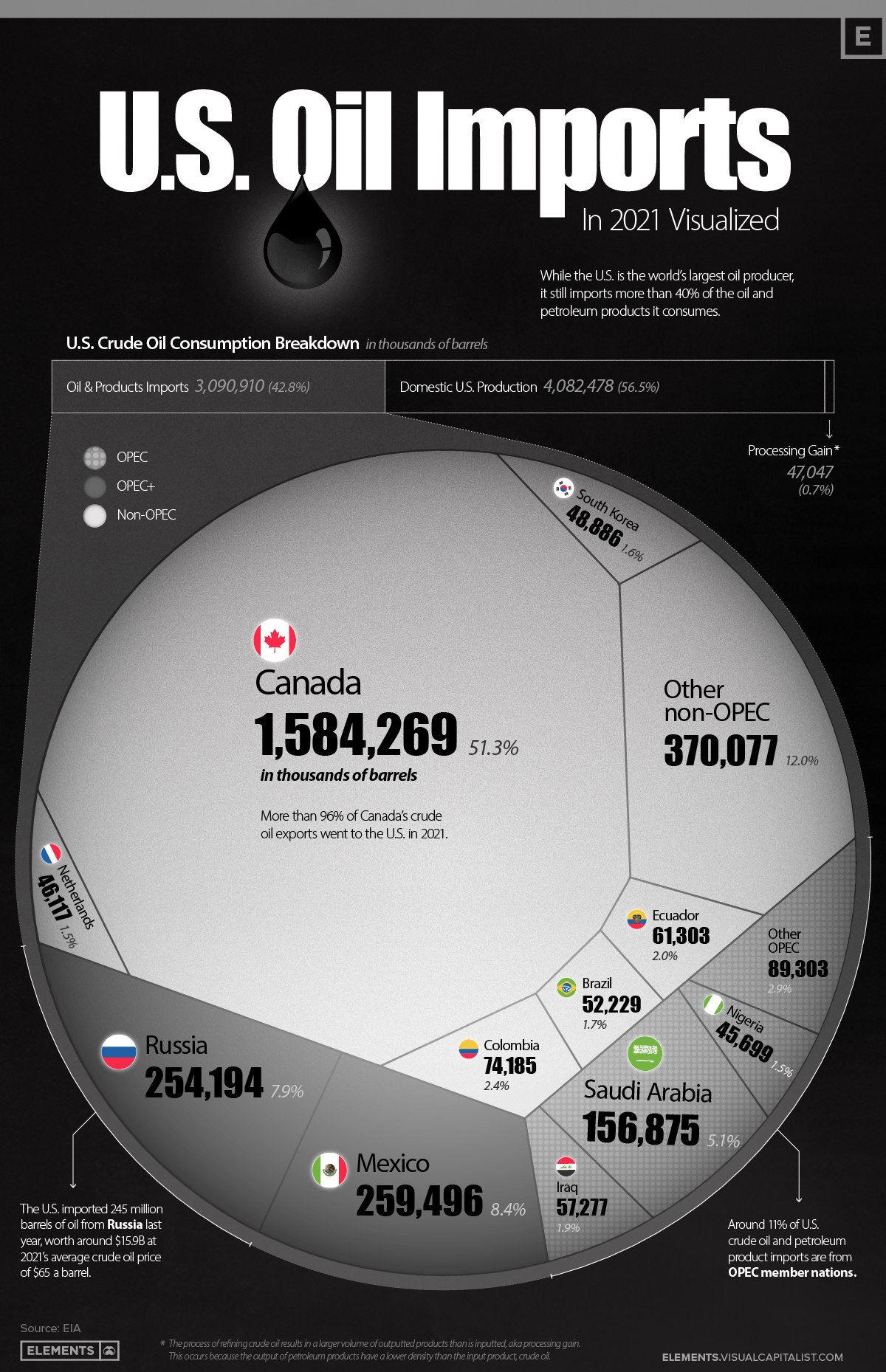
But here’s the thing. Whether you think it was the right thing to do, the reality is that passing legislation that is hostile to the U.S. oil and gas industry makes it even more difficult for domestic production to bounce back. So, instead of asking Russia and OPEC to pump more oil, we could look internally to what we could do in the U.S. to pump more oil.
Forbes
From a US offshore perspective, there should be serious dialogue about how we can increase exploration and production. The risks associated with over reliance on imports have been repeatedly demonstrated over the past 5 decades. The horizontal drilling/well stimulation revolution has been a blessing, but given the sharp decline rates for fracked wells, we cannot solely rely on onshore production from tight reservoirs.
Jerry Schubel on the benefits of rigs-to-reefs programs
Posted in California, decommissioning, energy policy, Offshore Energy - General, rigs-to-reefs, tagged California, decommissioning, Jerry Schubel, rigs-to-reefs on November 2, 2021| Leave a Comment »
Veteran marine science advocate Jerry Schubel, former president of Long Beach’s Aquarium of the Pacific, is among those pushing for offshore oil platforms to be transformed for new ocean uses. He points out that the underwater portion of the structures already are a boon to marine life.
“They have enormous value as ecosystems because of the life that has grown on and around them,” he said.
He points out that other states have rigs-to-reefs programs — and California does as well, though it needs funding before it can function. Once the ball gets rolling, oil companies could be tapped to cover costs with fees drawn from the money they would save by not having to haul dismantled rigs ashore. Schubel estimated that turning platforms into reefs could cut decommissioning costs in half.
But Schubel says artificial reefs should be just the beginning. How about fish farms? Research labs? Windmills? Hotels for divers?
“The uses,” he said, “are limited only by our imagination.”
Orange County Register
Well said Dr. Schubel! For a full list of alternative uses for offshore platforms see the official Rigs-to-Reefs+++ page.
Remember when the price of oil was negative?
Posted in energy policy, Gulf of Mexico, Offshore Energy - General, tagged negative oil price, oil production on November 1, 2021| Leave a Comment »

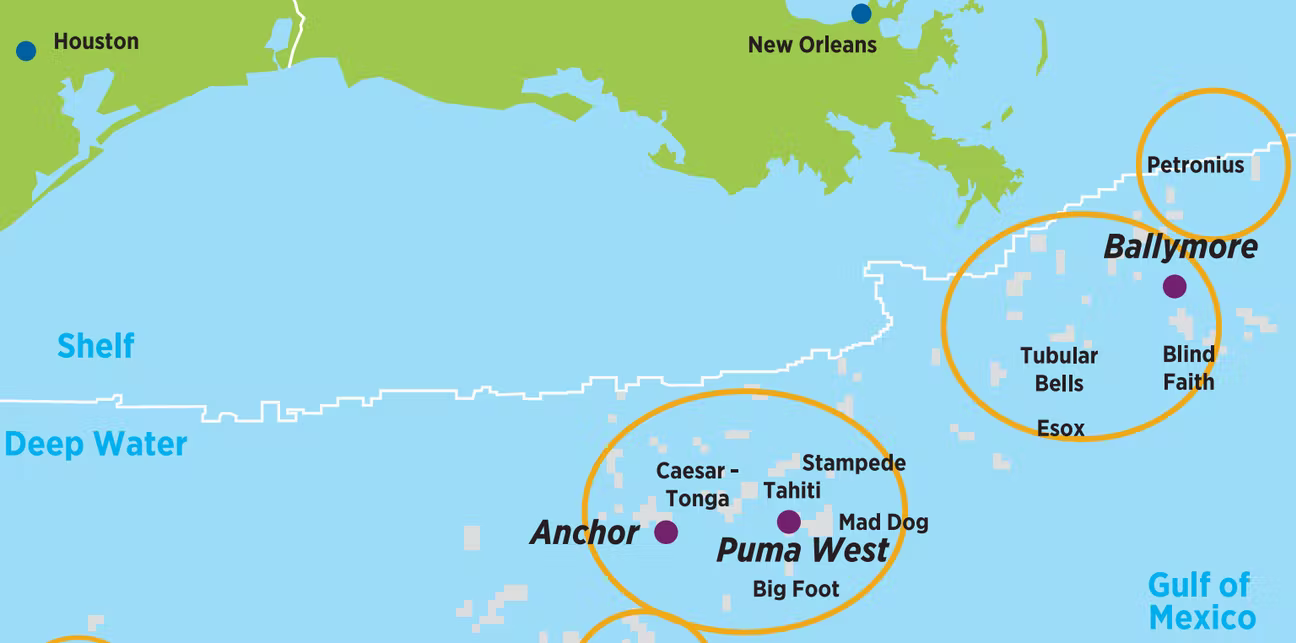
U.S. oil production plummeted and is unlikely to recover to pre-pandemic levels. The Gulf of Mexico will not be picking up the slack. GoM production peaked in August 2019 at 2.044 million BOPD. Absent increased exploration, that peak will never be exceeded.
Private jets storm Glasgow
Posted in climate, energy policy, tagged COP26, Glasgow, private jets on November 1, 2021| Leave a Comment »
More than 400 private jets carrying world leaders and business executives to Cop26 will blast 13,000 tonnes of CO2 into the atmosphere.
Matt Finch, of the Transport and Environment campaign group, said: “The average private jet, and we are not talking Air Force One, emits two tons of CO2 for every hour in flight.
It can’t be stressed enough how bad private jets are for the environment, it is the worst way to travel by miles.Our research has found that most journeys could easily be completed on scheduled flights.
“Private jets are very prestigious but it is difficult to avoid the hypocrisy of using one while claiming to be fighting climate change.
Daily Record UK
For the record, BOE does not own a private jet. Our Air Force 1 is pictured below 😃

Is pressuring OPEC part of the Green New Deal?
Posted in energy policy, tagged oil prices, OPEC, White House on October 27, 2021| Leave a Comment »
But certainly, the supply and — and OPEC and putting additional pressure on OPEC is something that — that, certainly, our national security team will continue to do.
Jen Psaki, Press Secretary
Equally predictable:
I will also note that, as it relates to gas prices, we remain concerned about trends we have seen where, even as supply has increased at times over the last several months, we’ve still seen heightened prices.
The FTC — we’ve asked the FTC to look into that. They’ve said they were doing that.
Jen Psaki, Press Secretary
Gov. Abbott responds to UN
Posted in energy, energy policy, tagged climate, Gov. Abbott, oil and gas, Texas, UN on October 26, 2021| Leave a Comment »

UN Secretary General Guterres to Texas: “Texas must end its reliance on oil and gas production to remain prosperous in the era of climate change.“
Gov. Abbott responds:
Texas to United Nations: Pound Sand
The world is reeling from spiraling fuel costs caused by premature over-reliance on renewable energy.
High fuel costs punish middle class families & stoke the supply chain crisis.
Texas oil & gas is needed right now.
Greg Abbott tweet
COP26 bans oil industry. Is this helpful?
Posted in conferences, energy policy, Offshore Energy - General, UK, Wind Energy, tagged climate, COP26, Glasgow, oil industry banned on October 25, 2021| Leave a Comment »

Oil firms have been banned from taking an active role in the upcoming COP26 summit.
The news is a seismic victory for climate activists.
It stops Big Oil companies from sponsoring the conference and steering the narrative away from their culpability in the climate crisis.
Euronews.green
Comments:
- This decision is more about exercising political power than advancing our energy future, which is dependent on collaboration among all sectors of the energy industry.
- Oil and gas producers are “banned,” but major energy consumers are welcome to support the conference.
- The 3 oil companies mentioned in the article are major investors in offshore wind and other renewable energy projects. These companies have spent hundreds of millions of dollars to purchase US offshore wind leases and will spend much more on the projects that follow. They are also major investors in low carbon intensity offshore oil and gas production.
- Does the US government, which (at taxpayers expense) is sending a very large delegation to COP26, support this type of discriminatory behavior toward major contributors to our economy?
- While the delegates are attending the conference, the folks at home are seething about gasoline prices and inflation.
Carbon intensity workshop recommended
Posted in conferences, energy policy, Gulf of Mexico, Offshore Energy - General, tagged BOEM, carbon intensity, deepwater operations, GHG emissions, GRP, NASEM, NOIA, Wood Mackenzie on October 21, 2021| Leave a Comment »
With regard to air emissions, the advantages of deepwater Gulf of Mexico production are rather obvious:
- High production rates per well
- Few surface facilities (57 deepwater platforms, 3% of GoM total, produce 90+% of oil)
- Modern gas turbines for power generation
- Tightly enforced restrictions on flaring and venting
- Better control of fugitive emissions
- Distant from shore (not a factor for GHG effects)
Wood Mackenzie, NOIA, and others contend that restrictions on GoM leasing are contrary to carbon reduction goals.
An important and unintended consequence of enacting more restrictive policies such as a lease ban or increase in royalty rate in the Gulf of Mexico is that it could give rise to carbon leakage to countries that export crude to US.
Wood Mackenzie

In light of the policy implications of GHG emissions, a Carbon Intensity Workshop is highly recommended. The estimates generated by Wood Mackenzie, Rystad, and others need to be explored in depth. Is data quality an issue? How are the data verified? Is there regulator or third party oversight? What are the assumptions behind the estimates? Also, for the purposes of US policy decisions, product transportation emissions should certainly be included. A barrel produced in the Middle East is not the same as a barrel produced in the GoM.
Looking at the chart above, I have immediate questions about the drilling emissions (blue). What wells are included? What about workovers and other well operations? I’m surprised that the deepwater GoM drilling emissions are so high relative to the other regions. While dynamically positioned MODUs have high fuel consumption rates, deepwater wells are few in number relative to shale drilling. Also, why are Brazil’s drilling emissions, which I assume are primarily associated with deepwater operations, so much lower that those for the GoM.
BOEM/BSEE and/or the Gulf Research Program (NASEM) would seem to be good sponsors for such a workshop.