Feeds:
Posts
Comments

Archive for the ‘energy policy’ Category

My mother was a hard-working Quaker farm girl who hung the wash outside until her final days and otherwise conserved energy in a manner that was consistent with her values – thrift, simplicity, and love of fresh air. While there are still many common sense conservationists, professional alarmists have gained control of environmental messaging and dominate fundraising. It may be time for the environmental community to reassess its direction.

Read Full Post »

U.S. Oil Industry Uses Ukraine Invasion to Push for More Drilling at Home

New York Times

Actually, it’s a case of the Ukraine invasion demonstrating the obvious – domestic production is critical to our economy and energy security. Europe and the US have had a wake-up call and responsible leaders now recognize the importance of secure supplies and the need to halt purchases from a tyrant.

The oil industry is doing just fine with $100+ per barrel oil. They will produce oil and gas where the opportunities present themselves: Guyana, Mexico, North Sea, Africa, Brazil, Canada, private lands in supportive US states, and elsewhere. The folly is US policy that unreasonably restricts exploration on Federal lands, including the Outer Continental Shelf. These restrictions penalize the owners of those lands, the people of the United States, not the oil industry and certainly not the Russian tyrant.

Read Full Post »

“The absolute earliest a new Lease Sale 257 could occur is July 2, which is after the expiration of the current five year program,” Interior said in a 28 February court filing (opting not to appeal the DC court decision invalidating the lease sale).

Argus

So, a new lease sale cannot occur until after the five year program expires and no sale may be held. Brilliant, Joseph Heller would be proud. It’s a good thing oil and gas supplies are plentiful and secure, and that prices are cheap.

Remember, the judge’s decision invalidating Sale 257 was that BOEM didn’t analyze the benefits of higher oil and gas prices (as a result of lower offshore production) in reducing international consumption and GHG emissions.

US offshore leasing – time for action

Previous posts on Sale 257.

Read Full Post »

BP, Equinor, and Shell are exiting Russia, but Exxon’s response seems to be something less. Per Upstream:

US supermajor ExxonMobil is scaling back its operations on its flagship offshore development project in Russia’s Sakhalin Island region in response to the fallout from the crisis in Ukraine, according to the Sakhalin Online news website.

A consortium source cited by the Russian website claimed that foreign managers have been told to leave the project for an initial period of one month.

Upstream

Exxon accepted the political risks associated with lucrative Russian production, and they now have a massive moral and public relations dilemma. Will they try to wait this crisis out or take more permanent actions?

It would be nice to see Exxon return to the Gulf of Mexico where they haven’t drilled a well since 2019. Currently, Exxon’s primary interest in the Gulf is for carbon sequestration purposes. Perhaps they can focus more on the Gulf’s still promising production potential and less on its potential as a disposal site.

Read Full Post »

Since well before the Putin crisis, this independent blog has been expressing concerns about sustaining US offshore oil and gas production without new leases and increased exploration (more here). Now that concerns about domestic production and energy security are heightened (understatement of the year!), let’s review where the leasing program stands:

  • 466 days have elapsed since the last oil and gas lease sale (Nov. 19, 2020), with no future sales in sight.
  • There had been 182 sales in the previous 66 years of the US offshore oil and gas program, an average of 2.76 per year. Never before (since 1953) has a year transpired without a lease sale.
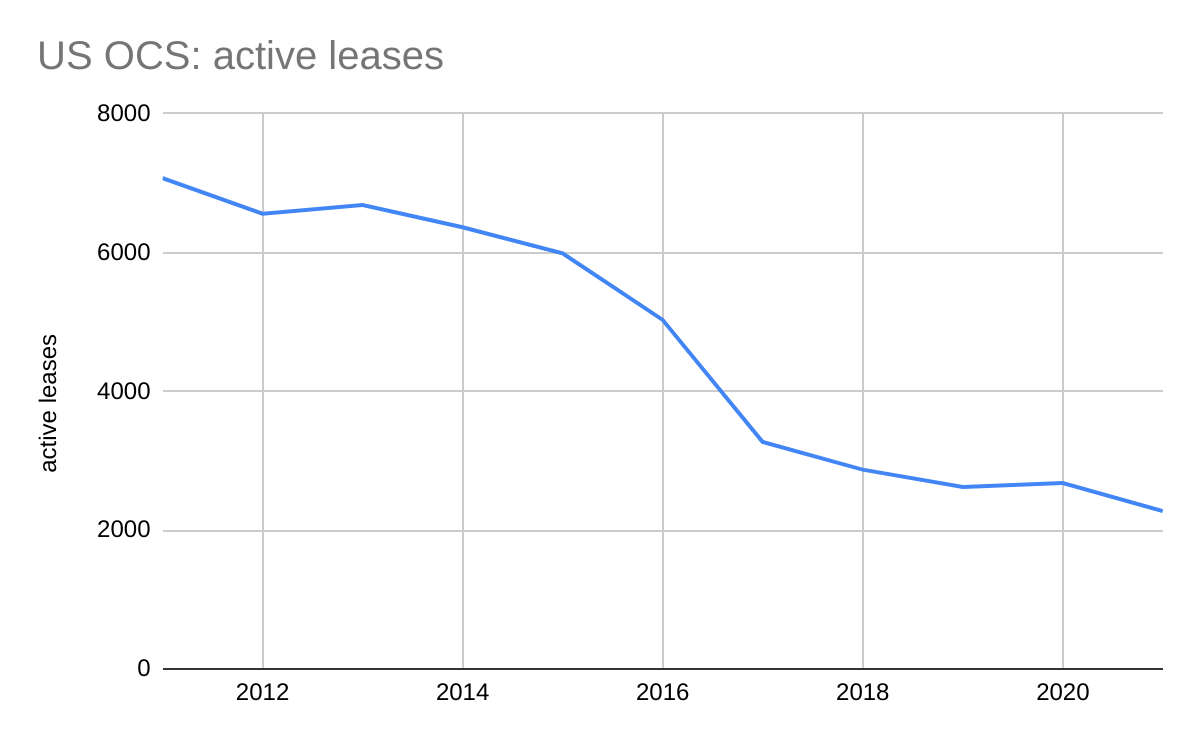
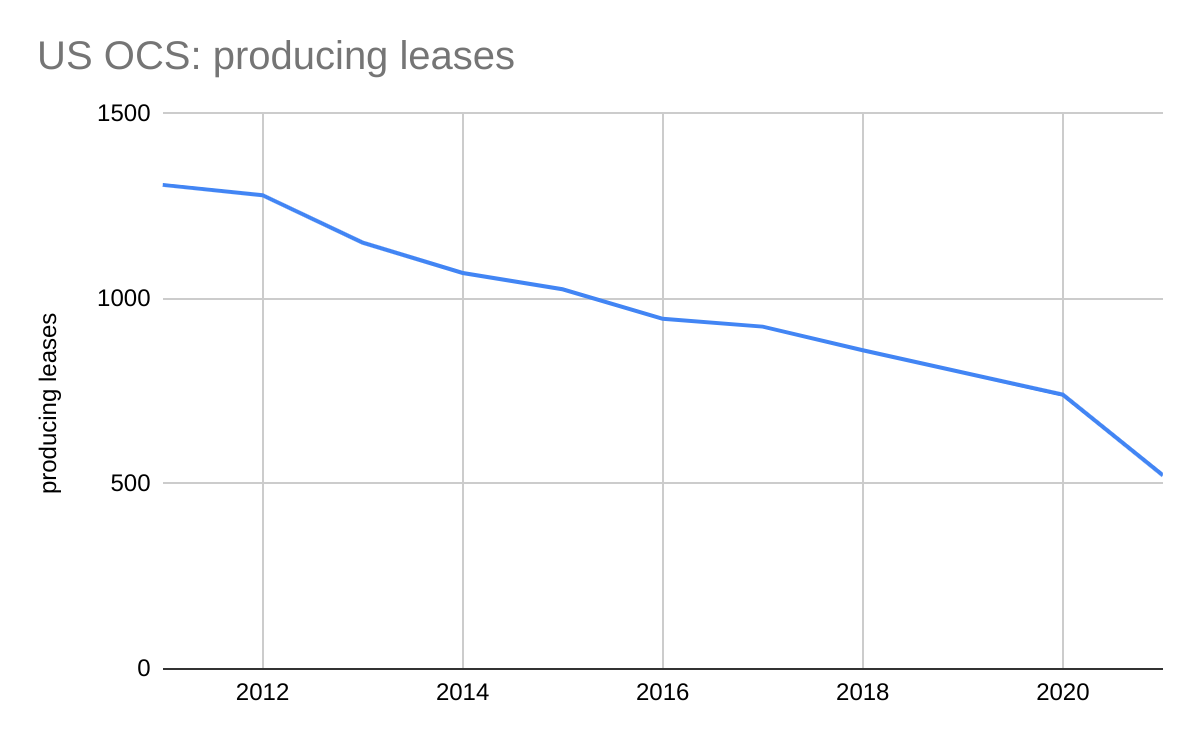
  • Currently, there are only 2016 active US OCS leases and 506 producing leases, the fewest in at least 40 years (recent history charted below).
  • Despite favorable geology beneath the deepwater Gulf of Mexico and advanced exploration and well completion technology, US offshore oil production (1.713 million bopd per the latest EIA data – Dec. 2021) is down 16% from the August 2019 peak of 2.044 million BOPD. Gulf oil production is thus the lowest since 2018 (except during hurricane shutdowns).
  • New projects and higher ultimate recoveries from producing reservoirs could increase total offshore production by 10-20% over the next few years, but sharp declines will follow without new leases and increased exploration.

Read Full Post »

The Board of Shell plc (“Shell”) today announced its intention to exit its joint ventures with Gazprom and related entities, including its 27.5 percent stake in the Sakhalin-II liquefied natural gas facility, its 50 percent stake in the Salym Petroleum Development and the Gydan energy venture. Shell also intends to end its involvement in the Nord Stream 2 pipeline project.

Shell.com

Read Full Post »

On Sunday, the Norwegian government announced that its sovereign wealth fund, the world’s largest, wwould divest its Russian assets, worth around 25 billion Norwegian crowns ($2.80 billion).

Reuters

“In the current situation, we regard our position as untenable,” Equinor Chief Executive Anders Opedal said in a statement. “We will now stop new investments into our Russian business, and we will start the process of exiting our joint ventures in a manner that is consistent with our values.”

Reuters

British oil giant BP said Sunday that it is “exiting” its $14 billion stake in Russian oil giant Rosneft over Moscow’s invasion of Ukraine in one of the biggest signs yet that the Western business world is cutting ties over the Kremlin’s invasion of Ukraine.

Washington Post

Read Full Post »

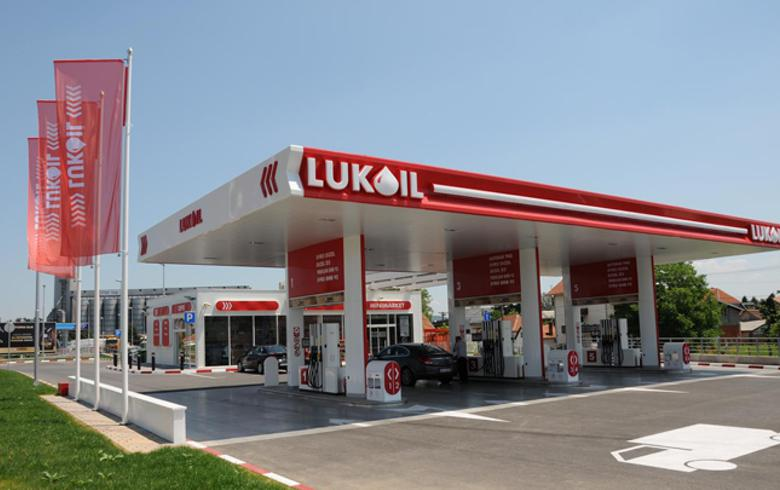
Per offshore-energy.biz, Russian giant Lukoil has closed a $450 million deal to acquire operator interest in Mexican offshore tracts. Not a good look for Mexico, but in their defense:

  • The deal was closed on 3 February.
  • Many countries, including the US, continue to import Russian oil and gas.
  • Lukoil continues to sell gasoline in the US and worldwide.
  • Unlike some elements of the US government, Mexico appreciates the domestic and international importance of expanding their offshore program.

Read Full Post »

Excerpt from Press Secretary Psaki’s (2/24/2022) response to a question about lifting restrictions on the energy industry:

A. There’s also plenty of oil leases that are not being tapped into by oil companies, so you should talk to them about that and why.

  • Hopefully, this was a glib response that is not indicative of the Administration’s understanding of oil and gas exploration and development.
  • When you acquire a lease, you aren’t buying a certain amount of oil and gas in the ground that you can simply produce at your leisure. You are buying the opportunity to explore for and, if you are fortunate, produce oil and gas.
  • Exploration begins with the acquisition, processing, and evaluation of geophysical and other data. If these data are encouraging, you seek internal, partner, and regulatory approvals to drill exploratory wells. The drilling of unnecessary wells makes no sense from any standpoint: financial, safety, or environmental.
  • You have a limited amount of time to initiate production depending on the terms of your lease. Otherwise you lose the lease. The Federal regulators are strict about this, as they should be.

As has been noted on this blog, recent offshore exploration activity is not sufficient to sustain current production levels. The absence of regular lease sales is an important factor. The UK Energy Minister commented recently about the importance of new licensing and continued investment. Norway has also taken steps to encourage such activity. Note the emphasis on predictability in this statement from the Norwegian Ministry of Petroleum and Energy:

Predictability about which areas it is possible to apply for in APA (allocation in predefined areas; i.e. leasing or licensing) and regular replenishment of new area is important to achieve an effective exploration. APA rounds are therefore conducted annually.

Read Full Post »

Bad decision by Blackstone; worse timing. Putin and OPEC must be pleased.

Blackstone Inc., once a major player in shale patches, is telling clients its private equity arm will no longer invest in the exploration and production of oil and gas, according to people with knowledge of the talks. The firm’s next energy fund won’t back those upstream investments — a first for the strategy.

Bloomberg

Meanwhile:

As the United States continues to tie its hands with regard to the transportation of natural gas, a fuel that has actually led to a large decrease in CO2 emissions over coal, Russia and China reached an agreement under which Russia will supply 100 million tons of coal to China so that China can continue to open up new coal-fired power plants

Forbes

Embargo Russia, not US producers!

Read Full Post »

« Newer Posts - Older Posts »