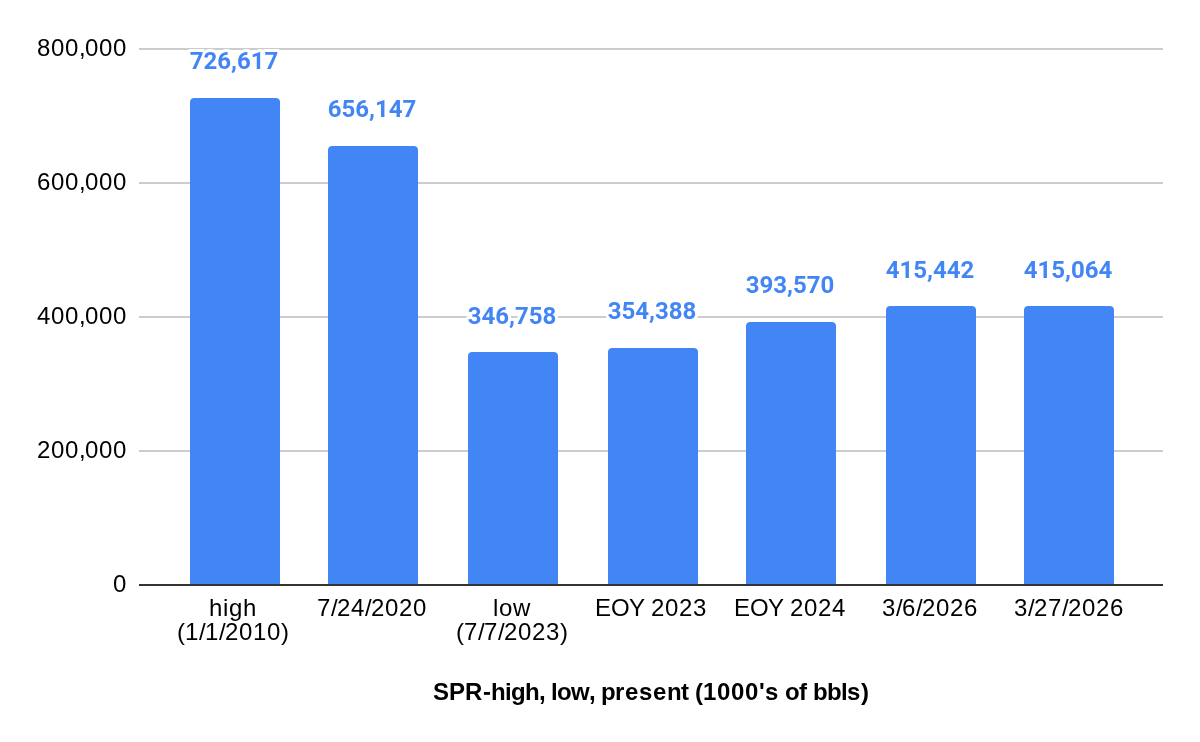
DOE’s 3/11/2026 announcement called for the release of 172 million barrels. To date, 378,000 bbls (0.22% of that amount) have been released.
| date | bbls (1000s) |
| 3/6 | 415,422 |
| 3/13 | 415,422 |
| 3/20 | 415,442 |
| 3/27 | 415,064 |
The big picture:
Posted in energy policy, tagged 172 million barrel withdrawal, only 378 thousand, progress to date, SPR, Strategic Petroleum Reserve on April 2, 2026| Leave a Comment »
DOE’s 3/11/2026 announcement called for the release of 172 million barrels. To date, 378,000 bbls (0.22% of that amount) have been released.
| date | bbls (1000s) |
| 3/6 | 415,422 |
| 3/13 | 415,422 |
| 3/20 | 415,442 |
| 3/27 | 415,064 |
The big picture:
Posted in energy policy, Gulf of Mexico, Offshore Energy - General, tagged bid rejections, BOEM, Gulf of America, MROV, Sale BBG1, tract evaluation on April 2, 2026| Leave a Comment »
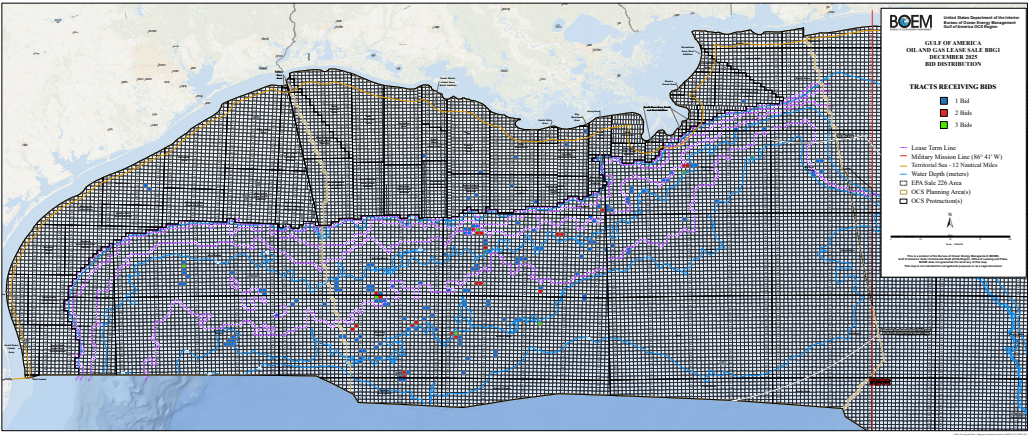
Companies seeking to acquire OCS leases are not only competing with each other, they are also competing with BOEM’s tract evaluations. In that regard, the bidders fared well at Sale BBG1. Only 3 of the 181 high bids were rejected by BOEM. and those rejections appear to be warranted.
The rejected bids were significantly below both BOEM’s Mean of the Range-of-Value and Lower Bound Confidence Interval for these single bid tracts (table below).
| Block No. | Company | no. of bids | bid | MROV | LBCI |
| EW 921 | LLOG | 1 | $505,777 | $2,900,000 | $2,200,000 |
| MC 587 | KUSA | 1 | $700,000 | $3,300,000 | $2,200,000 |
| MC 588 | LLOG | 1 | $613,008 | $6,100,000 | $4,600,000 |
LLOG submitted 9 other high bids (alone or with partners) that were accepted. KUSA did not submit any other bids. We’ll see if the rejected bids for these blocks are exceeded in future sales.
Nine other high bids (table below) were less than the MROV, but all were greater than the LBCI. Those bidders “beat the house,” acquiring leases for <MROV. In that regard, Equinor led the pack with no rejections even though 3 of their 7 bids were below MROV. Similarly, 2 of Beacon’s 4 bids were <MROV, with no rejections.
| Block No. | Company | no. of bids | bid | MROV | LBCI |
| GC 345 | Beacon | 1 | $5,302,358 | $5,400,000 | $4,200,000 |
| GC 346 | Beacon | 1 | $1,102,358 | $1,500,000 | $900,000 |
| GC 547 | Equinor | 1 | $3,200,067 | $4,500,000 | $2,600,000 |
| GC 549 | Equinor | 1 | $899,967 | $1,500,000 | $576,000 |
| AT 64 | LLOG | 1 | $7,997,018 | $8,300,000 | $6,700.000 |
| KC 386 | Oxy | 2 | $3,000,505 | $3,500,000 | $2,800,000 |
| KC 429 | Oxy | 1 | $600,505 | $910,000 | $470,000 |
| KC 431 | Woodside | 1 | $904,547 | $1,200,000 | $840,000 |
| WR 56 | Equinor | 1 | $904,547 | $1,200,000 | $576,000 |
Perhaps most interesting were the blocks that were highly valued by industry, but not by BOEM. Each of these blocks (table below) received multiple bids and high bids >$10 million. Conversely, BOEM valued the blocks at only $576,000, which (per the terms of the sale) equates to the minimum acceptable bid of $100/acre.
| Block No. | high bidder | high bid | other bids | MROV |
| GC 845 | Beacon | $11,802,358 | LLOG: $613,008 | $576,000 |
| KC 25 | Chevron | $18,592,086 | BP: $11,507,770 Shell: $753,029 | $576,000 |
| WR 443 | Woodside | $15,204,547 | Chevron $1,596,189 | $576,000 |
| WR444 | Woodside | $12,204,547 | BP: $4,593,770 Chevron $1,482,378 | $576,000 |
All of this demonstrates yet again that:
Superstition, tactic, AI, coded or subliminal message? 😉
Posted in energy policy, Gulf of Mexico, Offshore Energy - General, Regulation, tagged Endangered Species Act, exemption, God Squad, Gulf of America, permanent, Rice's whale on April 1, 2026| Leave a Comment »

The ESA, which was enacted with good intentions, has perhaps been most effective in blocking, delaying, or complicating energy development. In the Gulf of America, the primary species in recent ESA battles has been the Rice’s whale.
While this blog was focused on the Santa Ynez Unit drama, a major ESA policy maneuver for the Gulf of America was in the works.
A provision of the ESA authorizes an Endangered Species Committee, known to critics as the “God Squad,” to grant exemptions to ESA requirements. The Committee is comprised of the Secretary of the Interior (chair), the Secretary of Agriculture, the Secretary of the Army, the Chairman of the Council of Economic Advisors, the Administrator of the Environmental Protection Agency, and the Administrator of the National Oceanic and Atmospheric Administration.
Yesterday, the Committee met (notice attached) and agreed to exempt Gulf oil and gas operations from the Endangered Species Act.
Knowing the swings in the political pendulum, provisions for reversing this decision warrant attention. The applicable language from the statute is pasted below:
(B) An exemption shall be permanent under subparagraph (A) unless—
(i) the Secretary finds, based on the best scientific and commercial data available, that such exemption would result in the extinction of a species that was not the subject of consultation under subsection (a)(2) or was not identified in any biological assessment conducted under subsection (c), and
(ii) the Committee determines within 60 days after the date of the Secretary’s finding that the exemption should not be permanent.
So, barring legislation, the exemption would seem to be difficult to overturn.
Earthjustice is vowing to “go to court to stop this illegal order.”
Posted in California, energy policy, Offshore Energy - General, pipelines, tagged 50 year saga, BSEE, Jim Flores, oil sales, Sable Offshore, Santa Ynez Unit on March 31, 2026| Leave a Comment »
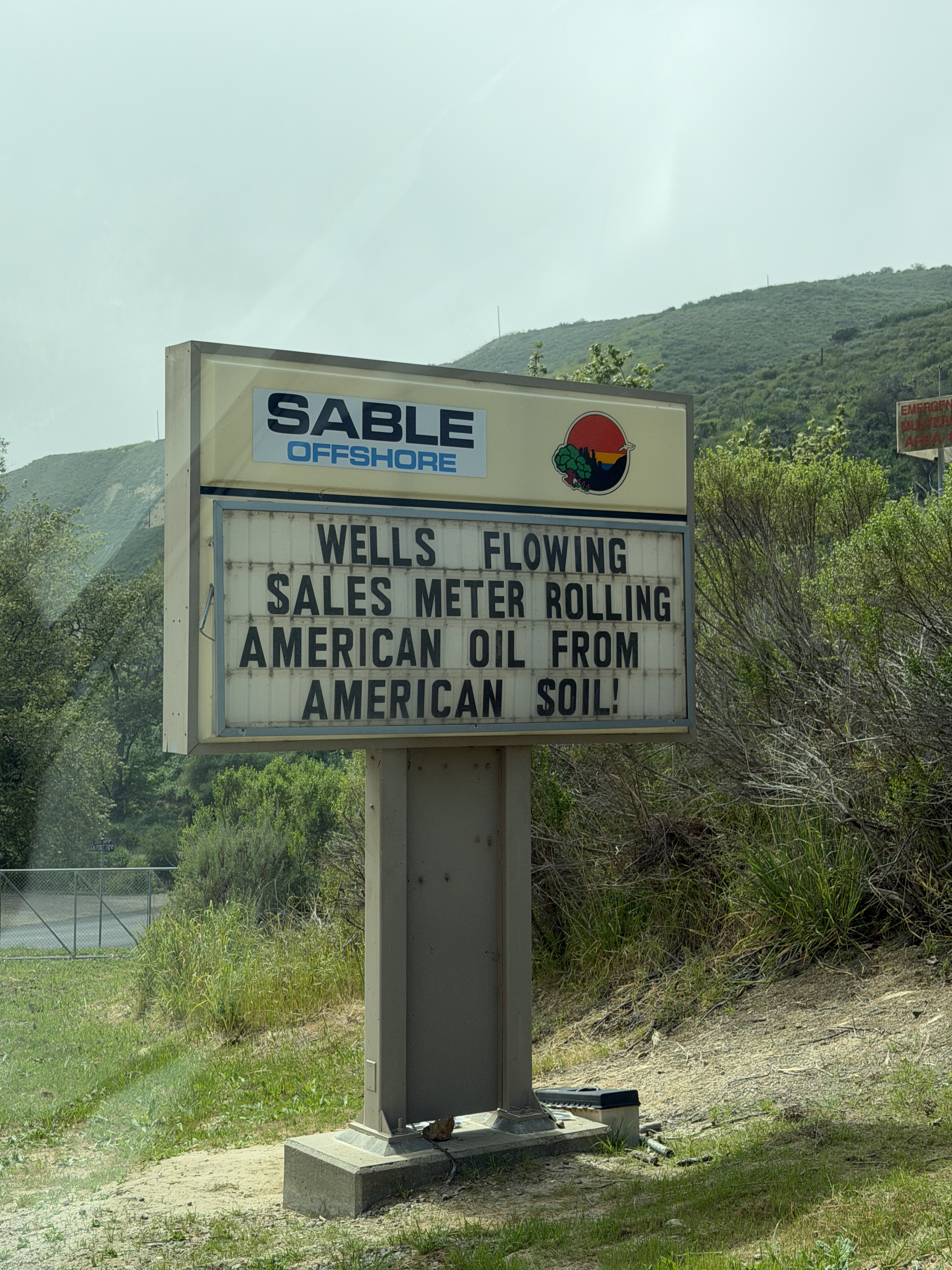
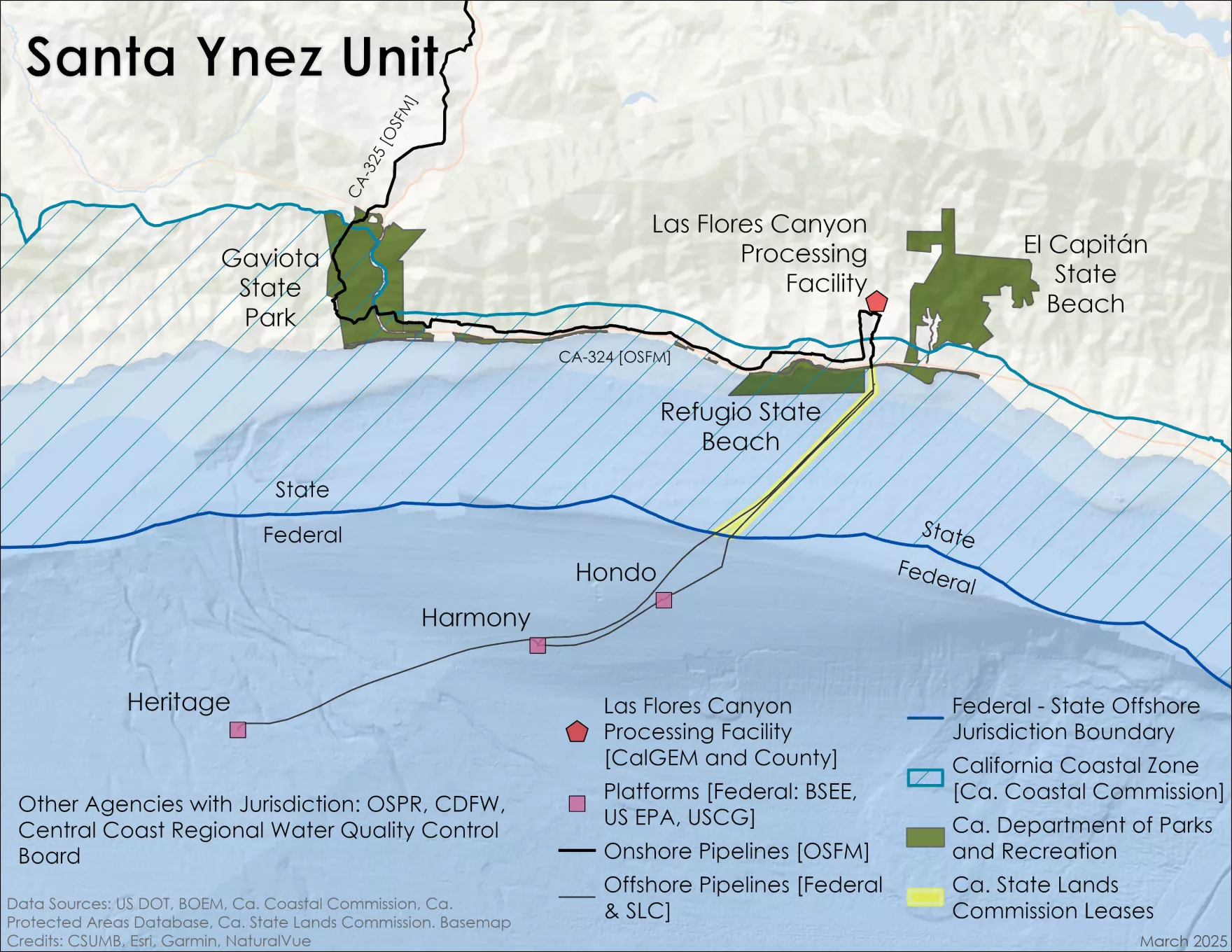
Sable Offshore Corp. (3/30/2026) today announced that on March 29, 2026, Sable initiated oil sales. The Santa Ynez Pipeline System was filled from Las Flores Canyon to Pentland Station at a rate in excess of 50,000 barrels of oil per day.
At the Santa Ynez Unit, Platform Harmony is currently producing approximately 22,000 gross barrels of oil per day. Additionally, the United States Department of the Interior’s Bureau of Safety and Environmental Enforcement has completed its final pre-restart inspection of Platform Heritage. Sable plans to commence production restart at Platform Heritage today at an expected total rate of over 30,000 gross barrels of oil per day. We expect Platform Hondo to be online by the end of the second quarter of 2026 at a rate in excess of 10,000 barrels of oil per day.
Sable Chairman and Chief Executive Officer, Jim Flores, said “Sable is proud to announce oil sales through the Santa Ynez Pipeline System to Chevron. In doing so, we are providing American oil from American soil through an American pipeline to an American refinery for American consumers and the United States military.
A wild month in the 50 year Santa Ynez Unit saga is ending with a flourish. The wind is at Sable’s back, but storm clouds are on the horizon.
Posted in California, energy policy, Gulf of Mexico, Offshore Energy - General, Regulation, tagged Daniel Yergin, energy policy, Gulf of Mexico, LSUPress, offshore oil and gas, Offshore Oildom, Tyler Priest on March 30, 2026| Leave a Comment »
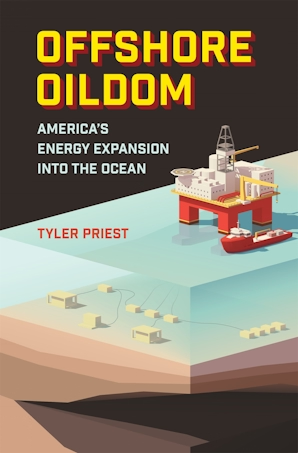
Tyler Priest, the leading historian on US offshore oil and gas operations, has informed me that his much anticipated book, “Offshore Oildom,”is now available for order from LSU Press. Tyler’s book is a fascinating account of the history of the technologically innovative and economically important, yet controversial, OCS Oil and Gas program. See the attached flyer.
Consider this recommendation by Daniel Yergin:
“Tyler Priest, a preeminent historian of energy and the environment, explores how a single well drilled off a pier near Santa Barbara in 1898 gave rise to a major American industry—offshore oil and gas. In spirited prose, Priest demonstrates how this U.S. industry was created not only by innovation, creative engineering, and complex execution; it was also the result of fierce political battles.” ~Daniel Yergin, Pulitzer Prize–winning author of The Prize: The Epic Quest for Oil, Money, and Power and The New Map: Energy, Climate, and the Clash of Nations.
Posted in decommissioning, energy policy, tagged alternate uses, Energy Policy Act of 2005, OCSLA, offshore data centers, re-purpose offshore platforms, rigs to reefs on March 30, 2026| Leave a Comment »

The Rigs-to-Resistors category in our World Famous Rigs-to-Reefs +++ list has been expanded to include offshore data centers, a concept that is attracting investor interest (see attached brochure).
Advantages of offshore data centers include power availability (natural gas, hydro-kinetic, wind, solar), cooling water, sovereignty, and growth potential.
Alternative uses of OCS facilities were authorized by an OCS Lands Act amendment drafted by the Minerals Management Service and attached to the Energy Policy Act of 2005 by Congresswoman Barbara Cubin. The amendment authorized:
“use, for energy-related purposes or for other authorized mariner elated purposes, facilities currently or previously used for activities
authorized under this Act,”
The attachment summarizes plans to install modular data centers on existing offshore platforms. The advocates see “using fixed platforms ready for decommissioning as a low-cost solution with simpler execution.” Are they a bit too optimistic? 😉
Japan has some interesting offshore data center ideas, including the concept pictured below.

Posted in California, decommissioning, energy policy, Gulf of Mexico, Offshore Energy - General, Regulation, tagged BOEM, decommissioning, financial assurance, Platforms Hogan and Houchin, predecessor liability, proposed rule, reverse chronological order on March 26, 2026| 4 Comments »

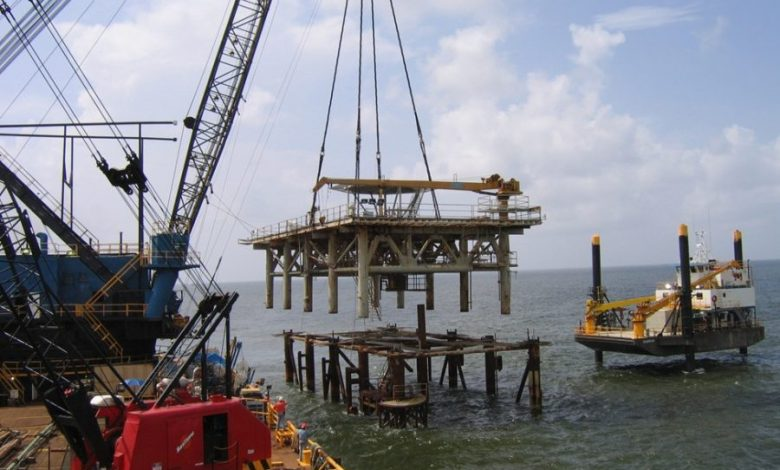
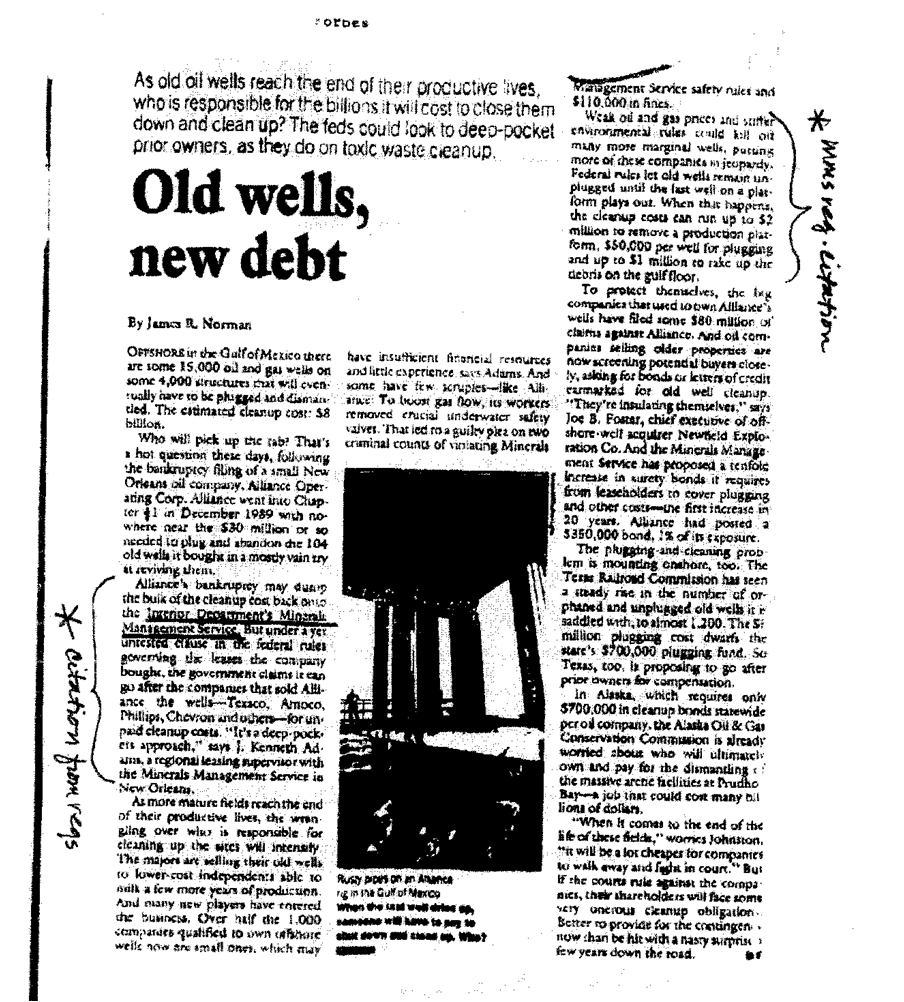
For 40 years, challenges associated with bankruptcies (or the threat thereof), a divided offshore industry, political pressure, hurricane damage, and unresolved legal issues have hindered initiatives to better protect the public from decommissioning liabilities. Nonetheless, regulators and industry were able to prevent taxpayers from incurring any decommissioning costs. Unfortunately that is no longer the case.
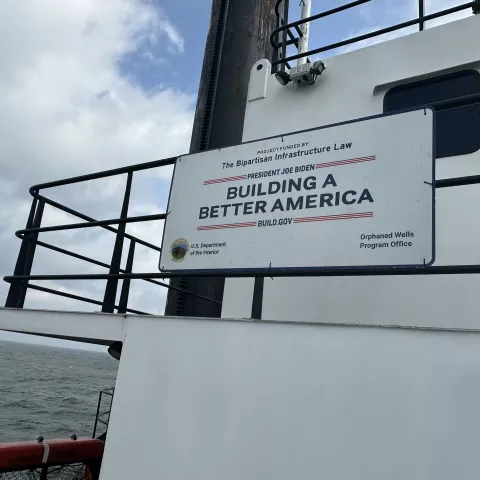
For the first time in history, the govt has funded decommissioning on the OCS (and bragged about it – photo below).
BOEM’s proposed revisions to the decommissioning regulations (attached) would facilitate the transfer of aging structures to companies with limited assets, and in some cases, poor or undemonstrated safety records.
The proposal would reduce or eliminate the supplemental financial assurance requirement if a predecessor lessee has a strong credit rating. For that strategy to work, related decommissioning issues must be addressed. and clarifications and boundaries provided to ensure taxpayers are protected from decommissioning liabilities.
Predecessor liability, which is important because it helps prevent companies from assigning leases for the purpose of avoiding decommissioning obligations, was not established in the regulations until much of the OCS infrastructure was already installed. In a final rule that was effective on 8/20/1997, my office (thanks to the perseverance of Gerry Rhodes, John Mirabella, and Dennis Daugherty) codified the joint and several liability principle in 30 CFR 250.110 as follows:
(b) Lessees must plug and abandon all well bores, remove all platforms or other facilities, and clear the ocean of all obstructions to other users. This obligation:
    (1) Accrues to the lessee when the well is drilled, the platform or other facility is installed, or the obstruction is created; and
    (2) Is the joint and several responsibility of all lessees and owners of operating rights under the lease at the time the obligation accrues, and of each future lessee or owner of operating rights, until
the obligation is satisfied under the requirements of this part.
Prior to the that rule, the official policy of the Dept. of the Interior, as expressed in a 1988 letter from the Director of the Minerals Management Service (see excerpt pasted below), was that lease assignors would NOT be held accountable should their successors fail to fulfill their decommissioning responsibilities.
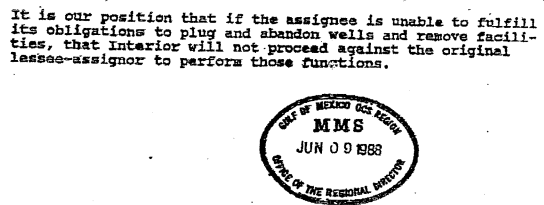
A major unanswered question regarding decommissioning obligations is thus the extent to which predecessor liability applies to leases assigned prior to the 1997 regulation. According to BOEM data, 771 remaining platforms were installed at least 10 years before the rule change, and 504 were installed at least 20 years prior. For assets transferred prior to the rule change, do the predecessors retain liability? BOEM should explain its position on this issue.
Other predecessor liability questions that need to be answered:
Two examples of what can happen (and has happened):
Example 1: Big AAA Oil assigns a lease to Proud Production, a reputable independent. After years of operations, Proud can no longer profitably produce from the lease. Proud assigns the lease to CCC Oil & Gas, a small and highly efficient operator. After the lease is no longer profitable, even for a company with a low cost structure, CCC assigns the lease to Elmer’s E&P, a sketchy, barely solvent operating company with a poor compliance record. Elmer rather predictably neglects maintenance and declares bankruptcy after a decline in oil prices. Should Big AAA Oil, which had no say in the last 2 transfers in the assignment chain, be financially responsible for decommissioning the facilities?
Example 2: Big AAA Oil assigns a lease to DDD Development Company. Per the terms of the assignment, DDD establishes an Abandonment Escrow Account, as provided for in 30 CFR 556.904. BOEM allows DDD to withdraw funds from the account for purposes not authorized in the regulations. Should Big AAA Oil be liable for decommissioning costs after DDD is no longer solvent? (See “The troubling case of Platforms Hogan and Houchin.”)
For predecessor liability to be fairly and effectively implemented, and survive legal challenges, BOEM should:
Another important concern is that BOEM’s proposal does not correct two prior changes that further expose the public to decommissioning liabilities:
Posted in California, energy policy, Offshore Energy - General, tagged California AG, Chevron, Chris Wright, Dept. of Energy, El Segundo, Gaviota State Park, March Madness, Sable Offshore, TRO denied on March 25, 2026| Leave a Comment »


On Monday, Sable got a boost from Judge Wilson, U.S. District Court for the Central District of California. Judge Wilson denied a request by the California Department of Parks and Recreation (and other State agencies) to enjoin Sable Offshore from restarting or continuing the operation of oil pipeline segments withing Gaviota State Park.
Sable got another boost from Chevron, which agreed to buy 20,000 bopd from Sable for its El Segundo refinery.
Not to be denied, the California Attorney General filed the attached lawsuit in the U.S. District Court for the Northern District of California. The AG argues that US Energy Secretary Chris Wright has no authority under the Defense Production Act (DPA) to excuse Sable from compliance with state and federal laws and court orders. The lawsuit alleges that the DPA Order violates the Administrative Procedure Act and infringes on California’s sovereign power under the Tenth Amendment.
The suit also alleges that the Order violates the constitutional Separation of Powers by purporting to override not only state law and a preliminary injunction issued by the Santa Barbara Superior Court, but also a judicial Consent Decree approved by the U.S. District Court for the Central District of California that expressly acknowledged and approved the State’s role in reviewing and approving any planned restart of the onshore pipelines.
The AG asks the Court (p. 33) to issue a judicial declaration that the Wright Order is unconstitutional and/or unlawful because it violates the APA and the U.S. Constitution.
Read the Court filing for full details, and stay tuned. No doubt there will be more swings in momentum going forward.
Posted in energy policy, Offshore Energy - General, Offshore Wind, tagged $1 billion, Attentive, Carolina Long Bay, Doug Burgum, leases terminated, LNG, New York Bight, Offshore Wind, Total on March 24, 2026| 1 Comment »
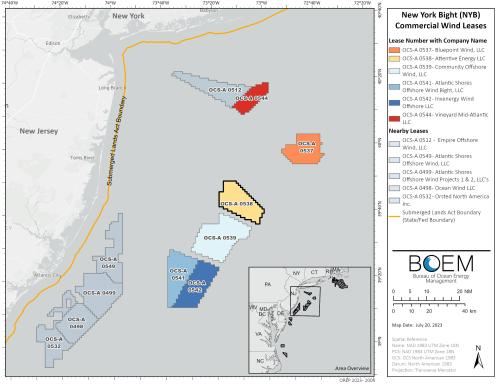
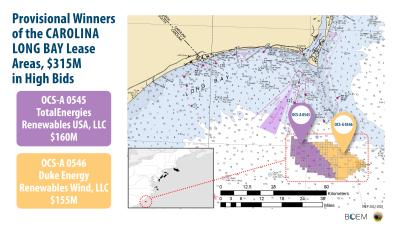
Per the Dept. of the Interior:
Comments:
Posted in energy policy, Gulf of Mexico, natural gas, Offshore Energy - General, pipelines, tagged Appalachia Region, Haynesville, leading natural gas producer, Marcellus Shale, New York, OCS gas, Pennsylvania gas, Permian, Utica shale on March 19, 2026| Leave a Comment »
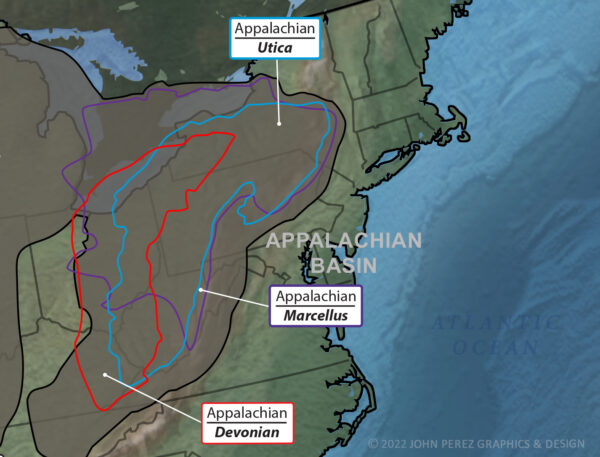

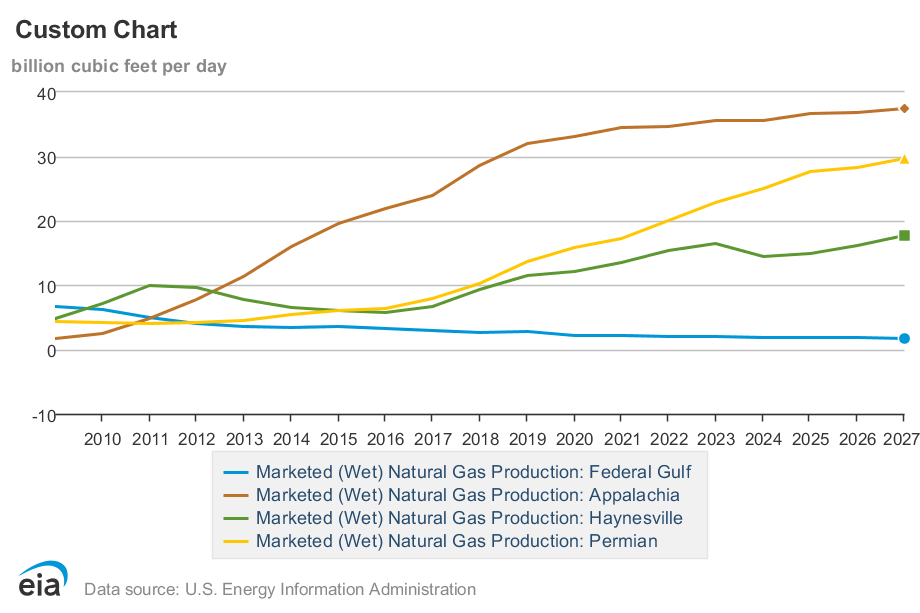
Per EIA data, the Appalachia, Permian, and Haynesville regions accounted for 67% of the total marketed gas production in the US in 2025 and 81% of the growth last year.
In 2025, more natural gas was produced in the Appalachia region of the Northeast than in any other US region, accounting for 31% of marketed natural gas production. (See the chart below.) Were it not for pipeline capacity limitations, recent growth in Appalachia production would have been greater.
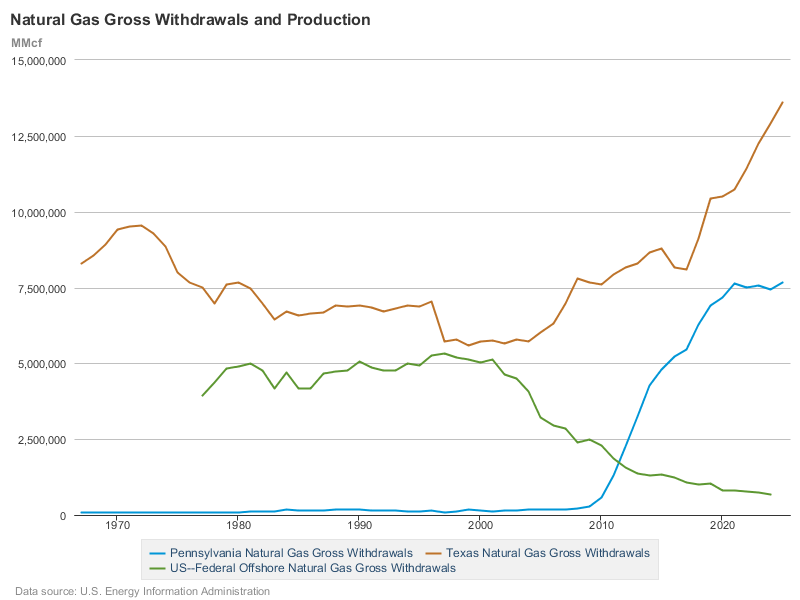
OCS gas production, 80% of which is now associated gas from deepwater oil wells, continues to lag the shale basins. This is a big change from 25 years ago when the OCS produced more gas than any state but Texas. (See the chart below.) Interest in ultradeep (subsurface) OCS shelf gas prospects remains scant despite favorable demand forecasts and technological advances.
.
Meanwhile, New York continues to block development of the State’s ample shale gas resources. foregoing the economic and environmental benefits.
 Bud's Offshore Energy (BOE)