Feeds:
Posts
Comments

Archive for the ‘well control incidents’ Category

WA’s Mines and Petroleum Minister, Norman Moore, is firmly opposed to the Federal proposal for a single national regulator.

We are yet to be persuaded by this, or any other report, that a national regulator would be the way to go. Norman Moore


Read Full Post »

Montara Blowout - Timor Sea

Our virtual vigil is over.  I awoke to messages from Odd, Anthea, and Kevin that the day had finally arrived – the Montara Report has been released. Not only do we have the Inquiry report, but also the government’s response and PTTEP’s action plan.  We’ll be digesting this over the next few days (along with a turkey dinner), but below are a few key items (direct quotes from the government’s response) that are likely to be of interest to BOE readers:

  • To create a single national regulator the Government will expand the functions of the existing National Offshore Petroleum Safety Authority (NOPSA) to include regulation of structural integrity, environment plans and day-to-day operations associated with petroleum activities in Commonwealth waters. There is a fundamental connection between the integrity of structures, the safety of people, and protection of the environment. The expanded authority – to be named the National Offshore Petroleum Safety and Environmental Management Authority (NOPSEMA) – will also regulate safety, integrity and environment plans for minerals extraction and greenhouse gas storage activities in Commonwealth waters.
  • In recognition of the global nature of the offshore petroleum industry, and Australia’s increasingly important role, the Government intends to host an international conference for governments, regulators and the offshore petroleum industry to share the lessons from Montara and to learn from the experience of other nations. The conference will beheld in Australia during 2011.
  • An important feature of objective-based regulation is that it encourages continuous improvement rather than acompliance mentality. It is essential that a regulatory system encourage the creator of the risk to move beyond minimum standards in a continuous effort for improvement, and not just accept the minimum standard. The risk of specific standards is that they can shift the burden of responsibility from the operator to the government and stifleinnovation. The Australian objective-based regime retains the focus clearly on the operator to evaluate risk andachieve fit for purpose design in order to reduce risk to ‘as low as reasonably practicable’.

Read Full Post »

Deepwater Horizon

Nothing new, but a but a very good Macondo commentary by Bill Campell, a retired Shell employee. Worth reading.

In my opinion this event is not so much about the well as designed but the well as installed. Installing a well is similar to any other civil engineering project in that what is installed has to be tested or commissioned before it is put into use, just as you would test a vessel or pipeline designed to contain hydrocarbons under pressure.   Wells, which are discovered to have a problem during integrity tests indicating for example a connection between the well and the reservoir, are worked over to rectify the problem and in a few hours after remedial activities have been undertaken, the integrity testing is re-commenced. Bill Campbell

Read Full Post »

Link

The National Academy of Engineering and the National Research Council have released the interim report of the Committee on the Analysis of Causes of the Deepwater Horizon Explosion, Fire, and Oil Spill to Identify Measures to Prevent Similar Accidents in the Future. The interim report includes the committee’s preliminary findings and observations on various actions and decisions including well design, cementing operations, well monitoring, and well control actions. The interim report also considers management, oversight, and regulation of offshore operations.

Comment: No significant surprises.

Read Full Post »

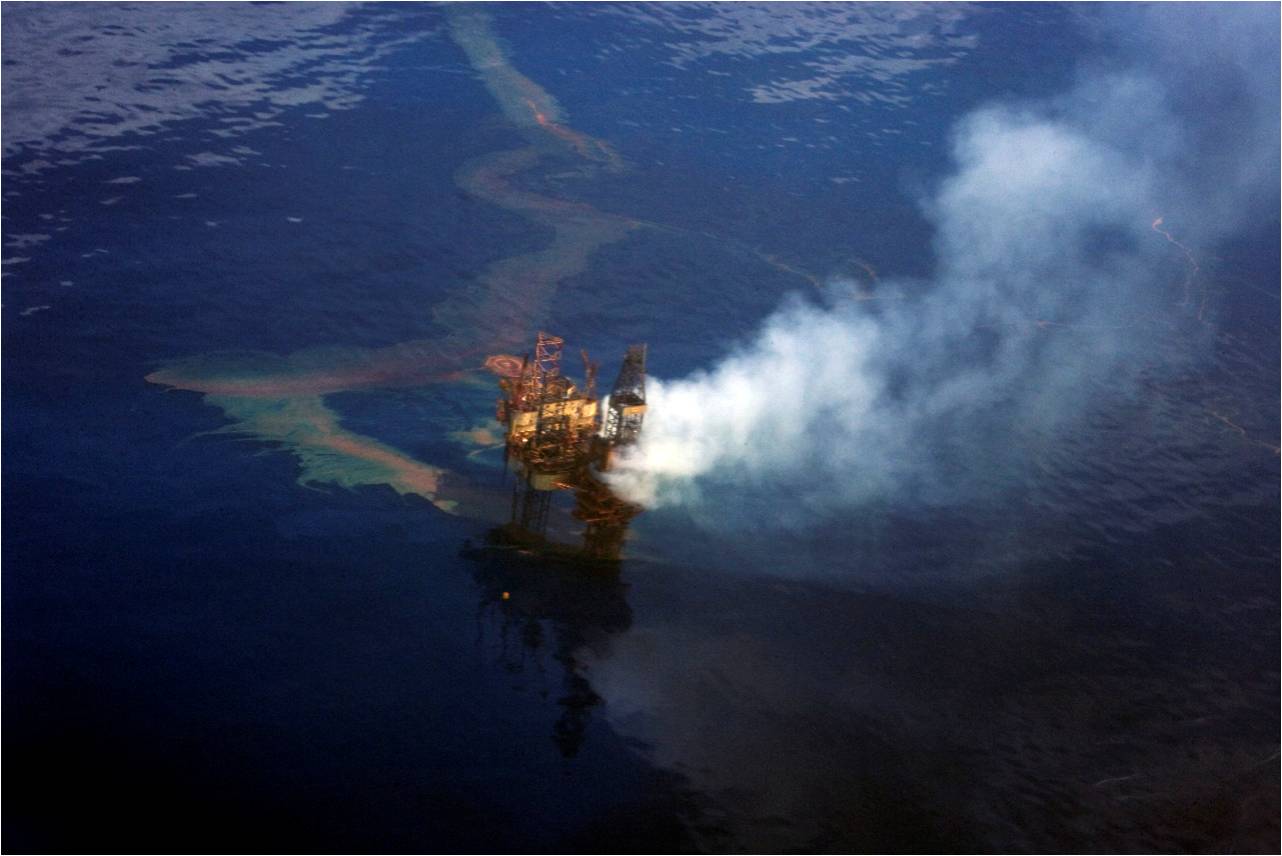
Montara Blowout - Timor Sea - 2009

A spokesman for PTTEP says the damaged rig will be towed away next month and a replacement will be in place by June next year subject to government approvals. ABC-Australia

Food for thought:

  • Should a major blowout automatically disqualify a company from further exploration and development within that field?
  • Should PTTEP have voluntarily agreed to (been required to) assign their Montara rights to another company?
  • Should leases or operating licenses be automatically suspended after such major accidents?
  • Shouldn’t exploration and development rights be contingent on safe and responsible operating practices?
  • Do PTTEP and other operators deserve a second chance under such circumstances? Third chance? How many?

Read Full Post »

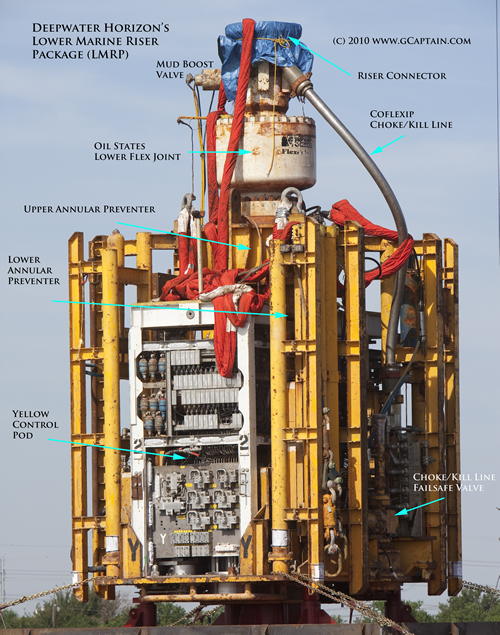
BOP stack awaiting post-Macondo inspection (from gCaptain.com)

Other than the mildly amusing skirmish about the positioning of representatives of the various factions during the inspection process (Hey, how about access for bloggers!) and some silly comments about the independence of the inspection contractor, there has been very little attention paid to the Deepwater Horizon BOP examination that is scheduled to begin today at NASA’s Michoud facility in New Orleans. The absence of media interest is surprising given the importance of this part of the Macondo investigation. Presumably, there will be more extensive coverage beginning today.

While the inspection and testing will be quite technical, some important aspects should be rather straightforward.  What is the position of the rams, particularly the shear ram?  What is the condition of the ram elements and annular preventer?  Is there evidence of control line leakage?  What can be determined about the electronics and the sequencing system designed to automatically actuate the shear ram when power is lost or when the riser is disconnected?

Hopefully, the official investigation website, which currently has no information on the BOP inspection program, will provide updates.  While we don’t expect immediate information on the findings, there should be reports explaining how the inspection program is being conducted and what has been accomplished.

Read Full Post »

Our 15 September post suggested that a properly conducted and interpreted negative pressure test would likely have prevented both the Macondo and Montara blowouts. As more information about Macondo surfaces, there is no dispute about the significance of the negative pressure test errors.  Despite differences of opinion about the contributing factors, all companies involved with the blowout seem to agree that a properly conducted and interpreted negative pressure test would likely have prevented the blowout.

Read Full Post »

I hate to say nice things about lawyers :), but the Commission attorneys handled the two days of hearings very effectively.  The outstanding staff preparation and support were quite obvious.

BOE has have long advocated more industry leadership on guiding principles, incident data gathering and verification, risk assessment, peer-audits, standards improvements, cooperative research, and failure data for critical equipment.  In that regard, we are pleased that Chairmen Reilly and Graham, the other Commissioners, and the industry and government witnesses commented positively on some of these important programs.

We need to effectively manage the safety and environmental risks associated with offshore exploration and production, because we can’t afford the economic and security risks associated with a diminished offshore oil and gas program. BOE advocates conservation and renewables, but projections by IEA and other leading energy forecasters make it clear that oil and gas will continue to be an important part of our energy mix for decades.

Read Full Post »

With all of the discussion about the float collar issues, I thought I was listening to the Montara hearings this morning.   I’m surprised that neither the Commission questioners nor the panelists have mentioned Montara. When you have two major blowouts within 8 months and they have very similar root causes, the similarities should be of enormous interest. The absence of information transfer that might have prevented Macondo should be a major consideration in these and other hearings.

We have been talking about the similarities between Montara and Macondo for months.  Colin Leach’s 28 September post draws further attention to this issue.  Colin also hit the nail on the head with his comment that an additional barrier should have been installed above the float collar before proceeding.

Read Full Post »

Hats off to the Commission attorneys and staff for today’s presentations and questioning.  They were very well prepared, conducted themselves in a professional manner, and focused on the causes (not who should be blamed). The format was excellent with the Commission presenting their tentative findings and then asking the industry panel how they felt about each finding.

Oddly, the only real speculation was by the industry panelists, most notably the comments below about the flow path and BOP performance. Not very subtle!

Read Full Post »

« Newer Posts - Older Posts »