active leases ➡ producible leases ➡ energy production
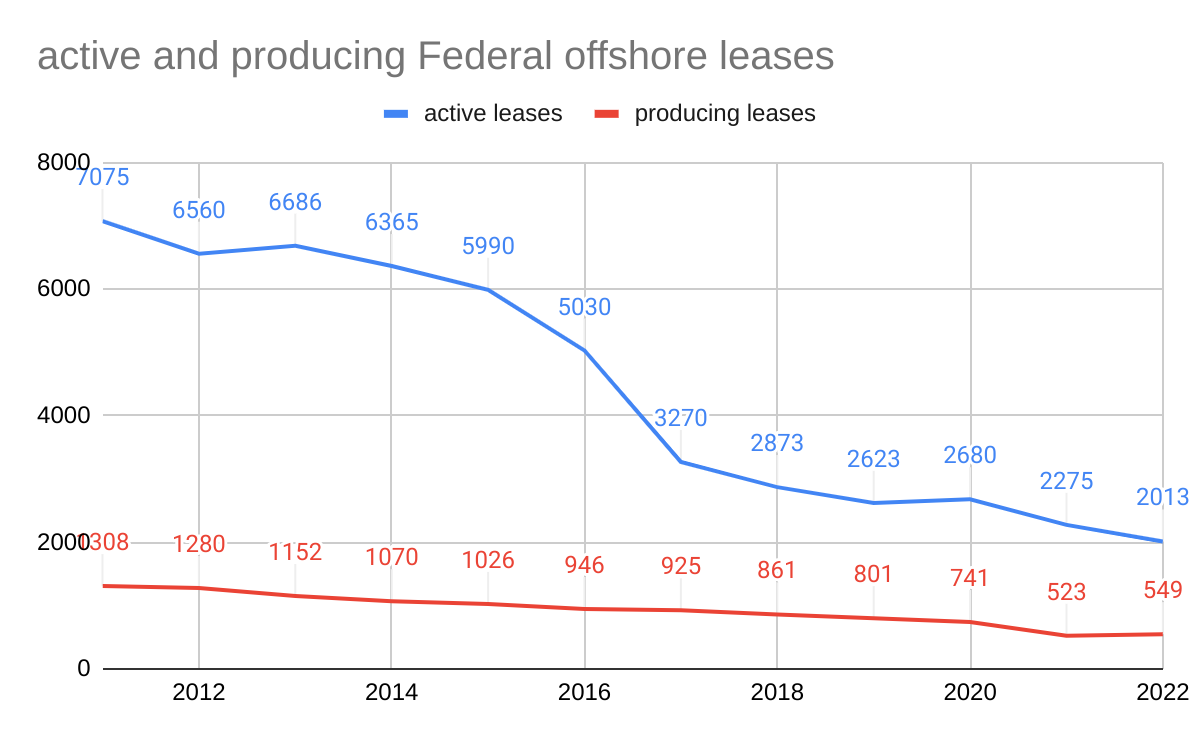
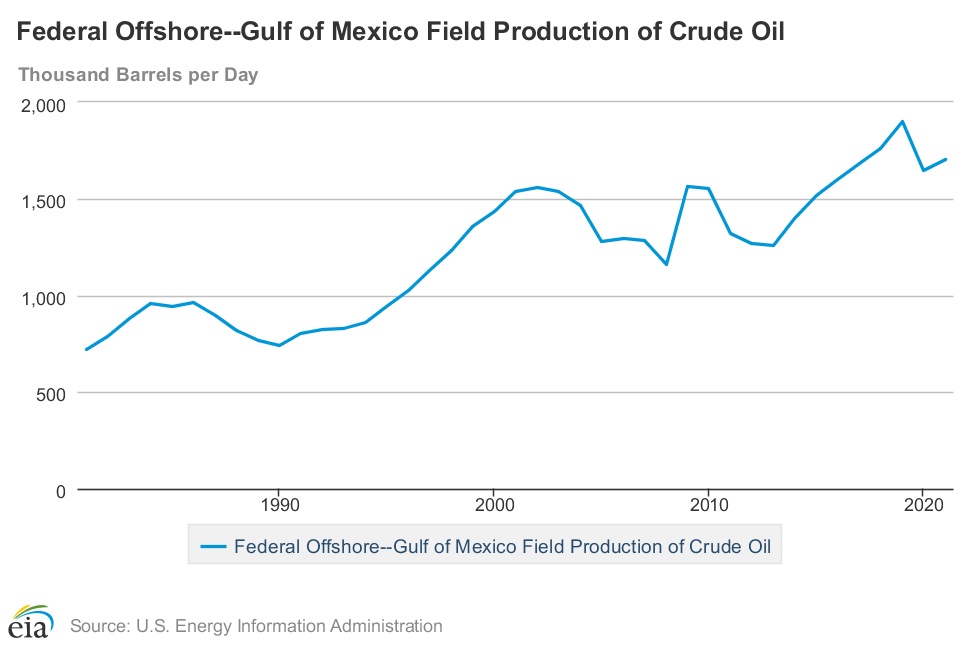
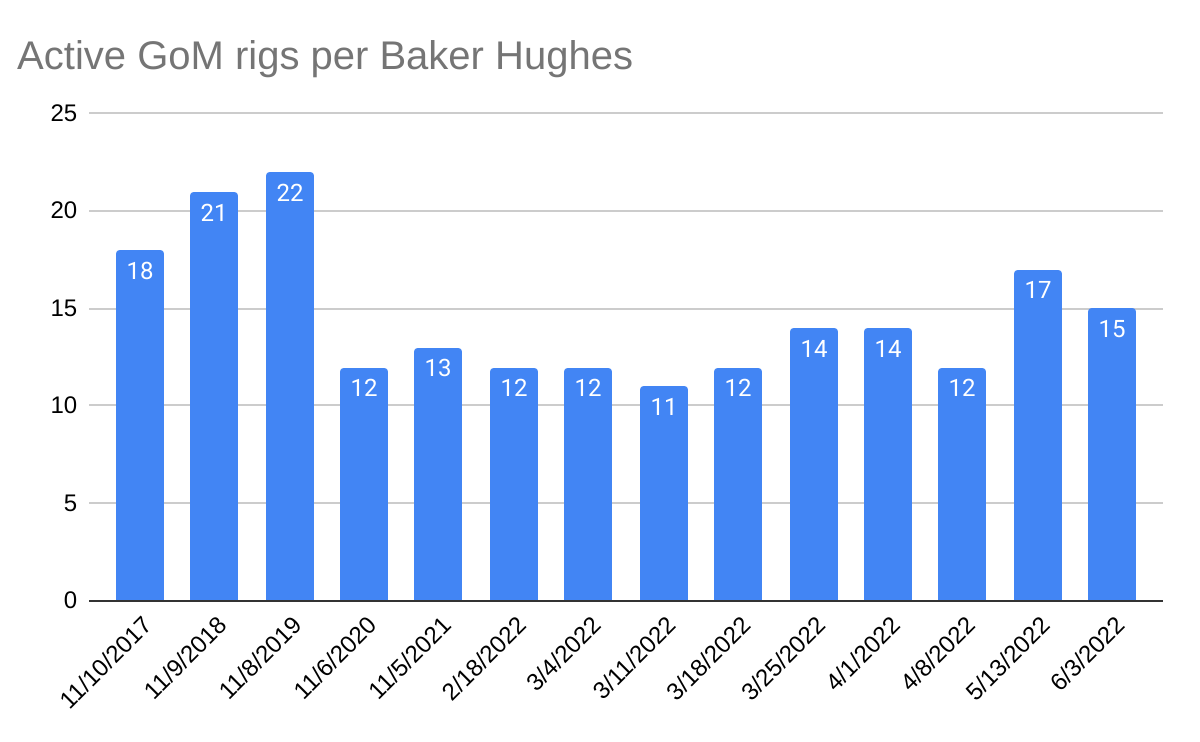
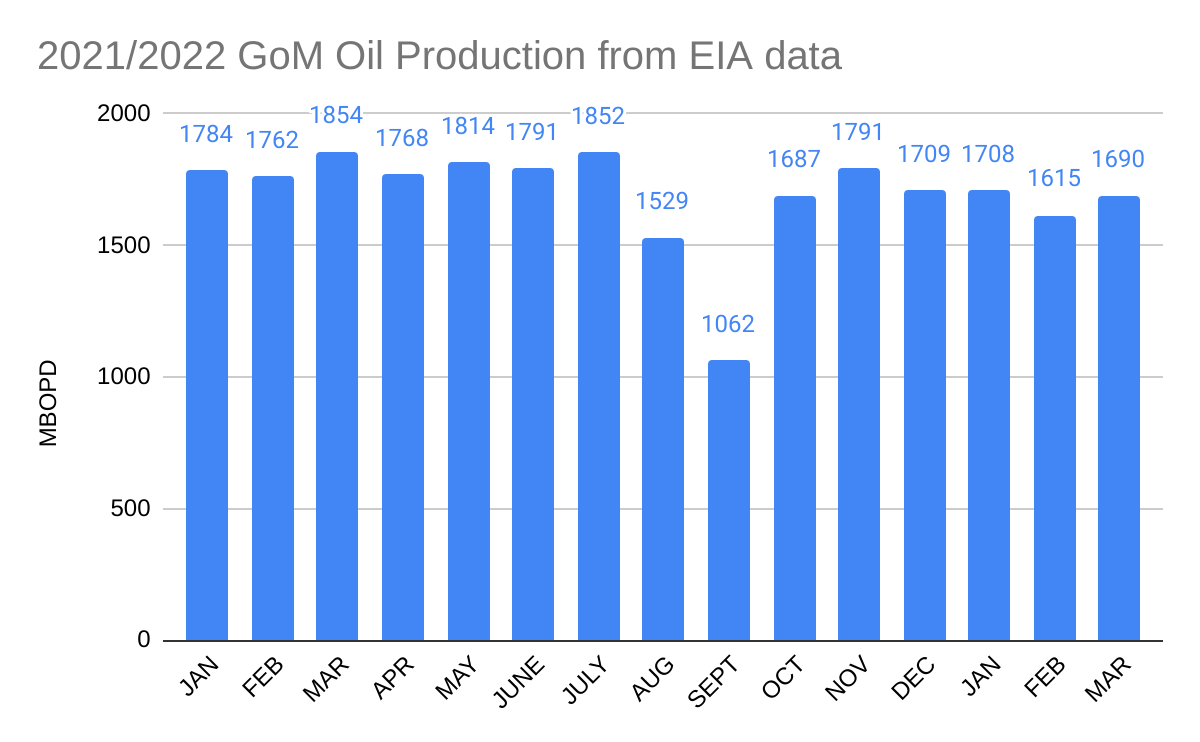
The future of US offshore energy production is in jeopardy. As is clear in the first chart below, the problem is the precipitous decline in opportunities (l.e. leases), not the will to produce. At 27.3% (6/2022 data), the % of active leases that are producing is near the historic high of 30%. The spin doctors really need to drop the old and tired nonproducing leases excuse.
There have been 24 well stimulation treatments (21 of which involved hydraulic fracturing) on the OCS offshore California between 1982 and 2014, and these were conducted on four of the 23 platforms. Reservoirs on the OCS off Southern California tend to be much more permeable than onshore reservoirs, and are already highly naturally fractured. Therefore, little permeability enhancement has been required for their development. As described in the scenario evaluated in the EA, the future use of Well Stimulation Treatments is expected to continue to be occasional rather than essential to hydrocarbon production from these platforms.
As is the case every 5 years or so, there is another aquaculture push within the Federal government. It looks like this will be a very process-rich endeavor (check out the list of “Scoping Information Needs“), so don’t expect much soon.
NOAA Fisheries is conducting public scoping for a programmatic environmental impact statement to consider identifying one or more AOAs in federal waters of the Gulf of Mexico. The programmatic environmental impact statement will evaluate the impacts and benefits associated with siting aquaculture in those locations, which could occur through future proposals and project level review. Public scoping is an opportunity for the public to provide input on the range of issues to be addressed in the programmatic environmental impact statement. This is a planning effort and no specific aquaculture-related activities or individual aquaculture projects are being proposed at this time.
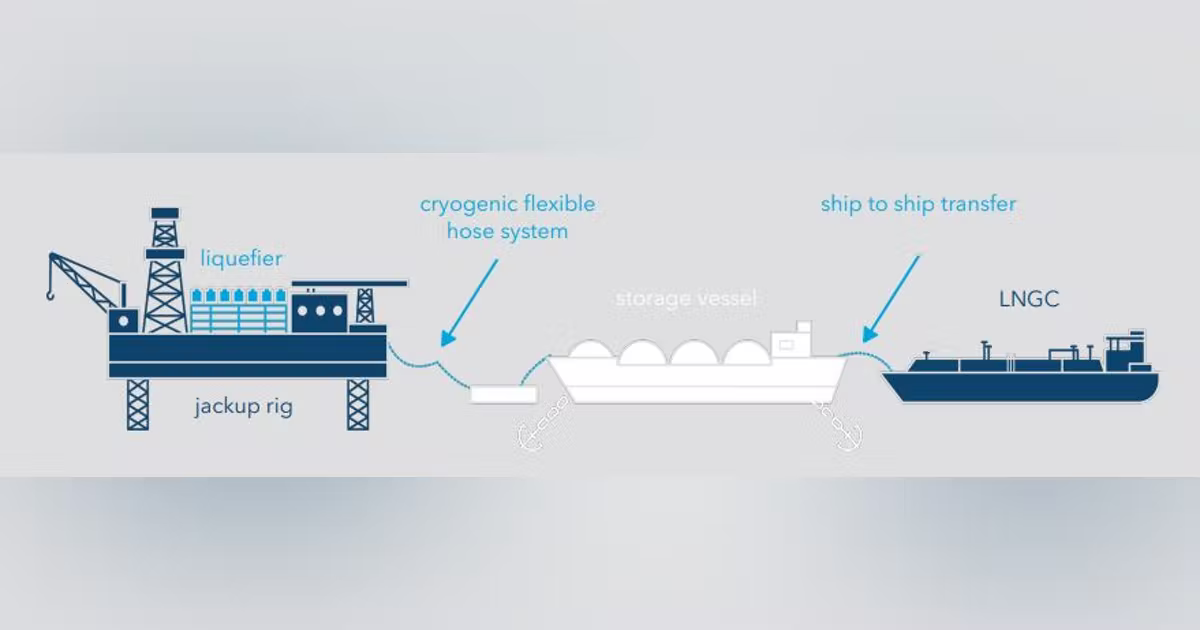
In the past the thought was that we would be importing LNG, i.e. “Rigs-to-Regasification.” Now that we are exporting LNG, we are adding “Rigs-to-Refrigeration” to the alternative use list.
Per our previous post on this topic, New Fortress Energy is moving forward with fast-track LNG projects in the Gulf. Three converted jack-up rigs purchased from Maersk will make up the first “Fast LNG” liquefaction train.
New Fortress is planning to install its first two “Fast LNG” units in West Delta Lease Block 38, located about 16 nm off Grand Isle, Louisiana. The two independent liquefaction trains at this deepwater “port” would export about 1.4 million tonnes per annum (mtpa) of LNG each. Though small by shoreside standards, the plant design would offer a number of advantages, like low cost and speed to market – a critical factor at a time of high demand for LNG. The company says that it should be able to produce each facility on an 18-20 month timescale, from engineering through construction and commissioning.
Given the challenges posed by tropical storms, particularly for jackup units, the design criteria for these “permanent” jack-up liquefaction facilities and the role of classification societies are of particular interest.
Newfoundland is only 30 to 90 minutes ahead of the other Atlantic provinces and states, but the offshore energy gap is much greater. Newfoundland continues to be the only Atlantic producer, and the future is looking brighter with another positive step by industry and the provincial government.
Calgary, Alberta (May 31, 2022) – Cenovus Energy Inc. and its partners have agreed to restart the West White Rose Project offshore Newfoundland and Labrador. First oil from the platform is anticipated in the first half of 2026, with peak production anticipated to reach approximately 80,000 barrels per day (bbls/d), 45,000 bbls/d net to Cenovus, by year-end 2029.
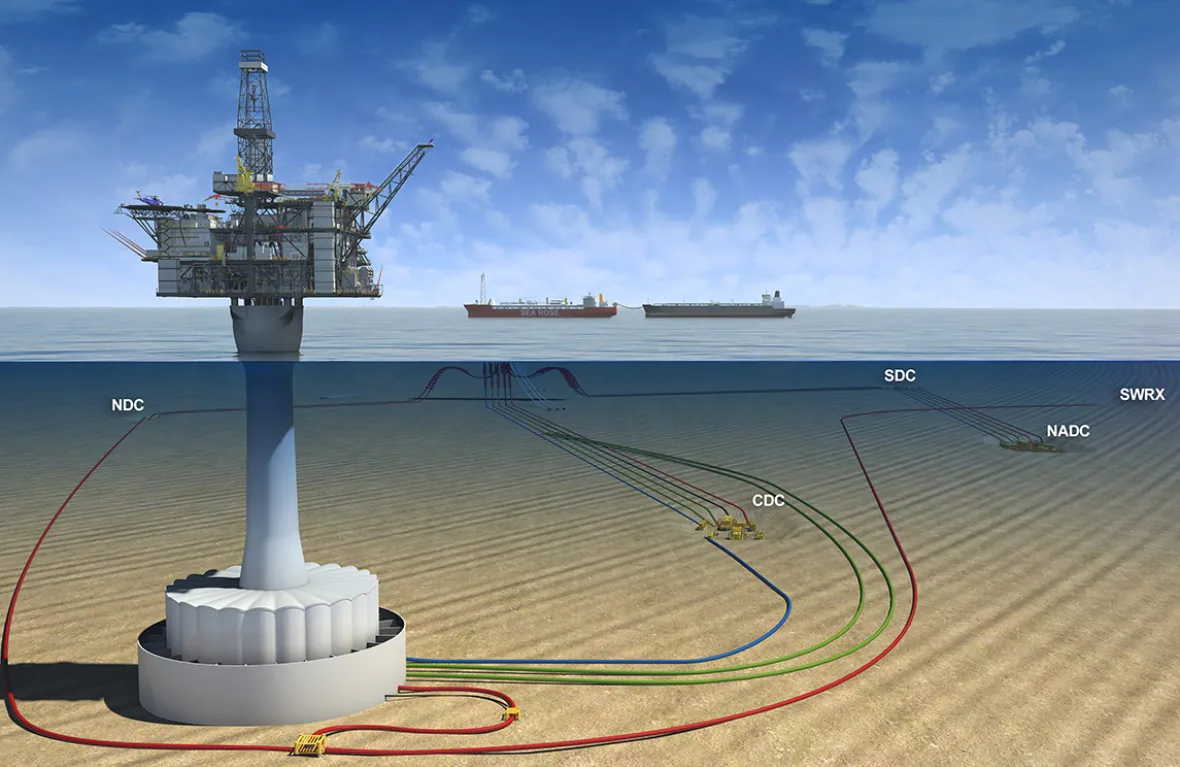
Construction includes the completion of the concrete gravity structure and topsides, which will serve as the drilling platform for the project. Once installed, the platform will be tied into existing infrastructure.
Offshore California, the best that most facility operators and their predecessors (to the extent they continue to hold decommissioning liabilities) can hope for is a graceful exit with manageable financial losses. (The situation is a bit different for Exxon’s Santa Ynez Unit, which has been shut-in since 2015 while the company seeks to resolve oil transportation issues resulting from an onshore pipeline rupture. Here is the latest episode of that amazing saga.)
California’s Federal offshore, where 9 mobile drilling units (MODUs) were operating concurrently in the early 1980s, hasn’t seen a MODU in over 30 years. However, 23 production platforms, some of which are massive structures, remain (see the presentation below). At this point, these platforms are expensive monuments given that their combined production (per EIA) is only 7000 BOPD.
Regardless of their production status, the California offshore platforms continue to be ecologically significant. Dr. Jerry Schubel is among the many marine scientists who understand the importance of the life that has grown on and around these structures. The scientific community also sees other research, educational, and recreational uses for these platforms as per our Rigs-to-Reefs +++ page.
To their credit, State and Federal agencies, trade organizations, and interested third parties continue to discuss the issues and consider alternatives. A recent workshop was helpful in that regard. Attached is the excellent presentation by Bob Byrd and John Smith, who have been at the vanguard in addressing California decommissioning issues. Embedded below is the YouTube video of the presentations from their session. These are excellent updates for those who have an interest in decommissioning issues.
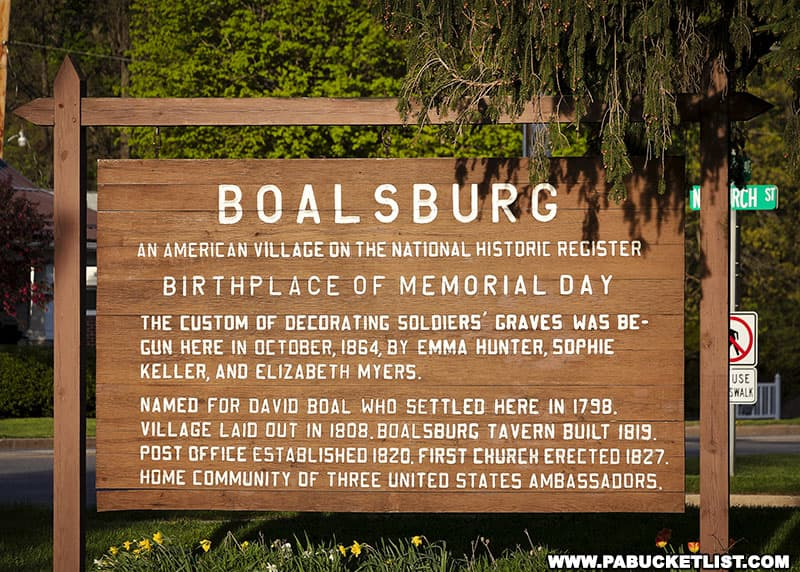
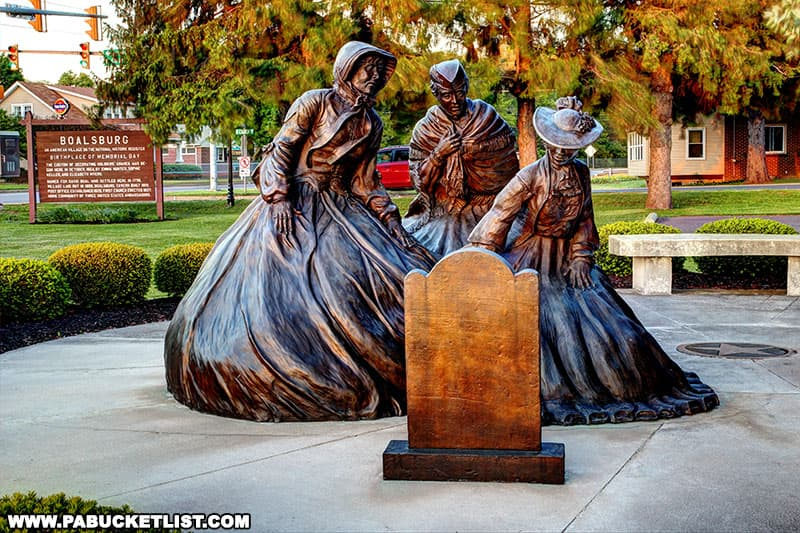
Boalsburg is a charming village in central PA near Penn State University. The custom of decorating soldiers graves began during the Civil War and was originally known as “Decoration Day,” which is what my grandmother always called this day of reflection.
The men of Boalsburg, an abolitionist community in Centre County, led by Professor James Patterson, joined the Union Army in response to a call for volunteers by President Abraham Lincoln. The women of Boalsburg, with their husbands, sons and brothers at war, organized daily meetings at the Boalsburg Academy. They prepared packages and sewed and knit uniforms for their men at war. They arranged for the Boalsburg Brass Band to perform concerts to raise funds for wounded soldiers.
The men of Boalsburg suffered multiple causalities throughout the Civil War. It was the fifth casualty, the death of Dr. Reuben Hunter, on September 19, 1864, that inspired three women to visit the cemetery and decorate the graves of the fallen men. The three women, Emma Hunter, daughter of Dr. Reuben Hunter, Elizabeth Meyer, whose son Amos Meyer, was killed at the battle of Gettysburg, and Sophie Keller, decided to meet the following Sunday, share a bouquet of flowers to decorate the graves of their family members and friends.
After the decorating the graves of the recently fallen Boalsburg soldiers, they also decorated the graves of those men who had died in the War of 1812 and the Revolutionary War.

 Bud's Offshore Energy (BOE)