Archive for June, 2022
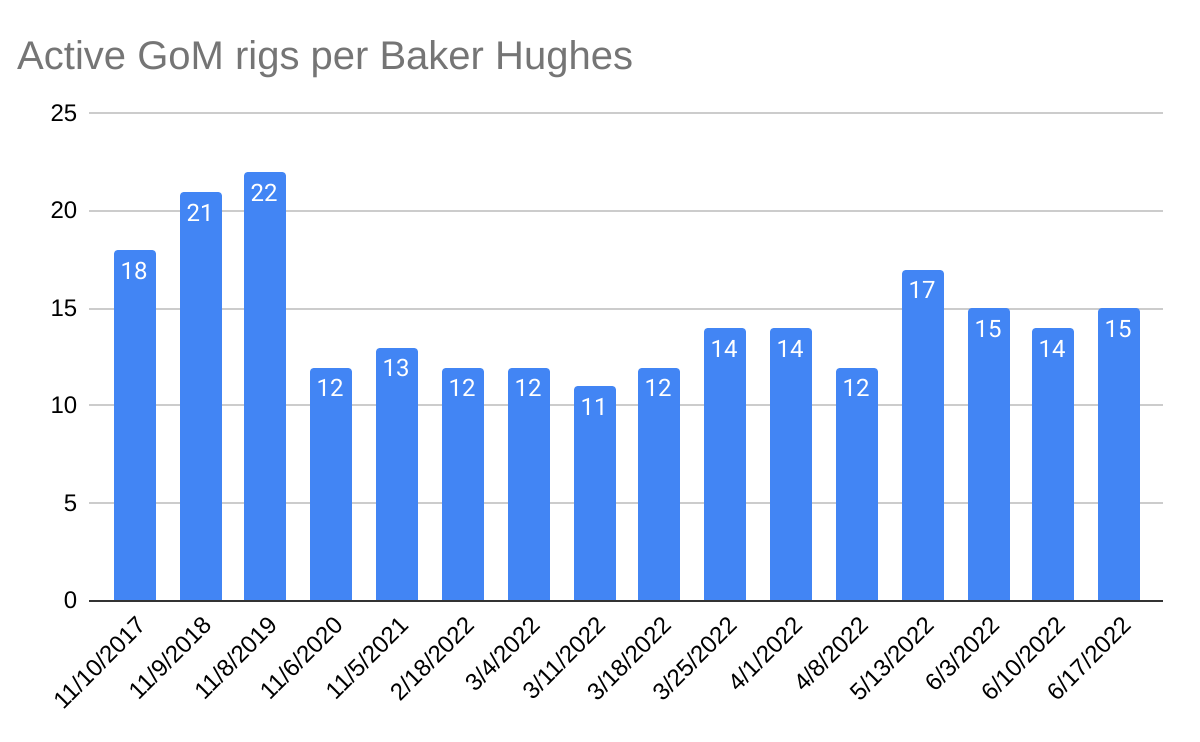
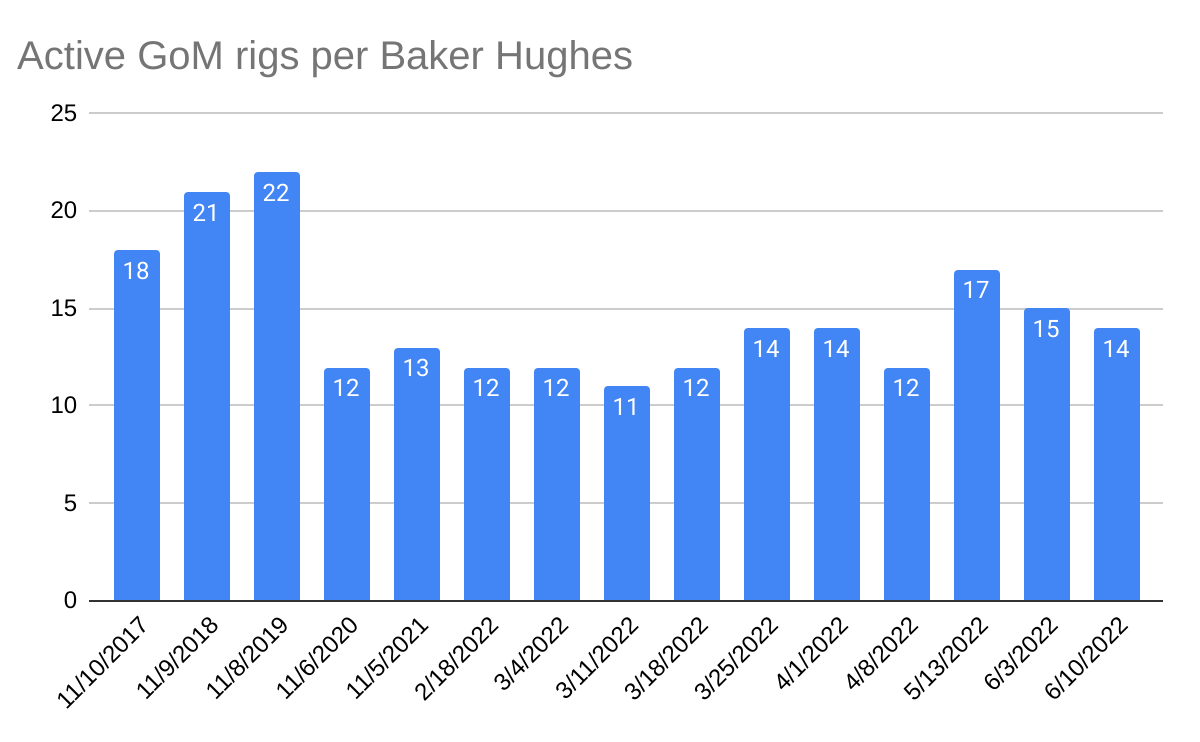
Gulf of Mexico rig count back up to 15
Posted in drilling, Gulf of Mexico, Offshore Energy - General, tagged Baker Hughes rig count, Gulf of Mexico on June 17, 2022| Leave a Comment »
Exxon and API responses to White House letters to refiners
Posted in energy policy, Offshore Energy - General, Regulation, tagged API, Exxon, letter to refiners, refiners response on June 17, 2022| Leave a Comment »
Good response from Exxon to the White House letter.
In the short term, the U.S. government could enact measures often used in emergencies following hurricanes or other supply disruptions — such as waivers of Jones Act provisions and some fuel specifications to increase supplies. Longer term, government can promote investment through clear and consistent policy that supports U.S. resource development, such as regular and predictable lease sales, as well as streamlined regulatory approval and support for infrastructure such as pipelines.
Exxon
Perhaps Exxon will return to the Gulf of Mexico if the Administration commits to regular and predictable oil and gas lease sales. The company hasn’t drilled a well in the Gulf since 2019.
The longer API letter comments on the fundamentals of refining markets and operations while also addressing the Administration’s “end fossil fuel rhetoric” and negative regulatory signals. Who would want to make major refinery investments under these circumstances?
Inspector General reports on Gulf of Mexico flaring violator
Posted in energy policy, Gulf of Mexico, Offshore Energy - General, Regulation, tagged flaring, flaring data, Gulf of Mexico, OIG report, reporting on June 16, 2022| Leave a Comment »
We determined that over approximately 5 years, the energy company’s venting and flaring activities exceeded regulatory limits without the required approvals, resulting in a loss of Federal mineral royalties and resources. More specifically, we identified approximately 229,066 MCF of vented and flared natural gas as suspicious or exceeding the allowable amount across four platforms in the Gulf of Mexico between January 2014 and April 2020. We presented our findings to ONRR, which assisted us in analyzing the energy company’s venting and flaring activities and determining the amount of lost Federal mineral royalties. Based on this analysis, ONRR submitted and secured a proof of claim in the amount of $712,857.82 for unpaid mineral royalties during the energy company’s bankruptcy proceeding.
OIG report 6/13/2022
Comments:
- The report doesn’t name the company, but one can make an educated guess based on some of the information provided (e.g. number of platforms the company operated, bankruptcy proceedings, etc.)
- The regulator usually finds out about false or misleading recordkeeping. Reports from employees, anonymous or otherwise, are a common source of such charges, as was the case here. (In my District in California, a toolpusher informed us that BOP pressure test records were being falsified. This led to multiple felony convictions.)
- The IG’s recommendations to BSEE and ONRR are reasonable and appropriate:
- Examine venting and flaring reports for patterns that may reflect violations or amounts that exceed permissible limits.
- Develop a process to ensure that royalties are being paid for improperly flared or vented gas.
- As BOE has previously reported, available public flaring data do not match. These data inconsistencies should be addressed.
- BSEE/ONRR should make more detailed flaring/venting data publicly available so differences between facilities and sectors (e.g. deepwater vs. shelf) can be assessed. Efforts should also be made to post these data in a more timely manner. Data for 2021 are still not available.
Energy policy must make lives better, not worse…
Posted in energy policy, Gulf of Mexico, Offshore Energy - General, tagged energy poverty, environmental justice, GHG emissions, Lease Sale 257, US energy policy on June 16, 2022| Leave a Comment »
The primary goal of energy policy should be ample, reliable supplies that are sufficient to ensure reasonable consumer prices. The “Backup Plan” (below) is only acceptable in cartoons.
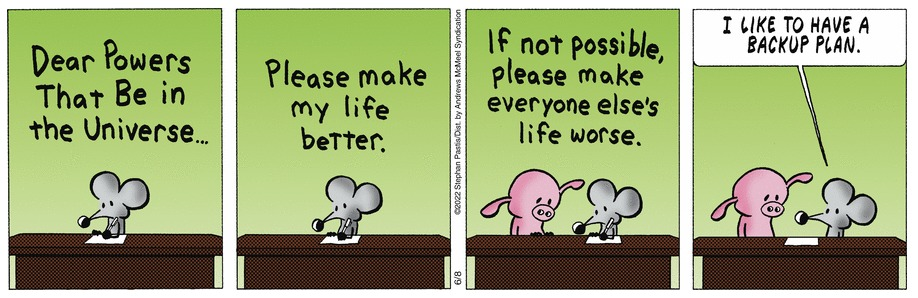
From an offshore energy policy standpoint, remember this:
Gulf of Mexico Lease Sale 257 was vacated on 1/27/2022 because DC Federal Court Judge Contreras ruled that BOEM failed to consider the “positive” effect that higher prices would have on reducing foreign consumption and the associated GHG emissions. Apparently the Court failed to consider that higher oil and gas prices would:
- increase energy poverty and make lives worse, particularly for the poor (is this environmental justice?)
- increase worldwide coal consumption and GHG emissions, most notably in India and China
The Administration chose not to appeal that decision, although API and the State of Louisiana have. It has now been 575 days since the last Federal offshore oil and gas lease sale.
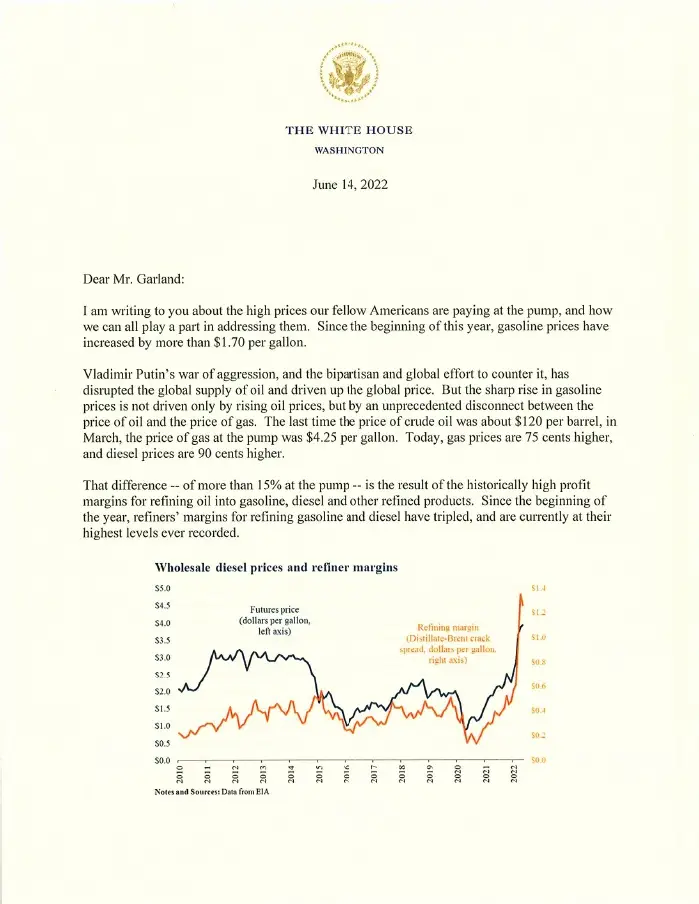
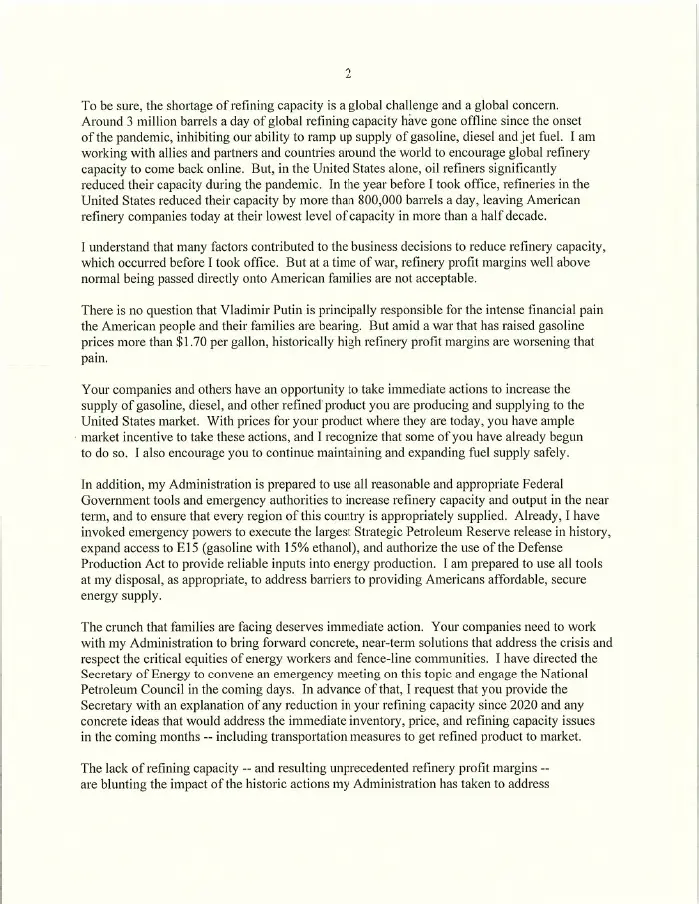
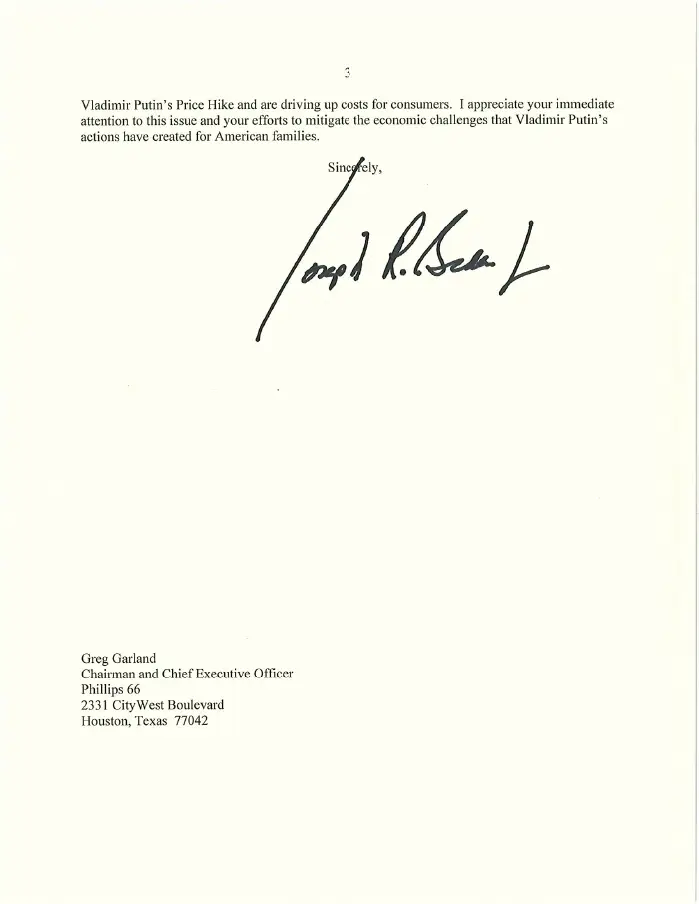
President’s letter to refiners – you be the judge
Posted in energy policy, tagged letter to refiners, President Biden, White House on June 15, 2022| 1 Comment »
How’s this for a water view? Eat your hearts out Floridians😀
Posted in Canada, tagged Ferryland, iceberg, iceberg alley, Newfoundland on June 15, 2022| Leave a Comment »
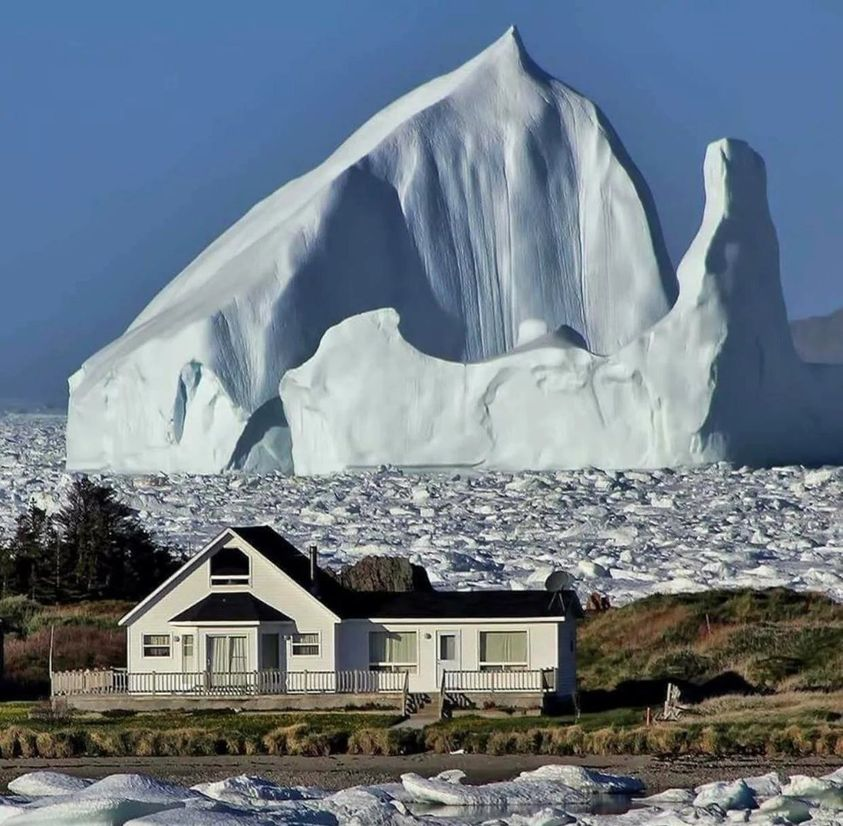
Far offshore from Ferryland (see map below), oil and gas operations are conducted in what are arguably the world’s most challenging conditions. The Grand Banks has been called the “North Sea plus icebergs,” and that may be an understatement.

Interesting Dan Yergin interview
Posted in energy policy, tagged Daniel Yergin, ESG, pipelines, Saudi Arabia on June 14, 2022| Leave a Comment »
Some quotes that I found particularly interesting in Dan Yergin’s Forbes Interview:
“We don’t have a physical shortage of natural gas in the U.S., we have a shortage of pipelines. It’s very hard to get any new major pipelines done. In fact, it’s somewhere between very hard, and impossible.”
“Some of the assumptions about how easy things would be [related to the energy transition] are turning out to not have been correct. I think there is some reassessment of ESG [Environmental, Social, and Governance investment] going on, and at the same time, many investors also want good returns. Therefore, they’re looking at the oil and gas sector in a way they weren’t looking at it a year ago.”
With regard to concerns about US government policy panic: “For instance, a ban on oil exports. First of all, if you banned product exports, it would actually send gasoline prices higher…. If limits were put on LNG exports, it would be a terrible shock to Western unity and Europe’s ability to stay the course.”
On Saudi Arabia: “I think the old relationship with the U.S. is over. China is the main, critical market for the Kingdom now….The Crown Prince has said that he wants Saudi Arabia’s Sovereign Wealth Fund to be the biggest in the world, and it is probably on the way to being that. He sees Saudi Arabia becoming very influential in the world’s economy, not only as an oil producer, but as a financial player.”
“The likelihood that there will be new Iranian oil coming onto the market is increasingly unlikely“
Norwegian strike appears to have been averted
Posted in Norway, tagged labor dispute, Norway, oil workers, strike on June 13, 2022| Leave a Comment »
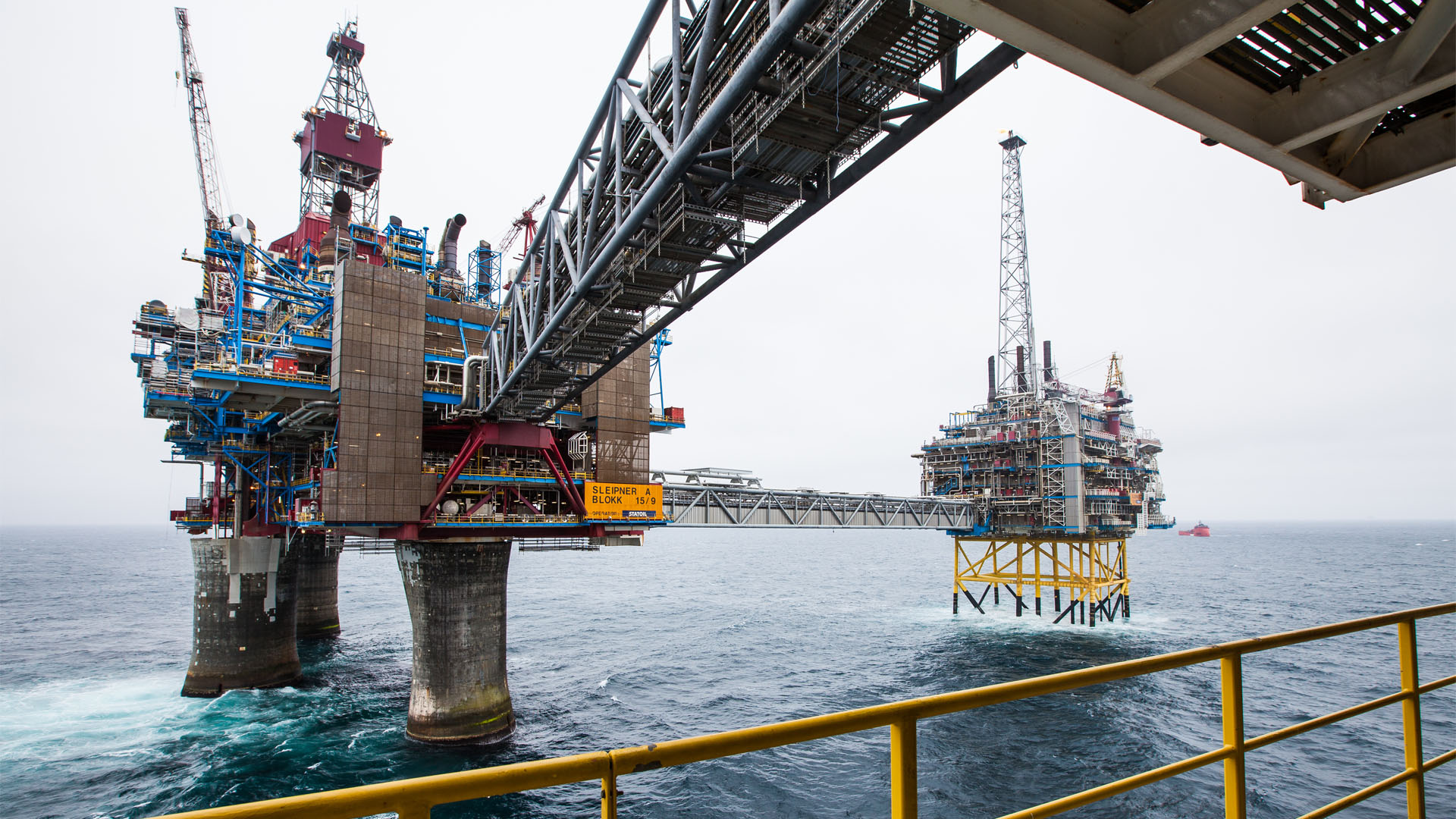
Norwegian offshore worker disputes tend to be resolved without major work stoppages, and fortunately that appears to be the case with the latest dispute. This would not have been a good time to take Norway’s 1.8 million BOPD and 11.5 BCFD of gas off the market, even briefly.
Excellent update on Gulf of Mexico incident trends
Posted in accidents, Gulf of Mexico, well control incidents, tagged BSEE, Gulf of Mexico, incident trends, Jason Mathews, safety alerts, violations on June 13, 2022| Leave a Comment »
Kudos to BSEE’s Gulf of Mexico Region for their timely safety alerts and comprehensive updates on offshore incidents, trends, and compliance issues. Their most recent update is linked below.
For the past 50 years. my main goal for US offshore operations has been a zero fatality year. Sadly, that goal has never been achieved and will not be achieved this year (see slide 15).
Many casualties are associated with activities that are not perceived to be of high risk. The message on slide 22 of Jason’s presentation is thus very important:
Perceived low risk activities can still result in impactful injuries. Continually risk assess the work being undertaken, no matter if it permitted or nonpermitted work.
Know your personal limits and stop before you reach your limit. Pause and ask for help before you are at your limit.
Jason Mathews, BSEE, 6/7/2022
Gulf of Mexico rig count down another tick
Posted in drilling, Gulf of Mexico, Offshore Energy - General, tagged Baker Hughes rig count, Gulf of Mexico, offshore drilling on June 10, 2022| Leave a Comment »
 Bud's Offshore Energy (BOE)