Feeds:
Posts
Comments

Archive for May, 2022

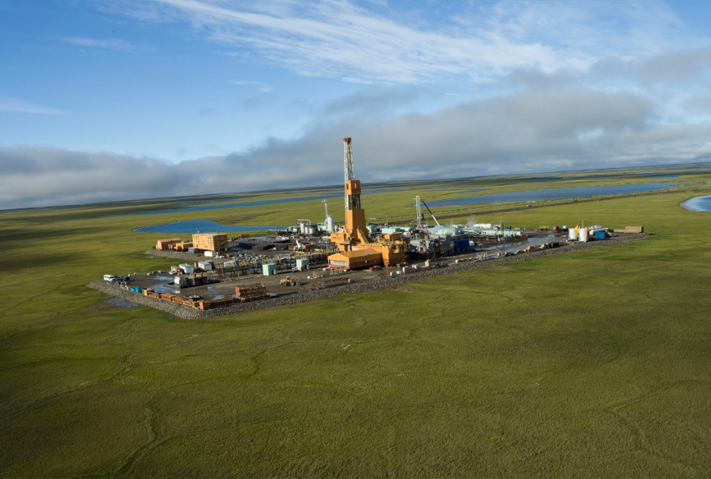
Alpine drill site, CP photo

In March, a gas release incident occurred while drilling a disposal well in the Alpine field on the North Slope of Alaska. While there were no injuries or environmental impacts, the investigation and findings will help minimize well construction risks during future operations. The report is attached.

Some comments:

  1. I like the way the report, related information, and all situation reports were posted in a timely manner on the Alaska Oil and Gas Conservation Commission (AOGCC) homepage. It’s refreshing that the AOGCC homepage is 100% substantive and completely devoid of the spin and propaganda you find on most government and corporate websites. (For comparison purposes, check out the Department of Energy and Department of the Interior homepages.)
  2. The ConocoPhillips (CP) incident report is concise, logically organized, and clearly written.
  3. The findings are consistent with the data, and the supporting figures are legible and understandable.
  4. Instead of blaming the crew or using the “human error” cop out for the leak-off test execution and subsequent monitoring issues, the report rightfully attributes those failures to company procedures and communications. This reflects well on CP’s understanding of the human and organizational factors that contribute to safety performance, and CP/AOGCC efforts to foster a strong safety culture. (Remember the shameful prosecution of well site leaders Bob Kaluza and Don Vidrine following the Macondo blowout.)
Read Full Post »

Through her research of Pennsylvania’s Marcellus Shale play, Lee found that highly concentrated lithium was found in the produced water (water produced as a byproduct during the extraction of oil and natural gas) along with produced natural gas and oil.

“We found lithium in the petroleum-based rock brines, which opens new pathways to address the shale plays as a substantial source of lithium, given that they are ubiquitous in the U.S.,” Lee said.

University of Houston

Read Full Post »

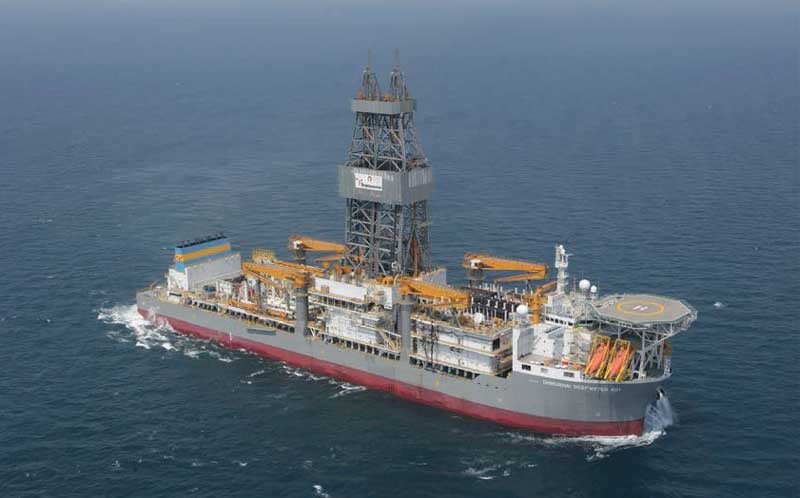
Transocean Deepwater Atlas

The drilling business, particularly the deepwater sector, has never been for the faint of heart, and the past few years have included the added stresses of COVID, negative oil prices, anemic exploration activity, and offshore leasing “pauses.” Transocean nonetheless managed to build two 8th generation drillships, the Deepwater Atlas and Titan, both of which are slated to operate in the Gulf of Mexico.

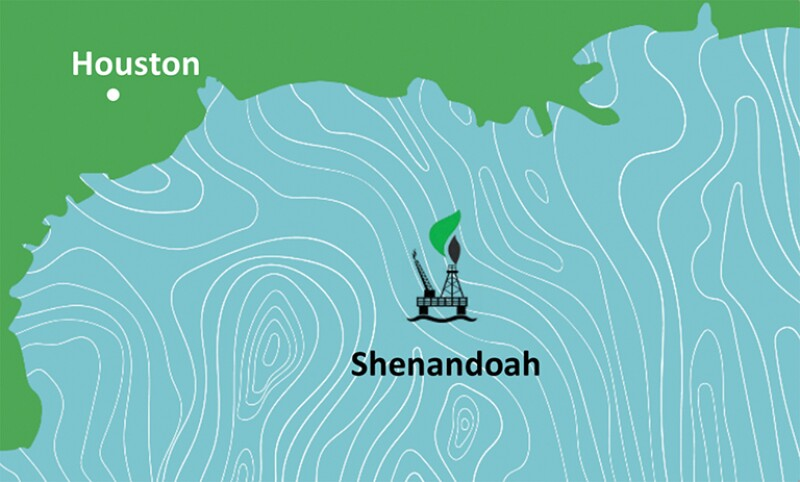
The Atlas will begin drilling for Beacon Offshore Energy (unrelated to the BOE blog 😀) in the Shenandoah field (almost heaven?😀) later this year. The Titan is expected to begin drilling for Chevron next year. The rigs will be outfitted with 20,000 psi blowout prevention equipment and will be well-equipped for the growing number of high pressure prospects in the Gulf. Here is Transocean’s promotional video for the two rigs.

Both Beacon and Chevron fared well on our Gulf of Mexico scorecard. A bit of information about Beacon (BOE):

  1. Wholly owned by funds managed by Blackstone Energy Partners.
  2. CEO Scott Gutterman was previously the CEO of LLOG.
  3. There are a number of related investment partnerships under the Beacon umbrella and they are often joint lease owners.
  4. Per BOEM data, BOE has interest in 11 Gulf of Mexico leases.
  5. The company has an excellent compliance record: 12 facility inspections (presumably all were drilling units) resulted in only 1 INC (violation).
  6. Per BSEE, Beacon had 22 well starts since 2008. (Mystery: While the Blackstone and Beacon websites indicate that the company was formed in 2016, BSEE’s online borehole file shows 10 well starts prior to that year with the exact same company name. Presumably, the borehole file data are in error because BOEM data do not show any Beacon lease interest prior to 2018.)
  7. Beacon bid on one tract in Lease Sale 257 (Nov. 2021) and was the sole bidder (sale was voided by DC Federal Court).
  8. Beacon bid on 3 tracts in Sale 256 (Nov. 2020) and was the high bidder on one.
  9. Beacon acquired interest in 2 leases in Sale 254 (March 2020), 7 in Sale 252 (March 2019), and 2 in Sale 251 (Aug. 2018)
  10. In February 2022, Blackstone reportedly advised clients that they would no longer invest in oil and gas projects. Presumably, that doesn’t affect the Beacon operations (or perhaps the folks at Blackstone have come to their senses 😀).

Read Full Post »

Not really, but current economic and energy security realities doomed a bill to prohibit drilling and production in State waters. Strong quotes from bill opponents:

“SB 953 was held because it didn’t work — it was going to cost the state billions of dollars for a symbolic victory,” Andrew Meredith, president of the State Building and Construction Trades Council of California, said in a statement. “The California Senate is rightfully more concerned with actually improving the plight of workers and our environment than chasing headlines.”

Politico

“I think most legislators understand that every barrel of oil we don’t produce here under our strict environmental rules must be imported by foreign tankers floating offshore in our crowded ports from Iraq, Saudi Arabia, or the Ecuadorian rainforest,” California Independent Petroleum Association CEO Rock Zierman said in a text message.

Politico

Read Full Post »

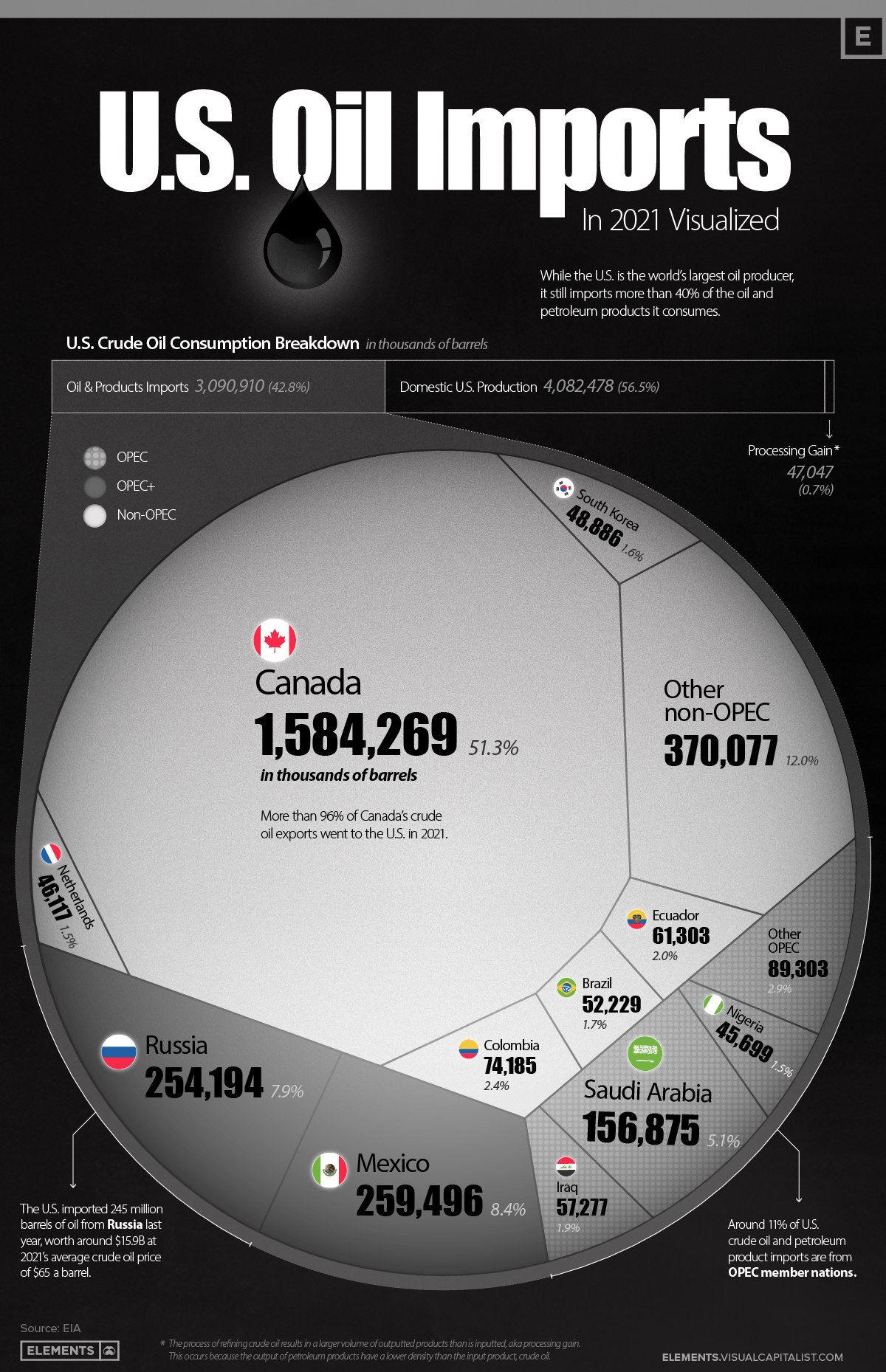
This graphic uses 2021 EIA data to compare the volumes of crude oil and petroleum products imported by the US from other countries.

Read Full Post »

WASHINGTON — During testimony before the U.S Senate Committee on Energy and Natural Resources today, Secretary of the Interior Deb Haaland confirmed that, despite delays in implementation from the previous Administration, the Interior Department will release the Proposed Program – the next step in the five-year offshore energy planning process – by June 30, 2022, which is the expiration of the current program. A Proposed Program is not a decision to issue specific leases or to authorize any drilling or development.

DOI

Here is the timeline for the 5 Year Leasing Program (light blue).

A sale this year under the new program is thus highly unlikely. The process will no doubt be delayed even further by litigation. As we have said previously, the only hopes for a sale this year are a successful appeal of Judge Contreras’s Sale 257 ruling or successful congressional action (unlikely but possible under the circumstances).

Read Full Post »

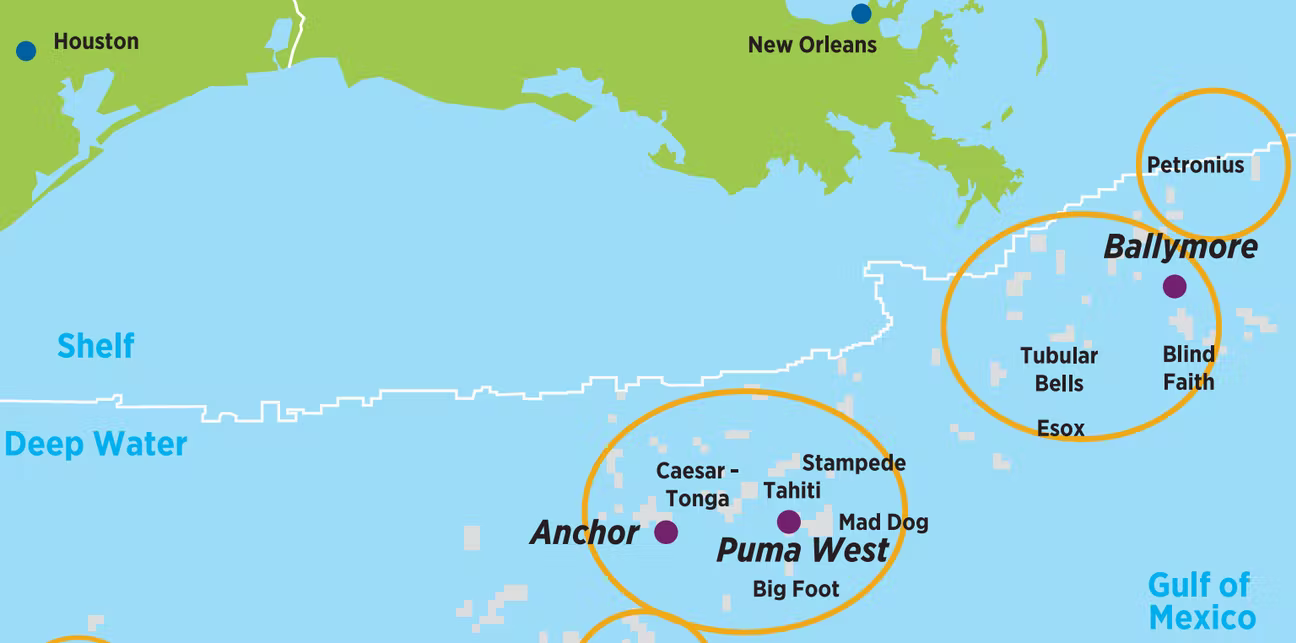
Ballymore will be produced with 3 seafloor wells (6540′ water depth) that are expected to transport 75,000 bopd via a three-mile subsea tieback to Chevron’s Blind Faith floating production unit. Per BOEM, the Ballymore field was discovered in December, 2017. First production is expected to be in 2025.

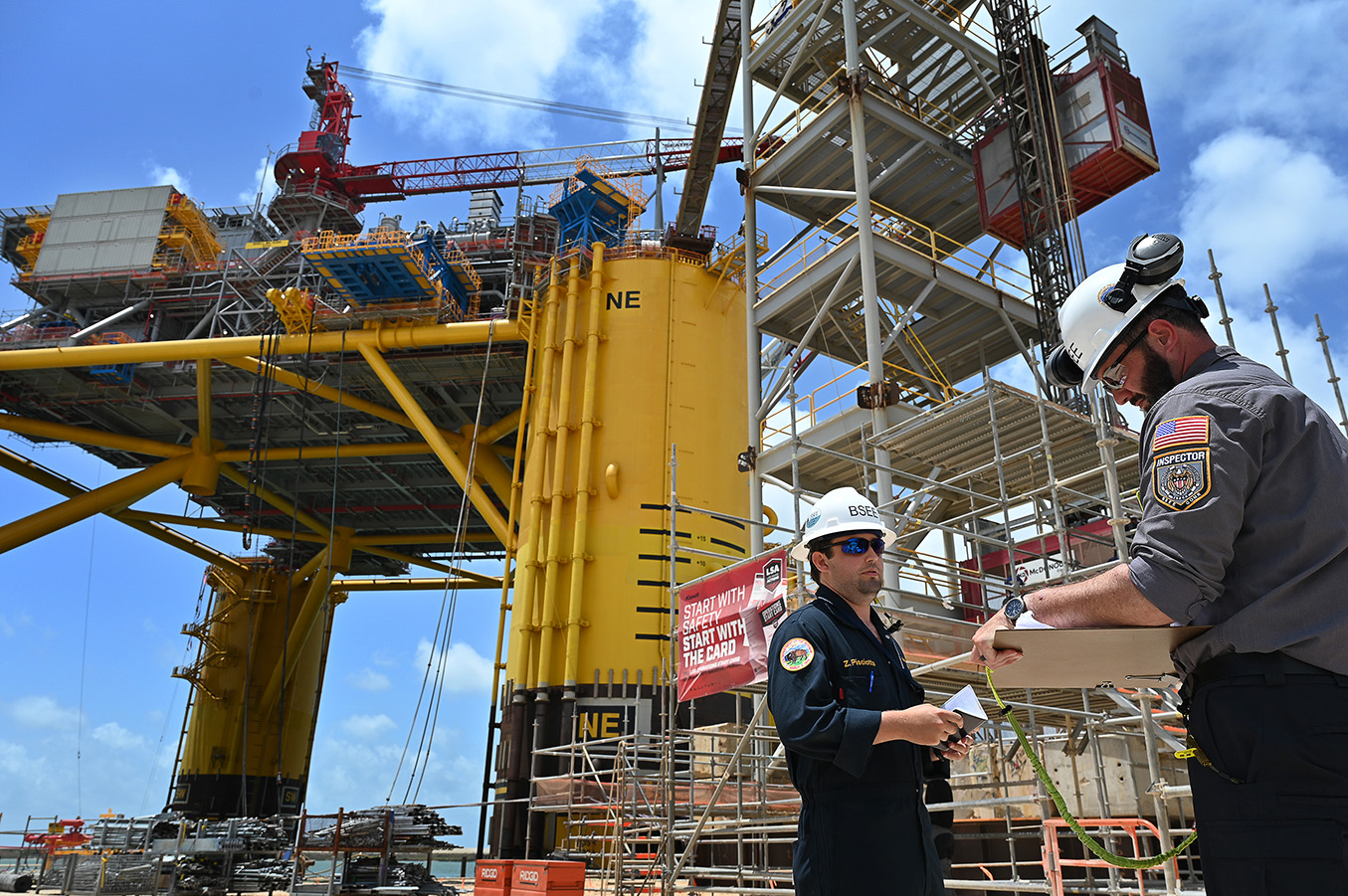
Pre-production inspection, Shell Vito
Vito

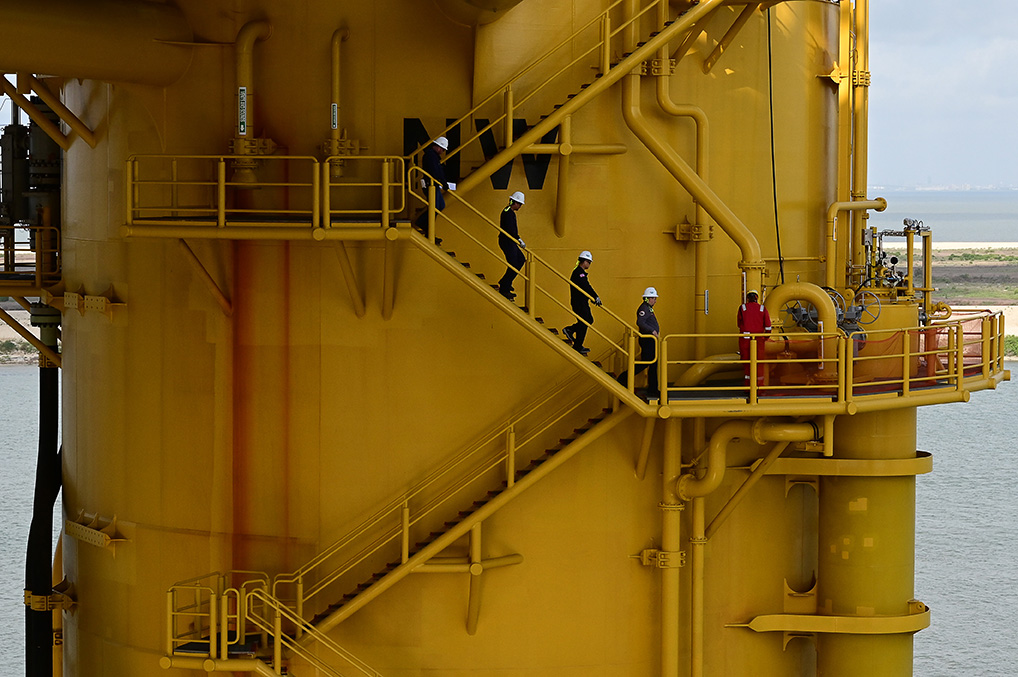
Shell’s Vito floating production unit was inspected last week by BSEE personnel. Vito is expected to begin production later this year or early next year and produce up to 100,000 bopd. Per BOEM data, the Vito field was discovered in 2010.

As these projects demonstrate, deepwater development takes time and is often dependent on related projects on other leases. This is why future production is dependent on regular, predictable lease sales.

Read Full Post »

  1. Gulf of Mexico Lease Sale 257 was vacated on 1/27/2022 because DC Federal Court Judge Contreras ruled that BOEM failed to consider the “positive” effect that higher prices (the logical result of lower production) would have on reducing foreign consumption and the associated GHG emissions. Think about that in the context of the timing and magnitude of this ruling. Why did the court fail to consider the other logical consequences of tight oil supplies and higher prices – increased coal consumption and energy poverty? To avoid the latter, India, the world’s second largest coal producer and consumer, is boosting coal production to record highs.
  2. The Administration, which had only proceeded with Sale 257 because a prior court ruling invalidated the President’s leasing pause, chose not to appeal the decision by Judge Contreras. Why appeal a decision that is consistent with your agenda?
  3. The legislatively mandated 5 year leasing program, without which no Federal offshore leases sales may be conducted, expires at the end of June. This is why last week’s cancellation of the 3 remaining sales in the current 5 year program was rather meaningless. Despite bipartisan congressional support for prompt completion of a new 5 year plan, this does not appear to be a high priority for the Department of the Interior. The only hope for a sale this year might be a successful appeal by Lousisiana and API of Judge Contreras’s Sale 257 ruling.

Read Full Post »

BOE was troubled by this incident and the contractor’s statements that followed.

BSEE has posted a strong safety alert.

The BSEE investigation concluded that the operator and contractor representatives failed to promptly start the Temporary Abandonment (TA) procedures.

BSEE’s investigation report provides complete details on the incident.

Globetrotter II

Read Full Post »

From Reuters article:

  • bp: Only 15% of shareholder votes backed a call for the company to accelerate its energy transition, compared with the 21% in favor in a similar vote last year.
  • Oxy: Only 17% of investors backed a call for emissions-reduction targets. (I wonder how Buffett voted 😀)
  • Marathon: 16% supported a measure calling for the company to report on how its transition plans affected workers and communities
  • ConocoPhillips: 42% supported an emissions-reductions targeting measure vs. 58% last year.

Exxon, Shell, and Chevron are on deck!

Read Full Post »

« Newer Posts - Older Posts »