Feeds:
Posts
Comments

Archive for October, 2021

Scandpower study (2004) for MMS:

Overall Conclusion
Currently, there are no regulations that require removal of subsea pipelines if they are not an obstruction to navigation. Based on the high costs for removing the pipelines, the personnel risk involved in the removal operations, the negative effect on overall emissions to air and the very limited reduction in discharges to sea, the overall conclusion is that it is better to leave the pipelines in place. If possible, re-use of the pipelines is the optimal solution.

Environmental Impacts
The impacts on the environment and the marine environment from pipelines and cables left in place were found to be very minor. Conversely recovery operations will have a negative impact on the environment. The number of vessels required for removal operations and long operating hours will result in considerably more releases and emissions than leaving the pipelines in place. In addition the energy savings benefit from recycling the pipeline materials will be exceeded by the energy required to remove the pipelines and separate the materials.

Pipeline Decommissioning: Environmental Impact Metric (per Scandpower)

Remove/
recycle
Remove/
landfill
Reuse or
preserve
Bury Abandon
in place
EnergyHighHighLowModerateNone
EmissionsHighHighLowLowLow
DischargesLowLowModerateLowLow
HabitatLowLowModerateLowLow
AestheticsLowModerateNoneNoneNone
Resource
Utilization
HighNoneHighNoneNone
LitteringLowLowLowLowModerate

The “Habitat” impacts row seems questionable. Pipeline removal certainly has a greater impact on habitat than abandonment in place, particularly for buried pipelines.
Read Full Post »

Read Full Post »

A: Not according to this 2012 INGAA study:

Findings of INGAA Study:

  1. 85% of pipeline incidents reported to PHMSA from 2002-2009 occurred irrespective of the age of the pipeline, with just 15% related in some way to the age of the pipeline.
  2. The properties of the steels which comprise natural gas pipelines do not change with time; that is, pipe does not “wear out.”
  3. The fitness of a pipeline for service does not necessarily expire at some point in time.
  4. The integrity of those pipelines for which the fitness for service may degrade with the passage of time can be assessed periodically. Timely repairs – and other mitigation efforts – based on those assessments will ensure the pipeline’s continued fitness for service.
  5. A well-maintained and periodically assessed pipeline can safely transport natural gas indefinitely.

Read Full Post »

This quote from an AP article is consistent with the view expressed here after our review of the inspection reports for the Beta Unit (Platform Elly to shore) pipeline. Further per the AP article:

Safety inspections in 2015, 2017 and 2019 found anomalies in Amplify’s pipeline, including instances of metal loss and three dents that were previously repaired. But several experts who reviewed the reports said the metal loss — which can be a sign of a pipe wall thinning as it corrodes with age — was relatively minor. The dents were not in the same area as the spill.

AP

Read Full Post »

Maersk Drilling awarded contract extension to drill world record well in Angola

The Ondjaba-1 well will be drilled at a new world record water depth of 3,628 m. The current world record is 3,400 m, set by Maersk Voyager’s sister drillship Maersk Venturer when it drilled the Raya-1 well for TotalEnergies offshore Uruguay in 2016.

Maersk

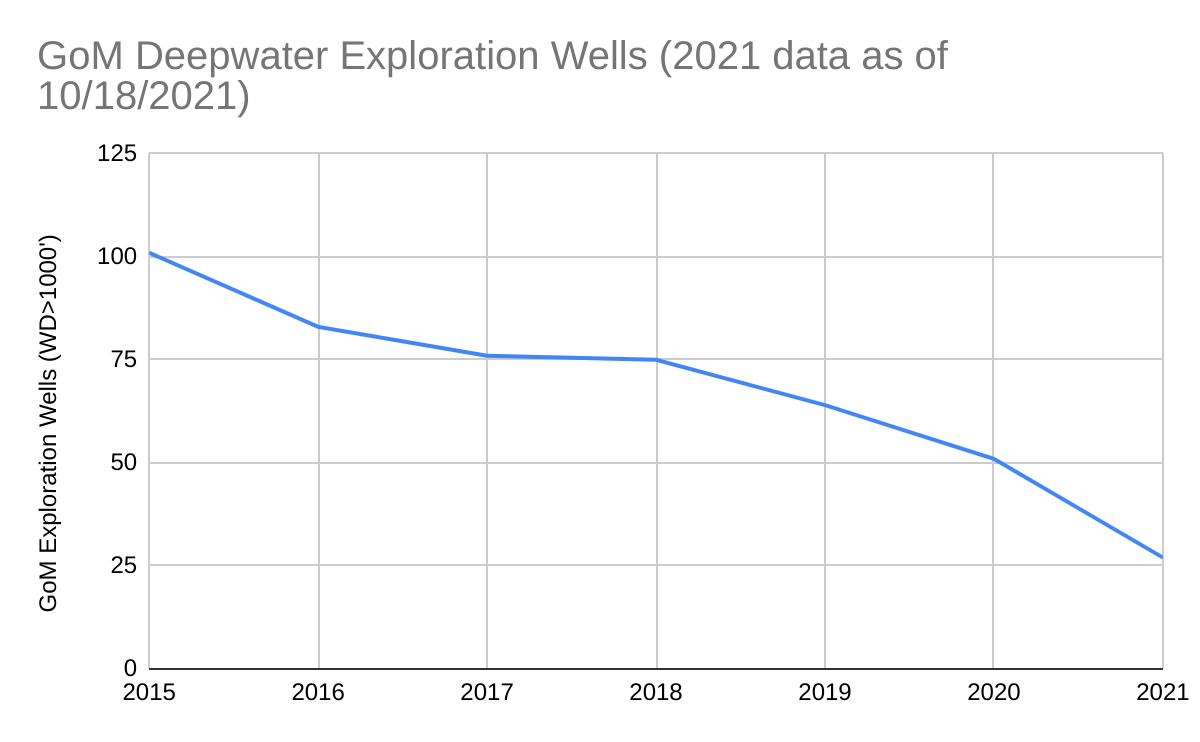
The record US water depth well (3051m/10,011′) was drilled in 2003 by Transocean for Chevron in Alaminos Canyon Block 951 the Gulf of Mexico. The deepest well drilled in US GoM in 2021 YTD was for Shell in 9352′ of water in Alalminos Canyon Block 815.

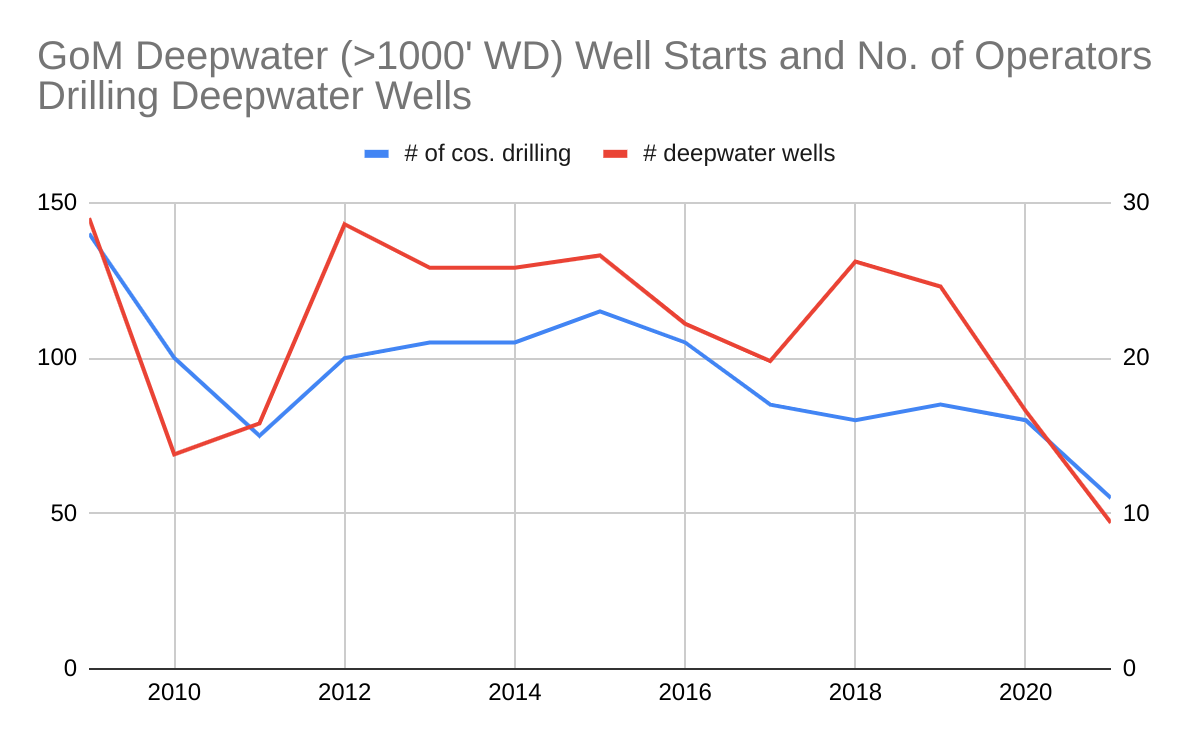
While brief celebrity space flights are major news stories, these economically important and technical challenging accomplishments by the offshore industry receive very little attention even as oil prices pierce the $82/bbl mark.

Read Full Post »

Aqueos 2020 external (ROV) inspection:

The 16” oil pipeline was found to be in good condition with no visible damage or anomalies.
One (1) CP test point that was installed in 2014 was found to be displaced from its location on the pipeline (this was also noted in the 2018 survey), and no damage was noted at the location (Fix #101).

Aqueos inspection report, May 2020

Pipe‐to‐electrolyte potential values recorded were:
 ‐ 921 millivolts (mV) on the 6” gas pipeline
 ‐ 910 millivolts (mV) on the 10” water pipeline
 ‐ 963 millivolts (mV) on the 10” gross fluids pipeline
 ‐ 906 millivolts (mV) on the 16” oil pipeline

As the NACE Standard SP0169‐2013 “Control of External Corrosion on Underground or Submerged Metallic Pipelines” criterion is ‐800 mV, all readings indicate that Cathodic Potential is within specifications.

Aqueos inspection report, May 2020

Metal loss data from Baker Hughes internal inspection (12/2019):

Depth of Metal LossExternal AnomaliesInternal Anomalies
30+%00
20-29%10
10-19%00
total10
Baker Hughes In-line Inspection Report, 12/30/2019

The metal loss findings are consistent with those reported in a previous internal inspection (Baker Hughes, 11/2017).

BSEE has general authority to require pipeline inspections under 30 CFR 250.1005. BSEE, the State Lands Commission, and the operator appear to have implemented an effective inspection program for the Beta Unit.

Read Full Post »

Establishing an OSHA rule takes an average of 7 years, and the process has ranged from 15 months to 19 years between 1981 and 2010, the Government Accountability Office (GAO) reported to Congress in 2012

EHS Daily Advisor

OSHA’s long rule promulgation timeframes are actually quite typical for US regulatory agencies. In some cases, employees work on a single rule for most of their careers! On the plus side, the rigorous internal and public review processes help prevent arbitrary and capricious actions by regulators. However, the long promulgation process often results in regulations that are outdated before they are published. As a result, the entire process repeats and you have a regulatory “do loop.”

To avoid the daunting rulemaking process, regulators often resort to issuing notices, letters, or conditions of approval that accomplish some of their objectives. However, these actions are not always consistent with the rule promulgation requirements of the Administrative Procedures Act and other directives, and are less likely to survive legal challenges.

The optimal approach is for the regulator to establish clear objectives for the operating companies and a schedule for achieving those objectives. This approach was demonstrated following the 2005 hurricane season (Katrina and Rita) when numerous mooring system and other stationkeeping issues were identified. In a face-to-face meeting, Department of the Interior Secretary Gale Norton outlined her concerns and informed offshore operators that there would be no drilling from moored MODUs or jackups during hurricane season until the issues identified during Hurricanes Katrina and Rita were addressed.

The collaborative effort that followed was a resounding success. In addition to addressing station keeping concerns, a comprehensive list of hurricane issues was developed. Industry and government then worked together to assess mitigations and develop new standards and procedures. The essential MODU standards were completed before the 2006 hurricane season, and all of the related concerns were effectively addressed prior to the 2009 hurricane season. Had the government elected to promulgate regulations to address all of these issues, much of this work would have never been completed.


Read Full Post »

Industry environment plans

Good read for you inspection and regulatory policy nerds. (I know you’re out there! 😃). The draft policy looks very good at first glance.

If (like me) you can’t help yourself, here is the link for providing feedback.

Read Full Post »

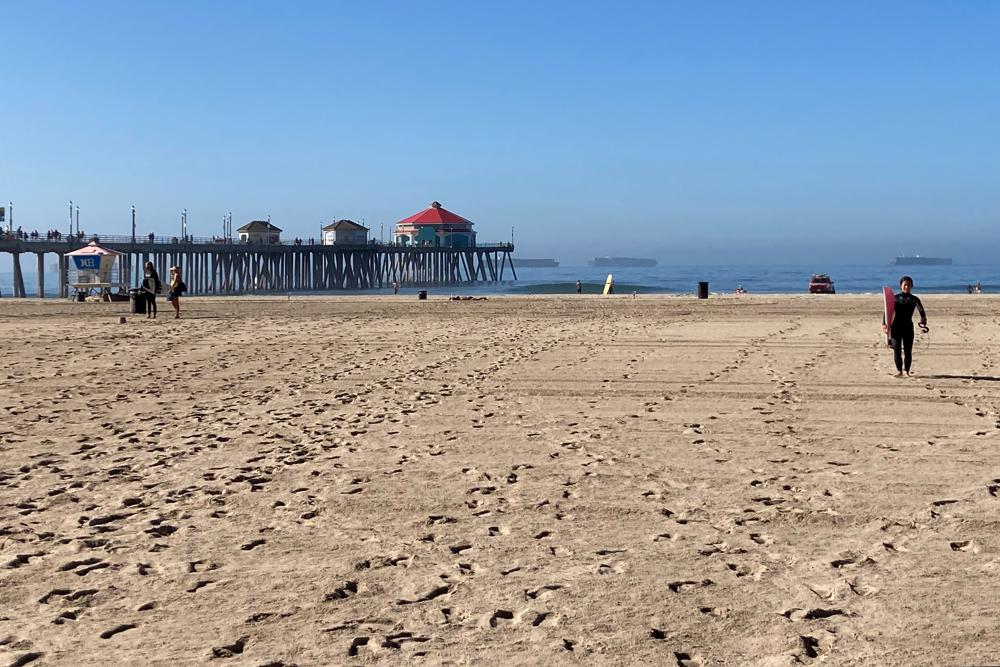
Surfers leave the water after lifeguards enforce the closure of the ocean in Huntington Beach, Calif., Sunday, Oct. 10, 2021. The water has been closed to surfing and swimming for a week since an offshore oil pipeline leaked crude into the water off the coast of Orange County. (AP Photo/Amy Taxin)
AP Photo/Amy Taxin

Huntington Beach reopened:

Matt Harty, a 61-year-old retired construction supervisor from the nearby community of Seal Beach, said he was glad to return to the waves in Huntington Beach with other early morning surfers. He said he’s seen oil spills before and this one didn’t seem that bad, and in fact, the beach looks great.

“This is the cleanest I’ve seen the beach in years, right, because there’s been nobody here for a week,” Harty said. “I think they cleaned it up really well.”

AP 10/11

While the size of the spill isn’t known, the Coast Guard on Thursday slightly revised the parameters of the estimates to at least about 25,000 gallons (95,000 liters) and no more than 132,000 gallons (500,000 liters).

AP 10/9

Comment: Including a lower estimate that is 80% less than the initial estimate is hardly a slight revision, especially when this lower limit is based on an assessment of pipeline data.

So far the impact on wildlife has been minimal – 10 dead birds and another 25 recovered alive and treated – but environmentalists caution the long-term impacts could be much greater.

AP 10/9

Comment: One gets the sense that some anti-production activists are disappointed that the spill is not the environmental disaster needed to end oil and gas production in U.S. offshore waters, that the pipeline operator is (at most) only partially responsible, and that the primary regulators have been doing their job despite outdated regulations and jurisdictional uncertainty.

So far, two proposed class-action lawsuits have been filed on behalf of a disc jockey who runs beachfront events in Huntington Beach and a surf school that operates in the city known as “Surf City USA.”

ABC News

No comment 😃

Read Full Post »

Look at the US Dept. of Energy homepage and I think you’ll get a better sense of the imbalanced energy policies, in the US and elsewhere, that are contributing to the emerging energy crisis.

There isn’t a single mention of oil or natural gas on the Dept. of Energy homepage. DOE’s priorities are “Combating the Climate Crisis” (embellished with a satellite image of Hurricane Andrew), “Creating Clean Energy Union Jobs” (other energy jobs aren’t important?), and “Promoting Energy Justice.” With regard to the latter, how is driving up energy prices “energy justice?” How is importing more of the oil that we consume “energy justice.” Affordable energy has increased economic opportunities for all and enabled us to better protect our environment. In that regard, this Petr Beckmann slide holds true:

Read Full Post »

« Newer Posts - Older Posts »