Feeds:
Posts
Comments

Archive for October, 2010

There is tremendous benefit from collaboration between governments and between industry and governments working together on a global scale. Half of the remaining oil and gas resources are located offshore, and the demand for energy continues to grow. While each country may have unique societal demands that must be addressed, we also share many common technical and environmental challenges as we continue to explore the deep water. Carolita Kallaur, 2001, London
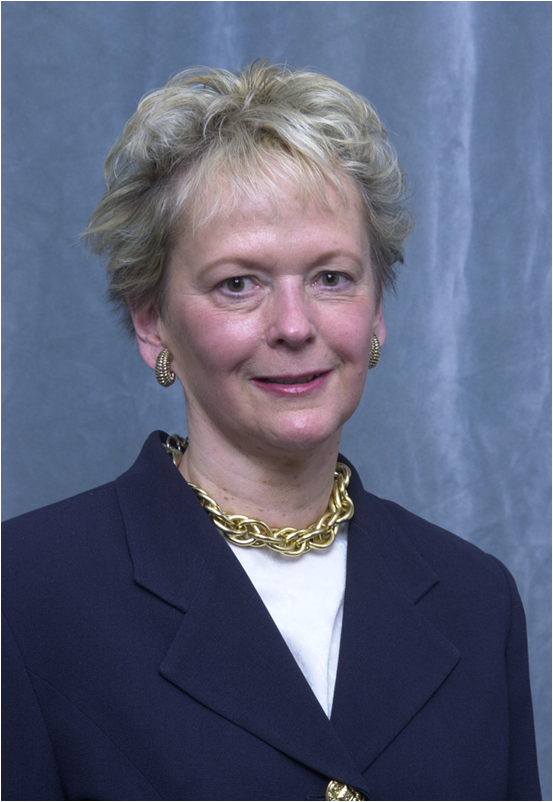
Carolita Kallaur

Carolita Kallaur’s words ring stronger today than ever, and the need for international cooperation on offshore safety issues has never been clearer. Carolita, who directed the US offshore oil and gas program at the end of her outstanding career with the Department of the Interior, was the spirit of offshore safety.  Her highest priorities were improving international standards and working together on safety and pollution prevention matters, and she worked tirelessly to promote these objectives.

Carolita also believed in recognizing outstanding organizations and individuals who demonstrated exceptional commitment to safety achievement.  She was instrumental in establishing an awards program in Houston that honored these outstanding leaders.

Shortly after she retired in 2002, Carolita contracted amyotrophic lateral sclerosis, an incurable nervous system disorder that is commonly known as ALS or Lou Gehrig’s disease.  She died just before Christmas in 2003. Carolita’s indomitable spirit lives on with an awards program that honors outstanding offshore safety leaders. These awards were first presented at the International Regulators’ Offshore Safety Conference in London in 2005, and were again presented at the second conference in Miami in 2007.  The International Regulators’ Forum has completed its latest round of deliberations, and will again be presenting Carolita Kallaur Awards at the Vancouver conference on 18 October.

I look forward to joining international leaders in honoring Carolita’s legacy and recognizing the deserving winners of these prestigious safety awards.  See you in Vancouver!

Read Full Post »

Decision Making Within the Unified Command

The Use of Surface and Subsea Dispersants During the BP Deepwater Horizon Oil Spill

The Challenges of Oil Spill Response in the Arctic

The Amount and Fate of the Oil


Read Full Post »

Absent live streaming or television, the Times Picayune seems to be providing the best coverage of the Coast Guard – BOEM Macondo hearings in New Orleans.  While the legal sparring has attracted the most press interest, two other items in this Times Picayune article caught my attention.

Part of Keplinger and Fleytas’ duties was to monitor indicators of gas detectors and alarms from the bridge. Keplinger was busy showing visiting BP and Transocean officials a video-game-style simulator for 45 minutes to an hour before the explosions, he said, but he insisted that Fleytas was keeping him abreast of readouts of the rig’s systems.

Comment: Just as school teachers shouldn’t have been flying in the space shuttle, “tourists” shouldn’t have been visiting a complex drilling operation when the crew was in the process of setting production casing and suspending a potentially dangerous well. While the visit was well-intended, the last thing the crew needed on that night was to be distracted by a group of corporate executives.  The distraction they caused was comparable to driving on a dangerous highway while getting text messages from your boss. Visiting windows should be limited to relatively low-risk operations (e.g. when drilling ahead prior to reaching target intervals), and these windows should immediately close if complications develop.

Keplinger flashed some anger at Capt. Curt Kuchta, captain of the Deepwater Horizon rig, during his testimony. He noted that a fellow rig worker, Chris Pleasant, had to ask Kuchta three times whether to disconnect the rig from the wellhead before he got the go-ahead.

Comment: One of the benefits of drilling from a floating and dynamically positioned rig is the ability to move off location if trouble arises.  The failure to disconnect the riser and move away from the well at the first indication of flow contributed significantly to the tragic consequences.  The technical and human factors that prevented such a disconnect must be thoroughly examined.

Further comment: The absence of live streaming of these important safety hearings is inexcusable.  If a senator or governor were testifying, I expect that the cameras would be there.

Read Full Post »

  • C-SPAN has opted not to cover this weeks BOEMRE – Coast Guard Macondo hearings.  Instead, they are presenting recordings of political rallies, assorted senatorial and gubernatorial candidate debates, and similar fare.  In other words, all three channels will be dedicated to the usual political posturing that already receives non-stop national coverage, and the investigation into one of the more significant accidents in US history will be ignored.
  • Why does it take 3 weeks to post the transcripts of these hearings? The Australians posted each Montara transcript within hours after the day’s session ended.

Read Full Post »

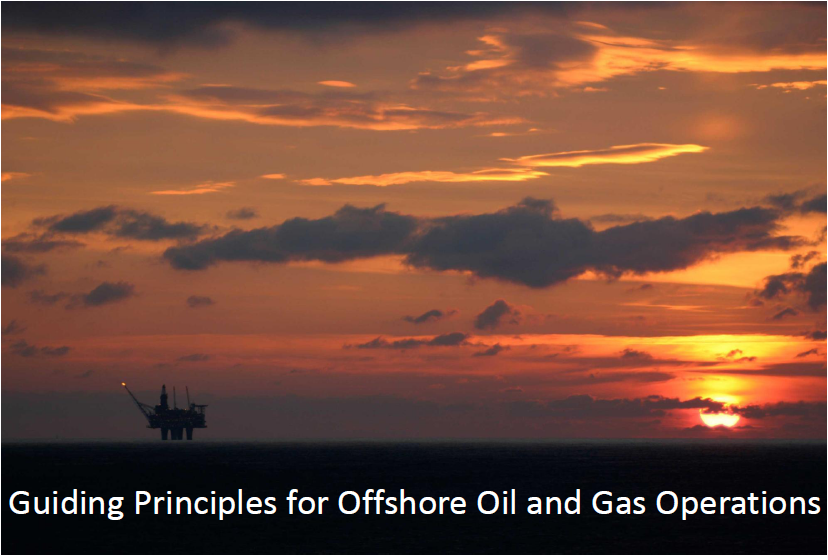
While unveiling their “Guiding Principles,” Kathryn Klaber, Executive Director of the Marcellus Shale Coalition, said this:

We’re all in this together. We’re all only as good as whoever had a mistake this morning.

That this statement also applies to offshore oil and gas operations should now be painfully obvious to all.  Each company’s success is dependent upon every other company’s performance, not just in your region, but anywhere in the world.  The offshore industry needs to clearly and succinctly describe its universal commitment to safety and environmental protection.  Sweeping principles that guide all operations should be developed and endorsed by every operator and contractor.  The Marcellus document is a good starting point, but more details may be needed. Commitments to sharing and analyzing verified incident data, participating in standards development, assessing new technology, and sponsoring safety and environmental research should be included. Now is the time to act.  Who will provide the regional and international leadership?

Read Full Post »


Boudreaux


Some Cajun humor from a former colleague :):

Boudreaux suddenly quit drinking, took a bath, quit chasing women, quit his poker games and stopped laying around. He started cutting the grass around the church, even painted it and was faithful to be first to attend on Sundays! Father Thibodeaux asked him what about dis wonderful change that had done overtook him. Boudreaux explained, ” I heard “Crisis in the Gulf” and if He’s dat close, I wanna be good to go!

Read Full Post »

Jane Cutler, CEO of the National Offshore Petroleum Safety Authority, makes important comments on leadership in this interview.

I’m privileged to work with some great people who are passionate about improving safety. This role within NOPSA provides me with a great opportunity to make a difference and allows me to foster a really proactive work culture, removing obstacles that make it harder for people to do their work well.

Almost everyone involved with offshore safety is passionate about their work and wants to make a difference.  Unfortunately, they are often frustrated by administrative and organizational processes that prevent them from identifying and addressing important safety issues in the most effective and efficient manner.  While there has been much post-Macondo talk about safety policy, there has been little discussion about the organizational constraints that stifle initiative and creativity within regulatory programs.  The focus should be on enabling bright and dedicated people to create and sustain an optimal regulatory environment for safety achievement by the operating companies and their contractors.

Read Full Post »

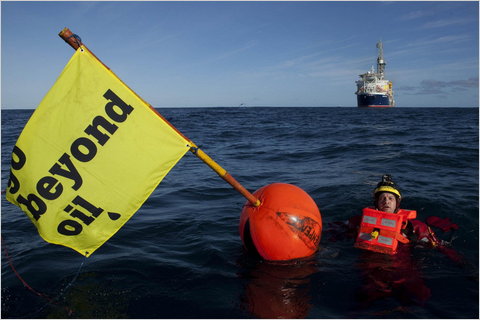
Greenpeace Photo

Despite protests, the UK has approved Chevron’s exploratory well in 1640′ of water west of the Shetland Islands.

It was a choice between producing oil and gas here in U.K. waters, where we have one of the most robust safety and regulatory regimes in the world, with all the economic benefits that will bring, or paying to import oil and gas from elsewhere. UK Department of Energy and Climate Change statement

It’s pretty hard to argue with that logic.

Read Full Post »

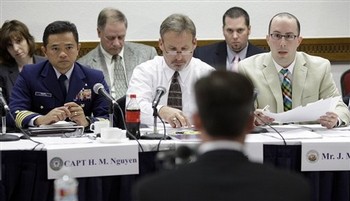
Capt. Hung Nguyen, David Dykes, and Jason Mathews question the witness. Sylvia Murphy and Kirk Malstrom monitor attentively from the 2nd row.

The panel that is most closely investigating the technical and operational aspects of the Macondo blowout reconvenes on Monday morning at 0800 CT in New Orleans.

I would assume that one of the CSpan stations will be covering the hearings, but their broadcast schedule for next week has not yet been posted.

Read Full Post »

Scarabeo 9

According to the Miami Herald an Italian rig, the Scarabeo 9, will drill the long-awaited exploratory well offshore Cuba.  The article indicates that the new-build rig is expected to arrive in Cuba late this year.

Per Oil and Gas Interntional:

The Scarabeo 9 embodies the latest technology for deepwater drilling operations and is capable of drilling in waters 3,600 meters in depth. Expectations are it will mobilize to Cuban waters during the second or third quarter of 2011 and commence drilling during the third or fourth quarter. (note: the Miami Herald article projects an earlier arrival). Repsol holds the six blocks in the Cuban sector of the Gulf of Mexico in a production-sharing agreement with Union Cubapetroleo (Cupet), the Cuban national oil company. The concession encompasses Blocks N25, N26, N27, N28, N29, and N36, a combined area of some 10,200 sq km along the island’s northwest coast. Repsol is the operator of the six blocks with 40% interest in partnership with Statoil, holding 30% and Oil and Natural Gas Corporation (ONGC) with the remaining 30%.

Read Full Post »

« Newer Posts