Feeds:
Posts
Comments

Archive for September, 2010

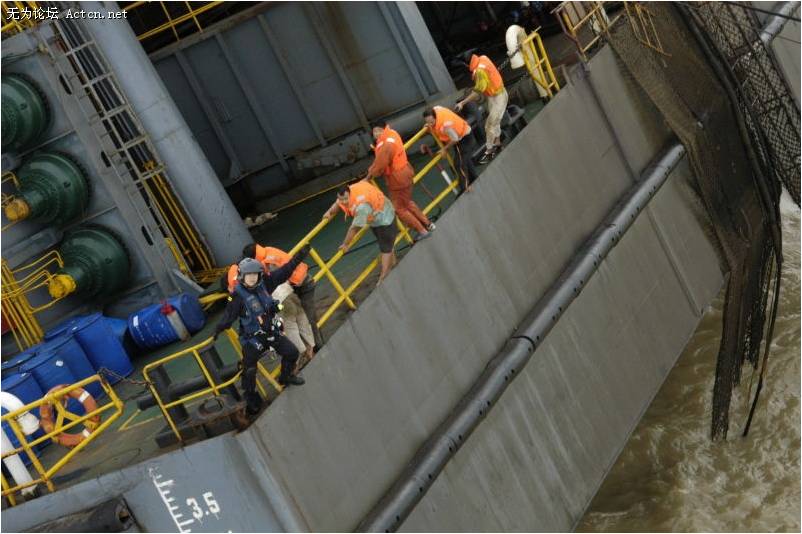
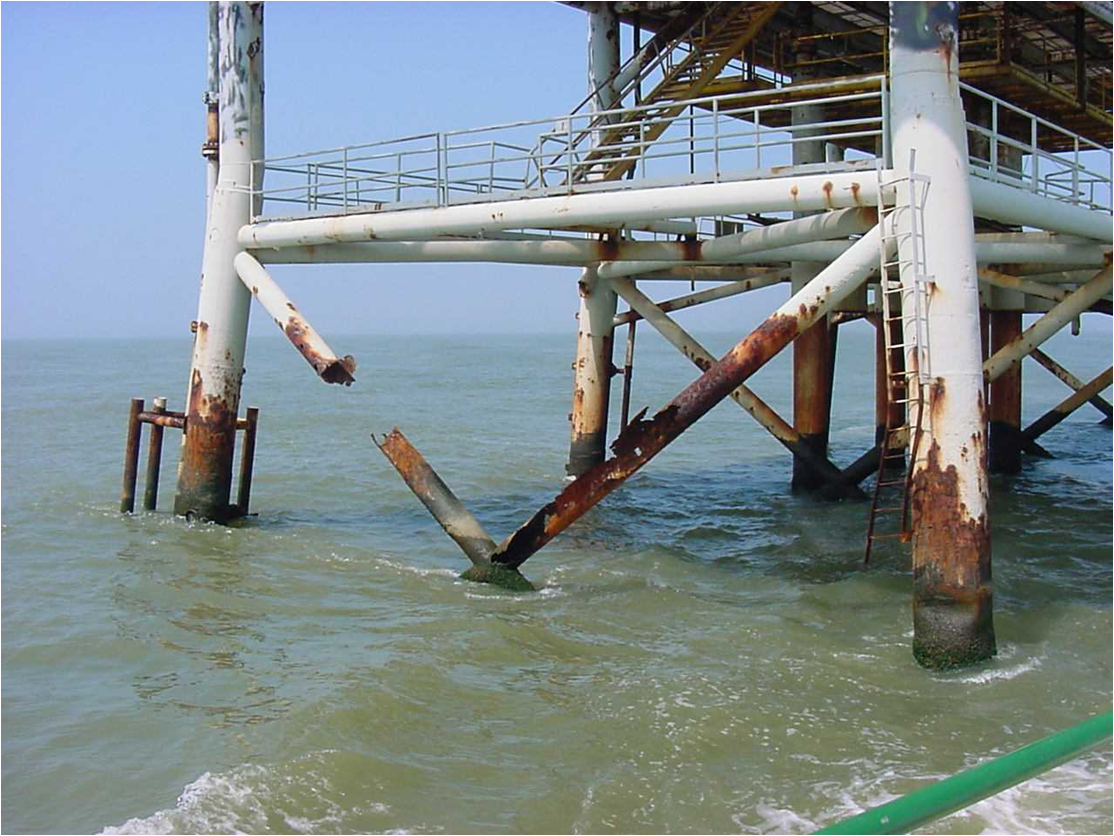
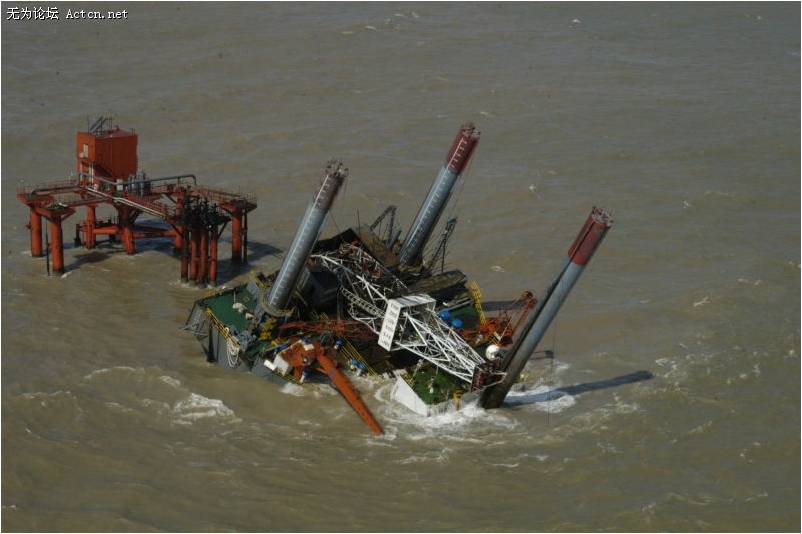
BOE received these pictures of a jackup rig failure offshore China.  The rig may have been working at the well platform that is also pictured.  Sinopec reported a drilling platform accident during a recent typhoon. Apparently, these are pictures of that accident. We assume that some combination of hull inundation, wind forces, and foundation failure caused the jackup to topple.  Two workers were reported to be missing.

A lot of work has been done in recent years to address jackup failures during hurricanes, including this important study by Malcolm Sharples. If we have any readers in China, we encourage them to advise Sinopec about these reports. We also hope that representatives from China are able to join us at the International Regulators’ Offshore Safety Conference in Vancouver to discuss these and other important offshore safety issues.

Read Full Post »

who 'dat?

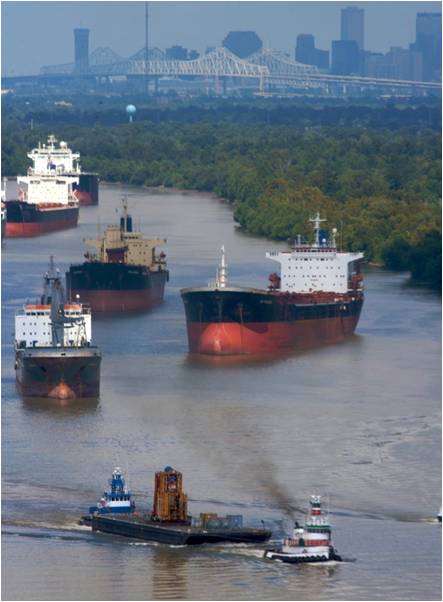
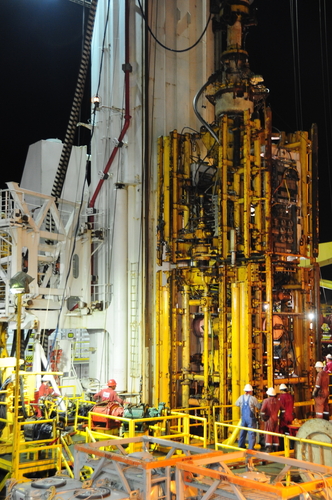
The BOP stack from the Macondo well is pictured in the foreground while being transported up the Mississippi River.  New Orleans is in the background.

Read Full Post »

Admiral Allen’s statement:

I have received extensive briefings over the last 24 hours regarding the final effort to intercept the Macondo well.  Through a combination of sensors embedded in the drilling equipment and sophisticated instrumentation that is capable of sensing distance to the well casing, BP engineers and the federal science team have concluded that the Development Driller III relief well has intersected the Macondo well.  This determination was made based on a loss of drilling fluids that indicated communication had been established beyond the relief well, the pressure exerted against the drill bit as it came in contact with the well casing and, finally, an increase in pressure in the choke line of the Macondo well blow out preventer.  While each of these indicators taken separately would not necessarily be conclusive, the aggregate data available supports the conclusion that the two wells are joined.  It is also important to note that none of the measurements supported a scenario where the annulus of the well is in communication with the reservoir.  Accordingly, we intend to proceed with preparation to cement the annulus and complete the bottom kill of the well.  Further information will be provided as cementing procedures are completed.

Observations:

  1. The relief well engineering team and crew performed exceptionally despite the many distractions and interruptions. Outstanding work.
  2. The new ranging and sensing equipment, combined with real-time measurement-while-drilling technology, made this complex operation seem routine.
  3. The above report seems to confirm that the annulus had been sealed with cement above the producing reservoir.  This was accomplished either when the production casing was cemented prior to the blowout or during the top-kill operation, presumably the former.
  4. There was no report of oil in the mud returns or other evidence of of oil in the annulus surrounding the production casing.  If no oil was encountered in the annulus, this would seem to confirm BP’s conclusion that the well flowed inside the production casing.
  5. Flow was stopped by the capping stack on July 15, and the Macondo well was killed when mud and cement were injected during the top-kill operation.  Since the well was already dead, the cementing of the annulus that will follow is actually part of the plugging and abandonment operation.  While the annulus could have been secured through more conventional plugging procedures, this does not detract from the relief well team’s extraordinary achievement.

Read Full Post »

If you haven’t heard BP executives answer the same questions  (long string, centralizers, cement bond log, BOP failure, etc, etc) often enough during appearances before Congress, you can watch a UK House of Commons committee ask them to Tony Hayward and Mark Bly on cspan’s recording of yesterday’s hearing.  This excellent legislative teamwork is further evidence of that special relationship between the US and UK.

I do wish that both government’s would show more interest in some of the lower profile incidents that also have major international significance. Perhaps they can coax Venezuela to release information about the Aban Pearl sinking. Even though I follow Hugo Chavez’s tweets :), I’ve learned nothing of significance about that accident.

In light of yesterday’s post about negative pressure testing, I was interested in this comment by Tony Hayward at the Common’s hearing:

We clearly have taken a lot of action to clarify and provided much greater rigor around the assessment of the negative pressure test.

Can BP tell us more?

Read Full Post »

The Bureau of Ocean Energy Management, Regulation, and Enforcement (BOEMRE) has issued a Notice to Lessees and Operators (NTL) that specifies deadlines and other requirements for plugging and abandoning non-producing wells and removing platforms that no longer have utility. In my view, this regulatory action is necessary, appropriate, and consistent with authority provided in the Subpart Q (for quit :)) Decommissioning regulations. Post-hurricane experiences have demonstrated the enormous costs, operational challenges, and safety and environmental risks associated with plugging damaged wells and removing toppled platforms.

Read Full Post »

Despite the vast differences in location and water depth, both the Montara and Macondo blowouts would have been prevented if negative pressure tests had been properly conducted and interpreted after the production casing had been set.

A negative pressure test simulates an underbalanced condition in which the formation pressure exceeds the pressure exerted by the fluid column.  The purpose of the test is to determine if there are leaks in the casing shoe track, casing, or seal assembly. At Macondo, the test was conducted and the evidence of inflow is quite clear.  Unfortunately, that evidence was misinterpreted.  See slides 14-17 in the linked presentation.

At Montara, the testimony suggests that a negative pressure test was not properly conducted.  PTTEP therefore had a false sense of security regarding the integrity of the casing shoe. See page 9 of this transcript.

Both wells subsequently flowed through the shoe track and inside production casing for a combined duration exceeding 5 months.

There are currently no industry standards for conducting and interpreting negative pressure tests.

Read Full Post »

“Can’t happen again” was the mantra of the OCS oil and gas program for 40 years after the Santa Barbara blowout.  “Can’t happen here” was the short-lived message of government and industry after last year’s Montara blowout in the Timor Sea.   Surprisingly, new versions of the “can’t happen” message have been heard since Macondo.  Companies have boasted that “it couldn’t happen to us,” and some government representatives have claimed that their regulatory regimes would have prevented the blowout.  The beat goes on.

Macondo will not be the blowout that ends all blowouts, and Macondo will not be the last major offshore accident.  We need to focus on reducing the risks of another disaster during drilling, production, or transportation, in deep or shallow water, arctic ice, and every other environment where operations are conducted. The new mantra, no matter where you operate or regulate, should be “CAN HAPPEN AGAIN.”  That is the attitude we need if we are to prevent future accidents.  We should preach the “CAN HAPPEN AGAIN” message loudly and clearly, no matter how many years (hopefully decades) elapse before the next major accident.

We’ve heard a lot of details about the shortcomings of the well design, the companies involved, and one of the regulators.  However, consistent with the CAN HAPPEN AGAIN message, we need to also look at the high-level management, leadership, and regulatory issues. How do we sustain outstanding performance and minimize the risks of major accidents?  Here are four suggestions that have received little attention since the blowout:

  1. Challenge industry.  One lesson I have learned from the Norwegians is to make industry take ownership for their problems. Instead of halting deepwater drilling for six months while the government attempts to fix the problems (real and perceived), we should have given offshore operators six months to develop a plan for not only preventing another Macondo, but reducing the risks of any major drilling, production, and pipeline accidents.  If the government wasn’t satisfied with the industry plan, operations could be curtailed until a good plan was developed.
  2. Improve management systems and cooperative industry programs.  US operators and contractors are understandably in a reactive mode with a goal of lifting the moratorium. However, the next disaster will not duplicate this one.  The offshore industry must provide the leadership needed to improve management systems and develop cooperative programs that will monitor performance, evaluate technology and procedures, and asses risks.
  3. Truly reorganize the OCS regulatory program by consolidating safety and pollution prevention functions into a single authority. Wells, platforms, and pipelines are integrated systems.  You can’t divide the components among regulators and expect the regime to function effectively and efficiently. That’s not possible. A few examples (there are may more): separate agencies should not regulate connecting OCS pipelines; separate agencies should not regulate offshore cranes based on the type of facility; and multiple agencies should not regulate the integrity of floating structures.  Because of the complexity of the OCS regime, regulatory and industry personnel spend too much time resolving and coordinating administrative and procedural matters.  This time would be better spent focusing on mission critical safety issues.   A single agency should be responsible and accountable for safety and pollution prevention at offshore facilities, including the review of plans, permit applications, and management systems, and the conduct of inspections and audits needed to assess performance and verify compliance.
  4. Request assistance from international regulatory partners. While numerous US entities have questioned regulators in Norway, the UK, Australia, Canada, and elsewhere, no one has actually asked these organizations for assistance.  In lieu of one or more of the official US inquiries, international regulators should have been called on to review the accident and the regulatory regime. Who has spent more time assessing regulatory options than other regulators?  Who knows more about establishing and achieving safety performance objectives? Who else is knowledgeable and objective, yet insulated from US political influences?

Read Full Post »
Here’s the link. This is a highly specialized and technical task, and no information has been provided on the inspection team. Other than employees of Cameron and their competitors, the pool of people who can perform a detailed inspection of BOP components is pretty small.   It would be interesting to know who is conducting this inspection.

Read Full Post »

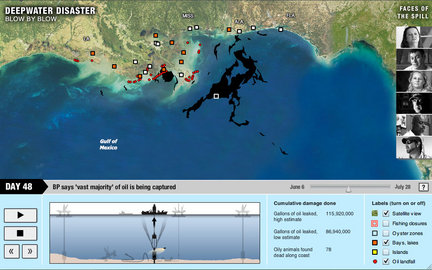
Click here or on the image above to see this excellent animation of the slick movement and well control efforts versus time.  Check it out; this is definitely worth viewing.

Read Full Post »

Oh no, industry standards!

Despite the stunning post-Macondo media revelation that regulators <gasp> use “industry standards” (you can’t slip anything past these folks!), there is no need to be fearful or anxious. Regulators of most technologically advanced industries, in the US and throughout the world, depend on such standards. Almost every US Federal agency uses standards to fulfill some of their objectives.

“Industry” standards are really consensus standards developed by experts who work for manufacturers, operators, service companies, universities, regulators, NGOs, and even consultants (for whom I suddenly have great respect :)).  Standards development, which is in accordance with specific protocols, is closely monitored and audited by designated organizations.

In the US, the use of standards is mandated by legislation that stipulates:

All Federal agencies and departments shall use technical standards that are developed or adopted by voluntary consensus standards bodies, using such technical standards as a means to carry out policy objectives or activities determined by the agencies and departments

However, it is important to note that regulators have the final say about which standards or parts of standards they incorporate in their regulatory programs. Regulators are under no obligation to incorporate standards that they believe would compromise safety or environmental objectives.

US standards programs are administered by ANSI.  ISO, a network of the national standards institutes of 163 countries, with a Central Secretariat in Geneva, Switzerland, administers standards worldwide.

While standards developed by API and other organizations have served the US offshore oil and gas program well, improvements can be made.  A few suggestions follow:

  1. Increase the participation by technical specialists from all sectors of industry.  In some cases, corporate mergers and low participation have reduced the diversity of opinion and expert input needed to develop the best possible standards.  All offshore operators, service companies, and contractors should recognize their obligation to participate on standards committees.  Their plans for such participation should be outlined in their safety and environmental management programs.
  2. Increase regulator participation.  While resource constraints limit the involvement of regulators, participation in offshore standards committees should be a high priority.  Wherever possible, Federal, State, and international regulators should pool resources to ensure that standards committees are effectively monitored.
  3. Standards should be available online at no charge to any interested party.  API has taken an important step in that regard by agreeing to provide free access to standards referenced in OCS regulations.
  4. Spin-off API’s standards programs into a new entity.  While API has managed standards development independently from its advocacy functions, the credibility of the standards programs would be enhanced if that work was performed in a separate organization. API’s highly visible advocacy work could be perceived as influencing standards development practices and priorities.  Such perceptions are detrimental to public confidence in critical safety and pollution prevention standards.

Read Full Post »

« Newer Posts - Older Posts »