Feeds:
Posts
Comments

Posts Tagged ‘wind turbines’

To #SSEN, #SSE Renewables,#ScottishPower, #Vattenfall, #EDPR, #Statkraft and all the companies that call destruction development.

To the planners behind the scenes in Glasgow, Edinburgh, and London who draw borders with maps but never set foot on the land they destroy.

To the investors who calculate profit and pretend it’s about the planet.

And it’s addressed to all who love Scotland, to those who still believe that the Highlands are sacred ground, that wilderness is not a void, but the pulse of something ancient and irreplaceable.

To those who once walked through moorland and silence and felt that rare sense of belonging to something pure.

And to those who now see it slipping away, amidst noise, steel, and greed.

Let’s stand together for what we love! Before it’s too late!

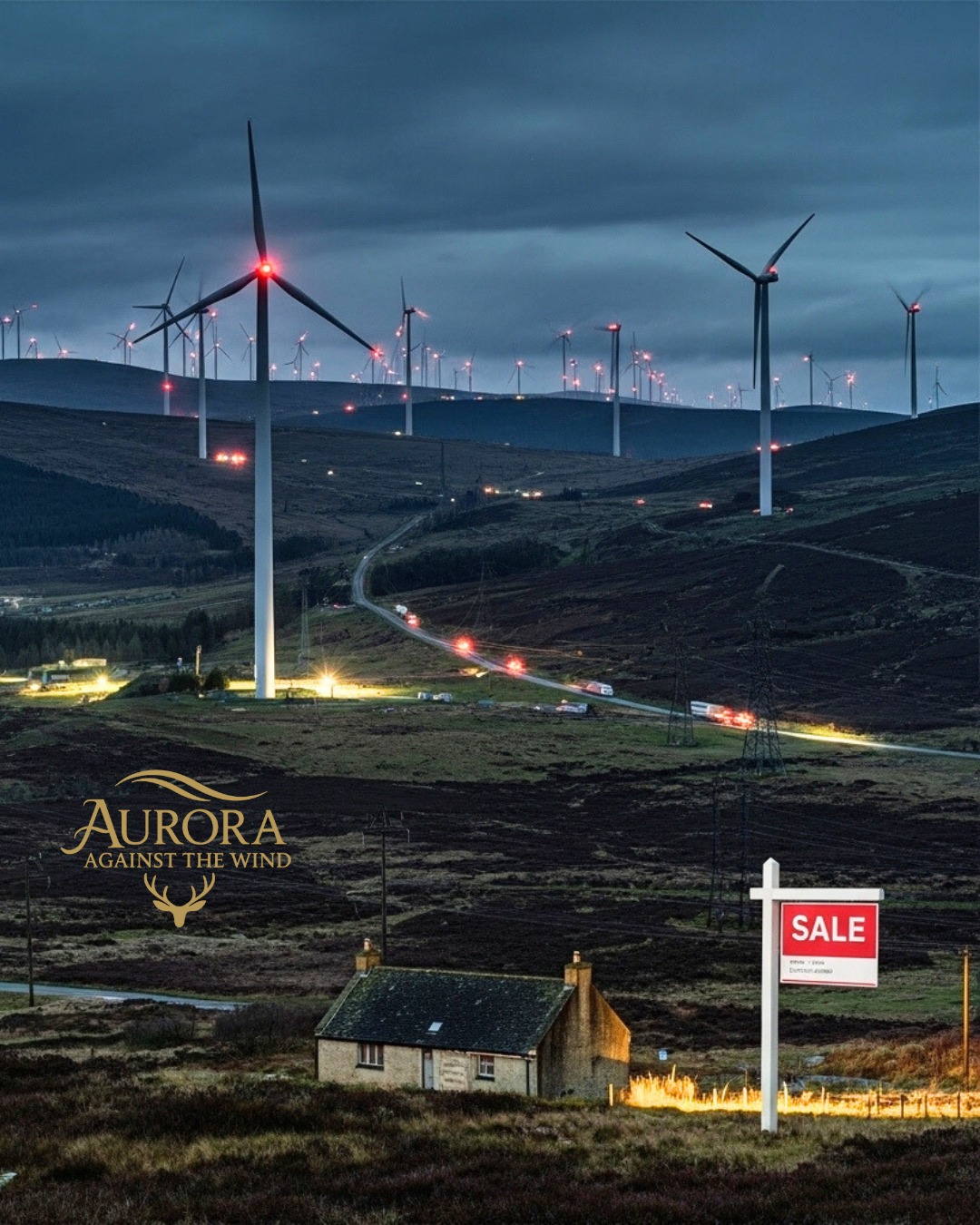
Beyond the Kyle of Sutherland the heart of the Highlands is being remade not by nature, but by contracts, cables, cranes, and lots and lots of money!

For example: In Invershin and Golspie they plan to house 400 workers, 150 here, 250 there, for five years of construction, working around the clock. (As in numerous other places in Scotland)

Diesel trucks will thunder down our single-track roads,shaking cottages and scaring sheep.

Quiet valleys will become supply corridors.

The night will be lit by headlights and engines.

And when they’re finished, silence will not return, because the monster turbines will remain, and with them, endless power lines will be built in the name of the price of progress.

They will stand like giant steel soldiers, an eternal monument to power and greed in the middle of our once pristine nature!

From Spittal to Beauly, a high-voltage line will soon run through the heart and soul of the North, right through forests, moors, and nesting grounds.

They call it a necessary connection. But why?

Because they produce more than they can transport! Because their greed is limitless!

To make a profit, to export, to a faraway market.

This isn’t about clean energy for Scotland.

It’s about feeding the industrial grid, at the expense of our ecosystems, our wildlife, our peace.

The osprey, the golden eagle, the bats that hunt over rivers, all will suffer from what you call development in the name of progress.

Migratory birds will collide with turbines taller than our churches.

Red deer will lose their habitat.

The once living soil will be buried under concrete.

🌲 What they will take from us

They will drain the peat bogs our greatest natural carbon stores, and turn them from the lungs of the Highlands into scars.

They will clear forests for turbine foundations and access roads.

Thousands of trees will fall in the name of green energy!

They will carve paths through river valleys where salmon once leaped and otters played.

They will pour thousands of tons of concrete into living soil.

And if you call it green energy I ask:

How green is a forest without trees?

How clean is a wind that smells of diesel?

🔴 The Death of the Dark Night

They will fill our skies with red, flashing lights,visible for miles!

A constant warning, the cold heartbeat of industry.

But for the creatures that live here,that light is death.

Bats are disoriented. Birds are drawn to their doom.

And for us, who once saw the aurora dance, it is deep sadness. It moves me to tears to think of what we will lose!

The Milky Way will disappear behind their towers.

The silence of darkness will be gone forever.

The darkness of old gives way to a constant blinking that neither man nor beast can rest.

Their promise of green jobs for us who live here—all false!

They bring contractors, workers, and convoys.

We locals are left with rising electricity prices, broken roads, and a never-ending hum. Radiation pollution day and night! Sound waves are our constant companions! Our houses are rapidly plummeting in price and becoming unsellable!

Instead of Highland idyll, construction noise!

The people of the Highlands are experiencing industrial colonization disguised as green energy. Communities are shrinking while wind turbines are growing.

In the Kyle of Sutherland, there will soon be almost one turbine per inhabitant.

Imagine that: one person, one monster turbine!

A land once characterized by loneliness, now trimmed by rotor blades and power pylons—all climate-neutral, of course!

They call it renewable. But what is being renewed? The money is in their pockets!

An endless hunger for more, disguised as green miracle energy!

A question for the powerful

Do you know what it feels like to live under a sky that never sleeps?

To feel the hum of the power grid in your bones?

To lose the stars one by one and call it progress?

You don’t live here.

You don’t walk these hills in the rain.

You’ve never seen the mist dance or watched the owl fly in the dark night.

You don’t stand by the river at dusk and listen.

You don’t know the natural sounds of the night or the silence when everything is asleep!

You don’t know the starry sky, a wonder with millions of lights that guide your way. You don’t feel the magic when the Northern Lights dance and enchant everything around them.

You only listen to the voice of money.

But let me tell you!

Scotland is not your factory.

The Highlands are not your testing ground.

You cannot pave the North with steel and call it salvation.

You cannot blind the sky and call it clean.

Look up.

The blinking lights that you love so much are not progress.

It is the wilderness’s last breath.

And when the final aurora fades behind your towers, remember:

It was not nature that failed you.

It was you who failed it.

I will fight for every blade of grass and every tree to save the Highlands a piece of their soul!

A Voice from the Highlands, for all who still believe that beauty and silence are worth defending.
Read Full Post »

Thialf: a character in Norse mythology who was Thor’s servant.

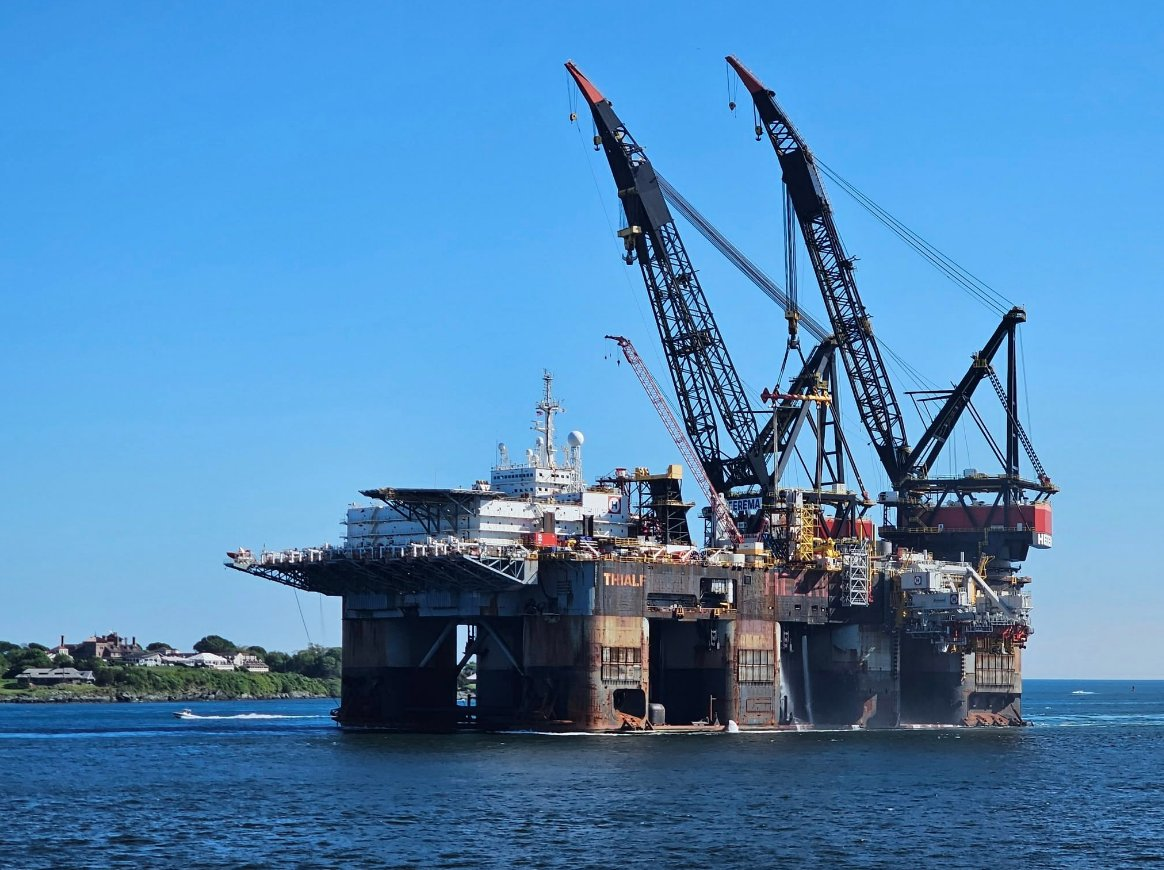
The Heerema Thialf, a semi-submersible crane vessel (SSCV), is a rather massive presence in coastal waters. The vessel is 661 feet long and 470 feet high, with a lifting capacity of up to 14,200 metric tons, and is the second-largest of its kind.

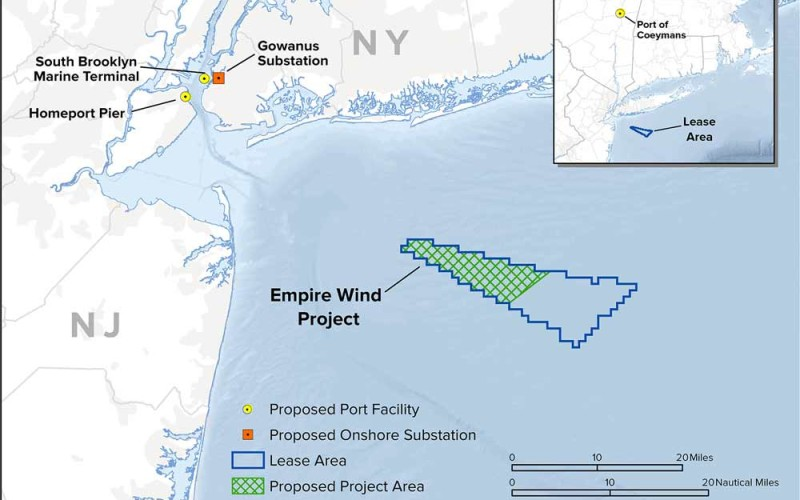
The Thialf, which set a world record in 2000 by lifting the 11,883-metric-ton Shearwater topside structure in the North Sea, will be driving piles for 54 Vestas 15 MW wind turbines and a substation structure that are part of Equinor’s controversial Empire Wind project.

John Smith tells me that the Thialf is one of the heavy lift vessels being considered for removing California offshore oil and gas platforms. The vessel is too large for the Panama Canal and would have to make the trip around South America or across the Pacific, depending on where it was last working.

The Thialf’s day rate has not been disclosed, but is likely greater than $500k. Equinor claimed to be losing $50 million/week when the project was paused. Thialf costs were presumably a significant chunk of those losses.

Read Full Post »

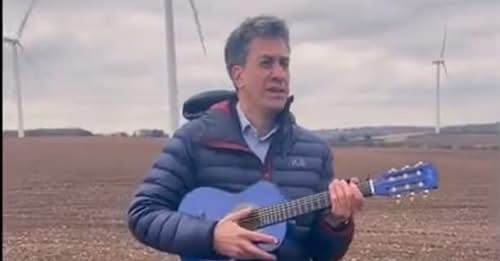
UK Energy Minister Ed Miliaband

By Richard Littlejohn with apologies to Bob Dylan 😉

“How many pits must a man close down

Before we run out of coke?

How many North Sea oil rigs must shut

Before the UK goes broke?

Yes, and how many windmills must the countryside take

Before it’s beyond a sick joke?

Disaster, my friend, is blowin’ in the wind

Disaster is blowin’ in the wind.

Yes, and how many more must be dumped on the dole

Before the worm starts to turn?

Yes, and how long will we go on importing foreign coal

As if we’ve got money to burn?

Yes, and how many times will the lights go out again

Before this madman will learn?

Disaster, my friend, is blowin’ in the wind

Disaster is blowin’ in the wind.

Yes, and how much higher will our gas bills have to go

So Miliband can play superhero?

Yes, and while the economy goes up in flames

Mister Ed fiddles madly like Nero,

Yes, and how many old folk will die from the cold

In futile pursuit of Net Zero?

Disaster, my friend, is blowin’ in the wind

Disaster is blowin’ in the wind.

And here is Miliband with his version (You can’t make this up! 😉):

Read Full Post »

Vineyard Wind

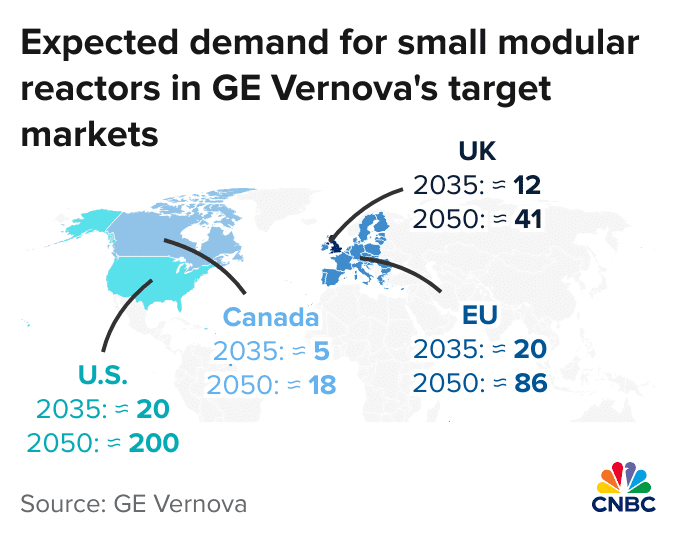
Per CNBC:

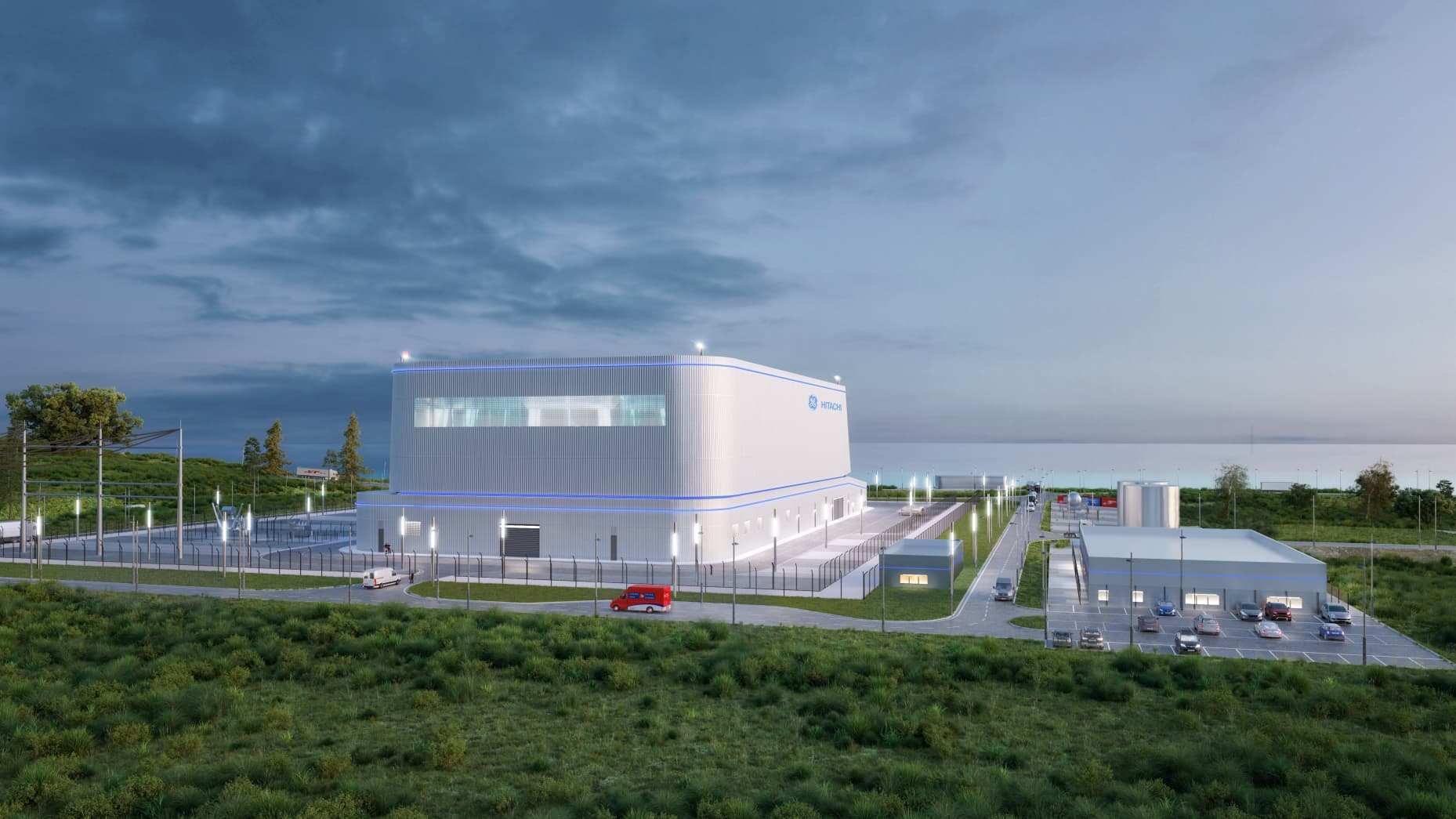
GE Vernova is aiming to deploy small nuclear reactors across the developed world over the next decade, staking out a leadership position in a budding technology that could play a central role in meeting surging electricity demand and reducing carbon dioxide emissions.

Read Full Post »

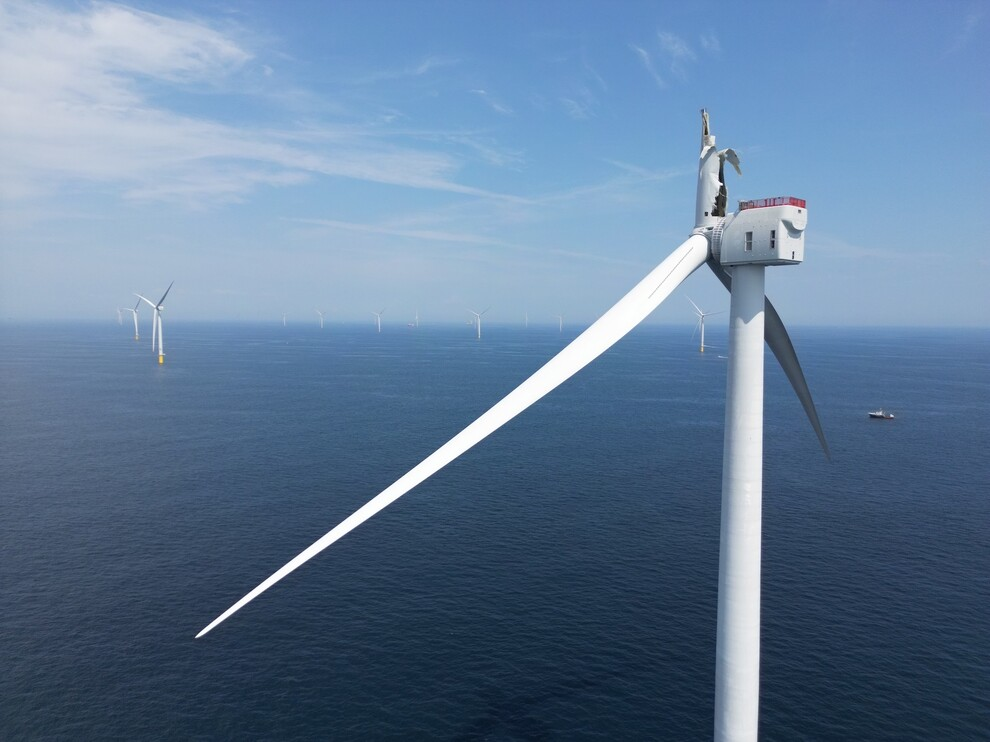
Photo: GUANGDONG NEWS

Read Full Post »

BOEM’s land rush approach to offshore wind leasing will add up to 1086 turbine towers and 28 offshore substations (OSSs) in the Atlantic just from active projects with approved Records of Decision (RODs). (See the table below.) Another 17 active Atlantic commercial projects have yet to reach the ROD stage. Those projects should increase the total number of structures to >3000. Five more Atlantic wind lease sales are scheduled.

projectturbine towersoffshore substations
Coastal VA Offshore Wind2023
Revolution Wind1002
Sunrise Wind941
Atlantic Shores South200up to 10
Ocean Wind 198up to 3
Vineyard Wind 11002
Empire Wind 1 & 21472
New England Wind (phases 1&2)1505

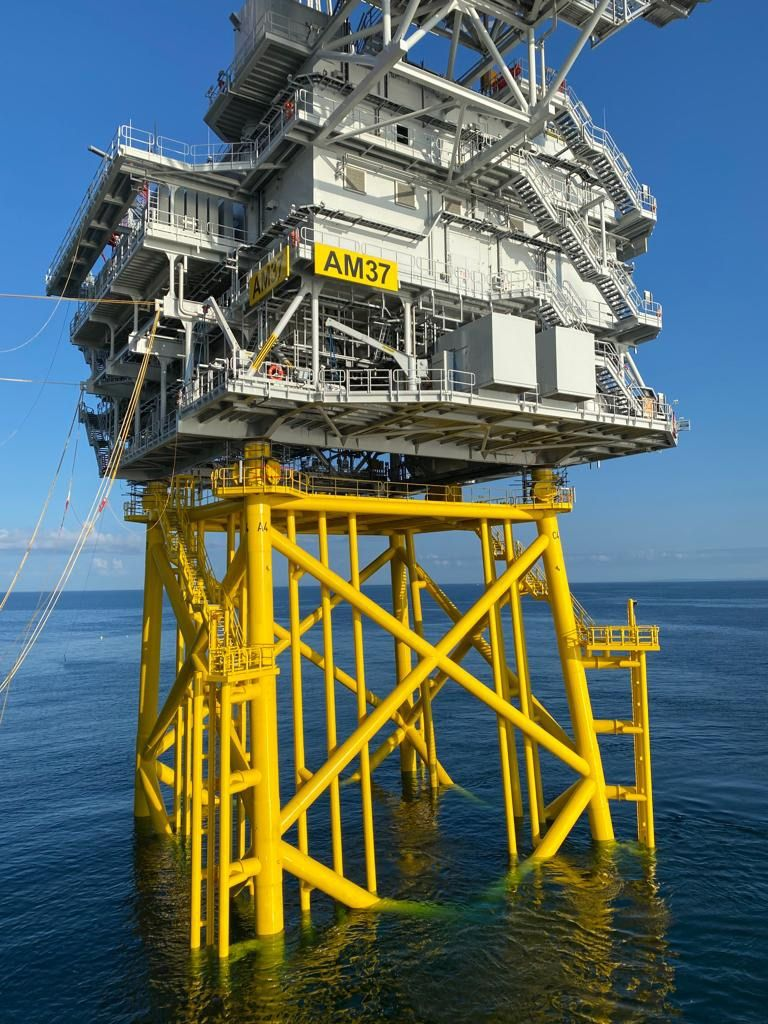
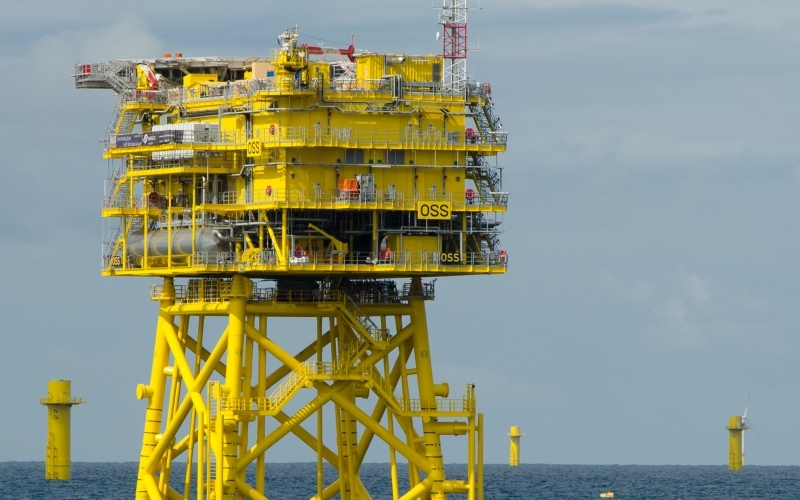
Per the Construction and Operations Plan (COP) for Vineyard Wind, the topsides for a conventional electrical service platform (ESP) (also known as an offshore substation or OSS) are 45 x 70 x 38 m, which is larger in surface area than a typical 6-pile oil and gas platform (~30 x 30 m), and is comparable in size to a large jackup drilling rig.

The Atlantic Shores plan calls for 10 small, 5 medium, or 4 large OSSs. (Uncertainty regarding the number and types of structures seems rather common in wind COPs.) The large OSSs have topsides that are 90 m by 50 m and rise to 63 m above MLLW. These are large offshore structures whether for wind or oil and gas.

Vineyard Wind ESP

Despite the looming decommissioning obligations, BOEM’s financial assurance requirements have been relaxed to facilitate wind development.

Per BOEM, the “Rule to Streamline and Modernize Offshore Renewable Energy Development” is intended to “make offshore renewable energy development more efficient, [and] save billions of dollarsUnfortunately, the savings associated with relaxed financial assurance requirements translates to increased risk for power customers and taxpayers.

BOEM signaled their intentions on offshore wind (OSW) decommissioning three years ago when they granted a precedent setting financial assurance waiver to Vineyard Wind. Despite compelling concerns raised by commenters, the “streamlining” regulations codified this decision.

No one knows what the financial future will be for wind projects and the responsible companies. Financial assurance should therefore be established when the structures are installed, not years into the future as allowed by the revised regulations. What leverage will BOEM have then?

Nordsee One substation, Germany. Rystad Energy projects 137 new power substations offshore continental Europe this decade, requiring $20 billion in total investment.

Read Full Post »

Decommissioning Vindeby wind project, Denmark

BOEM’s “Rule to Streamline and Modernize Offshore Renewable Energy Development” is intended to “make offshore renewable energy development more efficient, [and] save billions of dollars. Unfortunately, the savings associated with relaxed decommissioning financial assurance requirements translates to increased risk for customers and taxpayers.

BOEM signaled their intentions on offshore wind (OSW) decommissioning three years ago when they granted a precedent setting financial assurance waiver to Vineyard Wind. Despite compelling concerns raised by commenters, the “streamlining” regulations have codified this decision.

Cape May County, New Jersey, was among the commenters objecting to BOEM’s departure from the prudent “pay as you build” financial assurance requirement. The County commented as follows (full comment letter attached):

“[e]nergy-utility projects are in essence traditional public-private partnerships where technical and financial risks are transferred to the private sector in exchange for the opportunity to generate revenues and profit. Under the proposed rule, the Federal government is instead transferring risks associated with decommissioning to the consumer rather than to the private sector.

Cape May added:

[w]hile BOEM believes that if a developer becomes insolvent during commercial activity that a solvent entity would assume or purchase control, the County believes this is a risky assumption as the most likely reason for default is that a constructed wind farm developer is unable to meet its contractual obligations set forth under a Power Purchase Agreement (PPA) because its energy production revenues are not in excess of its operating costs. A change of hands would not remove these circumstances or make the project profitable.”

Cape May and others also commented on the threat of premature decommissioning as a result of storm damage. In response, BOEM asserts that these risks have been addressed in the latest standard for North American offshore wind turbines (Offshore Compliance Recommended Practices: 2022 Edition (OCRP-1-2022)). However, design standards, particularly those for offshore facilities, are not static. The recommended practice for OSW is likely to change multiple times in the coming years as storm, operating, and turbine performance data are updated and analyzed. The design standard for Gulf of Mexico platforms has been repeatedly refined and improved and is now in its 22nd edition.

In their response to public comments on the decommissioning risks, BOEM repeatedly asserts that they can adjust the amount and timing of required financial assurance as they monitor a lessee’s financial health. Unfortunately, a company’s finances can change quickly and BOEM’s options will be limited when it does. Increasing the financial burden on a struggling company that is providing power to a regional power grid will not be a simple proposition.

Strong comments from Cape May County:

Read Full Post »

In a report into the future of energy, the influential Committee on Climate Change calls on the Government to scale back plans to build thousands of turbines off the coast of Britain.

Instead, the report calls for hundreds more wind turbines to be built onshore at a lower cost over the next eight years.Daily Mail UK

On the other hand, offshore locations have stronger, more consistent winds, and minimal aesthetic and noise impacts. Is the public going to accept massive onshore wind development?

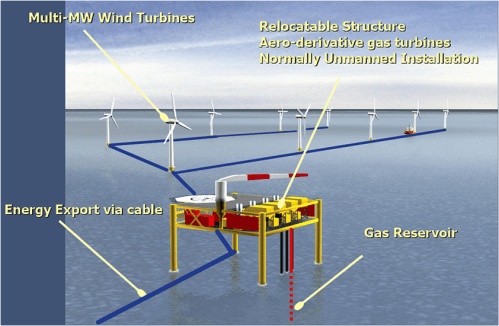
I continue to be intrigued by the concept of offshore energy units which integrate natural gas and wind projects to ensure consistent power supply. (See slide below from a presentation by George Hagerman, Virginia Tech Advanced Research Institute)

Read Full Post »

…. not every project makes sense.

NY Times photo

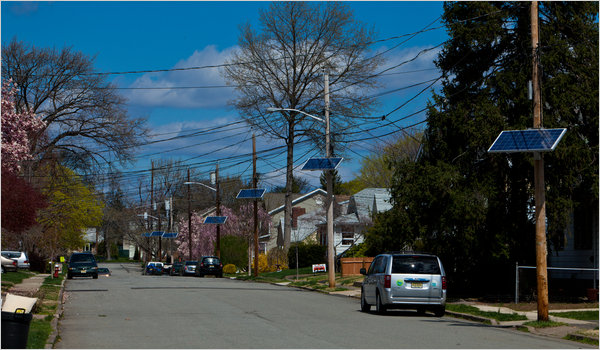
Like a massive Christo project but without the advance publicity, installations have been popping up across New Jersey for about a year now, courtesy of New Jersey’s largest utility, the Public Service Electric and Gas Company. Unlike other solar projects tucked away on roofs or in industrial areas, the utility is mounting 200,000 individual panels in neighborhoods throughout its service area, covering nearly three-quarters of the state. NY Times

So what’s next, mini-turbines on every utility pole, or worse yet, geeks like this guy hooked up to the electric grid? 🙂

Read Full Post »