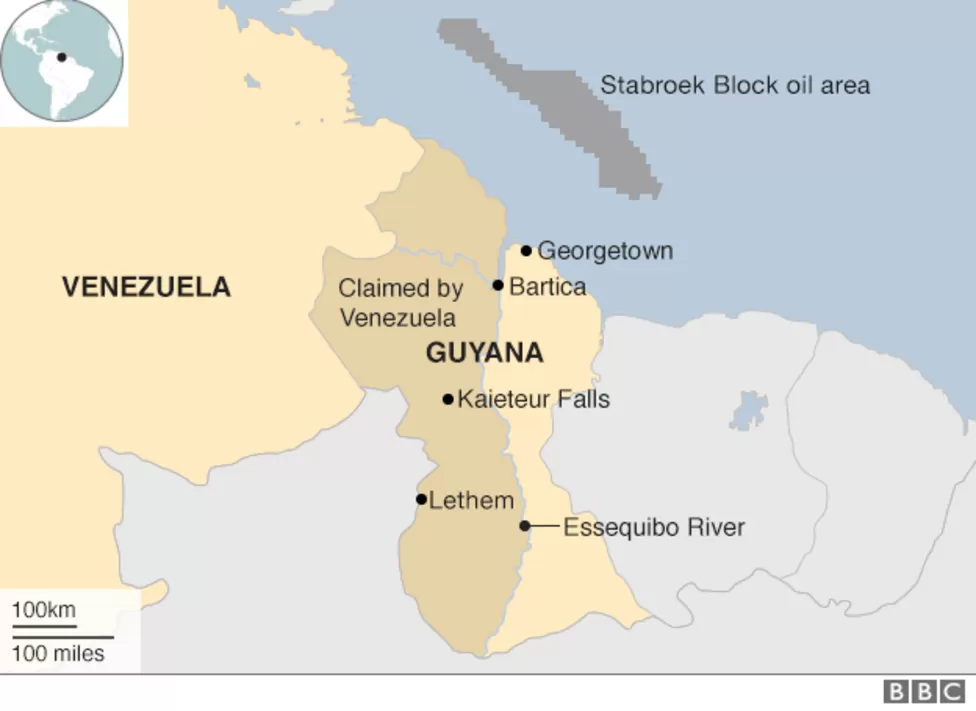
Having severely damaged their own oil industry, the government of Venezuela is intent on taking control of Guyana’s offshore resources. Venezuela seeks to annex 2/3 of Guyana and the adjacent offshore territory. The existing boundary was settled in accordance with international law in 1899.
“Question 5 proposes the creation of Venezuelan state of Guyana Essequibo and an accelerated plan for giving Venezuelan citizenship and identity cards to the Guyanese population.”
I suspect that very few Guyanese are interested in Venezuelan citizenship.
Ambassador Brian A. Nichols, Assistant Secretary for Western Hemisphere Affairs at the U.S. Department of State, emphasized that “efforts to infringe upon Guyana’s sovereignty are unacceptable.”
Venezuela’s referendum is scheduled for December 3.
Per our previous post on policy decisions that favor production in Iran and Venezuela over US offshore production, Senator Manchin made this statement:
“I also want to briefly express at the outset my strong concerns about the news last night that this administration has lifted most sanctions on Venezuelan oil for the next 6 months. On the heels of announcing the smallest 5-year offshore oil and gas leasing plan in decades, this administration is turning to Venezuela — they know I have a problem and I’m sure many of you will have feelings on this — one of the world’s dirtiest energy producers and an oppressor of its own people, to help make up the production that they refuse to allow in America. I understand that the administration believes this will encourage Venezuela to make democratic reforms, that has been tried, and we’ve failed before. It makes no sense at all to reward bad actors before they actually take the action you want. We tried that with Iran, and now here we are with Venezuela.” said Chairman Manchin.
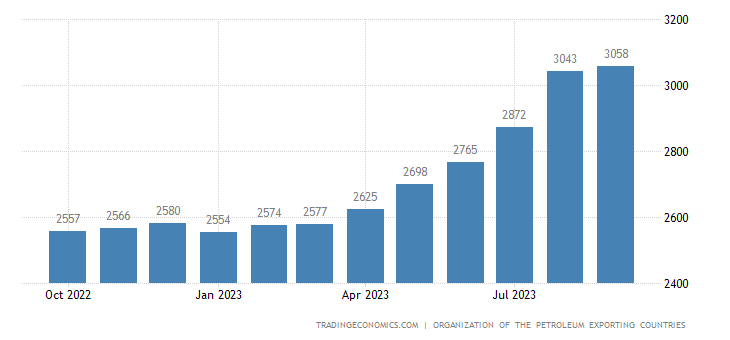
Given that further depletion of the SPR was no longer politically acceptable, a cynic might suggest that oil market considerations associated with the end of SPR withdrawals and OPEC tightening (Iran is currently exempt from OPEC quotas) factored into decisions regarding the relaxation of sanctions on Iran.
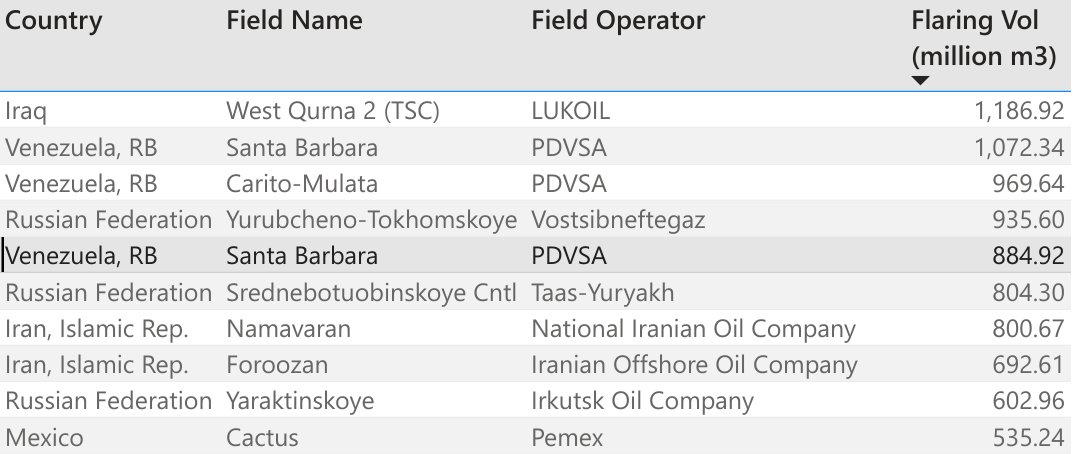
The latest World Bank data tell us that significant gas flaring issues persist. Worldwide, 138,549 million m3 of gas were flared in 2022. This equates to a massive 4 tcf, the equivalent of the reserves in a major gas field and more than 5 times the total gas production in the Gulf of Mexico in 2022.
The top ten “flarers” are listed below. Each of these fields flared from 19 to 42 bcf. For comparison, the top ten GoM gas producers in 2022 produced 10 to 57 bcf, so single fields are flaring more than GoM companies are producing in total. Assuming for discussion purposes a gas-oil ratio of 1000 cu ft/bbl, all of the gas associated with 19 million to 42 million barrels of oil production was wasted from each field.
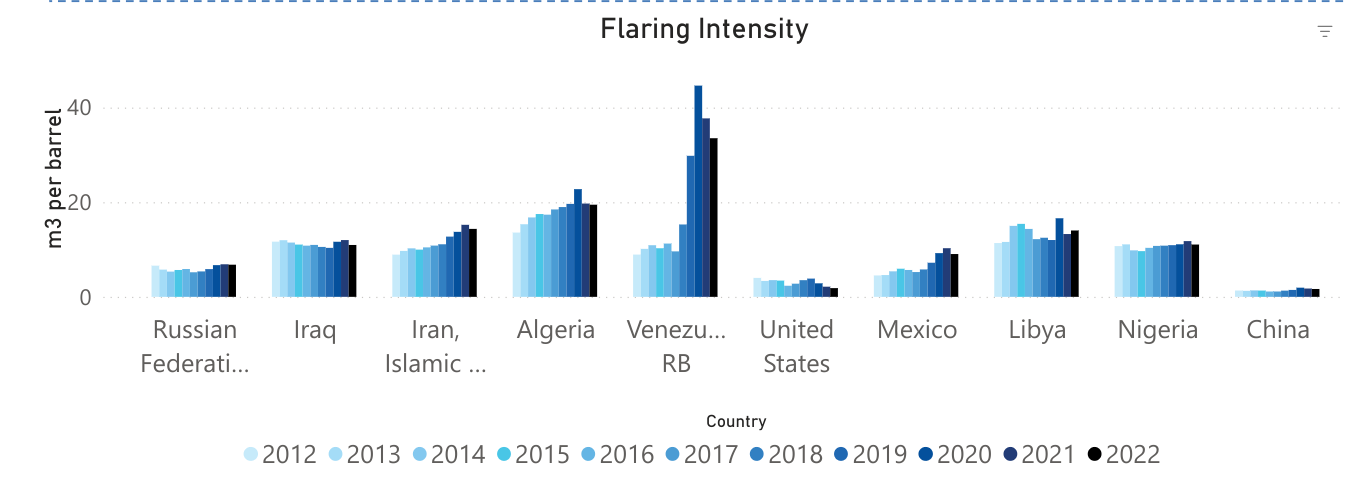
Posted below are the World Bank’s flaring intensity data (m3 of gas flared per bbl of oil produced) for the 10 countries with the highest flaring volumes. Venezuela’s flaring intensity rose to 44.6 m3/bbl in 2020, before declining moderately the following 2 years. 44.6 m3/bbl equates to 1575 cu ft/bbl. This gas flaring to oil production ratio implies that a very high percentage of Venezuela’s associated gas production was flared.
Here in North America, we have flaring issues of our own. Mexico’s Cactus Field is a top ten flarer (first table above) with 534.5 million m3 flared in 2022. The World Bank also lists 6 Permian Basin fields with >50 million m3 of gas flared in 2022.
Zeroing in on the US/Canada offshore sectors, fields with >1 million m3 of gas flared (2022) are listed below. Four of the top 7 are offshore Alaska and Newfoundland where the gas cannot currently be marketed and reinjection, field use, and flaring are the only options. Can production from these fields be better managed to reduce flaring volumes?
Q Does the President think there’s some benefit to the climate to drill oil in Venezuela and not here?
MR. KIRBY:No, it has nothing to do with a benefit to the climate, Peter. Again, there are 9,000 unused permits here in the United States on federal land that oil and gas companies can and should take advantage of. Nine thousand. And we’re talking about one there in Venezuela.
Oh no, not the 9000 permits response yet again!
Can someone please help the White House staff understand the difference between leases and permits, and the process that is followed in exploring for and producing oil and gas? Perhaps this will help.
A report is in the hands of the Federation of Petroleum Workers of Venezuela (FUTPV) shows the “precarious” state that is the drill ship PetroSaudi Discover, which operates in the Gulf of Paria in the Gran Mariscal gas project Sucre. This platform, as declared by the executive secretary and coordinator of health and safety of FUTPV, Eudis Girot, bear the same fate as his partner Aban Pearl, black on 13 May 2009 in the same coasts, if not halted operations and taken to Trinidad and Tobago for repair.
“We already knew it was a scrap, just like Aban Pearl,” said a source.
You recently spoke in the National Assembly and challenged anyone who opposes the government’s petroleum policy to speak openly.
I take this opportunity to do so. I feel qualified to do this because, when you were a member of the Venezuelan guerrillas during the 1960’s, in charge of blowing up oil installations, I was active in building them. During much of my life I have produced oil while you have lived off the oil we have produced.
The renting of offshore drilling barges, such as the Aban Pearl, which sank last year in Venezuelan waters, has been full of irregularities that I have denounced in much detail without any action being taken, so far.
Just a few days ago at an advisory committee meeting, some of us were talking about what an outstanding company PDVSA used to be. At Penn State, we had some very bright petroleum engineering students from Venezuela who went on to work for PDVSA. I am sure they have some very interesting stories to tell about their careers and the changes in Venezuela’s oil industry.
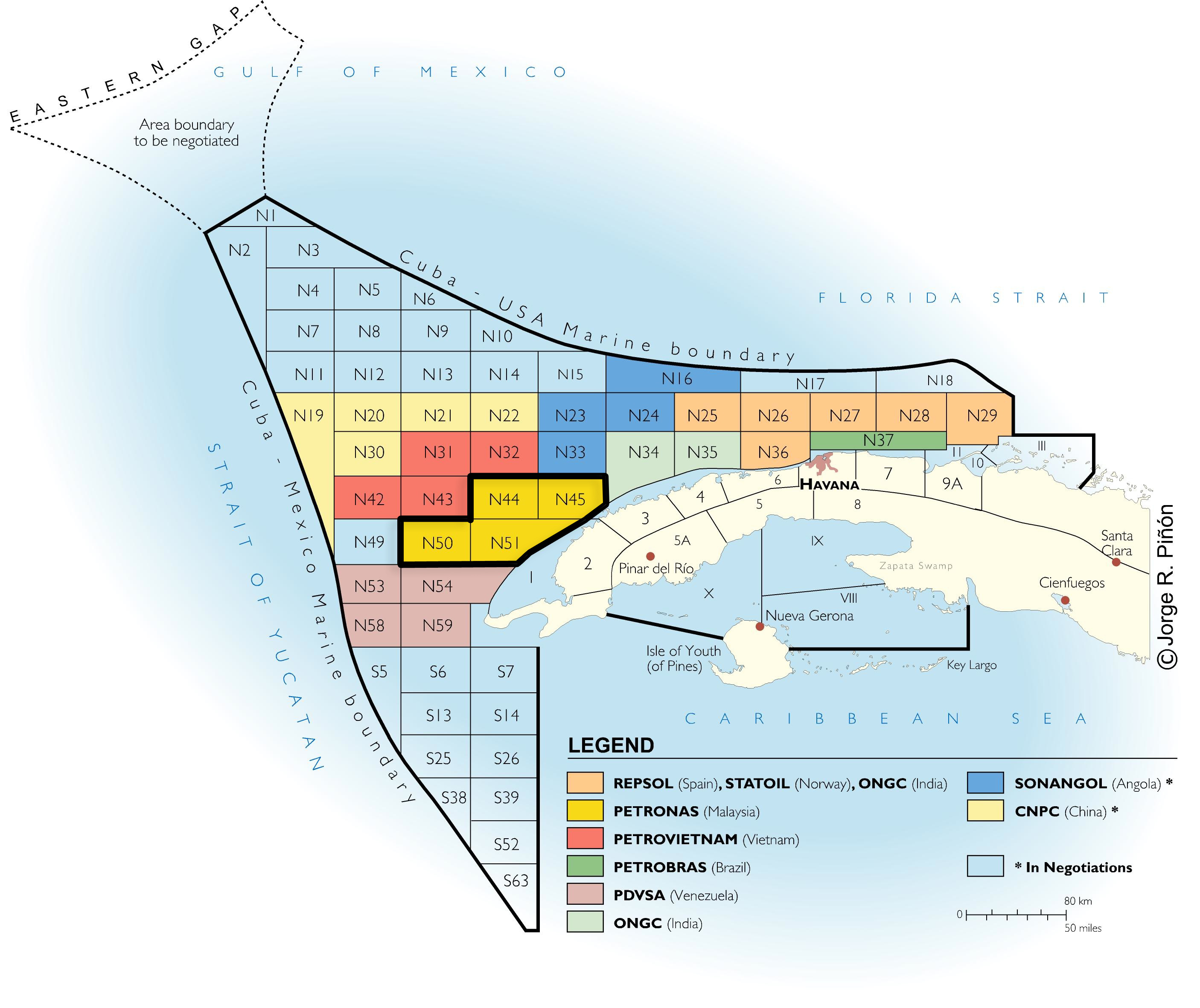
Add Sonangol, Angola’s state-owned oil company, to the intriguing list of companies that will be involved in Cuban exploration:
“We have signed agreements with Cupet (the Cuban state-run oil company) to explore and develop two blocks,” said Mateus de Brito, a member of the corporate executive committee. El Universal
According to CubaStandard.com, we can add Petronas, with Gazprom as a major partner, to the list of companies that will be drilling offshore Cuba next year. So, as best we can determine, beginning in 2011 the following companies will be using Saipen’s Scarabeo 9 to drill wells offshore Cuba:
Contrary to our energy, economic, and environmental interests, the US continues to prohibit governmental consultations on these important issues and participation by US companies in any aspect of Cuban offshore operations.
Venezuelan state oil company PdVSA will “soon” being exploratory drilling in Cuban waters of the Gulf of Mexico, President Hugo Chávez said during a bilateral meeting in Havana earlier this week.



 Bud's Offshore Energy (BOE)