Closing the books on the Biden administration’s management of the Strategic Petroleum Reserve:
Incoming reserve as of 1/22/2021: 638.086 million bbls (This was also the max. volume during the Biden administration.)
Outgoing reserve as of 1/17/2025: 394.566 million bbls
Net loss: 234.520 million bbls
% loss: 38.2%
Cost to replace (assuming $70/bbl ave. oil price): $16.416 billion
Time required to refill at max. rate of 685,000 bopd: 342.5 days (Taking into consideration acquisition, operational, and maintenance delays, and concerns about oil price impacts, a more realistic estimate would be 5 years, and this would require a concerted effort.)
The Strategic Petroleum Reserve would have no doubt been tapped again, as the Administration implied in June, if prices had exceeded $80/bbl for a sustained period prior to the upcoming elections. Fortunately, for the consumer and the SPR, that has not been the case.
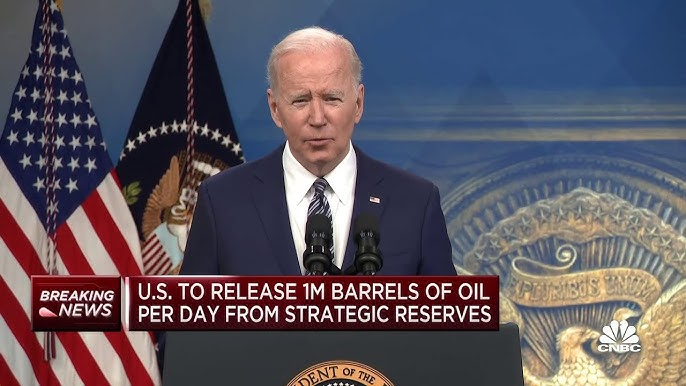
Prior to the 2022 midterm elections, oil prices reached as high as $122/bbl in June and remained above $90/bbl through July. The SPR was tapped hard with a massive reduction of 123 million bbls in the 5 months prior to the elections.
June-Oct WTI range $/bbl
beginning of June SPR vol. (bbls)
end of Oct. SPR vol. (bbls)
net gain or (loss)
midterm elections 11/8/2022
80-120
519,323
396,219
(123,104)
general elections 11/5/2024
65-83
370,526
384,642
14,116
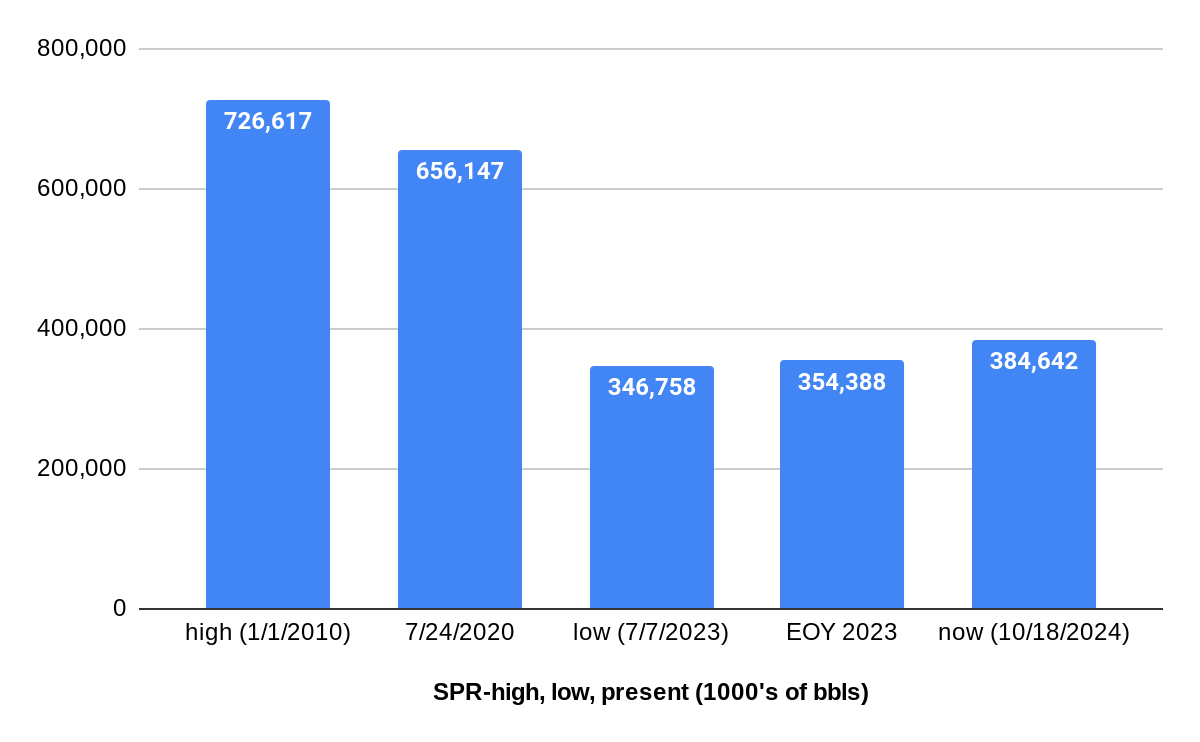
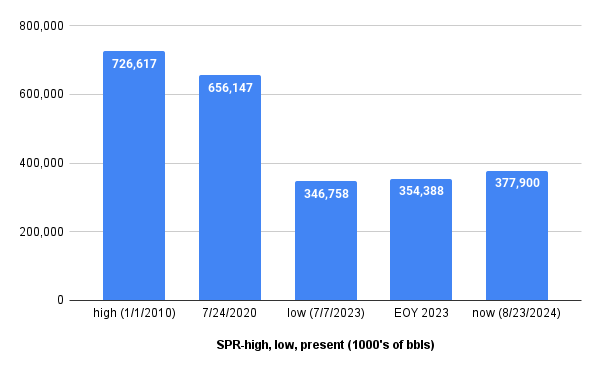
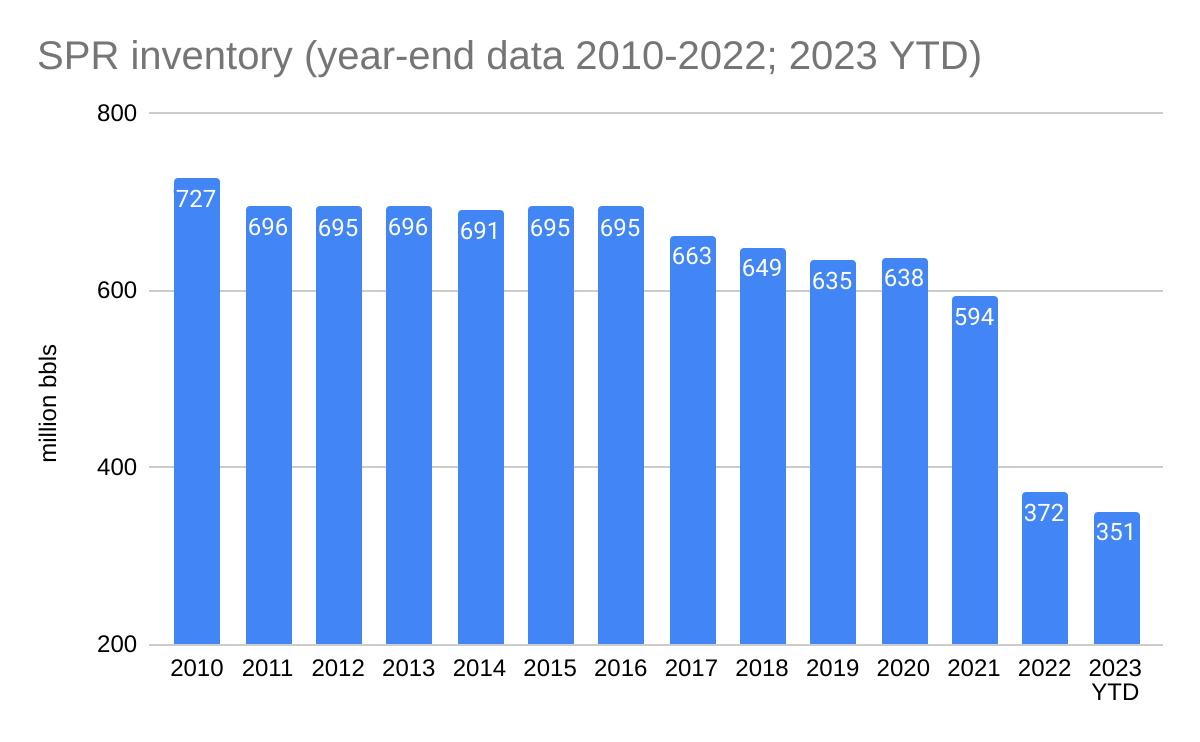
Despite the modest additions to the SPR in 2024, the reserve is only about one-half of capacity and 11% above the all-time low (7/7/2023).
Given the relatively moderate oil prices during much of 2024, DOE has made some progress in adding to the Strategic Petroleum Reserve. However, the 31 million bbls added since July 2023 only amount to about 10% of the reserves withdrawn during the 3 years prior (July 2020 to July 2023) and about 4% of the SPR’s capacity.
“We will do everything we can to make sure that the market is supplied well enough to ensure as low price as possible for American consumers,” Hochstein told the newspaper. “I think that we have enough in the SPR if it’s necessary.” ~Amos Hochstein, Special Presidential Coordinator for Global Infrastructure and Energy Security.
Maybe they should remove “Energy Security” from his impressive title since that seems to be a low priority.
Apparently it’s fine (and environmentally friendly) to deplete strategic oil reserves to reduce prices prior to an election, but not to hold regular oil and gas lease sales in the adjacent Gulf of Mexico. 2024 will be the first year without an OCS lease sale since 1958, and the Administration bragged about the new 5 year leasing plan having the fewest proposed sales in history!
“Consistent with the requirements of the Inflation Reduction Act (IRA) concerning offshore conventional and renewable energy leasing, the Department of the Interior today published the final 2024–2029 National Outer Continental Shelf Oil and Gas Leasing Program (Program) with the fewest oil and gas lease sales in history.
These three lease sales are the minimum number that will enable the Interior Department’s offshore wind energy program to continue issuing leases in a way that will ensure continued progress towards the Administration’s goal of 30 gigawatts of offshore wind by 2030.”
Last May, Cathy Rodgers, Chair of the House Committee on Energy and Commerce, requested that the General Accountability Office (GAO) address the following questions (letter attached):
Has the Biden administration conducted a long-term strategic review of the SPR, and if so, is the review adequate to inform decision making and protect the nation from energy supply disruptions in both current and future scenarios?
What damage and increased maintenance requirements, including well remediation, cavern closure, and both pipeline and pump replacements, have resulted from the recent drawdowns?
What physical or cybersecurity threats are there to the SPR facilities?
How thorough are DOE’s studies and assessments of the SPR’s structural integrity?
Has the DOE developed an adequate plan for replenishing the SPR? If so, please explain.
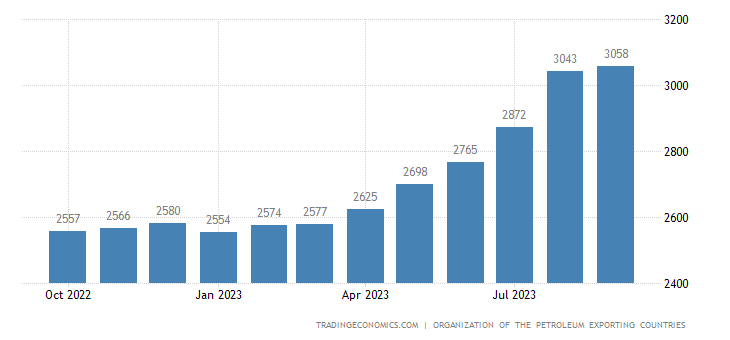
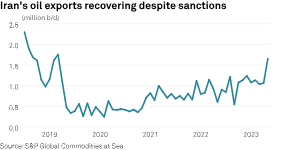
Given that further depletion of the SPR was no longer politically acceptable, a cynic might suggest that oil market considerations associated with the end of SPR withdrawals and OPEC tightening (Iran is currently exempt from OPEC quotas) factored into decisions regarding the relaxation of sanctions on Iran.
S&P Global reports on the surge in Iranian oil production and exports. In the quote below, note the concern about the higher oil prices that might result from tightening the sanctions. If oil price concerns are driving critical foreign policy decisions, this would be a rather stunning indictment of US energy policy, which is sometimes perceived as being more hostile toward domestic producers than international adversaries.
“Before the war, US-Iranian tensions had eased, which facilitated higher Iranian oil exports. Iranian crude oil production increased 500,000 b/d from March to September 2023 — to 3.1 million b/d from 2.6 million,” the analysts said. “Biden will be under pressure to enforce sanctions and curtail Iranian export revenue. This is a challenging situation for the Biden administration, which wants more oil on the market, not less. The attacks on Israel could override the oil issue.“
Q. I wanted to ask you about oil, if I could, and the money that it’s bringing in. So, is the amount of oil that’s being brought in by Iran — specifically, records amount, 85 percent to China, more oil being sold above the price cap from Russia — giving the President any pause on changing these energy policies for fossil fuels here in the U.S.?
MR. KIRBY: I would — just let me back up a little bit. I mean, it’s important to remember that Iran gets most of its oil revenue off the black market and evad- — evading sanctions, which they do. It’s costly to them. In fact, our evidence is that they really only receive a fraction of the market value of the oil that they sell, because they have to sell it on the black market.
We will always, as we do in any case, typically, revisit sanctions regimes to see if they need to be changed or adjusted, specifically with respect to Iranian oil.
The President, since the beginning of the administration, has been concerned about making sure we have a viable global market for oil, working hard to keep the prices of gasoline down here in the United States. Part of that is making sure you remove some of the volatility in that global supply and demand.
I don’t have any announcements or decisions to make today with respect to any changes to the domestic oil production.
Q But isn’t it a national security issue when you have countries that are profiting off of oil and the increased price of oil that don’t like Israel, that don’t like America?
MR. KIRBY: We don’t want, for instance, Russia to be able to — to get a windfall in profits from the oil market so that they can then turn that around and — and apply that to weapons in Ukraine. We certainly don’t want to see Iran do — be able to do much of the same, which is why we’re — we’re putting as much pressure on them as we are.
Q So, why not increase oil production here?
MR. KIRBY: I — again, I don’t have any announcements to make today.
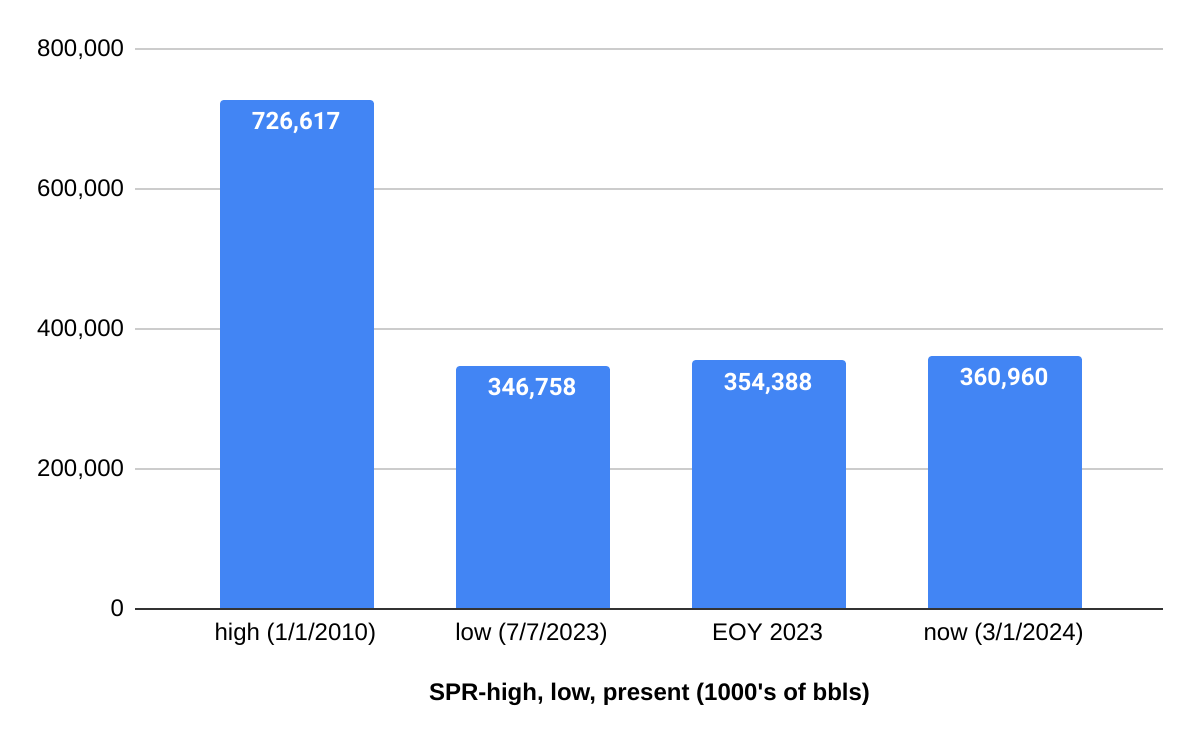
On a related note, the Strategic Petroleum Reserve has remained at historic low levels. The current volume is 351.3 million barrels, a slight rise from the low of 346.8 million barrels in July, the lowest volume since 8/19/1983 when the SPR was still being filled. Have the oil embargoes following the Yom Kippur War, the reason for the SPR’s existence, been forgotten?
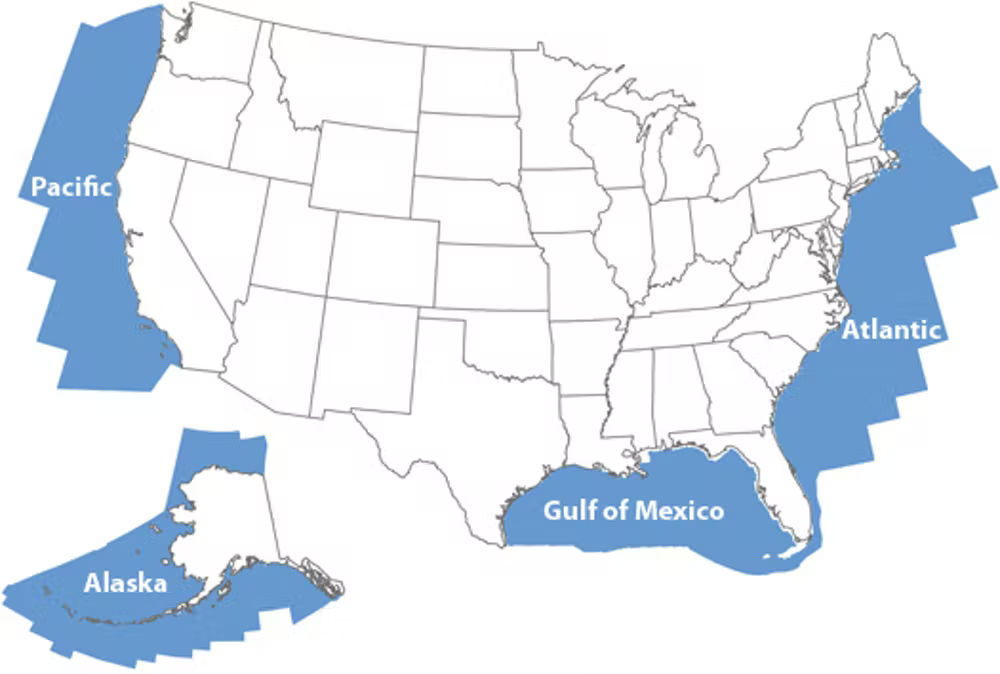
Ignore the significant oil and gas potential of arctic and subarctic Alaska, the Atlantic, the Pacific, and the Eastern Gulf of Mexico (where the best prospects are >125 miles from the coast of Florida).
WASHINGTON, Aug 1 (Reuters) – The Biden administration has pulled an offer to buy 6 million barrels of oil for the Strategic Petroleum Reserve, an Energy Department spokesperson said on Tuesday, as oil prices are expected to keep rising after a output cut from Saudi Arabia.
So much for adding a few drops to the SPR bucket. When your reserve is down 380 million barrels in a seller’s market, you don’t have a lot of purchasing leverage. Don’t expect much of an SPR refill anytime soon. It’s easy to deplete strategic assets; much more difficult to replace them.
 Bud's Offshore Energy (BOE)