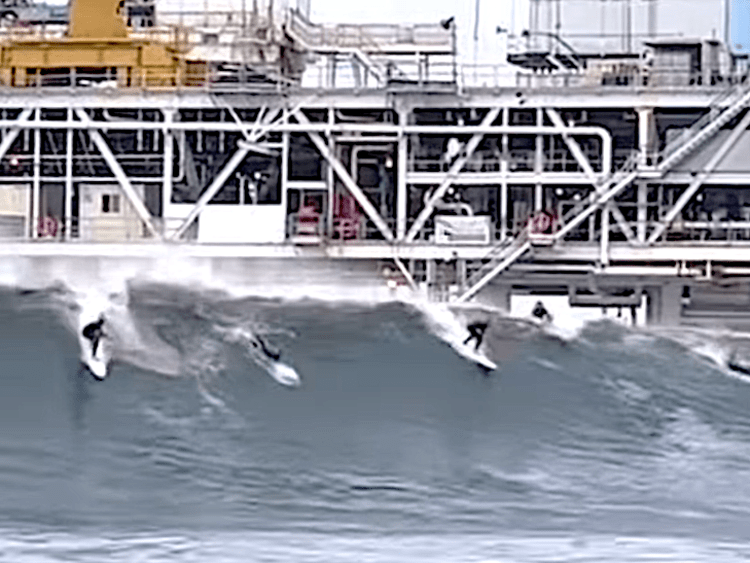
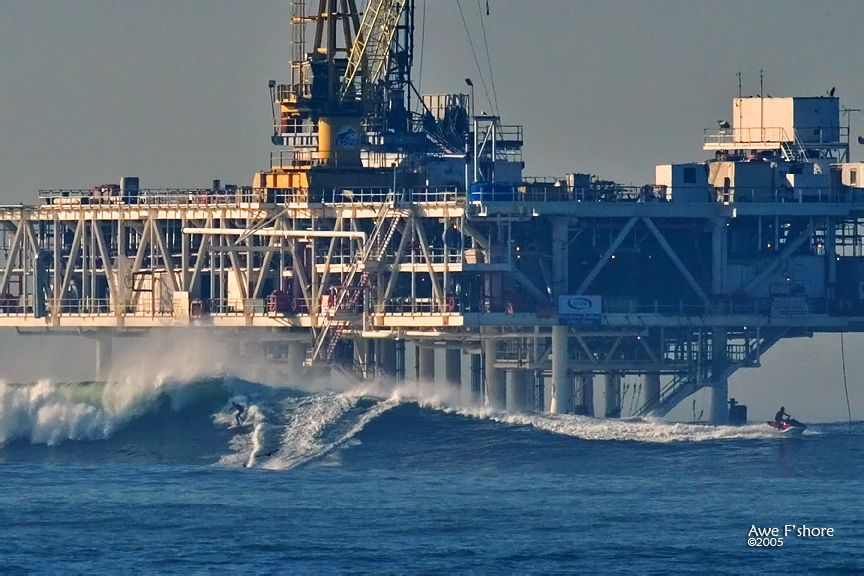
Eloquent eulogy by DCOR (platform operator) CEO Alan Templeton: “Last Sunday, August 10, I joined a small group of DCOR personnel on Platform Esther to witness her final moments of operation. At exactly 3:00 p.m., we pressed the ESD on the production deck, and one by one, the sounds of compressors and pumps faded until the platform fell silent — a profound and bittersweet moment in California’s energy history.
For over half a century, Esther stood off the coast of Orange County, first installed in the early 1960s as one of California’s iconic man-made oil islands. She blended into the horizon while quietly producing oil and gas, surviving storms, and later being rebuilt in 1985 into the platform we know today. More than just steel and pilings, Esther was a proving ground for innovation, a dependable asset, and a source of pride for the men and women who worked safely on her decks.
While she has now been permanently shut in, her legacy remains — a testament to the ingenuity, resilience, and dedication that have defined California’s offshore industry for generations.“
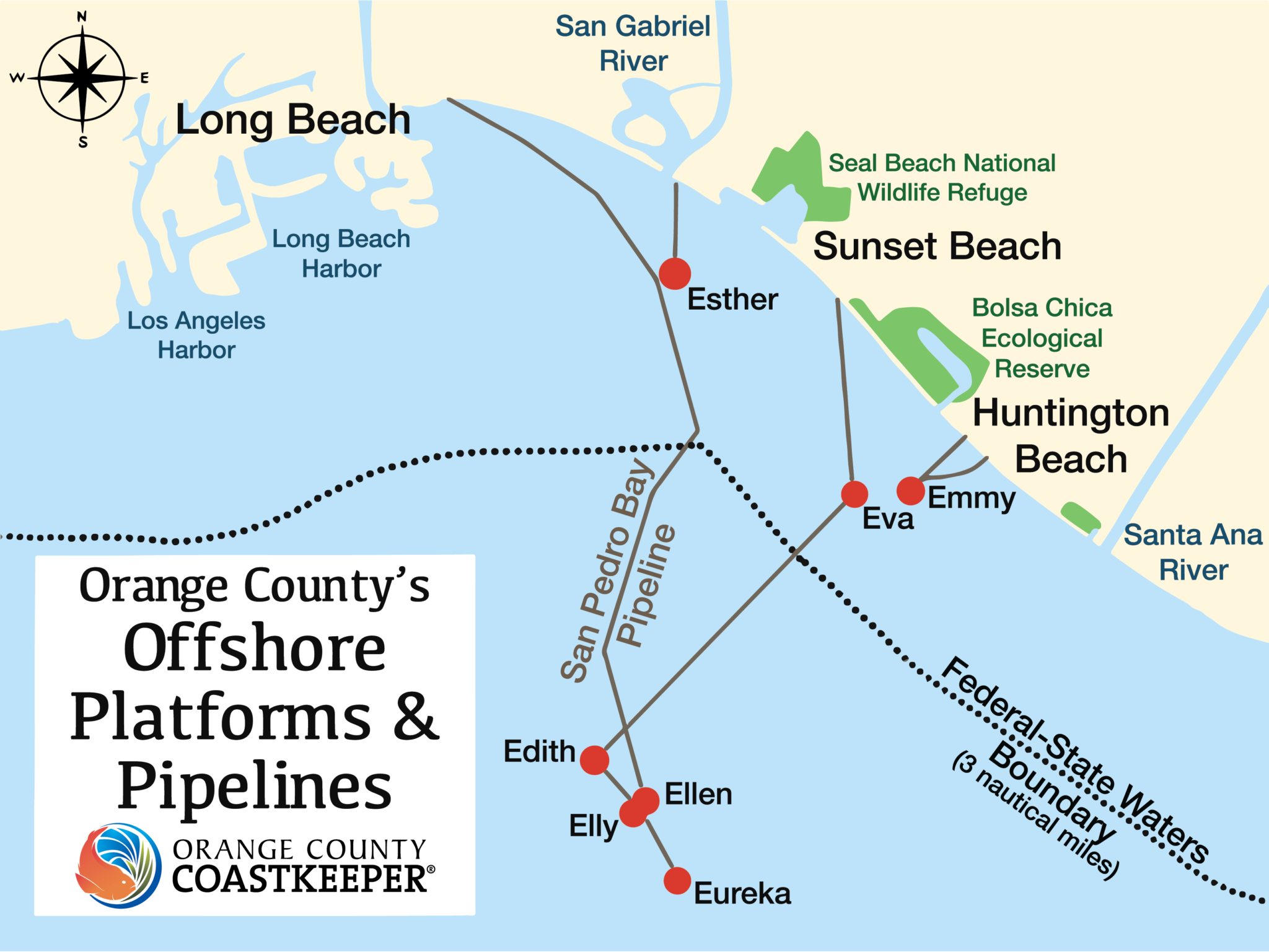
Litigation prematurely ended production at Esther, which would have had an estimated 15 more years of operative life. The attached settlement agreement, shared by John Smith, ends a dispute between the State Lands Commission and DCOR over repurposing a pipeline to transport oil from state Platform Eva to Federal Platform Edith (diagram above).
In exchange for relinquishing its mineral rights and decommissioning Platform Esther, the settlement grants DCOR a $10 million royalty credit on future oil produced from Platform Eva. This credit is significantly less than the value of remaining production from Esther.
Platform Esther, is one of three remaining oil production platforms in California state waters.
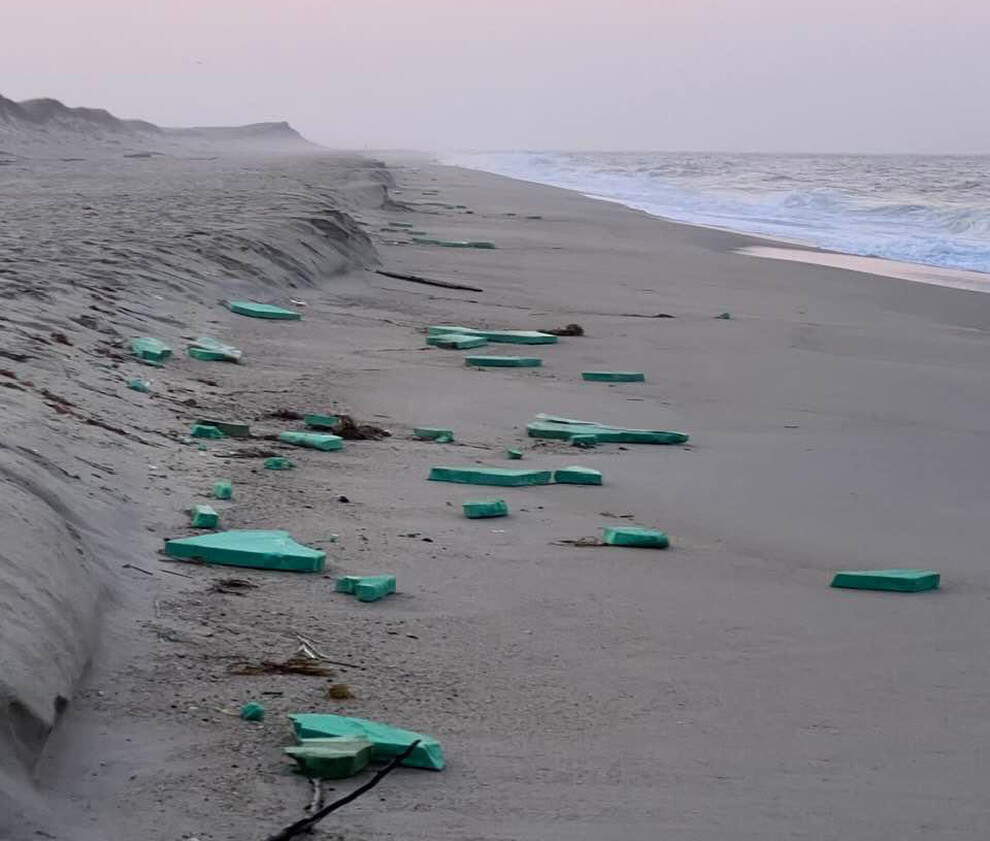
Debris from the failed Vineyard Wind blade littering the south shore of Nantucket in July 2024. Nantucket Current photo.
Nantucket reached a settlement agreement (attached) with turbine manufacturer GE Vernova (GEV), praising that company while criticizing Vineyard Wind (VW), the lessee and operator:
“The Town of Nantucket commends GE Vernova for its leadership in reaching this agreement. By contrast, the Town has found Vineyard Wind wanting in terms of its leadership, accountability, transparency, and stewardship in the aftermath of the blade failure and determined that it would not accept Vineyard Wind as a signatory to the settlement,”the town stated Friday morning.
Comments:
For a relatively modest sum ($10.5 million) paid by the contractor (GEV), the agreement further limits the Town’s ability to hold Vineyard Wind, the lessee and operating company, accountable. See sections 4, 5(a), and 9 of the agreement.
The Town’s ability to challenge the project was already compromised by their unpopular “Good Neighbor Agreement.”
What ever happened to operator responsibility? This fundamental tenet of the OCS oil and gas program also applies to offshore wind. Vineyard Wind should be the party that is fully accountable for the damages associated with their project. VW can seek compensation from GEV, but VW is the accountable party.
Can you imagine if BP had attempted to stay on the sidelines while Transocean and other contractors settled claims associated with the Macondo blowout? Unthinkable!
Nantucket should have insisted on VW’s participation, rather than excluding them.
What does the lessor, the Federal govt, have to say about damage compensation? Are civil penalties forthcoming? When will we finally see the BSEE investigation report!
Attached is a settlement agreement between NOAA and 4 NGOs that could have major implications for deepwater oil and gas operations in the Gulf of Mexico.
As background, the Rice’s Whale (formerly Bryde’s whale) area has been expanded (see map above) such that it fences off deepwater leases by creating a barrier to vessel transportation. The expansion is based on a single study that concluded that Rice’s whales were “the most plausible explanation” for moan calls observed in the northwest GOM shelf break area. No Brice’s whales were sighted in the expanded area during this study. The authors do point to a 2017 sighting offshore Corpus Christi, which is apparently the only actual sighting of a Brice’s whale along the NW GoM shelf break.
The settlement agreement commits BOEM, presumably with their concurrence, to exclude the expanded area from future leasing, to issue a Notice to Lessees and Operators (exhibit 1 below) and to attach stipulations to new leases (exhibit 2). Because BOEM’s authority to impose major new requirements without proposing a regulation for public review and comment is questionable, the Notice (NTL) describes the restrictions as “recommended measures.” However, the liability risks associated with the failure to comply with this “guidance” would be unacceptable to most companies. Adding to the muddle, the language in the lease stipulation differs by making it perfectly clear that compliance is required.
The most troubling restriction from an operational standpoint:
“To the maximum extent practicable, lessees and operators should avoid transit through the Expanded Rice’s Whale Area after dusk and before dawn, and during other times of low visibility to further reduce the risk of vessel strike of Rice’s whales.“
Comments:
Deepwater facilities are typically far from shore, and a requirement to transit only between dusk and dawn, particularly in the winter, is unrealistic and onerous. This is further complicated by the speed limit provision.
Those who have worked offshore know that periods of low visibility are unpredictable and can extend for days. The low visibility transit restriction is thus highly punitive and increases operational risks on the vessels and at the facilities they serve.
The vague “to the maximum extent practicable” caveat provides little comfort for planners, managers, and crews, and is a de facto acknowledgement that the requirement is unreasonable.
These restrictions, coupled with the required Automatic Identification System data, open the door to endless challenges, especially given the keen interest of the litigious organizations that are parties in the settlement agreement.
Deepwater GoM operations are few in number and highly dispersed, which is a more important mitigating factor than those included in the agreement. More on this tomorrow.
In addition to the deepwater operations that will be much more difficult to supply, there are currently 81 production platforms within the expanded Rice’s whale area (100 to 400 m water depth).These include important facilities like Amberjack, Cognac, Cerveza, and Lobster. What are the implications for these platforms? Will they be required to have full-time whale observers? Can they only be supplied during daylight hours with good visibility? Why not consider using these platforms as bases for more definitive studies?
Further to the previous point, there are 103 existing leases in the 100-400 m depth zone that is now excluded from leasing? 90 of these leases are still in their primary term, and 21 were issued in the past 2 years. How will the contractual rights of these leaseholders be protected? (In fact, the value of all 1550 active leases in >100 m water depth is affected by this agreement.)
Have BSEE and Coast Guard been consulted on the practicality and safety implications of these requirements?
Deepwater operations have been ongoing in the GoM for 50 years, and there is no apparent evidence of impacts to this species. Why can’t the consultation process and any necessary followup studies be completed before decisions are made regarding operating restrictions?
Finally, BOEM’s third footnote in the NTL (pasted below), doesn’t demonstrate great confidence in the need for the onerous requirements that are being imposed.
“This is not meant to be construed as a blanket determination as to whether BOEM, at present, has determined that there is a “reason to believe” that incidental take may occur, within the meaning of the ESA, the consultation regulations, or BOEM’s regulations. Those decisions will be made on a case-by-case basis in accordance with BOEM regulations referenced below.” Comment: Huh??? How are these blanket restrictions case-by-case, and how are they being imposed without public review?

 Bud's Offshore Energy (BOE)