Feeds:
Posts
Comments

Posts Tagged ‘Santa Barbara County’

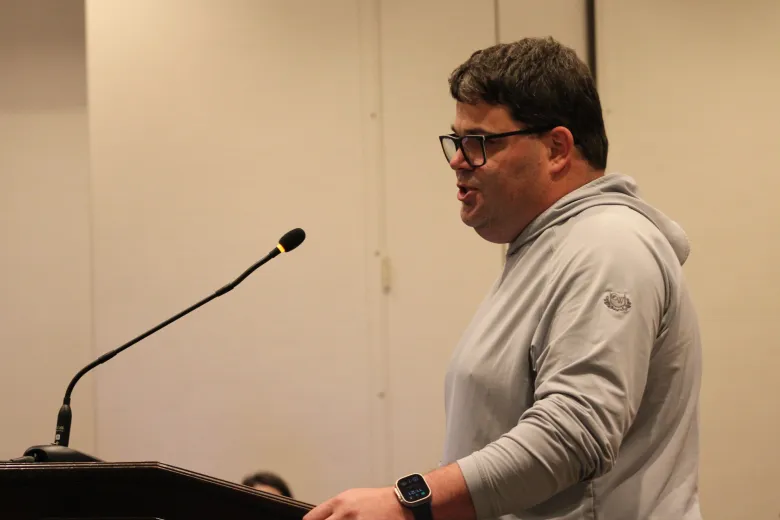
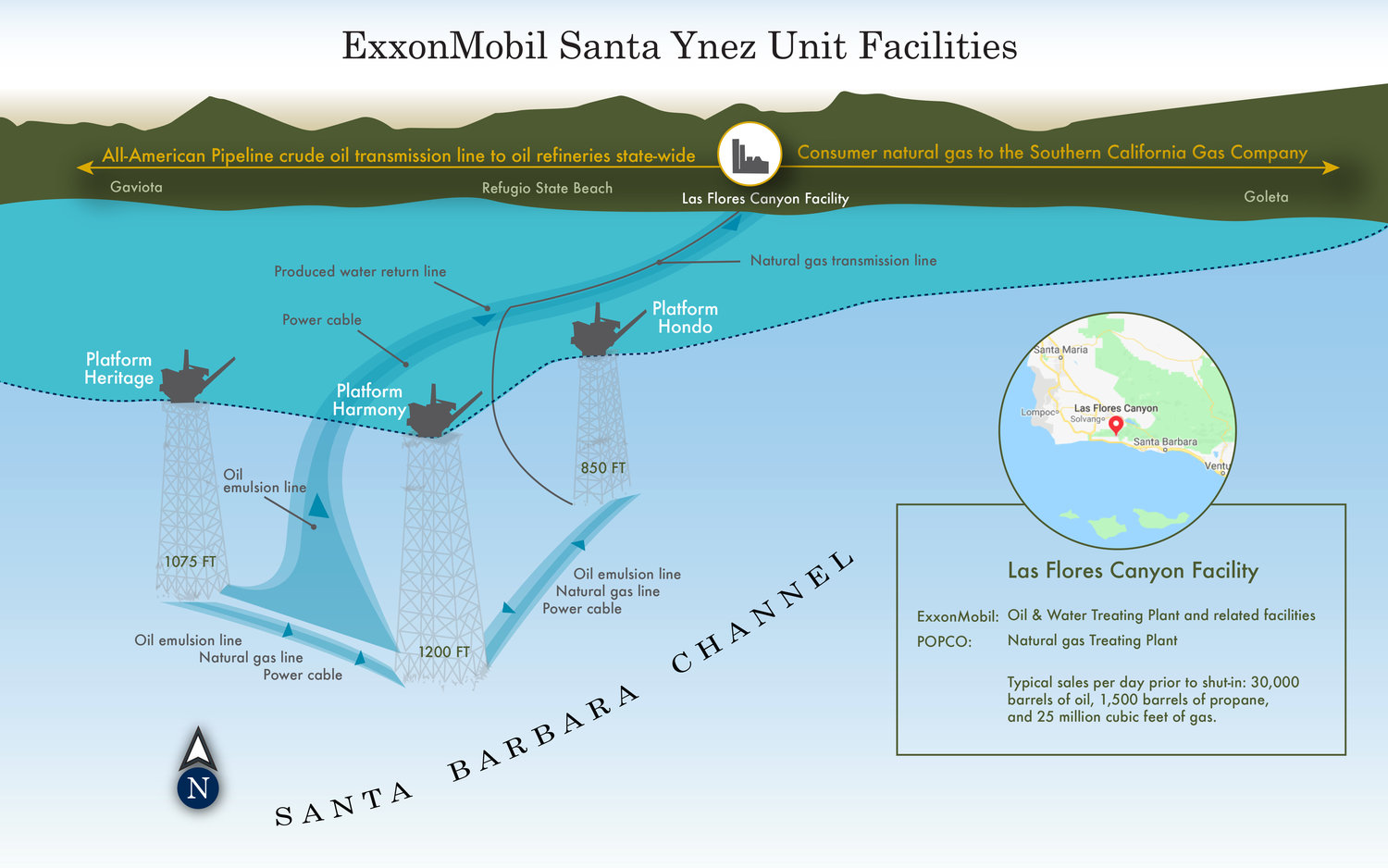
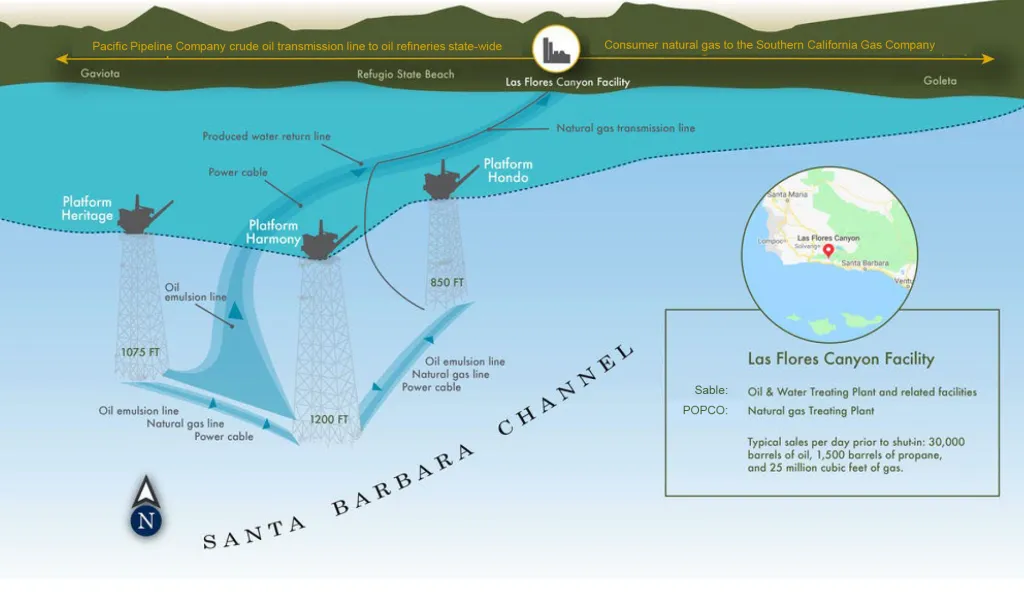
The vote on the transfer of Santa Ynez Unit (SYU), Pacific Offshore Pipeline Company (POPCO) Gas Plant, and Las Flores Pipeline System permits from Exxon to Sable Offshore was the last item on the Board’s agenda, so those of us who were streaming the meeting for that topic had to be patient.

The Sable session began with a surprise announcement that opened the possibility that perhaps the outcome might not be as expected. Supervisor Hartmann, who owns property close to the pipeline, had once recused herself from voting on this matter. When it was thought that her property was ~900′ from the pipeline, the Fair Political Practice Commission (FPPC) cleared her participation. However, after a 12/3/2025 letter from Sable informed that her property was as close as 8′ from the pipeline, the FPPC reversed its position and Supervisor Hartmann again recused herself.

Supervisor Hartmann’s re-recusal added some drama to the session given that there were two sure votes against Sable and one sure vote in favor. The swing vote would be that of Supervisor Lavagnino, who was very much supportive of the oil industry, but not Sable.

After strong but predictable presentations by the Environmental Defense Center/Center for Biological Diversity team and Sable, the floor was open to public comments. Although there were more speakers opposed to the Sable position (13), this observer found the Sable supporters (7) to be more compelling. Most were California natives who worked on the project and demonstrated a sincere commitment to the safety and environmental values that we all support. One aptly noted that California unnecessarily imports 2/3 of its oil from foreign sources, some of which aren’t particularly friendly.

As an aside, a County staffer pointed out that 400,000 barrels of SYU oil were in storage as a result of the resumption of production in May prior to receiving the necessary approvals to transport oil through the onshore pipeline.

The vote opened with Supervisor Nelson supporting the transfer of permits to Sable. His commented that the County was “attacking Sable’s finances at the same time they were trying to bankrupt them.”

Sable opponents held serve with Supervisors Capps and Lee opposing the transfer. Ms. Capps deserves credit for the sincere respect she showed for the Sable workers who were present.

So Supervisor Lavagnino would cast the deciding vote. He once again voted against the transfer noting that he was a long time supporter of the oil industry, but that he had lost confidence in Sable.

Bottom line: The outcome was as expected, but the recusal drama and strong presentations made the stream worth watching.
Read Full Post »

Excerpts from a stunning Sable update issued by Hunterbrook Media LLC (“Hunterbrook“) on November 14, 2025:

  • SEC filing reveals Sable entered October about a month from potential bankruptcy. The company had $41.6 million as of September 30, with $39.7 million in average monthly burn in 3Q25.  
  • When Sable announced its $250 million financing on November 10 at $5.50 per share, the company likely had single digit millions in the bank based on its reported burn, against over $163 million in accounts payable and accrued liabilities. Sable does not generate any revenue.
  • Sable needs to raise significantly more money: According to leaked audio of Sable’s CEO briefing for select investors, the company will require $2.3 billion to achieve commercial production of oil and gas from its three platforms off the coast of Santa Barbara.
  • That includes at least $900 million to buy out Exxon, to which Sable must pay 15% interest on debt due by March 31, 2027. By then, the loan would be about $1.1 billion, accruing $200 million in added debt.
  • One of Sable’s only known assets other than the oil and gas project is a private plane the company purchased from its CEO, Jim Flores. The plane recently flew round-trip from Houston, where Flores lives, to Louisiana, in time for a football game at the CEO’s alma mater.

Comments from Santa Barbara County Supervisor Steve Lavagnino, an oil industry supporter, that explain his opposition to the transfer of Exxon’s pipeline permit to Sable:

“The final straw for me was a Hunterbrook article, which was as disturbing as anything I’ve read. I have many friends in the oil industry and I will continue to support efforts to access our natural resources, but it has to be done responsibly by operators who put safety above profits.”

Sable’s limited response to the Hunterbrook report includes information on decommissioning financial assurance:

  • Sable’s original SYU Purchase and Sales Agreement (PSA) with Exxon required Sable to post a $350 million decommissioning bond “150 days following the resumption of production from the wells.”
  • According to Sable, production resumed on May 15, 2025. The bond would have thus been required in October. (SYU production was halted by court order on June 6, so that “resumption date” may be irrelevant. Regardless, the Oct. financial assurance deadline is immaterial given the recent update to the PSA.)
  • The PSA update extended the date for posting the decommissioning bond to three business days following the new Exxon Loan Maturity Date of March 31, 2027 or 90 days after first sales of hydrocarbons, whichever comes first. (Note the change in language from “resumption of production” to “first sales.” Brief well test production does not trigger posting of the decommissioning bond.)
  • Under certain circumstances after the bonding is in place Exxon may seek an increase in the bonding amount to $500 million.

The decommissioning obligations are moot if Sable runs out of funds or is unable to resume SYU production prior to the 3/31/2027 PSA deadline. Exxon would remain fully responsible for SYU decommissioning.

Is it time for a public statement from Exxon on the SYU and Sable?

Read Full Post »

Attached is John Smith’s comprehensive summary of lawsuits related to Sable Offshore’s attempts to restart Santa Ynez Unit production.

If you are keeping score, there are 10 separate cases including a class action lawsuit filed by investors. New legal battles are sure to follow given Sable’s OS&T strategy. Per John:

The combined legal challenges, injunctions, and restraining orders have significantly delayed Sable’s restart plans and prompted the company to pursue an Offshore Storage and Treatment Vessel (OS&T) strategy, which was utilized to process SYU production in federal waters from 1981 – 1994, and transport oil to markets using tankers.

Read Full Post »

Board of Supervisors Image (PNG)

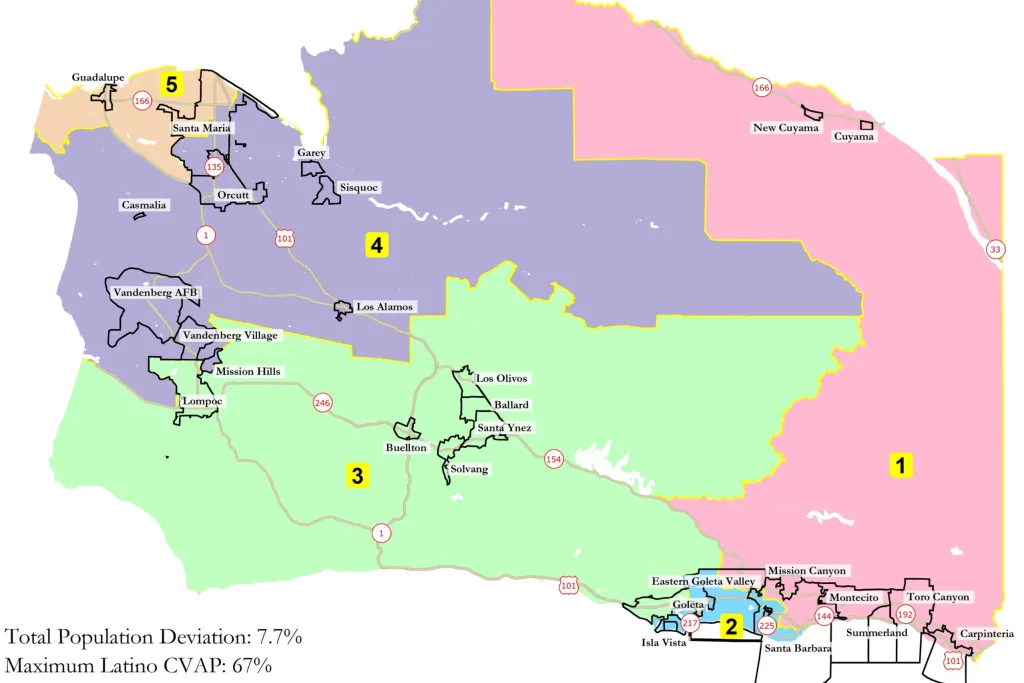
The Santa Barbara County Board of Supervisors voted 3-2 to proceed with developing a new ordinance that will ban new and operating oil and gas wells in the County.

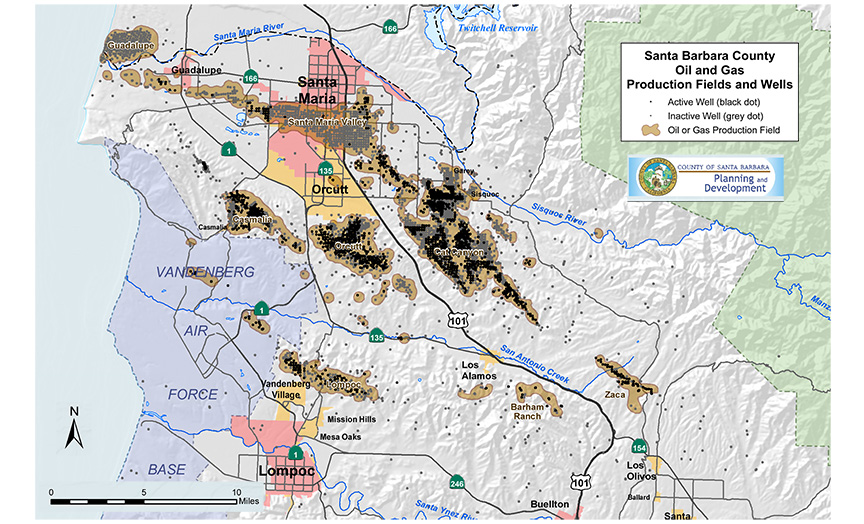
In essence, the 3 Supervisors from South County (Districts 1-3) voted to euthanize an industry that is largely in North County (Districts 4 and 5). Those 3 supervisors, not the marketplace, are terminating a historically important industry. See the maps below.

Supervisors Laura Capps of the Second District, Joan Hartmann of the Third District and Roy Lee of the First District voted for the ordinance.

Supervisor Steve Lavagnino of the Fifth District, where I once lived, correctly noted that the North County only has two industries that allow people to support themselves well after high school: agriculture, and oil and gas.

Ah, but it’s the industry’s fault according to Supervisor Hartmann. She asserted that companies have known since the 1950s about the dangers of climate change, and could have led the way to be part of the solution. How dare they respond to market forces instead of climate ideologues!

Of course, this is the same three vote coalition that is aligned with the Coastal Commission in opposition to the restart of the Santa Ynez Unit, which would benefit the County significantly.

Finally, note that the three supervisors voting for the ordinance represent the districts with the highest income levels and lowest poverty rates. Those opposing the ordinance represent the districts that will be most affected, and have the lowest income levels and highest poverty rates. (See the table below; Information courtesy of Grok AI.)

DistrictApprox. Median Household Income (2022)Key Areas IncludedNotes
1$120,000–$140,000Carpinteria, Summerland, Montecito, parts of Santa BarbaraAffluent coastal communities; high home values (~$1.5M+ median)
2$95,000–$115,000Santa Barbara city, Goleta, Isla Vista
Mix of urban professionals, students, and tech; university influence lowers median slightly.
3$80,000-$95,000Santa Ynez Valley, Buellton, Solvang, Lompoc
Rural/agricultural with tourism; moderate incomes from wine industry and military base
4$70,000–$85,000Lompoc, Vandenberg area, parts of Santa Mariaindustrial and defense-related; higher poverty rates (~15–20%).
5
$60,000–$75,000
Santa Maria, Guadalupe
Agricultural North County; majority Latino population; lowest incomes due to farm labor.

Poverty rates: ~8–10% in Districts 1–2 vs. 18–25% in Districts 4–5

Read Full Post »

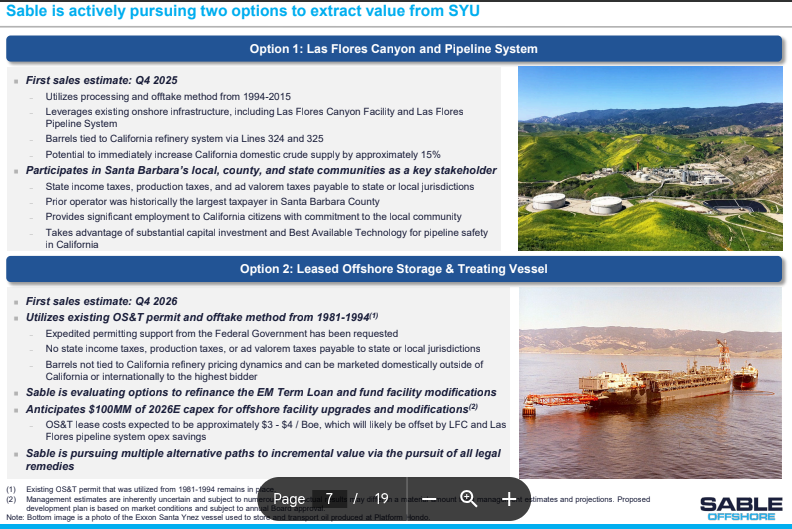
Those of us who were involved with OCS oil and gas operations in the 1970s remember the heated battles between Exxon and Santa Barbara County that led to the installation of the infamous Offshore Storage & Treatment (OS&T) facility in Federal waters. This was the first floating production, storage, and offloading facility (FPSO) in US waters by 3 decades!

In light of Sable’s difficult (bordering on impossible) onshore permitting challenges, the company resurrected the OS&T option in a recent presentation to investors (pertinent slide pasted above). The extent to which this is purely a tactical maneuver remains to be seen, but this option would be very difficult to execute, even with a supportive Federal regulatory environment.

Stay tuned!

Read Full Post »

In the Independent, Nick Welsh aptly described the latest court decision in the long and winding road that Sable Offshore hopes will lead to Santa Ynez Unit production:

When Judge Donna Geck got through ruling on the latest showdown between Sable Offshore Oil and Santa Barbara’s environmental establishment last Friday morning, it wasn’t clear if the no-nonsense judge cut the proverbial baby in half or kicked the can down the proverbial road.” 

Bottom line: The judge will “continue to bar the Fire Marshal from taking any steps to process Sable’s restart application until 10 days after Sable had received all the necessary permits and approvals from the myriad of state, federal, and local agencies that enjoy some degree of regulatory oversight over the proposed project.” Does that mean any agency, even one with a minor or questionable role, can block the project?

As the author notes:

“As of this writing, it’s not entirely clear which of those agencies have yet to issue Sable the permits it needs to start the restart process and when they’re likely to do so, if at all. Even less clear is whether there’s any agreement among the dueling parties as to which agencies have standing to even weigh in.”

Read Full Post »

A good Nick Welsh, Santa Barbara Independent article has been brought to my attention by John Smith. Bonus points for the baseball analogy:

In baseball, ties famously go to the baserunner, but in county government it’s forced a legal fight in the courts.”

The oil company Sable Offshore is insisting that when the County Board of Supervisors voted 2-2 on whether or not to allow another oil company, Exxon, to transfer its permits to Sable, the tie goes to Sable.”

Accordingly, Sable — much in the limelight recently — just filed a lawsuit against the Santa Barbara County Board of Supervisors in federal court to make that point. Joining Sable in this dispute is ExxonMobil, the oil giant that sold Sable its three offshore platforms, its 120-mile pipeline, and its onshore oil storage and processing facilities known as the Santa Ynez Unit two years ago.”

Because the Planning Commission had voted  3-1 to allow the transfer, Sable argues that the 2-2 Supervisors vote upholds the Planning Commission decision.

Never a dull moment in the Santa Ynez Unit restart doneybrook. More on the tie vote here and here.

Read Full Post »

The Santa Barbara Independent doesn’t pull any punches in this article about the once invincible California Coastal Commission. I recommend that you read the entire article, but here are some choice excerpts (emphasis added):

Lastly, it’s totally unprecedented for members of the commission to verbally eviscerate energy planners with Santa Barbara County at a public hearing for refusing to provide them requested planning documents having to do with Sable no fewer than seven times. While the county has denied this charge, no one from the county showed up for last week’s meeting to explain their actions. One commissioner termed this absence a “dereliction of duty.”

What actions and outcomes ultimately emerge from this rancor remain far from obvious. That’s in part because the political support enjoyed by the Coastal Commission — long regarded as one of California’s many “third rails” of state politics — has never been so uncertain. By “uncertain,” I mean rarely has any state agency been so reviled by such a wide swath of political players and stakeholder groups.

The question has become not so much who hates the Coastal Commission — it’s who doesn’t. Donald Trump has hated the commission since it objected to a 70-foot flagpole Trump planted on a beachfront golf course he owned back before he became president.

Elon Musk, Trump’s alter ego, sued the Coastal Commission — and lost — over the commission’s outspoken refusal to grant him the “consistency determination” he needed to increase the number of SpaceX rocket launches from Vandenberg Space Force Base from 35 to 50. Although a federal judge would rule in the commission’s favor, Governor Gavin Newsom, a noted Democrat, announced he was siding with Musk on this one. 

So, what happens if Sable doesn’t pay the fine? Or keeps on working despite three cease-and-desist orders? The key question — still loudly unanswered — is what Attorney General Rob Bonta will do. Will Bonta throw his considerable heft behind the commission? He hasn’t yet. And it’s been several months. Does the governor want to pick his battles with the Trump-Musk White House for causes that enjoy more broad public support?

Read Full Post »

Sable supporter Trent Fontenot calls out the CCC for government overreach.  Daniel Green / Noozhawk photo

Yesterday, the California Coastal Commission voted 8-3 to fine Sable Offshore $18,022,500 for performing pipeline repairs necessary to minimize operating risks and comply with the FIre Marshall’s requirements.

In the minds of at least some commissioners, Santa Barbara County, which reached agreement with Sable on pipeline repairs, is also a villain in this matter. Per Commissioner Harmon:

“We have not gotten a foothold with Sable, and we’ve not gotten a foothold with Santa Barbara County either. So, we are where we are, and because of this absolute failure of communication and Sable’s, to be frank, absolute failure to follow the law, this hearing has become necessary,” Harmon said.

We’ll see how this gets sorted out in the courts. Sable appears to have a strong case against the Commission, but litigation in California courts is not exactly ideal for oil companies.

Read Full Post »

BOE contributor John Smith has shared (attached) his highlighted version of the 89 page California Coastal Commission staff report recommending imposition of a $15 million fine

John finds it noteworthy that the report documents that Santa Barbara County did not concur with the CCC, and that the California State Lands Commission approved the span remediation work. John thinks this raises legitimate questions as to whether the CCC is overreaching in terms of asserting permitting authority for the repair and maintenance work. 

John thinks it will be interesting to see how the Courts rule on this and expects an appeal regardless of the outcome. He points to the Court ruling against the CCC on Pismo Beach offroading case as being pertinent to the Sable-CCC dispute. (“Is the Friends of Oceano Dunes court victory a good omen for Sable?“)

In particular, note the text John has highlighted in green. These issues will likely be central to the Court deliberations.

Read Full Post »

Older Posts »