Feeds:
Posts
Comments

Posts Tagged ‘safety violations’

  • Must average <0.3 incidents of noncompliance (INCs) per facility-inspection.
  • Must average <0.1 INCs per inspection-type. (Note that each facility-inspection may include multiple types of inspections (e.g. production, pipeline, pollution, Coast Guard, site security, etc). On average, each facility-inspection included 3.3 types of inspections in 2023. Here is a list of the types of inspections that may be performed.
  • Must operate at least 3 production platforms and have drilled at least one well (i.e. you need operational activity to demonstrate compliance and safety achievement).
  • May not have a disqualifying event (e.g. fatal or life-threatening incident, significant fire, major oil spill). Due to the extreme lag in updates to BSEE’s incident tables, district investigations and media reports are used to make this determination.

Read Full Post »

Below is a report summary that was referenced in the Office of the Inspector General, Dept. of the Interior, Semiannual Report to Congress (9/30/2023). The summary does not identify the company that committed the violations.

Failing to identify the responsible company is not in the best interest of the OCS program or the many operators and contractors that are committed to safe operations and compliance with the regulations.

The subject violations were on the Federal OCS and were serious enough to be investigated by the IG. The public has a right to see the full report. (See also the discussion about the failure to release the IG report on the misuse of the decommissioning account for Platforms Hogan and Houchin.)

Presumably, BSEE has issued civil penalties, so we may be able to piece this case together when those penalties have finally been paid.

Summary: Offshore Servicing Company Failed to Conduct Mandated Safety Tests and Submitted False Information to BSEE
Report Date: August 29, 2023 Report Number: 20-0425

The OIG investigated allegations that an offshore oil and gas servicing company bypassed safety valves and falsified mandated safety tests associated with an oil and gas production platform located in the Gulf of Mexico. The safety tests are required by Federal regulations enforced by the Bureau of Safety and Environmental Enforcement (BSEE) to ensure that equipment aboard the platform functions properly and prevents the discharge of hydrocarbons into Federal waters.

We found that the servicing company did not perform the mandated safety tests but submitted documentation to BSEE that falsely represented that the safety tests had been conducted. We also determined that multiple safety valves aboard the offshore platform were bypassed and remained in that condition for at least 59 days but potentially as long as 223 days. We presented our findings to the U.S. Department of Justice, which declined prosecution.

This is a summary of an investigative report we issued to the Director of BSEE for action as deemed appropriate.

Read Full Post »

Carbon-Zero US LLC of Dallas (a Cox Oil affiliate) has applied for up to $12 million in U.S. Department of Energy funds to develop a pilot sequestration hub in offshore storage fields about 20 miles from Grand Isle, according to officials from Cox Operating LLC, the Dallas operator that owns some of the storage fields.

Cox Operating LLC will “repurpose facilities and equipment” for the carbon storage project, according to a news release.

The Advocate

Should this company be authorized to repurpose Gulf of Mexico facilities for carbon sequestration?

  • Per BSEE Incident of Non-Compliance (INC) data for 2022, Cox had more component shut-in INCs (132) than any other company. Cox was second to the Fieldwood companies in the number of warning and facility shut-in INCs, and in the total number of INCs. 48% of the Cox INCs required either a component or facility shut-in.
  • Cox had an INC/facility-inspection ratio of 0.77, nearly 50% higher than the GoM average of 0.53.
  • Per the posted BSEE district investigation reports for 2022, Cox was responsible for 9 of the 30 incidents that were significant enough to require investigation. That is more than twice as many as any other company (next highest was 4).
  • The incidents included 3 serious injuries, 2 fires, a large gas leak, and oil spills of 114, 129, and 660 gallons. Per the posted reports, only one other company had an oil spill of >1 bbl. (Note: Only spills of > 1 bbl are routinely investigated by BSEE. One bbl = 42 gallons.)
  • While INCs were issued for only 3 of the 9 Cox incidents, a review of the reports suggests that INCs should have been issued for at least 4 of the other incidents.
  • Cox operates 375 platforms with installation dates as early as 1949. 134 of their platforms are > 50 years old. Only 66 were installed in the last 20 years and only 6 in the last 10 years (most recent December 2014). How will the carbon sequestration plans affect their massive decommissioning obligations?
  • Many of the Cox platforms were assigned by predecessor lessees. Those predecessors can only be held responsible for the decommissioning of facilities they installed, not for more recent wells or platforms and not for facilities that are repurposed for carbon sequestration.

Other more generic issues should be addressed before DOE awards funds for offshore sequestration projects.

Also, as noted in the discussion of Exxon’s 94 Sale 257 oil and gas leases, a competitively issued alternate use RUE is required (30 CFR § 585.1007) before sequestration operations may be conducted on an oil and gas lease.

Read Full Post »

While the Fieldwood Energy violations drove up the number of Incidents of Non-Compliance (INCs) in the Gulf of Mexico in 2021, most operating companies appear to have had good compliance records. Among companies that were subjected to at least 10 facility inspection and drilled at least one well, BHP Billiton, Eni US, and Murphy (listed alphabetically) had the most impressive compliance records. These three operators were cited for 7 or fewer INCs, none of which required a facility to be shut-in. Other operators that exceeded those activity thresholds and had excellent compliance records were (listed alphabetically) Anadarko, ANKOR Energy, Chevron, EnVen, Shell, and Walter Oil and Gas.

In the Pacific Region, Beta Operating Co., Chevron (now overseeing the former Signal Hill properties), and Exxon had excellent compliance records, although none of these facilities produced for the full year. In Alaska, Hillcorp had an excellent record at the Northstar Unit. (This is a gravel island facility in the State waters of the Beaufort Sea, but some of the wells produce from portions of the reservoir that are in the Federal sector).

Unfortunately, only summary inspection data are posted online. Without knowing the specific violations and circumstances, it’s not possible to fully assess the risk exposure. These oil and gas operations are conducted on public lands and are monitored by Federal employees. Inspection data and reports should be publicly accessible without having to submit Freedom of Information Act requests.

As has previously been discussed, incident updates should also be posted in a timely manner. Reference is made to this important recommendation in the 2016 National Academies report entitled Strengthening the Safety Culture of the Offshore Oil and Gas Industry:

Recommendation 4.2.2: Because accident, incident, and inspection data all are needed to identify and understand safety risks and corrective actions, the committee recommends full transparency such that regulators make all these data readily available to the public in a timely way, taking into consideration applicable confidentiality requirements.

Read Full Post »
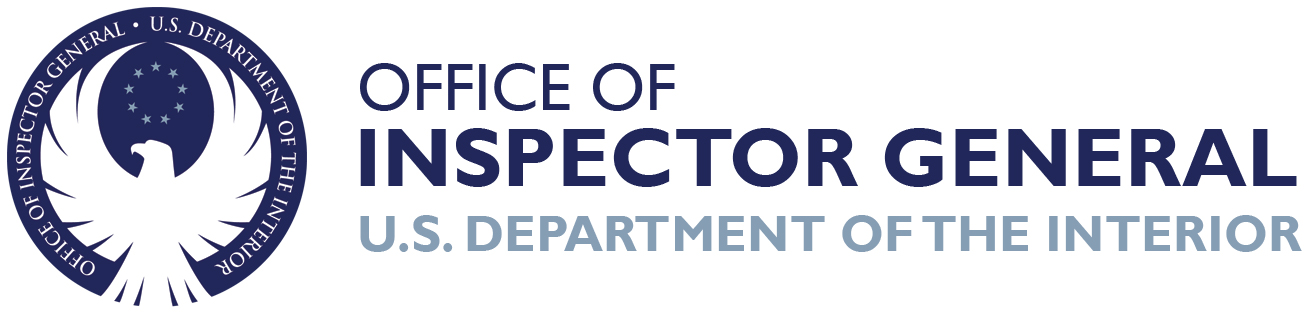
Per BSEE’s Incidents of Non-Compliance (INC) data base, the number of violations surged in 2021, both in terms of the total number of INCs and the INCs/inspection ratio (see chart below). Remarkably, a single company – Fieldwood Energy – was responsible for 845 INCs or 44% of the total number issued. Normalizing for the number of inspections, Fieldwood facilities were cited for 1.46 INCs/inspection versus 0.46 INCs/inspection for all other companies. An unprecedented 61 of Fieldwood’s 2021 INCs called for facility shut-ins, many times more than any other operator. Through the first 17 days of 2022, Fieldwood has already been cited for 21 INCs, 5 of which required facilities to be shut-in.

Fieldwood and its affiliates have experienced multiple bankruptcies and the company has once again been reorganized with the blessing of the courts. Chevron’s comprehensive objection to the reorganization plan asserted that Fieldwood has $9 billion in current and anticipated decommissioning obligations. These enormous decommissioning liabilities and their implications for predecessor lessees (former facility owners) and the Federal government were the main issue in these proceedings, and the bankruptcy plan includes settlements with predecessor companies and the government.

Even more significant than the financial matters and INCs are the following:

While BSEE regulations provide for the removal of operating rights for poor safety performance, companies can reorganize and problem managers can reappear elsewhere. As a result, marginally financed and ineffective operating companies are a major challenge for BSEE as evidenced by the INCs, civil penalties, and investigations. (See the related saga of Platforms Hogan and Houchin in the Pacific Region.)

Poor safety performers drag down the entire industry. The costs of mega-disasters like the Santa Barbara and Macondo blowouts have been widely discussed. However, chronic poor performance and the associated incidents also weaken the industry and damage the integrity of the offshore oil and gas program. These performance issues can’t be left entirely to BSEE and the Coast Guard to resolve. The industry needs to do a better job of self-evaluation, calling out poor performers, and exercising judgement in the assignment of offshore properties.

Read Full Post »