Feeds:
Posts
Comments

Posts Tagged ‘oil spill’

Ohmsett

The seemingly endless crowing about the absence of improvements in spill response capabilities is a story by itself. This topic warrants a full discussion when time permits, but for now I’ll offer a few comments and observations:

  • The Macondo offshore spill response was unprecedented and impressive, and the lessons learned will be applied to improve spill response preparedness around the world.
  • Those who claim that there has been no progress in spill preparedness either have no real interest in spill response or have not been paying attention.
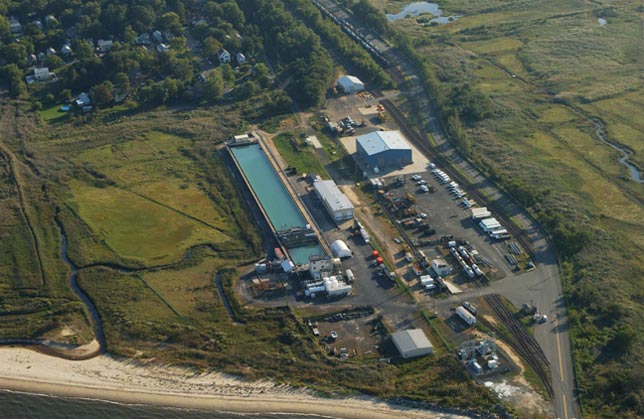
  • Even in the lean years following the Valdez oil spill research surge, the much-maligned MMS continued to conduct important burning, dispersant, remote sensing, and mechanical cleanup studies, while upgrading and expanding the use of the nation’s major oil spill response test facility – Ohmsett (pictured above).  This research was effectively applied during the Macondo spill and smaller, less publicized incidents. Click here for a nice summary of the program and here for the very extensive list of projects and links to the reports. Domestic and international partnerships, most notably with Norway and Canada, helped sustain this important research.
  • Despite periodic attempts to reprogram Ohmsett funding, MMS was able to continue to support this outstanding research facility.  Learn more about Ohmsett.
  • During the blowout, the networks featured the snake oil salesmen and hucksters who peddle super-sorbents and oil-consuming substances during every major spill.  That time should have been given to response experts and serious oil spill researchers.
  • Former industry executives with no real spill response experience trumpeted, without any documentation, claims of extraordinary recovery rates elsewhere (usually in places where no one gets to watch). Their favorite concept, supertanker response systems, received a lot of air time until the “Whale” tanker-skimmer flopped as predicted.
  • You would think that Kevin Costner’s very good separator (tested at Ohmsett in 1999!) was the only advance in response technology. Perhaps more movie and TV stars should get involved with spill response. Charlie (Oil) Sheen would no doubt attract interest to the cause. 🙂
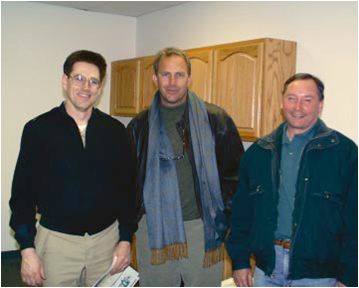
NWS Earle Executive Officer Claudill, Kevin Costner, and Ohmsett Manager Bill Schmidt (1999 photo at Ohmsett)


Read Full Post »

Good Nola.com article on the well containment systems

Comments on well capping and containment:

  1. Capping and containment systems, while important and necessary, are for blowout response, not blowout prevention. Their use, successful or otherwise, would only occur after a series of unacceptable failures.
  2. Having two capping and containment consortia in the Gulf of Mexico (and none anywhere else in the world) does not seem to be very cost effective or efficient.
  3. What are the plans for subsea capping and containment systems elsewhere?
  4. A capping/containment capability would not have saved a single life on the Deepwater Horizon. Verified barriers must be in place to prevent flow from the well bore.
  5. The well responsible for our other major drilling blowout spill (Santa Barbara – 1969), was capped at the surface by closing the blind ram on the BOP shortly after flow began. However, capping doesn’t work if you don’t have a competent well bore. The well flowed through numerous channels back to the seafloor.
  6. Capping subsea wells is safer than capping surface wells.
  7. Capping the Montara blowout (2009) in only 80m of water was neither safe nor technically feasible because of the way the well was suspended. Despite the complete absence of a capping option at Montara, the capping of surface wells has received little attention.
  8. The more critical, but less publicized, post-Macondo initiatives pertain to well design, construction, and verification. In that regard, important new standards, including the Well Construction Interface Document, are scheduled to be completed soon. That work must not be delayed.
  9. While capping stacks and containment systems will only be used in the event of a series of major failures, design and construction procedures are critical every time a well is drilled. The importance of the initial design decisions continues into the production phase and beyond, even after the well has been plugged and abandoned.

Read Full Post »

These hearings should be interesting:

The JIT expects to hold another set of public hearings the week of April 4 to focus specifically on the BOP and findings from the forensic examination. BOEMRE and the USCG expect to issue a joint release regarding the investigation by mid-April.

Read Full Post »

“Our internal investigation into the events of that tragedy is nearing completion,” Newman told investors during a conference call to discuss Transocean’s fourth-quarter earnings. “In light of continuing delays and obtaining information on the third-party testing of the Horizon’s (blowout preventer), we expect to release findings in the next month or two.” Fox Business


Read Full Post »

From the Australia Resources Minister’s Press Conference on 4 February in Canberra (click for the full transcript):

I might also say that I was in the United States last week and these issues were clearly top of mind in my discussions in Washington (l didn’t know he was here and have seen no US coverage of these meetings.)

I reinforced my previous commitment to work closely with the United States in terms of the consideration of the outstanding recommendations of the Macondo report and our determination to put in place a single national regulator in Australia

Discussions were also held with the companies and the US administration about an international conference we will hold in Western Australia in August of this year, focusing on the recommendations of the Macondo and Montara reports. That conference will be highly technical in nature.

It will in my opinion be a very important regulatory conference because it’s about basically having a look at where we are, what national and international responses can be coordinated, any specifications that might have to be changed so that we get a uniform approach to industry practice and the nature of equipment used. (Is the Minister unaware of the Vancouver conference and the ongoing work among regulators?)

(On the report about the Varanus Island explosion) Firstly I’d love to get my hands on it because I want to fully assess it. But I can’t get access to it at the moment because the WA government has determined it would be inappropriate to release it because it may impinge on potential legal proceedings.


Read Full Post »

From today’s Platts Oilgram News:

Offshore drilling giant Transocean expects to release its internal investigative report next month on last year’s Macondo disaster in the Gulf of Mexico as the first of several milestones toward resolving liability issues, Transocean CEO Steven Newman said February 8.

The BOP section of TO’s report should be very interesting.

Read Full Post »

U.S. OFFSHORE OIL EXPLORATION: MANAGING RISKS TO MOVE FORWARD

Interesting lineup of speakers.

Read Full Post »

Montara Blowout - Timor Sea

Link

PTTEP will have to report monthly and meet quarterly with Mr Ferguson under a binding agreement for the next 18 months.

Comment: That “penalty” is almost comical. What is the next level of punishment – weekly meetings with Ferguson? Also, shouldn’t the Minister let the regulator oversee PTTEP? Shouldn’t the Minister receive such reports and briefings from the regulator?

There is no disincentive, there’s no penalties. That’s what I think many Australians will be scratching their heads about. Paul Gamblin, WWF WA Director

Comment: I have to agree with the World Wildlife Federation. As one who has been following Monatara since the blowout was first reported and has read every page of the submissions and testimony, it seems inconceivable that PTTEP is able to continue its operations with no apparent penalty.

Read Full Post »

This cartoon reminded BOE sage Odd Finnestad of the Deepwater Horizon BOP “forensics” testing.

While the BOP testing is now in its 4th month with no official updates and no information on the badly neglected investigation website (where items from last August are listed as the “latest news”), there is online video evidence that gives us good clues about what happened.  However, this is partial evidence, and concerned operators, contractors, and regulators need complete information. While we wait, wells are being drilled around the world without the benefit of even preliminary findings.

When a plane crashes, information is released as soon as possible so that future accidents can be prevented.  Why is that not the case with this investigation? The absence of urgency and transparency is most disappointing.

Read Full Post »

From Platts Oilgram News (3 February 2011):

Mitsui affiliate MOEX Offshore has received invoices from BP seeking $2.64 billion in reimbursement related to the Macondo oil spill in the US Gulf of Mexico, Mitsui said February 2.

A wise attorney (not an oxymoron :)) recently mentioned that you had to be very careful about ventures that you are buying into (as a partner) or selling into (as a contractor or manufacturer). If something horrible happens, your company’s economic future could be jeopardized, even if your role was rather small.

Read Full Post »

« Newer Posts - Older Posts »