Feeds:
Posts
Comments

Posts Tagged ‘offshore’

It looks like Montara has not affected frontier exploratory drilling offshore Australia.  Per Upstream:

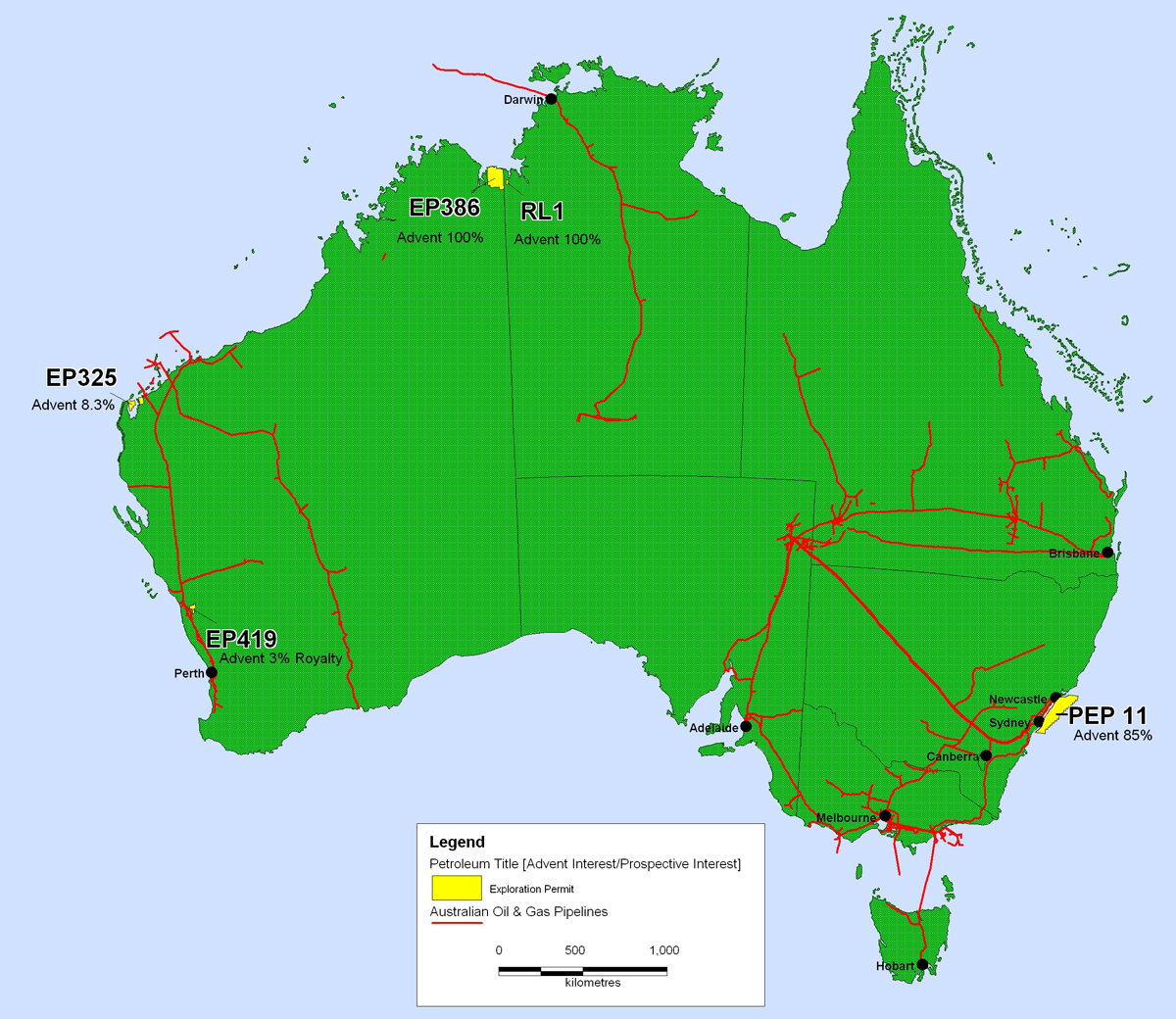
New Seaclem-1 will be the first well to be drilled off the New South Wales coast and will target an estimated 6 trillion cubic feet of gas in the Great White & Marlin prospects.

Well site is in PEP-11 (Advent Energy map)

Read Full Post »

The Economist reports on the Laggan-Tormore gas project :

The £2.5 billion project, approved earlier this year, should deliver its first gas in 2014—a full 28 years after the Laggan field was discovered, a delay that exemplifies the region’s challenges. The field was too small and remote to justify the construction of a pipeline until the nearby Tormore field was discovered in 2007.


Read Full Post »

In recognition of the earlier fall harvests to our north, Canada celebrates Thanksgiving a month ahead of the US. As a result, Canada’s Thanksgiving coincides with our Columbus Day.  So Happy Holiday to folks on both sides of the border, even if you have to work! 🙂

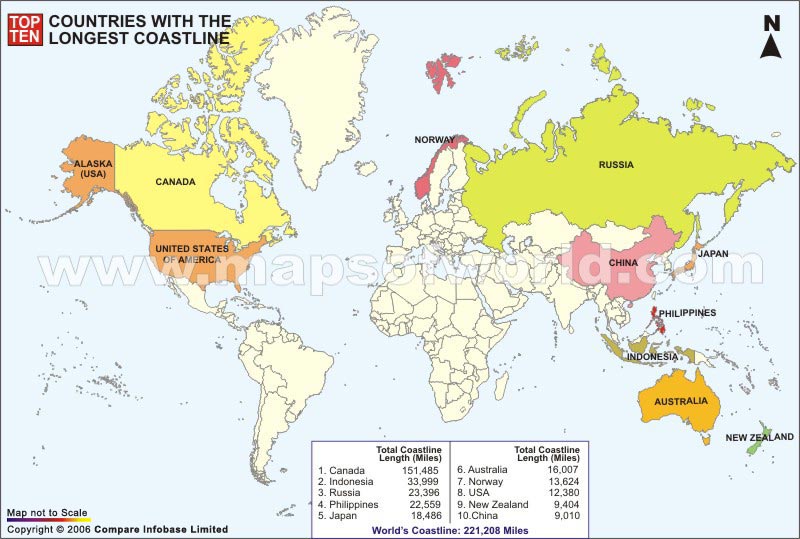
Canada, which is on our minds this week as we get ready for the big conference in Vancouver,  is especially significant to our offshore scholars because of its long coastline, by far the longest of any nation (see below and this slightly different Wiki ranking).   80% of the world’s nations have coastlines bordering an open sea, and about 1/3 of all nations have an existing or planned offshore oil and gas program.

link

Read Full Post »

Upstream reports that a worker is missing from Transocean’s Jack Ryan drillship which is working in the Akpo field offshore Nigeria. Two other workers were recovered from the water.  The accident occurred on Saturday, but neither TO nor the Nigerian Petroleum Corporation are providing any details.  Hopefully, more information will be forthcoming in the near future.

Read Full Post »

End game mysteries?:  As BP prepares for the static kill operation, the well’s flow path is still not clear.   While the consensus seems to be that the flow originates in the annulus outside the production casing, irregularities during the cementing and testing of that casing suggest the possibility of flow inside the casing.  The condition of the well bore and casing strings is also uncertain. Perhaps of greatest importance will be the inspection of the BOPE after the well is plugged and the stack is pulled.  This inspection process should be closely supervised by the regulators.

Press conference etiquette?: After admitting that they joined yesterday’s Unified Command press briefing late, two reporters asked questions that had been answered earlier.  Perhaps they think their time is more important than Admiral Allen’s, or that of the other attendees, viewers, and listeners.  One of these questioners asked when the static kill operation would begin.  Admiral Allen, who answered the question politely and patiently, should have asked when it would be most convenient for the reporter. Surely, the Unified Command would want to accommodate the reporter’s busy schedule. 😉

Dispersants: As has been demonstrated at oil spill workshops and conferences for the past 30 years, you can always stir up passions by questioning the use of dispersants.  Dispersants, unlike burning and skimmers, don’t remove oil from the water (at least not directly).  The On-Scene Commander (OSC) must consider the tradeoffs and make the decisions that he or she thinks will minimize the net impact of the spill.  Given the magnitude of location of the Macondo spill, I think the OSCs made the correct calls.  Dispersants were also used (not without controversy of course) in responding to last year’s Montara blowout in the Timor Sea.

Read Full Post »
While I have great respect for the technical and operational teams who are conducting the well intervention work, their allies and supporters are being alienated by the people who are managing the news.  From Day 1, the information on the well intervention operations has not been good enough, not even close.  We received no details on the repeated ROV attempts to actuate BOPE, very little information about the design and operation of the ill-fated seafloor collection chamber, and are now being totally stonewalled on the critical and long awaited top kill operation.

This is not a private drilling program or research project.  This became a public operation when the well blew out on April 20th.  Public resources are threatened, and the regional and national economic implications are enormous.  How and why are the top kill and other technical data confidential?

The Unified Command needs to stop managing the news and tell us what is happening.  For each injection period, we need the starting time, ending time, pressure fluctuations, injection rates, and volume and types of materials injected.  For observation periods, we need pressure readings versus time.  This information is surely being collected and summarized.  Share those summaries with the stakeholders in this massive effort – the American people.

Read Full Post »

I watched the live stream of the Unified Command Press Conference.  My impressions:

  1. Admiral Landry (USCG) and Doug Suttles (BP) have impressed me throughout this ordeal.  They have kept their heads under very difficult circumstances.  I salute them for their leadership.
  2. While it’s too early to make a call on Top Kill,  the early signs are encouraging.  There have been no apparent system or operational glitches.  Also from some of the camera shots, the mud seems to be “outrunning” the oil and gas – a positive sign.
  3. We should know a lot more in the morning.

Read Full Post »

Jan Therkildsen (BOE’s Chief Rocky Mountains Correspondent) found this Aban Pearl update.

Read Full Post »

There is nothing about the sinking on the Aban Offshore website, and very little new information elsewhere.  The way the incident was announced – a tweet from Hugo Chavez – seems to be the big story to date.

Read Full Post »

Aban Pearl

From BOE Europe Chief Odd Finnestad: All 95 workers are safe, says President Hugo Chávez.  The rig was previously named named Bulford Dolphin and owned by Fred. Olsen (Norwegian rig owner) who sold it in 2007 when it was 30 years old.  The rig started to take in water and capsized during the night.  The workers were evacuated and two navy crafts are now patrolling the area.

Odd has done more research and has provided the following additional information:

The rig is currently owned by Aban Singapore Pte. Ltd. Aban Singapore (ASPL) is a wholly owned subsidiary of Aban Offshore Ltd, an Indian company. The rig’s previous names were Bulford Dolphin (Fred Olsen Energy) and Treasure Seeker (Wilh. Whilhelmsen).  In 1975, Treasure Hunter, the first oil drilling rig was delivered to WW, followed by Treasure Seeker and Treasure Finder in the next two years. After a difficult start, the drilling rigs were secured on profitable long-term contracts with the oil companies, paving the way for the ordering, chartering and acquisition of still larger and more advanced rigs, culminating with Polar Pioneer from 1985 – one of the world’s most advanced rig for drilling in inhospitable waters. The WW offshore activities, however,  were gradually phased out towards the end of the decade.

Read Full Post »

« Newer Posts - Older Posts »