Feeds:
Posts
Comments

Posts Tagged ‘offshore oil’

From the State of the Union address:

The Interior Department is in charge of salmon while they’re in fresh water, but the Commerce Department handles them when they’re in saltwater. I hear it gets even more complicated once they’re smoked. President Obama

While this comment drew laughs from the audience, the regulation of salmon is rather straightforward compared to the extraordinarily complex regulatory regime for offshore facilities and pipelines. The first and most important recommendation in my testimony before the Senate Energy and Natural Resources Committee last May was as follows:

Streamline the OCS regulatory regime to minimize the potential for gaps, overlap, and confusion.  Because of the complexity of the OCS regime, regulatory and industry personnel spend too much time resolving and coordinating administrative and procedural matters.  This time would be better spent focusing on mission critical safety issues.   A single agency should be responsible and accountable for safety and pollution prevention at offshore facilities, and should draw on the expertise of other agencies and organizations as necessary to achieve performance objectives.

If we are to achieve our safety, pollution prevention, efficiency, and energy production objectives, the OCS regulatory regime must be consolidated and simplified.
Read Full Post »

Bob Graham and William Reilly will testify.

Schedule (Eastern Time):

0930 – Senate Energy and Natural Resources Committee – live streaming

1400 – House Natural Resources Committee – broadcast live on C-SPAN3

The questioning should be pretty lively, especially at the House hearing.

Read Full Post »

Montara Blowout - Timor Sea

SapuraAcergy’s scope under the contract involves the engineering, procurement, load out, transportation and construction activities for the removal and disposal of the existing topside and the transportation and installation of new pipelines, risers, umbilicals, spools, manifolds, FPSO mooring systems and a new replacement topside, all of which to be undertaken at PTTEPAA’s Montara Development Project in water depths of approximately 80 metres. Dow Jones

The work will be performed in 2011.

Comment: What about the Australian government’s commitment to review PTTEP’s license?

Read Full Post »

The Buchanan measure would permit the U.S. secretary of the interior to deny drilling leases to companies involved with countries facing trade sanctions. Buchanan specifically noted that Repsol, a Spanish corporation, has an agreement in place with Cuba to drill off the Florida coast. Sunshine News

Comment: In addition to the economic and foreign policy flaws, this legislation could increase risks to Florida by further limiting the pool of technically advanced and responsible companies that could participate in Cuban offshore drilling.

We would lose regardless of what these companies decided. If a company opted not to purchase US leases (so they could drill offshore Cuba), we would lose economically (i.e. jobs, revenue, and energy).  If the company chose to exit Cuba, less capable companies would fill the void.

While it seems unlikely that this bill will pass, even its threat could influence the decisions of leading international companies. If Congress is interested in protecting US interests, how about a bill that would facilitate dialogue with Cuba on safety and pollution prevention issues? How about a bill that would allow leading American companies to work offshore Cuba?

Read Full Post »

The Transportation Safety Board of Canada (TSB) will hold a news conference on Wednesday, February 9, 2011 to make public the final TSB investigation report (A09A0016) into the crash of a Cougar Helicopters Sikorsky S-92A off the coast of Newfoundland on March 12, 2009.

This investigation addressed the helicopter and pilot performance that contributed to the crash that killed 17 workers.

A separate commission, directed by Judge Wells, reported on broader issues associated with the offshore safety and regulatory regime.

Read Full Post »

Be sure to check them out!

Read Full Post »

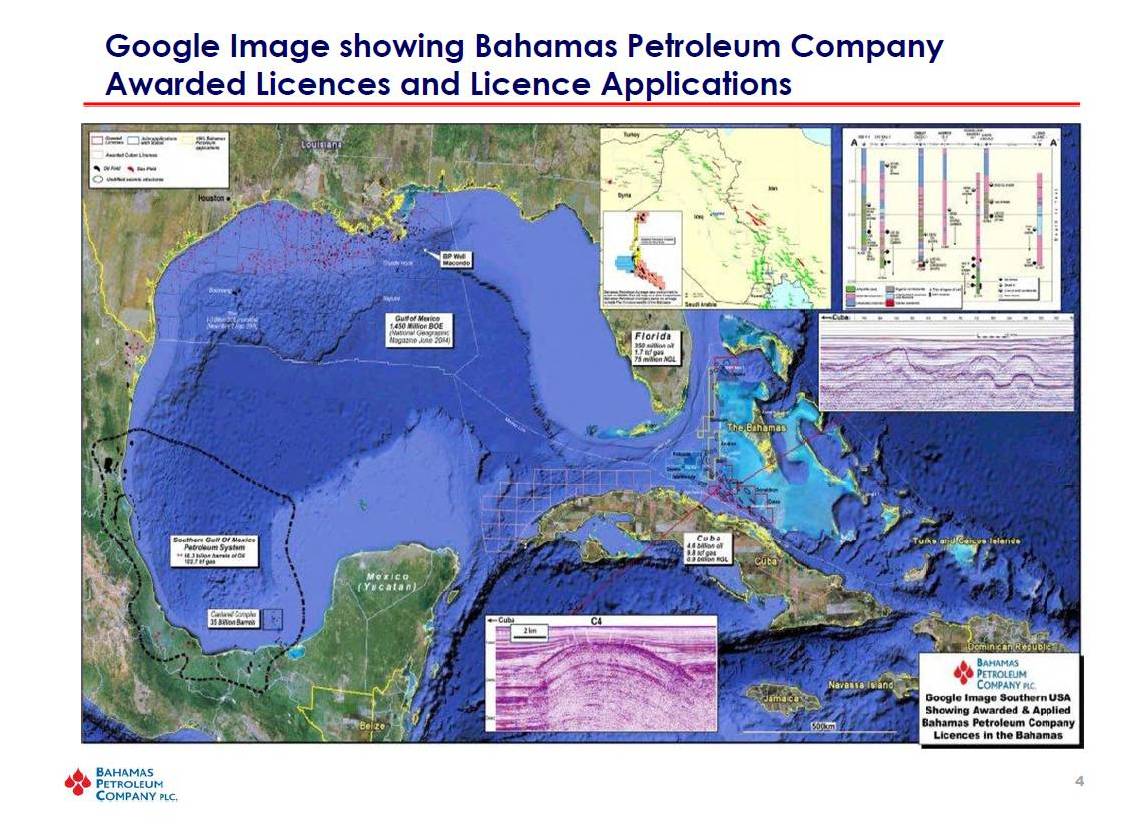
Super-geologist Paul Post is tracking Cuban and Bahamian activity and sent this map and update.

click on image to enlarge

Two thousand and eleven could be a key year for oil minnow Bahamas Petroleum Company. The AIM-quoted explorer has hired the Osprey Explorer seismic vessel, owned by Norway’s SeaBird Exploration, to shoot close-grid 2D over its four licences to the south of the Bahamas with a view to firming up a prospect for drilling in Q4. This would be the first well in Bahamian waters since 1986 and will be an acid test of BPC’s claim to be holding first mover advantage in waters that could be home to billions of barrels of oil. OilBarrel.com

Note that the area of interest is adjacent to Cuban waters, so the Cuban findings will be of great interest to the Bahamas.  I don’t know if the two countries have an information sharing agreement. Perhaps the Scarabeo 9 semisubmersible will move to Bahamian waters after drilling one or more wells off Cuba.

Read Full Post »

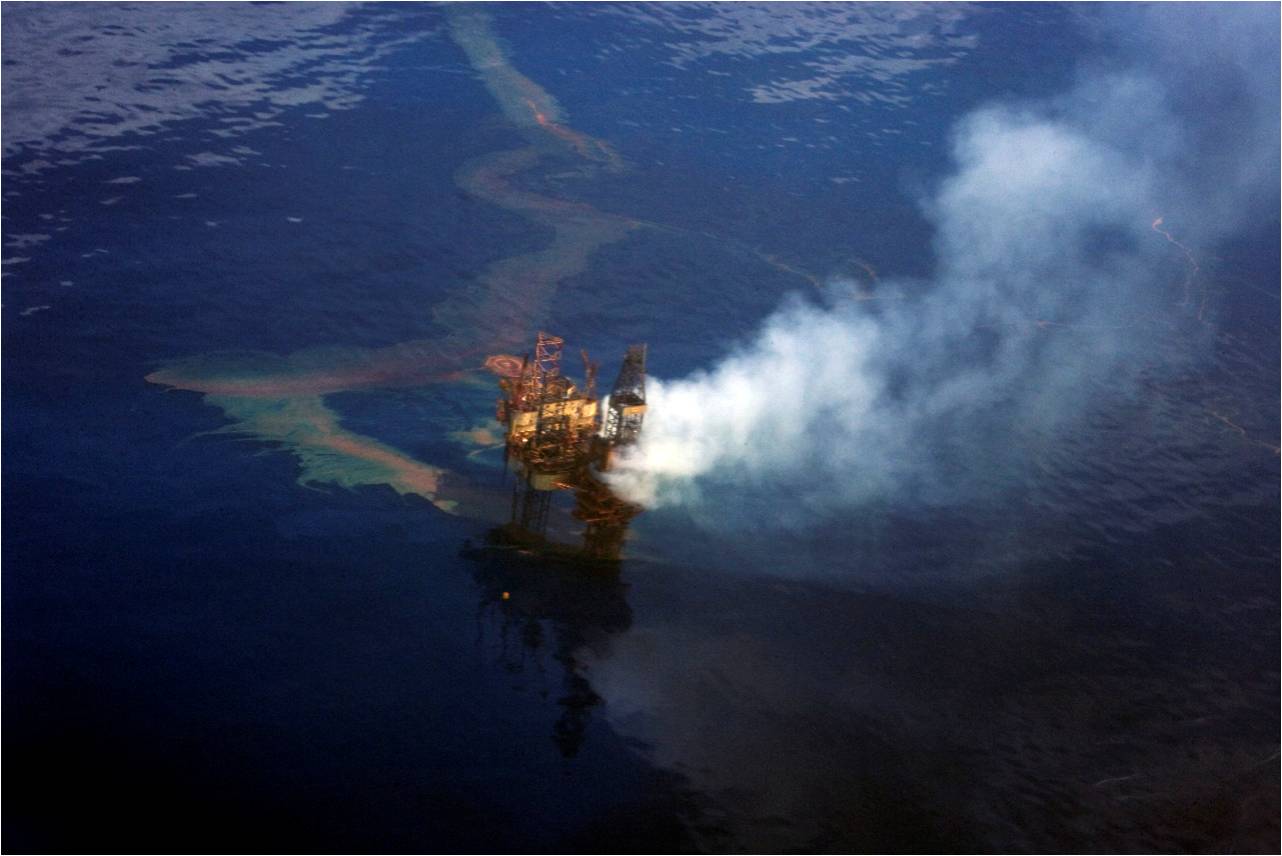
Apache said a hydrocarbon sheen was discovered in the water near its production platform in East Cameron Block 278 as the company was permanently plugging and abandoning nearby by non-producing wells. Apache said its workers saw bubbling in the water Sunday, followed by the sheen on Monday.

Platts Report

Apache Update

Read Full Post »

From Upstream report:

The International Energy Agency (IEA) said preliminary data showed oil demand hit a record high of 87.7 million barrels per day over the past 12 months.

Related Wall Street Journal story:

The Organization of Petroleum Exporting Countries Monday said demand for its oil in 2011 will be stronger than it previously forecast owing to the recovery in the global economy.

BOE Comment: The deep water sector is the only option for significant near and intermediate-term increases in US oil production. Ditto for many other non-OPEC producers. We better get our act together soon.

Read Full Post »

One of the better paragraphs I have read since Macondo:

The Deepwater story shows the fight against complacency is a continuous struggle, not a single battle. An executive at another oil major told me the default setting for safety managers should be “chronic unease”. That’s easy to see if you’re a prison governor or lighthouse-keeper. But it should be part of any executive’s attitude. Constant vigilance against, say, new competition, supply chain disruption, or unforeseen technological change is a must for modern managers.

Read Full Post »

« Newer Posts - Older Posts »